
高等教育

Search documents
西南林业大学泰和林学院揭牌成立
Xin Lang Cai Jing· 2025-12-20 22:07
Core Viewpoint - The establishment of the Taihe College at Southwest Forestry University marks a significant collaboration between Chinese and Thai educational institutions, focusing on forestry and related fields [1] Group 1: Institutional Collaboration - Southwest Forestry University and Thailand Agricultural University have jointly inaugurated the Taihe College, emphasizing cooperation in talent cultivation, research innovation, and faculty exchange [1] - Taihe College is the only Sino-Thai cooperative educational institution approved by the Chinese Ministry of Education, serving as a key platform for international education and the Belt and Road Initiative [1] Group 2: Academic Focus and Enrollment - The college will concentrate on disciplines such as forestry, wildlife and nature reserve management, and wood science and engineering [1] - Taihe College plans to enroll its first batch of 300 students in 2026, offering three undergraduate programs with a "3+1" dual degree training model, allowing graduates to receive degrees from both universities [1]
石河子大学获批创新型人才国际合作培养项目
Xin Lang Cai Jing· 2025-12-20 19:01
本报石河子讯(全媒体记者 常丫丫) 近日,国家留学基金管理委员会发布《关于确定2026年创新型人 才国际合作培养项目资助项目的通知》,由石河子大学化学化工学院牵头申报的"有机硅化学和硅基新 材料创新型人才国际合作培养项目"获批立项。 石河子大学化学化工学院相关负责人表示,将进一步构建国际化选拔与育人体系,为国家培养面向世 界、面向未来的拔尖创新人才。 据了解,该项目紧扣硅材料前沿与产业链需求,围绕有机硅化学、硅基材料创制、绿色硅工艺等核心方 向,与波兰波兹南密茨凯维奇大学、意大利帕多瓦大学、希腊克里特理工大学3所知名学府建立协同培 养机制,以培养一批贯通中西、善于创新的硅材料高端人才。根据项目规划,2026年至2028年间,每年 将支持6名硕士、博士、博士后及访问学者赴海外合作院校开展联合研究与学习。 ...
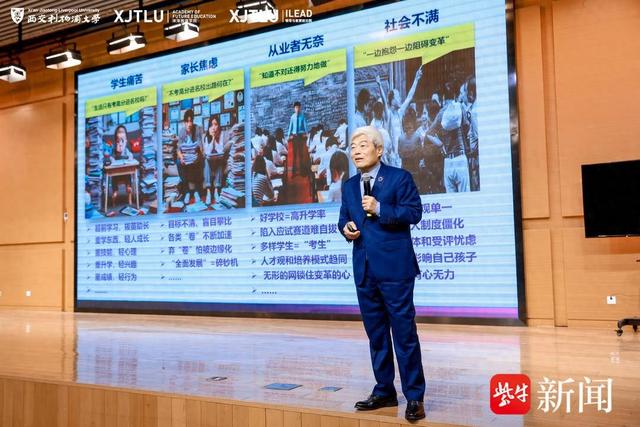
回应基础教育之问,西交利物浦大学推动“全学段”未来教育探索
Xin Lang Cai Jing· 2025-12-20 15:58
Core Viewpoint - The current anxiety surrounding education is primarily focused on the foundational education stage, where misalignment exists between educational goals and genuine growth needs [1] Group 1: Educational Innovation Conference - The Second Westlake Liverpool University Basic Education Innovation Conference was held, gathering over 300 frontline educators and thought leaders to discuss "future learning methods" [3] - Key figures in basic education reform attended the conference, addressing how foundational education can genuinely focus on student growth [5] Group 2: Practical Applications in Education - The conference emphasized the importance of integrating long-term innovative ideas and research outcomes into real educational contexts to validate their effectiveness [7][8] - A project-based learning approach was showcased in a class at Xiuhuan Middle School, where students engaged in discussions on real market issues, demonstrating the practical application of educational theories [10] Group 3: Student-Centric Learning - The focus is on whether students can find intrinsic motivation and develop judgment and action skills through real-world problem-solving, which are deemed more important than short-term academic results [14] - The educational philosophy promoted by Westlake emphasizes student-centered, interest-driven, research-oriented, and growth-targeted learning [16] Group 4: Collaborative Educational Framework - Westlake collaborates with schools to explore replicable and adjustable educational practices, rather than acting solely as an educational provider [17] - The "dual-wheel drive curriculum system" proposed by Westlake aims to enhance student happiness and internal motivation while integrating research-oriented learning into daily classroom activities [18] Group 5: Diverse Teaching Innovations - The first Westlake National Teaching Innovation Competition featured 33 innovative teaching cases, showcasing diverse teaching explorations focused on student growth [19] - The overarching goal of education in the face of rapid technological change is to facilitate better human growth rather than merely increasing speed [19]

甘肃中医药大学“虚拟仿真实训平台”正式用于教学 赋能医药贸易专业人才培养
Xin Lang Cai Jing· 2025-12-20 14:58
据悉,该平台由卫生管说学院吴明蔚团队倾力打造,是学校数字化教学改革的重要成果,突破传统实训 局限,为培养医药贸易领域复合型人才提供了有力支撑。 近日,甘肃中医药大学卫生管理学院打造的"国际医药商品进出口价格核算与贸易磋商虚拟仿真实训平 台"正式投入教学应用,并服务于学院国际贸易专业学生,收获一致好评。 (供稿人:吴明蔚) 该平台采用3D英文谈判动画结合价格核算虚拟场景,将枯燥的专业内容转化为直观互动形式,有效激 发学习兴趣;构建"3D动画+AI口语实训+能力提升"三维一体培养方案,通过虚拟教学环境实现理论与 实践深度融合。同时,AI模块还能实时纠正英文表达,助力学生夯实专业基础及提升英文口语表达。 ...
北职大入选第二期国家“双高建设计划”学校建设单位
Bei Jing Shang Bao· 2025-12-20 13:03
Group 1 - Beijing University of Technology (北职大) has been selected as a top institution in the second phase of the national "Double High Construction Plan," with its pharmaceutical biotechnology and intelligent connected vehicle technology programs recognized as national high-level professional groups [1] - The second phase of the "Double High Construction Plan" officially commenced with the issuance of a notice by the Ministry of Education and the Ministry of Finance, identifying 220 vocational schools, including 60 as "Double High" construction schools and 160 as "Double High" professional groups [1] - A "Double High" construction alliance was established in Shenzhen, with representatives from the 220 schools announcing the "New Double High" construction declaration, marking the formal establishment of a national team for skill-oriented higher education [1] Group 2 - Beijing University of Technology aims to align with the high-level educational and high-quality industry-education integration goals of the "Double High Construction Plan," focusing on the capital's high-precision industries, particularly in pharmaceutical health and intelligent connected vehicles [2] - The university is positioned as the only higher education institution in the Beijing Economic and Technological Development Area, enhancing its contribution to national strategies and the socio-economic development of the capital [2] - In 2025, the university will be renamed Beijing University of Technology, becoming the first municipal vocational undergraduate institution in the capital, marking a significant transition from a higher vocational college to a vocational undergraduate institution [2]
正在公示中!四川这4所学院,拟更名为大学
Xin Lang Cai Jing· 2025-12-20 09:50
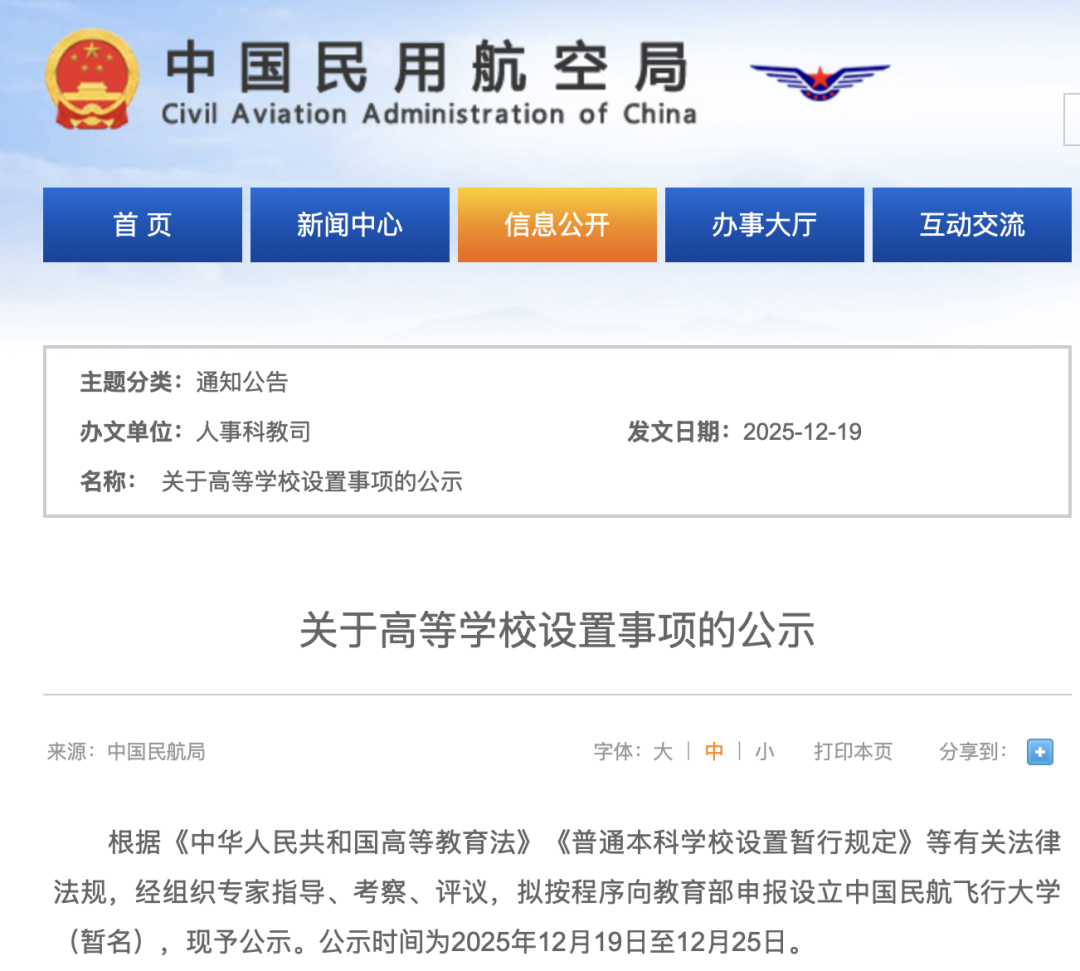
转自:四川发布 日前 中国民用航空局 四川省教育厅 陆续发布公示 中国民用航空飞行学院 成都体育学院 成都医学院 四川交通职业技术学院 4所院校拟更名 公示时间均为 2025年12月19日至12月25日 12月19日,中国民用航空局发布《关于高等学校设置事项的公示》。 ▲中国民用航空局网站截图 拟在中国民用航空飞行学院的基础上申报设立中国民航飞行大学(暂名)。 12月19日,四川省教育厅发布《关于2025年第四批拟申报高校设置事项的公示》。 ▲四川省教育厅网站截图 拟将成都体育学院更名为成都体育大学,拟将成都医学院更名为成都医科大学,拟将四川交通职业技术学院更名为四川交通职业技术大学。 | 设置基础 | 拟设置学校名称 | 办学性质 | 拟申报类型 | | --- | --- | --- | --- | | 成都体育学院 | 成都体育大学 | 公办 | 更名大学 | | 成都医学院 | 成都医科大学 | 公办 | 更名大学 | | 四川交通职业技 | 四川交通职业技术 | 公办 | 本科层次职 | | 术学院 | 大学 | | 业学校 | 有你的母校吗? ...
南方科技大学教授朱健康将于明年1月出任澳门科技大学校长
Xin Lang Cai Jing· 2025-12-20 09:50
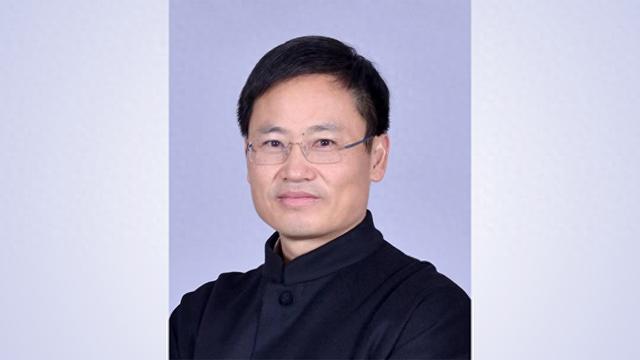
方科技大学 图 据澳门科技大学官网12月19日消息,澳门科技大学任命朱健康为第五任校长,他将于2026年1月履新。 朱健康 南 朱健康,国际著名分子遗传学家和植物生物学家。1987年毕业于北京农业大学土化系,1993年获得美国 普渡大学植物生理学博士学位。2000年受聘美国亚利桑那大学植物科学系教授。曾任加州大学河边分校 整合基因组学研究所所长,沙特KAUST大学植物逆境基因组中心主任,美国普渡大学生物化学系和园 艺及园林系杰出教授,中国科学院上海植物逆境生物学研究中心主任。曾获Charles Albert Shull奖和 Herbert Newby McCoy奖。2010年当选为美国科学院院士。 朱健康主要从事新型CRISPR-Cas基因编辑技术的开发和应用(生物育种、分子检测和基因治疗)、表 观遗传学(DNA甲基化和去甲基化)、植物逆境生物学(植物对干旱、高盐、低温等非生物胁迫的应 答机理)和新型生物刺激剂开发等方面的研究。目前为止, 在Cell、Nature、Science、Nature Biotechnology 等主流学术期刊发表论文超过550篇,其中Cell、Nature、Science 论文18 ...
9284万元!太原理工大学近期大批仪器采购意向
仪器信息网· 2025-12-20 09:01
Core Viewpoint - Taiyuan University of Technology has announced procurement intentions for 80 items of laboratory equipment, with a total budget of 92.84 million yuan, expected to be procured between March and December 2025 [1][2]. Procurement Overview - The procurement includes various advanced instruments such as infrared spectrometers, high-performance liquid chromatographs, and high-precision distributed fiber optic strain/temperature monitoring analyzers [2][3]. - The total budget for the procurement is 92.84 million yuan, indicating significant investment in upgrading laboratory capabilities [2]. Detailed Procurement List - High silicon oxide material intelligent forming unit: 470,000 yuan, to be procured in 2025, aimed at enhancing students' understanding of complex component formation in aerospace applications [3][4]. - High-precision distributed fiber optic strain/temperature monitoring analyzer: 167,000 yuan, scheduled for procurement in June 2025, designed for multi-channel real-time monitoring [5]. - Dynamic gas vapor adsorption analyzer: 80,000 yuan, required for experiments involving low-concentration CO2 and water vapor adsorption, with a delivery timeline of July 2025 [5]. - High-precision distributed fiber optic acoustic monitoring analyzer: 130,000 yuan, to be procured in June 2025, focusing on real-time acoustic monitoring capabilities [5]. - Weight method high-pressure gas adsorption instrument: 210,000 yuan, with a delivery requirement of 150 days, aimed at measuring adsorption and desorption isotherms under various conditions [5]. Additional Equipment and Systems - Online reaction product analyzer: 100,000 yuan, to be delivered by September 2025, for qualitative and quantitative analysis of reaction intermediates and products [6]. - Long-distance distributed Brillouin optical time-domain reflectometer: 70,000 yuan, scheduled for procurement in August 2025, capable of measuring temperature, strain, and Brillouin frequency shift over long distances [6]. - Emergency rescue channel rapid construction follow-up drilling machine: 100,000 yuan, to be procured in September 2025, designed for creating rescue passages in disaster scenarios [10].

观乎人文,化成天下——上海师范大学人文学院“育师”体系
Xin Lang Cai Jing· 2025-12-20 05:45
"三化一成"体系以三大递进路径系统推进:化己立德,引导教师在竞赛淬炼中涵养师德、铸就师魂;化 德立能,推动教师将价值信念转化为全方位的育人本领;化能立人,激励教师在课堂上实现知识传授、 能力培养与价值塑造的深度融合,担当起立德树人根本使命。三者环环相扣,最终融会于"资深教师— 青年骨干教师—新教师"三级师道养成体系之中,形成从价值内化到能力外显、从个体成长到薪火相传 的卓越教师培养路径。 化己立德:在竞赛淬炼中筑牢师德之基 青教赛之于参赛教师,首在"化己立德"。这不仅要求教师在严格赛程中锤炼意志、砥砺品格,更要在思 想深处筑牢信仰之基,将教育家精神与党的创新理论内化为价值追求与行动自觉。 一是以赛程磨炼为熔炉,内化坚韧意志品质。基于赛制规定,青教赛备赛过程是对参赛教师身心的全面 考验。从教学设计的反复推敲,到现场授课的精准呈现,再到教学反思的深度凝练,每一环节都需倾注 全力、精益求精。在这一过程中,教师们直面压力、突破自我,将挑战转化为成长的契机,不仅锤炼了 扎实的教学基本功,更磨砺了不畏艰难、追求卓越的坚韧品格,为担当育人使命奠定了坚实的意志品质 基础。 观乎人文,化成天下。上海师范大学人文学院深谙"化成" ...
10所大学入列,国家卓越工程师学院建设高校增至42所
Xin Lang Cai Jing· 2025-12-20 02:49
Group 1 - The Ministry of Education announced the fourth batch of universities approved for the construction of National Excellent Engineer Colleges, totaling 10 institutions [1] - The initiative aims to deepen the integration of education and industry in the training of master's and doctoral engineers, aligning with national strategic talent development goals [1][2] - A total of 42 universities have been approved for the construction of National Excellent Engineer Colleges across four batches [3] Group 2 - The reform in training excellent engineers has seen nearly 26,000 master's and doctoral students jointly recruited and trained by universities and enterprises, with over 2,000 graduates already employed [2] - The approach includes breaking traditional disciplinary barriers in engineering education and establishing a council responsible for university-enterprise collaboration [2] - The establishment of 50 National Excellent Engineer Colleges and innovation research institutes in key regions like Beijing, Shanghai, and the Guangdong-Hong Kong-Macau Greater Bay Area is part of the strategy [2]