项目式学习

Search documents
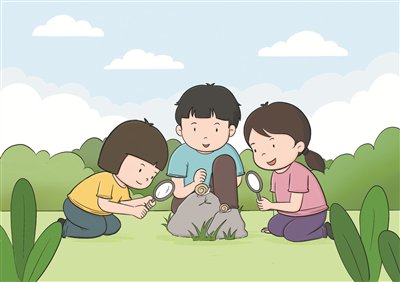
家长如何拓展 孩子的好奇心?
Xin Lang Cai Jing· 2026-02-06 16:47
Core Viewpoint - The article emphasizes the importance of fostering children's curiosity and exploration through supportive parenting, allowing them to learn and grow in a safe environment [3][4][8]. Group 1: Parental Guidance - Parents should create safe exploration spaces for children, allowing them to engage with their interests while setting boundaries to ensure safety [3][4]. - Encouraging children to take responsibility for their interests, such as caring for a pet, can enhance their learning experience and foster independence [5][6]. - Parents are advised to engage in exploratory activities with their children, asking questions that stimulate critical thinking and observation skills [6][7]. Group 2: Encouraging Curiosity - Children’s natural curiosity should be recognized and nurtured, with parents providing opportunities for exploration without imposing strict limitations [8][9]. - It is essential for parents to support children in their interests, helping them to expand their knowledge and experience through guided exploration [9][10]. - Allowing children to make mistakes during their explorations is crucial for their development, as it encourages resilience and problem-solving skills [10][11].

北京“远航天梦”航天科技体验中心项目正式落成
Zhong Guo Jing Ji Wang· 2026-01-16 14:36
Core Viewpoint - The "Youth Space Dream Science Popularization Action" and the Beijing Far Horizon Space Technology Experience Center aim to promote aerospace knowledge, spirit, and innovation among youth, contributing to China's strategy of becoming a technology and talent powerhouse [1] Group 1: Project Overview - The Far Horizon Space Technology Experience Center is designed by the China Aerospace Planning and Design Group and operated by Beijing Weiyujiahe Cultural Creative Co., Ltd. and Beijing Far Horizon Space Technology Development Co., Ltd. [2] - The center is the first immersive aerospace cultural science education brand in China, targeting youth aged 6 to 18 and their families, integrating science, art, sports, and education [2] - The center features three main functional areas: Aerospace Sci-Fi Art Exhibition Center, Future Exploration Center, and Astronaut Mission Simulation Center, providing a comprehensive and immersive platform for youth exploration [2] Group 2: Immersive Experience - The experience center offers a unique immersive experience, allowing visitors to journey through time to the year 2099, following the protagonist "Meng Yuanhang" on a thrilling space adventure [3] - It incorporates project-based learning and features four thematic exploration challenges and 17 interactive experience scenarios, promoting scientific literacy and innovation among youth [3] - The center also showcases the XR film "Motherland's Territory: Deep Space," which won awards at the 2025 China Golden Rooster and Hundred Flowers Film Festival, celebrating 70 years of Chinese aerospace achievements [3] Group 3: Expert Insights - The event featured prominent experts emphasizing the importance of aerospace science education for youth, linking it to national strategy and the cultivation of exploration and innovation spirit [4] - The event highlighted the commitment to integrating aerospace spirit into science popularization experiences, with a focus on engaging youth in meaningful educational activities [5] Group 4: Strategic Partnerships - Two significant cooperation agreements were signed during the event, including a strategic consensus to promote the "Far Horizon Youth Science Popularization Project" in Shanghai, enhancing the outreach of aerospace education [6] - A sponsorship agreement was signed with Guangdong Foshan COSO Sanitary Ware Co., Ltd., demonstrating the support from various sectors for the aerospace education initiative [6] Group 5: Upcoming Initiatives - The Far Horizon Space Technology Experience Center is expected to receive over 1 million visitors annually and has designed specific routes for educational activities and tourist groups [7] - To celebrate the 2026 New Year holiday, the center will launch the "Aerospace Dream New Year Science Season," featuring various interactive experiences and activities to engage youth in aerospace technology [7] - The successful launch of the "Youth Space Dream Science Popularization Action" and the establishment of the experience center will inject new momentum into the development of aerospace science popularization in China [7]

从技术叠加到素养内生,AI点亮和美少年成长路
Nan Fang Du Shi Bao· 2025-12-29 23:14
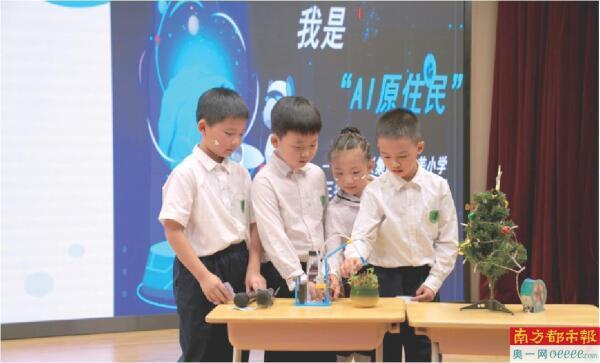
Core Insights - The article highlights the transformative impact of artificial intelligence (AI) on education, particularly through the "He Mei AI Youth Growth Plan" implemented by He Mei Foreign Language Primary School in Longgang District, Shenzhen, which has been recognized as a model project in AI education [2][6] Group 1: Educational Transformation - The "He Mei AI Youth Growth Plan" aims to lay a foundation for students' future lives by integrating AI as a core element of cognitive development and ethical reflection, moving beyond a superficial understanding of AI as merely a tool [2][3] - The school employs project-based learning (PBL) to shift students from passive knowledge receivers to active meaning creators, effectively coupling technology with educational goals [2][3] Group 2: Curriculum Development - The curriculum features a structured approach with a three-tiered progression: enlightenment, exploration, and creation, tailored to the cognitive development of students in grades three to six [4] - Notable projects, such as "I am an 'AI Native'," guide students through a comprehensive inquiry journey, integrating various subjects and fostering interdisciplinary thinking [4][5] Group 3: Demonstration Effect - The project has produced a comprehensive curriculum resource package that includes lesson plans and operational guidelines, significantly lowering the barriers to implementing AI education [6] - The school has achieved over 200 awards in various competitions, showcasing the effectiveness of its innovative educational model, which emphasizes low-cost, high-efficiency transformation paths for different educational institutions [6]
回应基础教育之问,西交利物浦大学推动“全学段”未来教育探索
Xin Lang Cai Jing· 2025-12-20 15:58
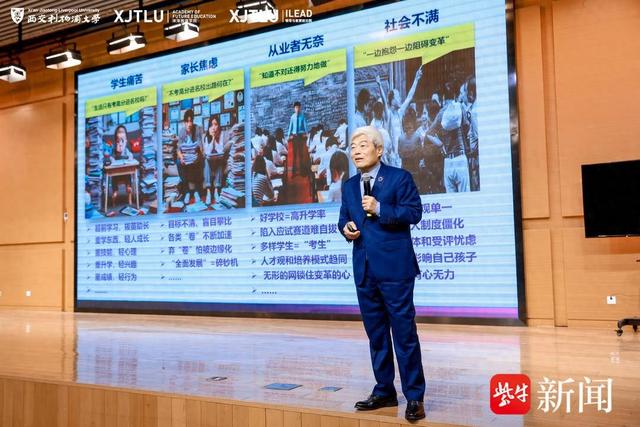
Core Viewpoint - The current anxiety surrounding education is primarily focused on the foundational education stage, where misalignment exists between educational goals and genuine growth needs [1] Group 1: Educational Innovation Conference - The Second Westlake Liverpool University Basic Education Innovation Conference was held, gathering over 300 frontline educators and thought leaders to discuss "future learning methods" [3] - Key figures in basic education reform attended the conference, addressing how foundational education can genuinely focus on student growth [5] Group 2: Practical Applications in Education - The conference emphasized the importance of integrating long-term innovative ideas and research outcomes into real educational contexts to validate their effectiveness [7][8] - A project-based learning approach was showcased in a class at Xiuhuan Middle School, where students engaged in discussions on real market issues, demonstrating the practical application of educational theories [10] Group 3: Student-Centric Learning - The focus is on whether students can find intrinsic motivation and develop judgment and action skills through real-world problem-solving, which are deemed more important than short-term academic results [14] - The educational philosophy promoted by Westlake emphasizes student-centered, interest-driven, research-oriented, and growth-targeted learning [16] Group 4: Collaborative Educational Framework - Westlake collaborates with schools to explore replicable and adjustable educational practices, rather than acting solely as an educational provider [17] - The "dual-wheel drive curriculum system" proposed by Westlake aims to enhance student happiness and internal motivation while integrating research-oriented learning into daily classroom activities [18] Group 5: Diverse Teaching Innovations - The first Westlake National Teaching Innovation Competition featured 33 innovative teaching cases, showcasing diverse teaching explorations focused on student growth [19] - The overarching goal of education in the face of rapid technological change is to facilitate better human growth rather than merely increasing speed [19]
“跨学科主题学习”“项目式学习”增强学生实践能力 中小学生科学素养稳步提升
Yang Shi Wang· 2025-12-17 05:05
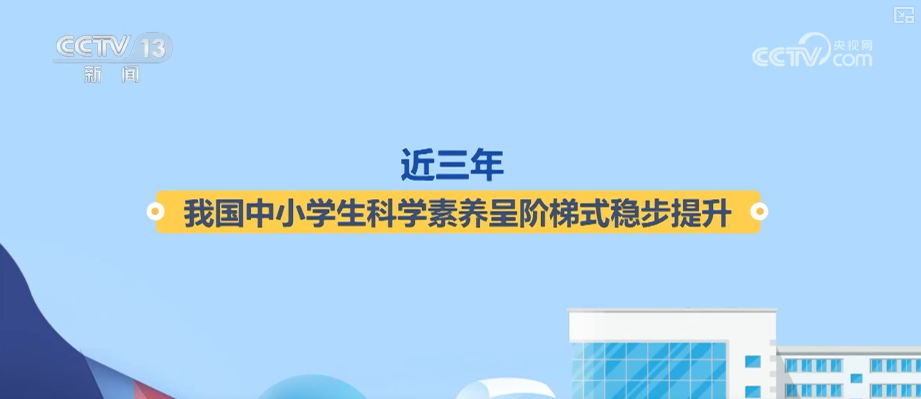
Core Viewpoint - By 2025, the scientific literacy of primary and secondary school students in China is expected to steadily improve, with average scores increasing by 4.5% from 2024 and 6.3% from 2023, indicating a consistent upward trend over the past three years [3]. Group 1: Educational Initiatives - The Ministry of Education has implemented new measures such as "cross-disciplinary thematic learning" and "project-based learning" to enhance students' scientific literacy and transform science education [5]. - In Beijing's Dongcheng District, schools are collaborating with universities to create "zero-carbon" courses, integrating inquiry-based learning at the primary level [7]. - The focus has shifted from merely learning to applying knowledge, emphasizing practical use and problem-solving skills [9]. Group 2: Resource Allocation and Development - There is still a significant shortage of professional science teachers across various educational stages, prompting the Ministry of Education to set targets for laboratory space and equipment availability by 2026 [10]. - The Ministry has established a collaborative mechanism involving 241 experimental zones and 1,862 experimental schools, along with partnerships with 14 universities [11]. Group 3: AI Integration in Education - The Ministry of Education plans to actively promote the integration of artificial intelligence in the development of science education for primary and secondary schools [10]. - Schools like Nanyu Middle School in Chongqing and Jing Shan School in Beijing are utilizing AI to enhance student engagement in subjects like chemistry, physics, and biology [14][16].
中小学科技教育有哪些重要改变
Bei Jing Ri Bao Ke Hu Duan· 2025-11-25 22:53
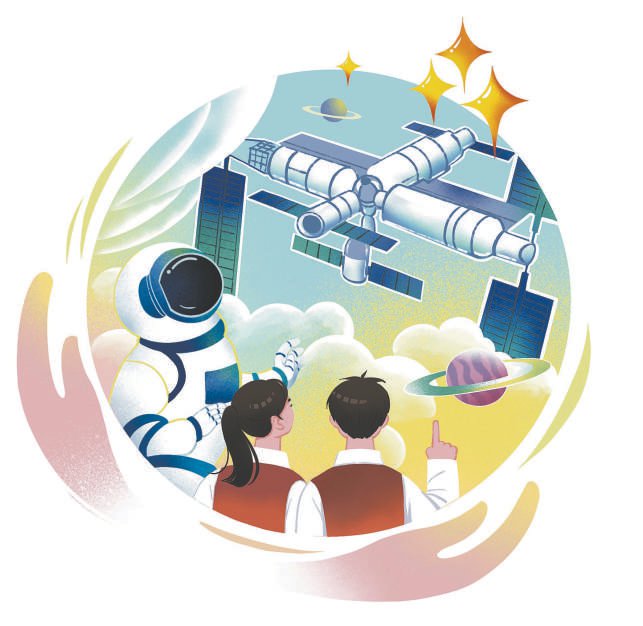
Core Viewpoint - The Ministry of Education and six other departments have issued guidelines to strengthen science and technology education in primary and secondary schools, aiming to create a comprehensive educational framework that fosters students' scientific interest and spirit across all educational stages [1][2]. Group 1: Cultivating Scientific Interest and Spirit - The guidelines emphasize a coherent educational goal across all school stages, with specific focuses: early grades on sensory experience and interest cultivation, middle grades on concept understanding and hands-on exploration, junior high on practical inquiry and technology application, and high school on experimental inquiry and engineering practice [1][2]. - Schools are encouraged to develop project-based learning (PBL) courses that integrate knowledge from various subjects while respecting students' growth patterns [2][3]. Group 2: Curriculum Design - The guidelines advocate for innovative curriculum ecosystems that integrate science, technology, engineering, and mathematics (STEM) to enhance students' interdisciplinary skills and innovation capabilities [3][4]. - Schools are developing specialized courses in fields like artificial intelligence, energy and environment, life sciences, and space exploration, ensuring that core competencies are effectively taught [4]. Group 3: Teaching Methods - The guidelines propose transforming teaching methods by implementing a "dual-teacher classroom" model, combining scientists and teachers, and utilizing advanced technologies like virtual laboratories [5][6]. - Schools are adopting project-based learning that emphasizes real-world problem-solving, thereby enhancing students' scientific interest and practical skills [5][6]. Group 4: Evaluating Learning Outcomes - The guidelines introduce the concept of a "digital portrait of scientific literacy," which aims to provide a multifaceted evaluation of students' learning processes beyond traditional exams [8][9]. - Schools are exploring various evaluation methods, including engineering logs and research notes, to reflect students' growth and problem-solving processes [9][10]. Group 5: Challenges and Recommendations - Current challenges in science and technology education include outdated teaching methods, insufficient interdisciplinary integration, lack of evidence-based learning, and uneven distribution of educational resources [11][12]. - Recommendations for improvement include promoting interdisciplinary course integration, enhancing practical and exploratory aspects of the curriculum, and optimizing teacher training and resource allocation [12].
培养具有人类命运共同体意识的世界公民
Ren Min Ri Bao Hai Wai Ban· 2025-05-14 01:12
Group 1 - The core mission of education is to help individuals develop self-educational abilities, with reading as a fundamental focus to cultivate reading skills, interests, and habits [1][2] - The disparity in reading resources between urban and rural areas significantly impacts children's educational starting points, particularly for those from disadvantaged backgrounds [1][2] - The New Education Foundation's project "New Education Children's Library" aims to enhance reading enthusiasm among rural children by leveraging internet resources and increasing volunteer involvement [2] Group 2 - The New Education Experiment has reached over 10,000 schools, but the development is uneven, with some schools excelling while others struggle to implement the educational philosophy effectively [2][3] - Collaborating with local education departments is a strategy to improve educational quality in different regions, with the New Education Experiment serving as a model for exploring successful educational practices [3] - The "Belt and Road" initiative includes international seminars to share China's educational experiences, aiming to present a true picture of Chinese education to foreign educators [3] Group 3 - There is a perception among some foreign scholars that China's educational success relies solely on time and rote learning, but this view does not capture the full picture of Chinese education [4][5] - Balancing Western educational philosophies with traditional Chinese methods is essential, emphasizing the strengths of both systems to cultivate well-rounded future citizens [5][6] - The focus on educational reform in the era of artificial intelligence is crucial, with a shift towards learning centers and project-based learning as alternatives to traditional schooling [6]
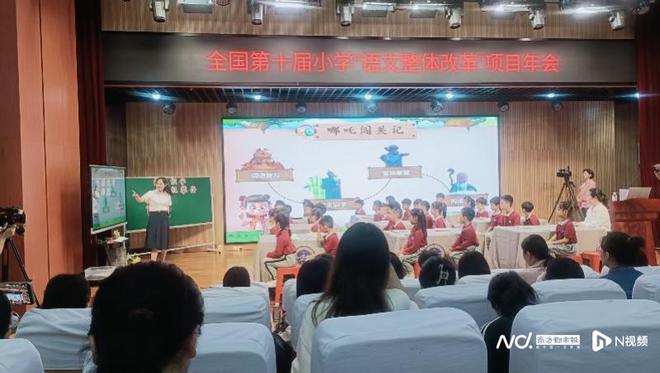
AI如何赋能教育创新?“语文整体改革”项目年会现场探讨
Nan Fang Du Shi Bao· 2025-04-28 01:34
Core Insights - The article discusses the transformation of Chinese language education from a "knowledge-based" approach to a "competency-based" model, driven by advancements in artificial intelligence and the implementation of new curriculum standards [1] Group 1: Conference Overview - The conference titled "Unit-Based Teaching Model Under Core Competency Guidance" was held in Guangzhou, attracting nearly 400 participants including education officials, researchers, principals, and frontline teachers [1] - The theme of the conference focused on reconstructing classroom logic through large unit task teaching and leveraging AI technology to enhance overall competency [1] Group 2: Expert Contributions - Expert Yang Chunsheng highlighted five characteristics of project-based learning, emphasizing the importance of student engagement and the process over grades [2] - Yang cited a Stanford University report indicating that 87% of college students rely on AI for problem-solving, which undermines their ability to build logical knowledge chains [2] - He also pointed out that the human brain loses 12 trillion neural connections annually, and the reliance on AI has led to an 87% repetition rate in solutions, compared to 31% in the pre-AI era [3] Group 3: Teaching Innovations - The conference showcased innovative teaching methods, including game-based tasks to stimulate early literacy among young students, presented by teacher Liu Jia from Guangyun Foreign Language School [5] - The "unit-based" teaching model integrates literacy, writing, reading, and expression, utilizing AI to optimize teaching processes and support students' core competency development [6] - Various teachers presented exemplary lessons, including deep thinking through problem chains and using AI to recreate the emotional context of ancient poetry [6]