石油运输

Search documents
土耳其:油轮袭击事件将产生严重威胁!
中国能源报· 2025-11-30 07:43
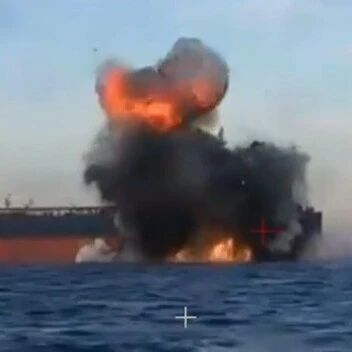
Core Points - Turkey expressed concern over the attack on two Gambian-flagged oil tankers in the Black Sea, which poses a serious threat to navigation safety, life, property, and the environment in the region [3]. Group 1 - The attack on the "Kairós" and "Vilarat" oil tankers occurred within Turkey's exclusive economic zone in the Black Sea [3]. - The Ukrainian Security Service and Navy reportedly used drones to carry out the attack, which resulted in significant damage to the tankers, rendering them unable to continue sailing [3]. - The targeted tankers are part of Russia's "shadow fleet," with their destination being the Russian Black Sea port city of Novorossiysk, indicating a potential major impact on Russian oil transportation [3]. Group 2 - The Turkish Maritime Authority reported that the "Kairós" tanker experienced an explosion and fire due to external factors, located 28 nautical miles from the Turkish coastline [3]. - The "Vilarat" tanker reported an explosion and fire 35 nautical miles from the "Kairós," highlighting the severity of the incidents [3].

【环球财经】土耳其对黑海油轮袭击事件表示关切
Xin Hua She· 2025-11-30 03:05
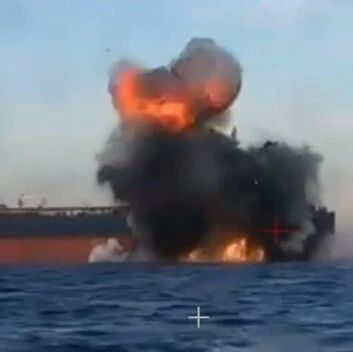
Core Points - Turkey expressed concern over the attack on two Gambian-flagged oil tankers in the Black Sea, which poses a serious threat to navigation safety, life, property, and the environment in the region [1] - The attack on the "Kairós" and "Vilarat" tankers was reportedly executed by the Ukrainian Security Service and Navy using drones, significantly damaging the vessels and impacting Russian oil transportation [1] Summary by Sections - **Incident Details** - The attack occurred on November 28, targeting the "Kairós" and "Vilarat" tankers within Turkey's exclusive economic zone in the Black Sea [1] - The "Kairós" tanker was located 28 nautical miles from the Turkish coastline when it exploded and caught fire due to external factors, while the "Vilarat" was 35 nautical miles away when it reported a similar incident [1] - **Impact on Russian Oil Transportation** - Both tankers are part of Russia's "shadow fleet" and were headed to the Russian Black Sea port city of Novorossiysk, indicating that the attack will have a significant impact on Russian oil transport [1]
乌称在黑海袭击俄两艘油轮
21世纪经济报道· 2025-11-29 13:20
Group 1 - Ukrainian security services reported that two Russian oil tankers, "KAIRO" and "VIRAT," were attacked by Ukrainian unmanned boats in the Black Sea [1][2] - The damage to the two tankers is severe, rendering them unusable, which is expected to impact Russian oil transportation [2] - Initial reports indicated that the explosions on the tankers did not result in any casualties among the crew [2]
加拿大一部长因反对输油管道项目辞职
中国能源报· 2025-11-29 02:17
Core Viewpoint - The resignation of Steven Guilbeault, Canada's Minister of Identity and Culture, highlights the tension between environmental policies and energy infrastructure development in Canada, particularly regarding a new oil pipeline project aimed at increasing energy exports to Asia and reducing reliance on the U.S. market [3]. Group 1 - Steven Guilbeault announced his resignation on the 27th, opposing a new oil pipeline project that the Canadian federal government agreed to pursue with Alberta province [3]. - The pipeline project is expected to significantly enhance Canada's energy export capacity to Asia, thereby decreasing dependence on the U.S. market [3]. - Guilbeault expressed concerns that several environmental policies he implemented as Minister of Environment are being undermined by the current government, emphasizing the need to prioritize environmental issues [3].

创5年来新高!美国制裁俄油促使买家转向替补供应 VLCC运价继续飙涨
智通财经网· 2025-11-24 07:05
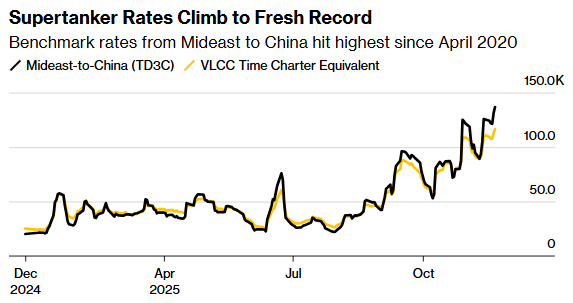
Group 1 - The cost of chartering Very Large Crude Carriers (VLCCs) has surged to its highest level in over five years, driven by buyers seeking alternatives to sanctioned Russian oil and increased supply from Middle Eastern and U.S. producers [1] - The benchmark freight rate for VLCCs transporting oil from the Middle East to China rose to nearly $137,000 per day, marking a 576% increase year-to-date and the highest level since April 2020 [1] - A broader index covering multiple VLCC routes also reached $116,400 per day, setting a new five-year high [1] Group 2 - The increase in VLCC bookings is attributed to U.S. sanctions on Russian oil companies, which took effect last week, prompting buyers, particularly from India and China, to seek alternative suppliers [4] - Analysts noted that the rise in rates aligns with increased production from the U.S. and OPEC+ countries, especially Middle Eastern producers preparing to offer more crude oil to buyers [4] - The surge in VLCC rates has also benefited the entire tanker fleet, with smaller vessels experiencing higher earnings as Suezmax tankers have entered the Middle East to transport cargo typically handled by VLCCs [4]
俄罗斯油轮,遭美军舰拦截
中国能源报· 2025-11-22 10:59
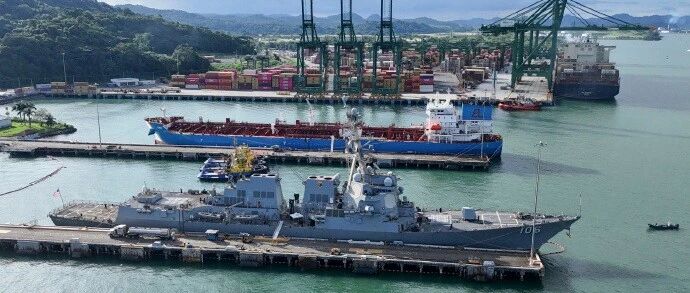
Group 1 - A Russian oil tanker, the "Seahorse," was intercepted by a U.S. destroyer while en route to Venezuela, leading to a change in its course towards Cuba [1] - The tanker was originally scheduled to deliver fuel to Venezuela on November 13 but had to alter its route due to the U.S. military's intervention [1] - The U.S. destroyer "Stout" moved into the tanker’s path, prompting the vessel to attempt to approach Venezuela twice but ultimately being forced to retreat and currently remains in the Caribbean [1]
西部原油管道输油量超2亿吨
Xin Hua She· 2025-11-22 08:17
Core Insights - The Western Oil Pipeline, known as "Shanlan Line," has transported over 200 million tons of crude oil as of November 21, contributing significantly to the diversification of national energy supply and supporting economic and social development in the central and western regions of China [1]. Group 1 - The cumulative crude oil transportation of the Shanlan Line has exceeded 200 million tons [1]. - The operation of the pipeline plays a crucial role in ensuring the diversification of national energy supply [1]. - The pipeline supports the economic and social development of the central and western regions of China [1].
西部原油管道输油量超2亿吨 安全平稳运行18年
Xin Hua She· 2025-11-22 08:01
Core Insights - The Western Crude Oil Pipeline, known as the "Shanlan Line," has transported over 200 million tons of crude oil as of November 21, providing strong support for the diversification of national energy supply and promoting economic and social development in the central and western regions of China [2] Group 1 - The cumulative crude oil transportation of the Shanlan Line has exceeded 200 million tons [2] - The pipeline plays a crucial role in ensuring the diversification of national energy supply [2] - It contributes significantly to the economic and social development of the central and western regions of China [2]
俄罗斯油轮在遭美军舰拦截后停滞于委内瑞拉附近海域
Ge Long Hui A P P· 2025-11-21 04:20
Core Viewpoint - The incident involving the sanctioned Russian oil tanker "Sea Horse" raises concerns about U.S. actions to disrupt energy support from Russia to the Maduro regime in Venezuela [1] Group 1: Incident Details - The "Sea Horse" tanker was intercepted by the U.S. Navy destroyer "Stout" on November 13 while en route to Venezuela, prompting an emergency turn towards Cuba [1] - The tanker attempted to approach Venezuela twice after the interception but turned back both times and is currently stalled in the Caribbean Sea [1] Group 2: U.S. Military Actions - The U.S. Southern Command has not commented specifically on the actions of the destroyer, but it has been reported that "Stout" has been deployed in the Caribbean since late September, leading a fleet of over ten vessels for anti-drug operations initiated during the Trump administration [1]
海峡危机引爆连锁反应!油价保险费用飙涨,全球经济或将埋单
Sou Hu Cai Jing· 2025-11-19 23:17
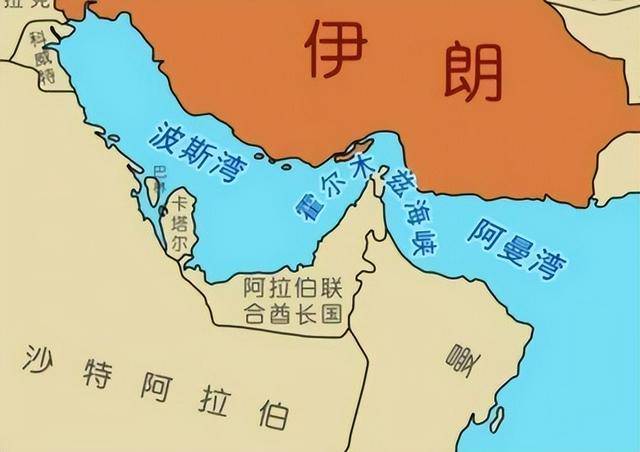
Core Viewpoint - The recent seizure of an international oil tanker by the Iranian Revolutionary Guard in the Strait of Hormuz has escalated tensions between Iran and the United States, raising concerns about global energy supply and market stability [1][3]. Group 1: Incident Overview - The Iranian Revolutionary Guard captured the MV Talara, a tanker flying the Marshall Islands flag, using military force, which has been interpreted as a direct challenge to international law and a threat to global shipping security [5][10]. - Approximately 20% of the world's oil and liquefied natural gas passes through the Strait of Hormuz, making any conflict in this region potentially impactful on global oil prices and shipping safety [7][19]. Group 2: U.S. Response - The U.S. has responded strongly, with the Pentagon stating it will use "absolute force" to protect shipping in the region, increasing military deployments and readiness for potential larger conflicts [10][12]. - The U.S. government has condemned Iran's actions as a typical act of hijacking that undermines international trade order and creates significant uncertainty for the global economy [12][17]. Group 3: Iranian Justification - Iran claims the seizure was a lawful enforcement action against the tanker for allegedly smuggling chemicals, asserting that it was not an act of aggression but a legal seizure [15][17]. - This justification has not been accepted by the U.S. or the international community, which views the action as a significant threat to international shipping and trade [17]. Group 4: Market Reactions - Following the incident, global oil prices surged, reflecting the immediate market reaction to the heightened risk in the Strait of Hormuz, a critical energy supply route [19][21]. - Insurance costs for shipping through the Strait have also increased, leading to higher international trade costs and potential supply chain instability, particularly for countries reliant on Middle Eastern oil [21][23]. Group 5: Strategic Importance and Future Outlook - The Strait of Hormuz is a vital geopolitical and economic corridor, handling about one-fifth of global oil transport, making it a focal point for international trade and political maneuvering [23][25]. - The ongoing tensions between the U.S. and Iran could further destabilize the region, with implications for global economic trends and the need for international cooperation to prevent escalation [25][29].