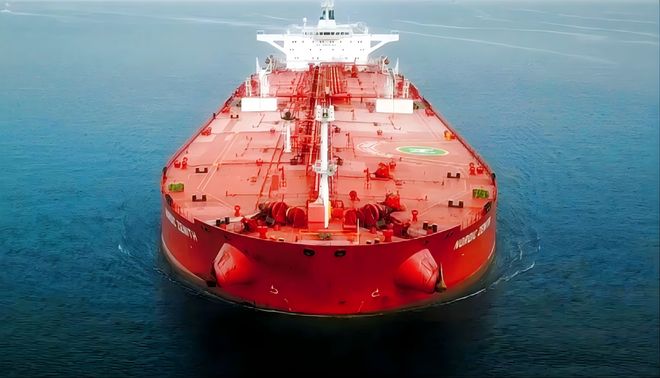
苏伊士型油轮

Search documents
对话一线租船专家-直击本周霍尔木兹通行情况变化
2026-03-30 05:15
Summary of Conference Call Records Industry Overview - The records primarily discuss the oil shipping industry, focusing on the dynamics of the VLCC (Very Large Crude Carrier) and MR (Medium Range) tanker markets, particularly in the context of the ongoing geopolitical tensions in the Middle East, specifically around the Strait of Hormuz [1][2][3][4][5][6][7][8][9][10][11][12][13][14][15][16][17][18][19][20][21]. Key Points and Arguments Shipping Market Dynamics - The blockade of the Strait of Hormuz has led to an oversupply of VLCC capacity in the Middle East, prompting shipowners to redirect vessels to the Atlantic routes, resulting in a surge in TCE (Time Charter Equivalent) rates for Aframax tankers to $320,000 per day [1][2]. - VLCC freight rates have reportedly bottomed out and are expected to rebound, with projections indicating that rates from the U.S. Gulf to the Far East could approach $30 million, nearing the highs seen at the onset of the conflict [1][3]. - The TCE for MR tankers has surpassed $100,000 per day due to a shift in European refined oil imports towards the U.S. Gulf, driven by the blockade [5][6]. Future Projections - The average VLCC freight rate is projected to stabilize at 250 points (approximately $250,000 per day) in 2026, with a gradual decline to 220 and 190 points in 2027 and 2028, respectively, as new ship deliveries slow down [1][18]. - New ship supply is critically low, with only 37 new VLCCs expected to be delivered in 2026, leading to sustained tightness in capacity until at least 2028 [1][16]. Geopolitical Impacts - The ongoing geopolitical tensions, particularly involving Iran, have created a complex environment for shipping, with certain countries negotiating exemptions for their vessels to pass through the Strait of Hormuz [2][10]. - The potential for conflict escalation, including the involvement of U.S. ground troops in Iran, could further complicate shipping routes and market dynamics [10][11]. Market Sentiment and Behavior - Shipowners are currently favoring the U.S. Gulf market due to its strong demand and favorable conditions, even as the Middle East market faces challenges [3][8]. - The market is experiencing a "siphoning effect," where strong demand in the U.S. Gulf is attracting global Aframax and Suezmax tankers, alleviating some of the oversupply pressure in the Middle East [3][4]. Operational Challenges - The congestion at the Yanbu port, which has reached a daily export capacity of 4.8 million barrels, is causing delays and increasing demand for Suezmax tankers due to limited VLCC docking facilities [1][17]. - The operational efficiency of shipping routes is significantly impacted by geopolitical tensions, with alternative routes being considered to avoid conflict zones, which could increase shipping distances and costs [9][12]. Long-term Market Outlook - Post-conflict, there is expected to be a strong demand for oil replenishment and diversification of import sources, which could further benefit the shipping market [15][20]. - The current high freight rates are anticipated to provide substantial returns for shipping companies, with projections indicating that the average TCE for VLCCs could remain above $200,000 per day in the near term [19][20]. Conclusion - The oil shipping industry is navigating a complex landscape shaped by geopolitical tensions, market dynamics, and operational challenges. The outlook remains cautiously optimistic, with potential for high returns driven by strong demand and limited supply in the coming years [1][19][20].
聚焦:美伊冲突推升航运资产风险溢价,快递反内卷延续:交通运输行业周报(20260223-20260301)
Huachuang Securities· 2026-03-01 13:30
Investment Rating - The report maintains a "Buy" recommendation for the shipping sector and highlights the ongoing positive sentiment in the oil shipping market [2][42]. Core Insights - The escalation of the US-Iran conflict has increased the risk premium for shipping assets, particularly affecting oil transportation through the Strait of Hormuz, which is crucial for global energy and shipping markets [1][10]. - The VLCC spot rates have surged to $200,000 per day, with significant weekly increases across various routes, indicating a strong upward trend in shipping rates [2][26]. - The express delivery sector is experiencing a recovery in volume growth, with major players like Zhongtong and Yuantong outperforming the market [3][43]. Summary by Sections Oil Shipping - The US-Iran conflict has heightened attention on the Strait of Hormuz, through which approximately 11% of global maritime trade passes, including 34% of oil exports [1][11]. - VLCC spot rates have increased significantly, with the Clarkson VLCC-TCE index reaching $200,000, a 40.1% increase week-on-week [2][26]. - Investment recommendations include focusing on the oil shipping sector, particularly companies like COSCO Shipping Energy, China Merchants Energy Shipping, and China Merchants Jinling [2][42]. Express Delivery - The express delivery industry is undergoing a "de-involution" phase, with regulatory efforts aimed at creating a more orderly competitive environment [3][43]. - The volume growth in the express delivery sector has shown improvement, with a year-on-year increase of 5.8% in cumulative collection volume as of February 22 [3][46]. - Leading companies such as Zhongtong and Yuantong are recommended for investment due to their strong market positions and growth potential [3][48][49]. Industry Data Tracking - Domestic civil aviation passenger volume increased by 6.3% year-on-year during the Spring Festival period, indicating a recovery in air travel [7][54]. - The air cargo price index at Pudong Airport showed a year-on-year increase of 7.4%, reflecting a positive trend in air freight [7][73]. - The Baltic Dry Index (BDI) and the Shanghai Containerized Freight Index (SCFI) have also shown upward movements, indicating a strengthening in shipping demand [7][77].
聚焦:美伊冲突推升航运资产风险溢价,快递反内卷延续:交通运输行业周报(20260223-20260301)-20260301
Huachuang Securities· 2026-03-01 11:26
Investment Rating - The report maintains a "Buy" recommendation for the shipping sector and highlights a positive outlook for the express delivery industry [2][3]. Core Insights - The escalation of the US-Iran conflict is driving up the risk premium for shipping assets, particularly affecting oil transportation [10][11]. - The express delivery sector is experiencing a continuation of anti-competitive practices, with volume growth exceeding expectations [3][46]. Summary by Sections Oil Transportation - The US-Iran conflict has intensified, potentially increasing the risk premium for shipping assets. Approximately 11% of global maritime trade passes through the Strait of Hormuz, including 34% of oil exports and 30% of LPG exports [11][10]. - VLCC spot rates have surged to $200,000, with a week-on-week increase of 40.1%. The one-year VLCC charter rate has also risen to $100,000 per day, reflecting a 9% increase [2][26]. - The report emphasizes three factors contributing to the bullish sentiment in the VLCC market: the US-Iran conflict, the rise of Long Jin as a major VLCC operator, and increased compliance trade demand due to sanctions [42][38]. Express Delivery - The anti-competitive practices in the express delivery sector are being addressed by the State Post Bureau, which has identified it as a key focus for 2026 [43]. - The sector's volume growth is gradually recovering, with a year-on-year increase of 5.8% in cumulative collection volume as of February 22 [46]. - Leading companies like Zhongtong and Yuantong are outperforming the market, with Zhongtong's volume growth at 9.3% compared to the industry average of 5% [47][48]. Industry Data Tracking - Domestic civil aviation passenger volume increased by 6.3% year-on-year before the Spring Festival, with average ticket prices also rising [54][55]. - The air cargo price index at Pudong Airport showed a year-on-year increase of 7.4% as of February 23 [73]. - The BDI and SCFI indices have shown increases of 5% and 7% respectively, indicating a positive trend in the shipping market [77].
日租金逼近27万美元!VLCC市场热得发烫!
Xin Lang Cai Jing· 2026-02-27 10:30
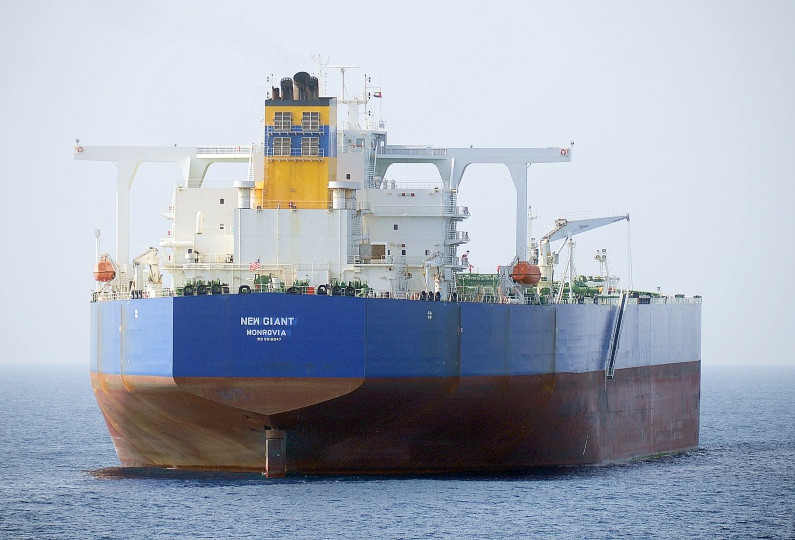
Core Insights - The VLCC market has reached unprecedented levels in February, with record daily charter rates being reported [1][8]. Group 1: Market Performance - New Shipping, owned by Greek shipowner Adam Polemis, achieved a record daily charter rate of $269,000 for the VLCC "New Giant" (built in 2016) [1][8]. - This rate surpassed the previous record set by TMS Tankers' "Solana" (built in 2010), which was chartered at $262,000 for a route from the Middle East to China [3][10]. - The VLCC "Advantage Vital" (built in 2023) was recently chartered by Shell for $180,000, indicating strong demand in the market [3][10]. Group 2: Market Dynamics - The VLCC market's strong momentum is spreading to smaller vessel types, with Suezmax tankers now valued at $95,900 per day, an 8% increase in 24 hours [6][13]. - The daily charter rate for modern VLCCs on the Middle East to China route has risen to $213,200, with a daily increase of 5% and a weekly increase nearing 50% [7][14]. - Key drivers of the current VLCC market boom include the aggressive fleet expansion by Longzhong Shipping, increasing demand for limited capacity, and ongoing tensions in the Middle East [7][14]. Group 3: Export Trends - Middle Eastern oil-producing countries are accelerating crude oil exports, with Iraq, Kuwait, and the UAE expected to increase exports by approximately 600,000 barrels per day, while Saudi Arabia will contribute an additional 400,000 barrels per day [7][14]. - As of February, Saudi Arabia's crude oil exports reached 7.3 million barrels per day, the highest level since April 2023 [7][14]. Group 4: Industry Commentary - CMB.TECH's CEO Alexander Saverys noted that the oil tanker market is rising against the odds due to reshaped trade patterns, limited new ship deliveries, and the active role of certain shipowners/operators [15].

航运行业重大事项点评:地缘风险溢价+长锦大举扫货+制裁强化,VLCC市场正面临近乎空前的高涨情绪
Huachuang Securities· 2026-02-23 14:42
Investment Rating - The report maintains a "Recommendation" rating for the shipping industry, indicating an expectation of growth exceeding the benchmark index by more than 5% in the next 3-6 months [6]. Core Insights - The VLCC market is experiencing unprecedented high sentiment driven by geopolitical risk premiums, aggressive capacity expansion by Changjin Shipping, and strengthened sanctions [1][9]. - The geopolitical situation between the US and Iran continues to elevate risk premiums, with Brent crude oil futures reaching $71.76 per barrel, a week-on-week increase of 5.9% [2][19]. - Changjin Shipping has rapidly expanded its fleet, becoming the largest VLCC operator globally, controlling 118 VLCCs, which corresponds to a market share of 16% [2][20][21]. - Strengthened sanctions are increasing the demand for compliant trade, with Venezuela's oil shifting towards compliant markets and India committing to stop purchasing Russian oil, which could add 1% to global tanker trade [3][39]. - The EU's proposal for a comprehensive ban on maritime services for Russian oil could necessitate the transfer of more compliant vessels into shadow fleets, impacting supply dynamics [4][43]. Summary by Sections Market Review - VLCC rates have surged to their highest levels in nearly a decade, with the Clarksons VLCC-TCE reaching $142,000 per day, a week-on-week increase of 24.5% [9][12]. - The stock performance of tanker companies has been strong, with notable increases during the holiday period [16]. Geopolitical Factors - The ongoing US-Iran negotiations have not yielded clear outcomes, maintaining military tensions and affecting oil transport routes, particularly in the Strait of Hormuz [2][19]. - Changjin Shipping's aggressive market entry reflects confidence in the tanker market's high profitability, with a significant increase in the concentration of top VLCC owners [21]. Sanctions and Compliance - The report highlights a shift in the oil market towards compliance due to increased enforcement of sanctions, with Venezuela's oil exports moving towards compliant channels [3][38]. - The EU's proposed ban on maritime services for Russian oil could lead to a significant increase in the demand for compliant vessels [4][43]. Investment Recommendations - The report emphasizes a bullish outlook for the oil transportation market, with expectations of continued demand growth and limited supply, recommending specific companies within the sector [5][46].
油轮跟踪-美伊局势僵持-行业供给脆弱
2026-02-13 02:17
Summary of Conference Call on Shipping Industry Industry Overview - The shipping industry, particularly the Very Large Crude Carrier (VLCC) segment, is experiencing high market conditions with optimistic expectations for 2026. The spot market rate for VLOC is approximately $120,000 per day as of February 11, 2026, and one-year charter rates have surged from $60,000-$70,000 to $98,000-$99,000, indicating strong confidence among shipowners in the market outlook for 2026 [2][3][4]. Key Points and Arguments - **Geopolitical Risks**: The ongoing tensions between the U.S. and Iran could lead to short-term spikes in shipping rates, potentially exceeding $150,000-$200,000 if the Strait of Hormuz is disrupted. Even if negotiations occur, prolonged stalemate or sanctions will likely push rates higher [2][5]. - **Impact of the Russia-Ukraine Conflict**: The conflict has intensified EU sanctions against Russian maritime services, complicating operations for shadow fleets and reducing the capacity of compliant fleets. This situation is expected to benefit the Aframax and Suezmax tanker markets, leading to further increases in rates [2][6]. - **India's Shift in Oil Imports**: Under U.S. pressure, India has committed to reducing imports of Russian oil, increasing its demand for compliant maritime transport from the U.S. and Venezuela. In December, India's daily oil imports from Russia dropped to approximately 900,000 barrels, a decrease of 600,000-800,000 barrels compared to October [2][7]. - **Challenges for Shadow Fleets**: Shadow fleets are facing increased operational difficulties and shrinking survival space due to high maintenance costs and risks of vessel seizure. Currently, sanctioned vessels account for 16.3% of the global fleet, responsible for 23% of global oil exports [2][8][9]. - **Internationalization of the Renminbi**: The internationalization of the Renminbi is accelerating, with Saudi Aramco settling 45% of its crude oil exports to China in Renminbi. The trend towards using local currencies in trade could challenge the dominance of the U.S. dollar [2][11]. Additional Insights - **Market Dynamics**: The shipping market is expected to experience significant volatility due to increased industry concentration, with companies like Synacor expanding their control over VLCC capacity. This could alter pricing dynamics and lead to more pronounced fluctuations in rates [2][15]. - **Future Outlook**: The shipping industry may face a seasonal downturn in the first half of 2026, but there is potential for rapid recovery in rates thereafter. The overall shipping cycle remains uncertain but with significant upside potential [2][17]. - **Profitability Expectations**: Major shipping companies like China Merchants Energy and COSCO Shipping Energy are projected to achieve profits of approximately 8.5 billion to 9 billion RMB and 8 billion to 8.5 billion RMB, respectively, based on current charter rates [2][18]. - **Risks**: Short-term risks include potential agreements between the U.S. and Iran that could lead to a rapid withdrawal from the Middle East, negatively impacting market sentiment. Long-term risks hinge on the resolution of the Russia-Ukraine conflict and the potential lifting of sanctions [2][21]. This summary encapsulates the key insights and dynamics affecting the shipping industry as discussed in the conference call, highlighting both opportunities and risks for investors.
SFL .(SFL) - 2025 Q4 - Earnings Call Transcript
2026-02-11 16:02
Financial Data and Key Metrics Changes - For the fourth quarter, the company reported revenues of $176 million and an EBITDA-equivalent cash flow of $109 million, with a total EBITDA of $450 million over the past 12 months, indicating strong operational stability [3][14] - The net result for the quarter was a loss of approximately $4.7 million or $0.04 per share, impacted by non-recurring and non-cash items [16] Business Line Data and Key Metrics Changes - Charter revenue from the fleet was approximately $176 million, with the container fleet contributing around $81 million, the car carrier fleet generating approximately $26 million, and the tanker fleet generating about $42 million [14][15] - The overall utilization of the shipping fleet in Q4 was about 98.6%, with adjusted utilization at 99.8% [12] Market Data and Key Metrics Changes - The company noted a significant strengthening in the tanker market, with the Suezmax segment expected to benefit from high charter rates due to correlations with the VLCC market [8][25] - The market for secondhand vessels is currently strong, with broker reports indicating a modern Suezmax tanker could command rates in the high $40,000s to over $60,000 per day [36] Company Strategy and Development Direction - The company aims to build a diversified, high-quality fleet and has secured long-term agreements with strong counterparties, enhancing its charter backlog to approximately $3.7 billion [3][9] - The company is focused on investing in efficiency upgrades and exploring new long-term charter opportunities, particularly in the tanker market [4][7] Management's Comments on Operating Environment and Future Outlook - Management expressed optimism about securing new employment for the Hercules rig, citing recent industry consolidations and increasing demand for premium rigs [9][42] - The company remains disciplined in its approach to capital deployment, focusing on sustainable cash flows and long-term contracts [30][31] Other Important Information - The company declared its 88th consecutive dividend of $0.20 per share, representing a dividend yield of around 9% [9][17] - The company has a solid liquidity position with cash and cash equivalents totaling approximately $151 million and an additional $46 million available on credit facilities [16][17] Q&A Session Questions and Answers Question: How is the company thinking about the Suezmax vessels given the strong crude tanker spot market? - Management finds the Suezmax market interesting and is looking for long-term charters while also benefiting from the current spot market [20][25] Question: What is the outlook for the dividend over the next 12 months? - Management indicated that the board does not guide on dividends but emphasized the importance of sustainable cash flows and disciplined capital deployment [28][31] Question: What was the rate on the previous contract for the terminated charters? - The previous charter rates for the sold vessels were around $27,000 per day, and the company sold them for $57 million each [35][36] Question: What is the status of the Hercules rig? - The Hercules rig has been idle since November 2024, but management sees signs of improving market dynamics and potential employment opportunities [42] Question: What is the size of the new rig financing facility? - The new financing facility for the Hercules rig is expected to be in the amount of $100 million [48]

波交所:VLCC市场在上周于所有波罗的海公布航线上保持稳定
Di Yi Cai Jing· 2025-12-15 12:00
Group 1: Market Overview - The Middle East MR freight rates experienced a mild increase over the weekend, with the TC17 35kt Middle East/East Africa route index rising to WS230, an increase of 10 points [9] - In the UK-Europe market, MR freight rates saw a significant decline, with the TC2 37kt ARA/US Atlantic Coast route index dropping by 12.5 points to WS136, and the Baltic round trip TCE decreasing by 15% to slightly above $14,000 per day [9] - The US Gulf MR freight rates continued to decline, with the TC14 38kt US Gulf/UK-Europe route falling from WS179 to WS166, and the Baltic round trip TCE dropping from $24,100 to $21,600 per day [9] Group 2: Specific Vessel Types - The Capesize market showed a notable decline, with the Baltic Capesize route (5TC) dropping from $41,571 to $30,731, indicating increasing freight rate pressure [1] - The Panamax market started weakly, particularly in the Atlantic, with the Baltic Panamax route (5TC) averaging $15,194, reflecting limited activity [2] - The Supramax market faced challenges, with the Atlantic and Pacific markets both under pressure, and notable transactions included a 38,000 dwt vessel from Rio de Janeiro to the East Coast of Mexico at $21,500 [4] Group 3: Oil Tanker Market - The LR2 market in the Middle East remained stable, with the TC1 75kt Middle East/Japan route index holding at WS155, corresponding to a TCE of approximately $37,000-$39,000 per day [5][6] - The VLCC market remained stable across all Baltic routes, with the Middle East Gulf to China route (TD3C, 270,000 tons) rate increasing to WS125.78, corresponding to a TCE of $122,676 per day [12] - The Suezmax market showed overall stability, with the Nigeria to UK Continent route (TD20, 130,000 tons) maintaining a rate of WS126, corresponding to a TCE of approximately $61,400 per day [13] Group 4: LNG and LPG Markets - The LNG market softened, with major route rates adjusting after a strong two-month increase, particularly on the BLNG2 US Gulf-Europe route, which saw a significant drop of $16,800 to $115,000 per day [17] - The LPG market exhibited a divergence, with the Eastern market under pressure and the Western market showing increased activity, leading to higher rates on routes such as the Houston-Far East route, which rose by $7.83 to $129.50 [18]
聚焦:VLCC运价维持年内高位,看好2026年景气持续向好:交通运输行业周报(20251124-20251130)-20251201
Huachuang Securities· 2025-12-01 07:12
Investment Rating - The report maintains a positive investment rating for the oil tanker sector, indicating a favorable outlook for 2026 [1][2]. Core Insights - VLCC freight rates have continued to rise, reaching a peak of $126,000 per day on November 21, 2025, and slightly decreasing to $122,000 per day by November 28, 2025 [1][11]. - The report anticipates sustained demand for oil transportation due to global crude oil production increases and ongoing sanctions affecting non-compliant oil trade [2][22]. - The supply-side dynamics remain stable, with stricter environmental policies countering the limited new ship deliveries [25][26]. Industry Data Tracking - In the aviation sector, domestic passenger volume increased by 5.7% year-on-year, with an average ticket price rise of 3.0% [8][27]. - The Baltic Dry Index (BDI) rose by 12.5% week-on-week, indicating a positive trend in shipping rates [43][47]. - The report notes a slight decline in the transportation sector, with a 0.5% drop in the transportation index, underperforming against the CSI 300 index by 2.1 percentage points [62][63]. Investment Recommendations - The report suggests focusing on companies with strong earnings elasticity and dividend value, particularly in the oil and air transport sectors [3][4]. - Specific recommendations include COSCO Shipping Energy, China Merchants Energy Shipping, and China Merchants Jinling Shipyard, highlighting their potential for growth in the current market environment [26][22].
NAT选择向前看:四季度TCE飙升|航运界
Xin Lang Cai Jing· 2025-12-01 00:08
Core Viewpoint - Nordic American Tankers (NAT) reported a significant increase in Suezmax tanker day rates, nearing $100,000, following seasonal weakness, indicating a positive outlook for cash accumulation in Q4 2025 [1][3] Financial Performance - For Q3 2025, NAT achieved revenue of $45.687 million, a 13.8% increase quarter-over-quarter but a 12.2% decrease year-over-year [4] - EBITDA for Q3 2025 was $21.381 million, down 6.9% from Q2 2025 and down 29.8% from Q3 2024 [4] - Operating profit for Q3 2025 was $6.784 million, reflecting a 10.2% decrease quarter-over-quarter and a 58.2% decrease year-over-year [4] - The net loss for Q3 2025 was $2.781 million, a significant increase in losses compared to the previous quarter [4] Year-to-Date Performance - For the first nine months of 2025, NAT reported total revenue of $123.785 million, a decrease of 30.7% compared to the same period in 2024 [4] - Year-to-date operating profit was $25.184 million, down 63.3% year-over-year [4] - The net profit for the first nine months of 2025 was $0.611 million, a drastic decline of 98.7% compared to the same period in 2024 [4] Fleet and Future Plans - NAT has signed a Letter of Intent (LOI) with a South Korean shipyard to construct two Suezmax tankers at a price of $86 million each, with delivery expected in the second half of 2028 [5] - The company operates a fleet of 20 Suezmax tankers, with an average TCE of $27,490 per day in Q3 2025 [5] Market Outlook - The global demand for oil remains strong, particularly in emerging economies, and OPEC's continued production increases are favorable for the tanker market [7] - As of June 30, 2025, there are 600 Suezmax tankers globally, with 120 expected to be delivered over the next four years, which is 20% of the current fleet [7] - NAT, being the only publicly listed company focused solely on Suezmax tankers, anticipates a strong tanker market in the coming years [7]