
罐头食品

Search documents
开源证券:给予欢乐家增持评级
Zheng Quan Zhi Xing· 2025-04-28 06:31
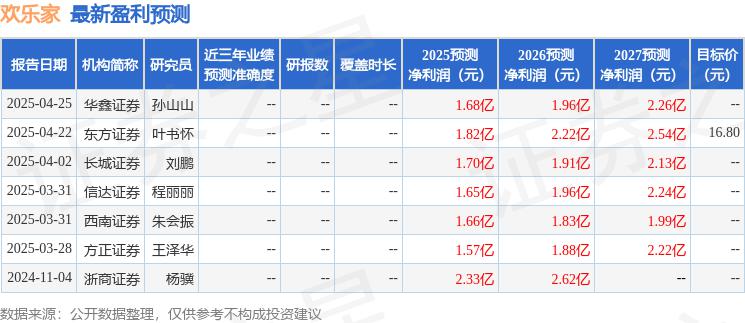
Core Viewpoint - The company is facing pressure on its main business sales, but the development of new retail channels shows promising results, leading to a maintained "buy" rating [2]. Financial Performance - In Q1 2025, the company's revenue was 450 million yuan, a year-on-year decrease of 18.5%, and the net profit attributable to shareholders was 30 million yuan, down 58.3% year-on-year [2]. - The profit forecasts for 2025-2027 have been adjusted, with expected net profits of 160 million yuan (-50 million), 180 million yuan (-30 million), and 200 million yuan, representing year-on-year growth of 4.9%, 14.5%, and 10.0% respectively [2]. Product Performance - Sales of coconut juice and canned fruit are under pressure, with coconut juice revenue at 230 million yuan (down 14.6% year-on-year) and canned fruit revenue at 160 million yuan (down 25.5% year-on-year) [3]. - The company plans to focus on upgrading the formula and packaging of canned fruit and expanding consumption scenarios, while also pushing coconut juice into snack wholesale channels [3]. Channel Analysis - Traditional channels are experiencing significant decline due to the rapid development of new retail channels, which are capturing demand from offline traditional supermarkets [4]. - The company is actively optimizing traditional channel outlets and has established partnerships with leading snack specialty chains, achieving revenue of 46.446 million yuan in Q1 2025 from snack wholesale channels, an increase of 6.149 million yuan from Q4 2024 [4]. Cost and Profitability - The gross margin decreased by 7.32 percentage points to 31.38% in Q1 2025, attributed to rising raw material prices and lower margins from snack specialty channels [4]. - The net profit margin fell by 7.27 percentage points to 7.63% due to increased expense ratios across various categories [4].

一瓶“小罐头”里的消费“大学问”
Xiao Fei Ri Bao Wang· 2025-04-28 03:02
Core Viewpoint - The newly released national standard for canned food (GB 7098—2025) aims to enhance food safety and industry development by updating definitions, sensory requirements, histamine limits, and inspection methods, with a transition period of one year before its official implementation in March 2026 [1][4]. Group 1: Impact on Consumers - The new standard mandates that product labels include warnings such as "Do not eat bulging cans," which reflects a commitment to consumer safety [2][3]. - The definition of "bulging cans" is clarified, indicating that it can result from chemical reactions, microbial activity, or physical causes, posing potential food safety risks [3]. Group 2: Changes in Industry Standards - The histamine limit for canned fish has been revised from 1000 mg/kg to 200 mg/kg, specifically targeting high-histamine fish species [4][5]. - The revision aligns with international standards set by FAO/WHO, ensuring that the new limits are scientifically justified and operationally feasible for the industry [5]. - The standard revision is expected to enhance the safety of canned food products, meeting consumer demand for higher quality [5]. Group 3: Industry Context - China remains the world's largest producer and exporter of canned goods, accounting for approximately one-quarter of global production [5]. - The updated standards are seen as a step towards improving food safety and public health, reflecting the industry's ongoing development [5].
欢乐家(300997):零食渠道增量 利润率暂时承压
Xin Lang Cai Jing· 2025-04-22 10:42
Core Insights - The company reported a revenue of 1.855 billion yuan for 2024, a decrease of 3.5% year-on-year, and a net profit attributable to shareholders of 147 million yuan, down 47.06% year-on-year [1] - In Q4 2024, the company achieved a revenue of 515 million yuan, a decline of 16.5% year-on-year, and a net profit of 64 million yuan, down 38.0% year-on-year [1] Revenue Breakdown - Coconut juice beverage revenue was 964 million yuan, a decrease of 3.7% year-on-year, indicating weak consumer demand [1] - Canned fruit revenue was 627 million yuan, down 11.5% year-on-year, with yellow peach and orange canned fruit revenues at 280 million yuan and 179 million yuan, respectively, both showing single-digit declines [1] - Snack channel contributed 115 million yuan, accounting for 18.3% of total revenue [1] - Revenue by region showed a decline in Central China (-11%) and Southwest (-5%), while East China experienced a growth of 20% [1] Profitability and Cost Structure - The company's gross margin for 2024 was 34.00%, down 4.75 percentage points year-on-year, primarily due to the increased proportion of low-margin snack channels and rising coconut raw material costs [2] - The sales expense ratio was 15.8%, up 3.4 percentage points year-on-year, attributed to increased promotional efforts and expansion of personnel in emerging channels [2] - The net profit margin for 2024 was 7.9%, down 6.5 percentage points year-on-year [2] Strategic Initiatives - The company has adopted a "focus on core + innovation breakthrough" strategy, planning to enhance snack channel coverage and promote coconut juice and canned products in leading channels [2] - Short-term plans include developing portable small-pack canned products and coconut water derivatives, while long-term plans involve a coconut processing project in Vietnam to improve raw material self-sufficiency [2] Earnings Forecast - The company has revised down its revenue and gross margin forecasts for 2025, while increasing expense ratio estimates [3] - Adjusted earnings per share for 2025-2027 are projected at 0.42, 0.51, and 0.58 yuan, respectively, with a target price of 16.80 yuan based on a 40 times price-to-earnings ratio for 2025 [3]