
Integrated Circuits

Search documents
臻镭科技股价涨5%,金元顺安基金旗下1只基金重仓,持有2.13万股浮盈赚取13.34万元
Xin Lang Cai Jing· 2026-01-06 03:36
Group 1 - The core viewpoint of the news is that Zhenlei Technology's stock has seen a 5% increase, reaching 131.64 yuan per share, with a trading volume of 2.158 billion yuan and a turnover rate of 7.95%, resulting in a total market capitalization of 28.178 billion yuan [1] - Zhenlei Technology, established on September 11, 2015, and listed on January 27, 2022, is based in Hangzhou, Zhejiang Province, and specializes in the research, production, and sales of integrated circuit chips and microsystems [1] - The company's main business revenue composition includes: power management chips (50.10%), RF transceiver chips and high-speed high-precision ADC/DAC chips (39.47%), technical services (5.97%), microsystems and modules (2.49%), terminal RF front-end chips (1.93%), and others (0.04%) [1] Group 2 - From the perspective of fund holdings, Jin Yuan Shun An Fund has a significant position in Zhenlei Technology, with its Jin Yuan Shun An Value Growth Mixed Fund (620004) holding 21,300 shares, accounting for 1.98% of the fund's net value, making it the seventh-largest holding [2] - The Jin Yuan Shun An Value Growth Mixed Fund was established on September 11, 2009, with a latest scale of 70.0466 million yuan, yielding 3.21% this year, ranking 1211 out of 8816 in its category, and achieving a 28.06% return over the past year, ranking 4187 out of 8081 [2] Group 3 - The fund managers of Jin Yuan Shun An Value Growth Mixed Fund are Kong Xiangpeng and Han Chenyang, with Kong having a tenure of 8 years and 195 days, managing a total fund size of 143 million yuan, and his best and worst fund returns during his tenure being -1.71% and -11.58%, respectively [3] - Han Chenyang has a tenure of 2 years and 313 days, managing a total fund size of 873 million yuan, with his best and worst fund returns during his tenure being 8.99% and -9.7%, respectively [3]

复旦微电股价跌5.03%,易方达基金旗下1只基金重仓,持有93.1万股浮亏损失388.23万元
Xin Lang Cai Jing· 2026-01-06 02:25
Group 1 - Fudan Microelectronics experienced a decline of 5.03% on January 6, with a stock price of 78.81 yuan per share, a trading volume of 841 million yuan, a turnover rate of 1.96%, and a total market capitalization of 64.737 billion yuan [1] - The company, established on July 10, 1998, and listed on August 4, 2021, is primarily engaged in integrated circuit (IC) related businesses, operating through two segments: design, development, and sales of integrated circuits, and providing IC testing services [1] - The revenue composition of Fudan Microelectronics includes: FPGA and other products (37.04%), non-volatile memory (23.92%), security and identification chips (21.35%), smart meter chips (13.46%), IC testing services (4.15%), and rental income (0.09%) [1] Group 2 - E Fund's AI ETF (588730) holds a significant position in Fudan Microelectronics, having increased its holdings by 352,900 shares in the third quarter, totaling 931,000 shares, which represents 3.54% of the fund's net value, ranking as the ninth largest holding [2] - The E Fund AI ETF was established on January 16, 2025, with a current scale of 1.753 billion yuan and has achieved a year-to-date return of 4.74%, ranking 247 out of 5488 in its category, and a cumulative return of 51.31% since inception [2]

灿瑞科技12月31日获融资买入190.27万元,融资余额6408.78万元
Xin Lang Cai Jing· 2026-01-05 01:47
12月31日,灿瑞科技涨0.43%,成交额2520.64万元。两融数据显示,当日灿瑞科技获融资买入额190.27 万元,融资偿还151.32万元,融资净买入38.95万元。截至12月31日,灿瑞科技融资融券余额合计 6408.78万元。 融资方面,灿瑞科技当日融资买入190.27万元。当前融资余额6408.78万元,占流通市值的4.37%,融资 余额低于近一年40%分位水平,处于较低位。 融券方面,灿瑞科技12月31日融券偿还0.00股,融券卖出0.00股,按当日收盘价计算,卖出金额0.00 元;融券余量0.00股,融券余额0.00元,超过近一年90%分位水平,处于高位。 截至9月30日,灿瑞科技股东户数8997.00,较上期减少0.02%;人均流通股4812股,较上期增加0.02%。 2025年1月-9月,灿瑞科技实现营业收入4.74亿元,同比增长13.75%;归母净利润-3747.63万元,同比减 少62.70%。 分红方面,灿瑞科技A股上市后累计派现4579.03万元。 责任编辑:小浪快报 资料显示,上海灿瑞科技股份有限公司位于上海市静安区汶水路299弄2幢7号,成立日期2005年9月13 日,上市日期 ...
深圳“十五五”规划建议:加强高端仪器等领域关键核心技术攻关
仪器信息网· 2026-01-04 09:27
Core Viewpoint - The article emphasizes the importance of promoting original innovation and tackling key core technologies, particularly in fields such as integrated circuits, industrial mother machines, high-end instruments, basic software, advanced materials, and biomanufacturing, to create disruptive and asymmetric technologies with first-mover advantages [1][2][6]. Group 1: Innovation and Technology Development - The Shenzhen Municipal Government's proposal for the 15th Five-Year Plan highlights the need for organized innovation, focusing on the world's technological frontiers and major national needs, while implementing various management mechanisms to enhance innovation [2][3]. - There is a strong emphasis on strengthening the role of enterprises in innovation, directing resources towards them, and fostering collaboration among leading enterprises, universities, and research institutions to create a robust innovation ecosystem [3][4]. Group 2: Research and Development Investment - The article discusses the necessity of increasing R&D investment from multiple sources, including government, enterprises, and society, to maintain leading levels in both scale and efficiency of output [4][10]. - It suggests reforms in government funding policies and encourages enterprises to increase their R&D spending through supportive measures like tax deductions [4][10]. Group 3: Educational and Talent Development - The plan calls for a comprehensive approach to integrate education, technology, and talent development, aiming to create a globally influential education and scientific center [7][9]. - It emphasizes the importance of cultivating high-level talent and fostering a collaborative environment between industry and academia to drive innovation [7][9]. Group 4: Innovation Ecosystem - The article advocates for building a first-class innovation ecosystem by enhancing financial services for startups and ensuring a supportive environment for new technologies and products [10]. - It highlights the need for improved intellectual property protection and the establishment of platforms for technology transfer and financing [10].


【投融资视角】启示2025:中国集成电路行业投融资及兼并重组分析(附投融资汇总、兼并重组等)
Qian Zhan Wang· 2026-01-04 03:19
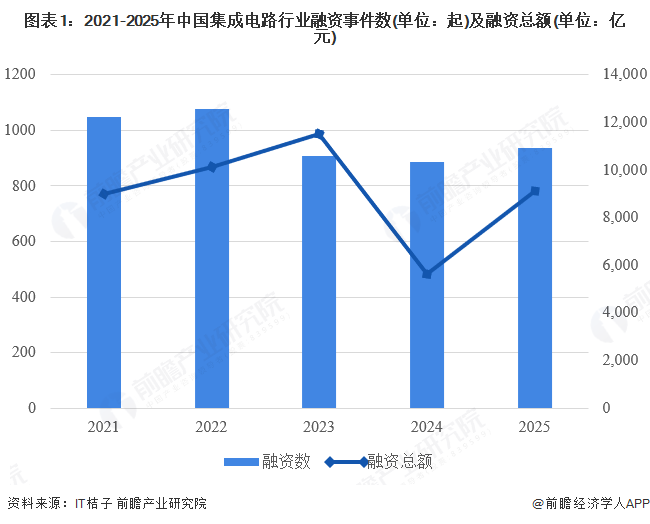
Industry Overview - The Chinese integrated circuit industry has seen a significant number of financing events, with over 1,000 events in both 2021 and 2022, indicating a peak period for investment [1] - In 2023, the number of financing events decreased, but the total financing amount increased to 1.15 trillion yuan, while in 2024, the number of events slightly declined, and the total financing amount halved to approximately 562.39 billion yuan [1] - By 2025, the number of financing events is expected to recover slightly to 938, with a total financing amount of approximately 911.05 billion yuan [1] Financing Events Summary - Major financing events in the Chinese integrated circuit industry for 2025 include various rounds of investment across different companies, with amounts often undisclosed [2][5][7] - Notable investments include 100 million yuan in Yanan Weiyan Technology and 1.43 billion yuan in Hongxing Zhixin, showcasing the active investment landscape [5][7] Financing Rounds Analysis - The most common financing round in the integrated circuit industry over the past five years has been the B round, with early-stage rounds like angel, Pre-A, and A rounds significantly outpacing later rounds [8] - Strategic investments have also been prevalent, indicating a strong interest in building long-term industry ecosystems [8] Regional Financing Distribution - Financing activities are heavily concentrated in eastern coastal provinces such as Guangdong, Jiangsu, and Zhejiang, with Jiangsu showing particularly high financing scales [9] - In contrast, provinces like Shandong and Henan have seen a significant decrease in financing events, while regions like Jilin and Tibet have almost no financing activity [9] Sector-Specific Financing Insights - The integrated circuit industry can be segmented into memory, logic chips, microprocessors, and analog chips, with memory leading with 374 financing events, significantly higher than logic chips (113 events), microprocessors (75 events), and analog chips (18 events) [13] - This reflects the strong demand for domestic alternatives in the memory sector and varying levels of investor interest across different segments [13] Representative Companies' Investment Activities - Key companies in the integrated circuit sector, such as Xinyuan Co., have made substantial investments in various startups to enhance their technological capabilities and strengthen their competitive edge [15][16][17][18] - For instance, Xinyuan Co. has invested 500 million yuan in Xinyuan Technology (Shanghai) and 100 million yuan in Xinyuan Microelectronics (Nanjing) [16] Mergers and Acquisitions - The competitive landscape among Chinese integrated circuit companies is characterized by numerous mergers and acquisitions, primarily focusing on horizontal integration to expand market share and achieve technological synergies [19][20] - Recent notable acquisitions include Huadian Co. acquiring 15% of Shengwei Ce Electronics and Xinyuan Co. acquiring 100% of Xinyuan Technology [20] Summary of Investment and M&A Trends - The investment activities in the Chinese integrated circuit industry are showing signs of recovery, with a notable increase in merger and acquisition events, indicating a dynamic market environment [22]



2025!杭州集创中心的奋进之年!
Xin Lang Cai Jing· 2025-12-31 13:46
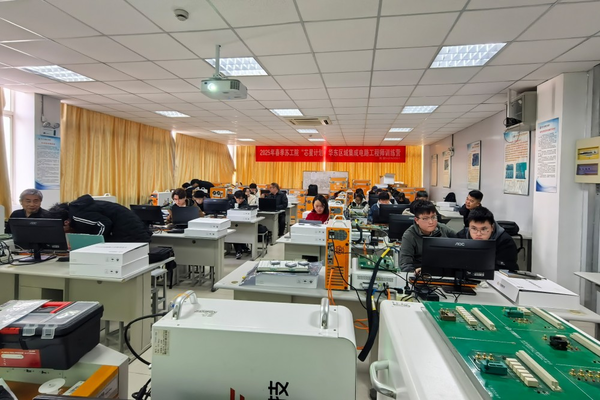
(来源:六安新闻网) 转自:六安新闻网 当时光的指针转向2025年的尾声,我们站在杭州集成电路创新中心的回廊上,回望这不平凡的一年。在 杭州市余杭区未来科技城管委会的领导下,集创中心以打造集成电路产业新高地为己任,交出了一份沉 甸甸的年度答卷。 一、人才培养:夯实基础,输送精英 二、交流合作:拓宽视野,促进融合 集创中心积极搭建开放合作的桥梁,吸引了全国各省市的行业同仁前来交流探讨。通过举办"集成电路 职业交流会"、"国际集成电路教育与人才发展(杭州)交流会"等近10场行业交流会,我们有效促进了产业 链上下游企业的紧密合作和人才资源的优化配置。同时,我们的海内外交流在2025年迈上了新台阶。新 加坡社科大学、瑞典代表团、发展中国家代表团等多国学者和行业专家相继到访集创中心。这些深入的 交流与对话,为各国在科技创新领域的互学互鉴与务实合作注入了新动力,也提升了集创中心的国际影 响力。 三、技术支持:构筑产业创新坚实基座 2025年,集创中心持续深化"技术支持平台"核心功能建设,致力于为余杭区集成电路产业提供坚实可靠 的技术后盾。本年度,完成了平台关键能力的战略升级,构建起一个专业化公共测试服务平台。为企业 提供 ...
“十四五”以来,我市产业强市建设不断向纵深推进——
Nan Jing Ri Bao· 2025-12-31 02:40
Group 1 - Nanjing's GDP has surpassed 1.9 trillion yuan, with per capita GDP ranking among the top cities in the country, indicating a strong economic foundation for the city's development [1] - The software and information service industry in Nanjing is expected to exceed 1 trillion yuan, marking it as the first trillion-level industry in the city [2][3] - Nanjing has established a robust industrial system with a focus on "4266" to enhance industrial capacity and promote high-quality development [3][11] Group 2 - The city has seen significant advancements in industrial clusters, with four clusters recognized as national advanced manufacturing clusters, showcasing a diverse and complementary industrial ecosystem [3][11] - Nanjing's industrial AI solutions have improved operational efficiency in power plants, transitioning from scheduled maintenance to demand-based maintenance, significantly reducing costs [2][6] - The establishment of the Jiangsu Intelligent Robot Innovation Center aims to enhance shared technology and accelerate data accumulation for product testing and commercialization [12] Group 3 - Nanjing is actively investing in emerging sectors such as low-altitude economy, artificial intelligence, and commercial aerospace, positioning itself as a leader in these fields [4][9] - The city has implemented policies to support the development of advanced manufacturing and digital transformation, including a three-year action plan for "smart manufacturing" [7][11] - Nanjing's focus on innovation has led to the establishment of several high-tech enterprises and research institutions, contributing to the city's competitive edge in technology [8][10] Group 4 - The city aims to strengthen its industrial base by fostering advanced manufacturing clusters and enhancing the quality of modern service industries [13][14] - Nanjing plans to create a modern industrial system supported by advanced manufacturing and modern services, with a goal of developing leading enterprises in artificial intelligence and other high-tech sectors [13][14] - The city is committed to implementing the "Artificial Intelligence+" initiative to promote the integration of AI across various industries, enhancing overall productivity and service quality [13][14]




科技成果转化实现量质齐升
Ren Min Ri Bao· 2025-12-29 05:22
Group 1 - The report highlights the significant progress in the transformation of scientific and technological achievements in China, with the total transaction amount of technology contracts increasing from 2.83 trillion yuan to 6.84 trillion yuan from 2020 to 2024, representing a growth of 141.7% [1] - The establishment of a basic framework for the transformation of scientific and technological achievements is noted, with continuous improvement in relevant laws and regulations, and a policy system that promotes the transformation of scientific and technological achievements [1] - The report indicates that the scale of strategic emerging industries is continuously expanding, with the added value of high-tech manufacturing industries expected to grow by 42% in 2024 compared to 2020, driven by new technologies in traditional industries [1] Group 2 - The number of technology transfer institutions established by universities and research institutes reached 2,364 by the end of 2024, a 21% increase from 2020, addressing challenges in the transformation of scientific and technological achievements [2] - The total contract amount for the transformation of scientific and technological achievements through various methods reached 226.91 billion yuan in 2024, an increase of 81% compared to 2020, reflecting the effectiveness of reforms in empowering researchers [2] - The report emphasizes the need for further improvements in the service capabilities for the transformation of scientific and technological achievements and the construction of a financial service system that covers the entire transformation chain [3]
深圳“十五五”规划建议:大力推进原始创新和关键核心技术攻关
Xin Lang Cai Jing· 2025-12-29 01:08
中共深圳市委关于制定深圳市国民经济和社会发展第十五个五年规划的建议发布,其中提到,大力推进 原始创新和关键核心技术攻关。坚持面向世界科技前沿、面向经济主战场、面向国家重大需求、面向人 民生命健康,强化有组织的创新,深入实施项目经理人制、揭榜挂帅制、业主制、包干制等机制,加强 集成电路、工业母机、高端仪器、基础软件、先进材料、生物制造等领域关键核心技术攻关,加快形成 一批具有先发优势的颠覆性、非对称技术。持续强化基础研究和应用基础研究,加强有组织的、对产业 具有牵引作用的基础研究,优化有利于原创性、颠覆性创新的环境,产出更多标志性原创成果。围绕解 决"卡脖子"问题、实现性价比更高的国产替代、推动技术工艺革新、推出更加满足需求的新产品等各类 创新任务各种创新需求,项目化清单化推进各行各业中对新技术、新产品、新业态、新模式的研究和应 用,形成一批具有国际竞争力的标志性产品和技术,进而不断催生新产业新模式新动能。 ...
城记 | 从错位竞争到协同创新突围 上海如何下好产业发展“一盘棋”
Xin Hua Cai Jing· 2025-12-28 17:49
Core Viewpoint - Shanghai is focusing on enhancing its urban capabilities and core competitiveness during the "14th Five-Year Plan" period, with a strategic emphasis on regional coordination and the integration of innovation, industry, finance, and talent [1][7]. Group 1: Regional Industrial Development - Shanghai's 16 districts are leveraging their resource endowments to develop distinctive industrial brands, such as "Mosu Space" in Xuhui and "G60 Sci-Tech Corridor" in Songjiang, establishing a foundation for differentiated competition [1][2]. - New industrial labels have emerged in various districts, indicating a shift towards more focused and upgraded industrial development, such as Pudong's emphasis on being a "leading area" and Yangpu's focus on digital economy [2][3]. Group 2: Innovation and Collaboration - The trend of innovation is increasingly concentrated in urban centers, with characteristics such as lightweight transformation and high-frequency interactions among scientists, entrepreneurs, and investors [3]. - Districts are forming collaborative networks to enhance the flow of resources and innovation, exemplified by initiatives like the G60 Sci-Tech Corridor and cross-regional cooperation [4][5]. Group 3: Talent and Funding Initiatives - Districts are establishing partnerships with universities and research institutions, implementing new mechanisms for market-oriented collaboration, and focusing on the commercialization of scientific achievements [5][6]. - Talent attraction policies and district-level industrial funds are being introduced to support startups and reduce operational costs, with several districts launching funds exceeding 10 billion [6]. Group 4: Strategic Planning for Future Development - The "first-mover" strategy is emphasized for Shanghai's industrial development, with districts acting as distinct "pieces" on a chessboard, focusing on sectors like integrated circuits and artificial intelligence [7]. - The collaborative experiences and differentiated positioning developed during the "14th Five-Year Plan" are expected to provide a foundation for avoiding homogenization in the upcoming "15th Five-Year Plan" [7][8].