Workflow
核电
icon
Search documents
连连突破彰显能源科创硬实力
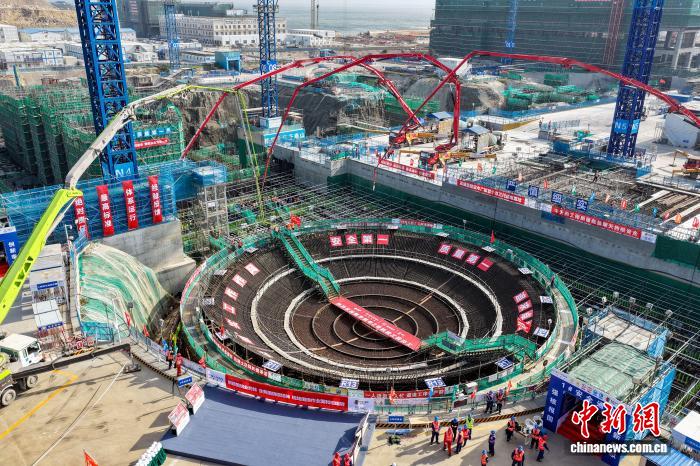
Core Insights - China's energy sector achieved multiple significant breakthroughs on October 16, including the successful cold test of the world's first commercial modular small reactor "Linglong One," the inauguration of the first national deep-water oil and gas emergency rescue base, and the full commissioning of the first million-kilowatt peak-shaving thermal power project in the northwest region [2][3][4]. Group 1: Major Breakthroughs - "Linglong One" is the world's first land-based commercial modular small reactor that has passed international safety reviews, marking a significant advancement in China's nuclear power innovation [3]. - The establishment of the national deep-water oil and gas emergency rescue base in Hainan significantly reduces emergency response times in the southern sea areas of China, enhancing the safety production capabilities in critical sectors [3]. - The commissioning of the first million-kilowatt peak-shaving thermal power project in the northwest region reflects the accelerated pace of project construction in the energy sector [4]. Group 2: Technological Innovations - Recent years have seen the completion of several major projects, including the Baihetan Hydropower Station and the third-generation nuclear power projects "Hualong One" and "Guohe One," showcasing China's hard-core technological innovation [5][6]. - China has achieved international leadership in key areas such as nuclear power, renewable energy, and smart grids, contributing to energy security and transition [6]. Group 3: Industry Development - The "Three-Year Doubling Action Plan" aims to establish 28 million charging facilities nationwide by the end of 2027, providing over 300 million kilowatts of public charging capacity [7]. - The energy sector is increasingly integrating with industries such as transportation, leading to the emergence of new fields and production capabilities [7]. - China's new energy technologies lead globally, with over 40% of global renewable energy patents and significant advancements in solar and wind energy efficiency [7][8]. Group 4: AI Integration - Artificial intelligence is becoming a new engine for energy technology revolution, expanding applications in areas such as renewable energy generation and oil and gas resource discovery [8].
“中国科技创新之路越走越宽广”
Ren Min Ri Bao· 2025-10-22 07:06
Core Insights - China's high-tech manufacturing industry showed a significant increase in value-added growth in Q3, outpacing the overall industrial growth rate, with the information transmission, software, and IT services sector growing by 11.7% year-on-year, an acceleration of 1.7 percentage points from the previous year [1] - The "14th Five-Year Plan" period has seen China achieve major original results in quantum technology, life sciences, material sciences, and space sciences, with notable advancements such as the operational status of the "Tianhe" space station and the successful lunar sample return by "Chang'e 6" [1][2] - China has entered the top ten of the Global Innovation Index for the first time, reflecting a vibrant innovation ecosystem driven by market dominance and open collaboration [3] Industry Developments - The launch of the first domestically produced electromagnetic aircraft carrier and the operational commencement of the world's first fourth-generation nuclear power plant highlight China's advancements in high-tech industries during the "14th Five-Year Plan" [2] - Shenzhen's "Robot Valley" has become a hub for over 74,000 robot-related enterprises, generating more than 200 billion RMB in total output, showcasing the successful integration of technology and industry [4] - The application of digital technologies is transforming social governance and daily life in China, with improved public services and efficient governance through digital means [5] International Collaboration - China has established technological cooperation with over 160 countries and regions, signing 119 intergovernmental science and technology agreements, and actively participating in major international scientific projects [7] - Chinese technological innovations are being shared globally, with initiatives in Latin America, Africa, and Southeast Asia aimed at enhancing local capabilities and addressing regional challenges [7][8] - The country is promoting a global vision for innovation, advocating for open and fair international technology development environments to tackle global challenges [8]
锐财经|连连突破彰显能源科创硬实力
Core Insights - The Chinese energy sector has achieved multiple significant breakthroughs on October 16, including the successful cold test of the world's first land-based commercial modular small reactor "Linglong No. 1," the inauguration of the first national deep-water oil and gas emergency rescue base, and the full production of the first million-kilowatt peak thermal power project in the northwest region [1][2][3]. Group 1: Major Breakthroughs - "Linglong No. 1" is the world's first land-based commercial modular small reactor that has passed the International Atomic Energy Agency's safety review, marking a significant advancement in China's nuclear power innovation [2]. - The successful cold test of "Linglong No. 1" demonstrates China's comprehensive capabilities in new nuclear energy system design, high-end equipment manufacturing, and complex engineering management, solidifying its competitive advantage in the international small reactor market [2]. - The establishment of the national deep-water oil and gas emergency rescue base in Hainan significantly reduces emergency response times in southern China's offshore oil and gas sector, enhancing safety production capabilities [3]. Group 2: Technological Innovations - Recent years have seen the completion of several major projects, including the Baihetan Hydropower Station and the third-generation nuclear power projects "Hualong One" and "Guohe One," showcasing China's hard-core technological innovation [4]. - The National Energy Administration has emphasized that the 14th Five-Year Plan period is crucial for achieving greater breakthroughs in energy technology innovation, with a focus on independent core technology development [5]. Group 3: Industry Development - By the end of 2027, China plans to establish 28 million charging facilities, providing over 300 million kilowatts of public charging capacity, as part of a three-year action plan to enhance electric vehicle charging infrastructure [6]. - The energy sector is increasingly integrating with industries such as transportation, leading to the emergence of new fields and production capabilities [7]. - China leads globally in renewable energy technologies, holding over 40% of global renewable energy patents and achieving significant reductions in the cost of wind and solar power generation [7].
大连优势产业逐绿而行
Jing Ji Ri Bao· 2025-10-22 06:15
Group 1 - The clean energy share in Dalian is increasing due to offshore wind power and nuclear power, with traditional industries like locomotives and shipbuilding transitioning towards greener practices [1][2] - Dalian's power grid has established the world's largest vanadium flow battery energy storage station with a total capacity of 200,000 kW, enhancing grid resilience and ensuring rapid power restoration during extreme weather [1] - By the end of 2024, Dalian's total installed clean energy capacity is expected to exceed 10 million kW, with both installed capacity and power generation accounting for over 60% [1] Group 2 - The first batch of 1000 kW battery-powered locomotives developed by CRRC Dalian has been put into operation, significantly reducing energy costs to only 12.7% of traditional diesel locomotives and cutting carbon emissions by 362 tons per locomotive annually [2] - The first engine produced by Hengli Heavy Industry for the ship power sector represents a major breakthrough in autonomous production, aligning with the green and low-carbon development trends in the shipping industry [2] - Dalian's industrial sector has achieved significant results in green development, with 12 enterprises recognized as national green factories and 85 as municipal green factories [2]
中国风电锚定“50亿千瓦”新目标,央企现代能源ETF(561790)备受关注,石化油服涨停
Xin Lang Cai Jing· 2025-10-22 05:54
Core Insights - The China Securities National New State-Owned Enterprises Modern Energy Index has seen a slight decline of 0.13% as of October 22, 2025, with mixed performance among constituent stocks [3] - The "Wind Energy Beijing Declaration 2.0" was released on October 20, 2025, at the International Wind Energy Conference, setting ambitious targets for wind power installation during the 14th and 15th Five-Year Plans [3] Group 1: Market Performance - The top-performing stocks include PetroChina Oilfield Services, which rose by 10.00%, and China Nuclear Engineering, which increased by 4.10% [3] - The recent trading volume for the National Modern Energy ETF was 161.57 million yuan, with a turnover rate of 3.62% [3] - Over the past year, the National Modern Energy ETF has seen an average daily trading volume of 615.35 million yuan [3] Group 2: Policy Changes - Starting November 1, 2025, the 50% VAT refund policy for onshore wind power will be canceled, while the policy for offshore wind power will continue until the end of 2027 [4] - The cancellation of tax incentives for onshore wind power is expected to impact net profits by approximately 19%, creating short-term pressure on profitability [4] Group 3: Industry Outlook - Despite the short-term challenges, the long-term outlook for the wind power industry remains robust due to China's commitment to its "dual carbon" strategy [4] - The wind power supply chain is anticipated to enter a recovery phase, with a focus on leading turbine manufacturers and offshore expansion [4] - The "Two Seas" strategy for wind power equipment is expected to enhance market share and overall profitability for companies in the sector [4] Group 4: Index Composition - As of September 30, 2025, the top ten weighted stocks in the index include Changjiang Electric Power and China Nuclear Power, accounting for 47.72% of the index [6]
连连突破彰显能源科创硬实力(锐财经)
Core Achievements in China's Energy Sector - On October 16, multiple significant breakthroughs were achieved in China's energy sector, including the successful cold test of the world's first commercial modular small reactor "Linglong No. 1," the inauguration of the first national deep-water oil and gas emergency rescue base, and the full commissioning of the first million-kilowatt peak-shaving thermal power project in Northwest China [2][3][4]. Breakthroughs in Nuclear Energy - "Linglong No. 1" is the first land-based commercial modular reactor to pass the International Atomic Energy Agency's safety review, marking a major advancement in China's nuclear power innovation. The successful cold test demonstrates China's comprehensive capabilities in new nuclear energy system design and high-end equipment manufacturing [3]. Emergency Response Enhancements - The establishment of the national deep-water oil and gas emergency rescue base in Hainan significantly reduces emergency response times in southern China's offshore oil and gas sector. This base, developed over seven years, complements the Tianjin base, enhancing the overall emergency response framework [4]. Accelerated Project Development - Recent months have seen rapid advancements in energy projects, including the world's first "dual-tower one-machine" solar thermal storage power station entering trial operation, and the completion of the first coal-to-natural gas demonstration project in Northeast China [4]. Technological Innovations - China's energy sector has seen the completion of several major projects, such as the Baihetan Hydropower Station and the third-generation nuclear power plants "Hualong One" and "Guohe One." These projects highlight China's technological prowess in energy innovation [5][6]. Strengthening Energy Independence - The country is enhancing its energy independence through major technological projects and energy engineering, achieving breakthroughs in various fields, including renewable energy generation and advanced nuclear power [7]. New Energy Infrastructure Development - By the end of 2027, China plans to establish 28 million charging facilities with over 300 million kilowatts of public charging capacity, as part of a three-year action plan to enhance electric vehicle charging infrastructure [8]. Integration of AI in Energy Sector - Artificial intelligence is increasingly being applied in the energy sector, enhancing capabilities in areas such as renewable energy generation and oil and gas resource discovery, thus driving new vitality in the industry [9].
优势产业逐绿而行
Jing Ji Ri Bao· 2025-10-21 22:00
Group 1 - The core viewpoint highlights the transition of Dalian's traditional industries towards green energy, with significant contributions from offshore wind power and nuclear energy, leading to an increase in the share of clean energy [1][2] - Dalian's power grid has established the world's largest vanadium flow battery energy storage station with a total capacity of 200,000 kW, enhancing grid resilience and ensuring rapid power restoration during extreme weather conditions [1] - By the end of 2024, Dalian's total installed capacity of clean energy is expected to exceed 10 million kW, with both installed capacity and power generation accounting for over 60% [1] Group 2 - The first batch of 1000 kW battery-powered locomotives, developed by CRRC Dalian, has been put into operation, marking a significant breakthrough in replacing old diesel locomotives with clean energy alternatives [2] - The battery-powered locomotives utilize high-capacity lithium iron phosphate batteries, achieving a charging time of 70 minutes and reducing energy costs to only 12.7% of traditional diesel locomotives, with each locomotive capable of reducing carbon emissions by 362 tons annually [2] - Dalian's industrial sector has seen substantial achievements in green development, with 12 enterprises recognized as national green factories and 23 as provincial green factories [2]
如何评估风电与核电增值税政策调整的影响?
2025-10-21 15:00
Summary of Key Points from the Conference Call Industry Overview - The conference call primarily discusses the impact of VAT policy adjustments on the wind power and nuclear power industries [1][2]. Core Insights and Arguments - **Nuclear Power Impact**: - Existing operational nuclear units are unaffected by the VAT policy changes. However, approved but not yet operational units will see a reduction in the VAT refund period from 15 years to 10 years, with a refund rate lowered to 50%. New approved projects will not benefit from any VAT incentives [1][2]. - The financial impact on approved but not operational nuclear units is estimated to be between 350 million to 400 million yuan, primarily affecting years 6 to 15. New approved projects may face around 500 million yuan in financial impact [3]. - **Wind Power Impact**: - For onshore wind power, profitability per GW is expected to decrease by approximately 0.11 yuan, representing a 6% decline. Offshore wind power will see a more significant reduction, with profitability per GW decreasing by 0.41 yuan. The competitiveness of onshore wind power will drop by 0.3 percentage points, while offshore wind power will decrease by 0.6 percentage points [1][3][4]. - **Market Reaction**: - The market's response to these policy changes has been relatively stable, with only a few companies significantly affected by the tax refund changes experiencing noticeable declines. Overall, most wind power operators and major nuclear power operators have shown stable performance due to low valuations of green electricity and nuclear power, with limited fundamental impacts [5]. - **Long-term Outlook for Nuclear Sector**: - The VAT policy changes are not expected to significantly impact the long-term investment value of the nuclear sector. Despite uncertainties from the pressure to decarbonize thermal power and rising coal prices, these factors may limit the decarbonization process of thermal power, which could benefit clean energy sources [6]. Additional Important Insights - **Green Energy Trends**: - The "Document No. 136" protects the tax rates of older projects. High-energy-consuming industries are mandated to use green energy, with sectors like aluminum required to purchase a certain percentage of green energy starting in 2025. Other industries such as steel, cement, data centers, and polysilicon may also be included in this system in the coming years. Significant subsidy funds released in August and September have alleviated some overdue payment issues, indicating that green energy has left-side investment value [7]. - **Investment Potential in Fujian Coastal Operators**: - Fujian coastal operators, such as Funiu and Zhongmin, are expected to benefit from two favorable factors: improved performance since the third quarter and the anticipated distribution of projects as part of the 14th Five-Year Plan, which may address valuation issues due to a lack of growth [8].
中核资本与辽宁金控签署战略合作框架协议
Core Viewpoint - The strategic cooperation framework agreement signed between China National Nuclear Corporation (CNNC) and Liaoning Financial Holdings Group marks a significant step towards enhancing nuclear technology innovation and clean energy projects in Liaoning province, aiming to transform it from a supporting province to a strong nuclear industry province [1] Group 1: Agreements and Collaborations - CNNC signed a strategic cooperation framework agreement with Liaoning Financial Holdings Group [1] - The China National Nuclear Power Research Institute and Liaoning Provincial Department of Science and Technology signed a comprehensive cooperation framework agreement in the field of technological innovation [1] Group 2: Future Goals and Initiatives - Liaoning's provincial secretary expressed the intention to leverage the agreements to accelerate the development of nuclear technology innovation platforms and nuclear power industry clusters [1] - The collaboration aims to support the revitalization of Northeast China and Liaoning province by enhancing the nuclear industry [1]
新能源板块延续涨势,关注储能电池ETF(159566)、新能源ETF易方达(516090)等投资价值
Sou Hu Cai Jing· 2025-10-21 11:14
Group 1 - The E Fund New Energy ETF tracks the China Securities New Energy Index, covering the entire new energy industry chain, including lithium batteries, photovoltaics, wind power, hydropower, and nuclear power [1] - The index has shown a performance increase of 1.5% since its inception, with a rolling price-to-earnings ratio of 54.1 and an estimated return of 86.79% [1] - The E Fund Energy Storage Battery ETF tracks the National Securities New Energy Battery Index, focusing on the energy storage sector, comprising 50 companies involved in battery manufacturing and related technologies [1] - This index has experienced a performance increase of 2.1% since its inception, with a rolling price-to-sales ratio of 32.2 and an estimated return of 84.9% [1] Group 2 - The photovoltaic sector is highlighted as a strong representative of future energy, consisting of 50 representative companies across the upstream, midstream, and downstream of the industry chain [2] - The photovoltaic index has recorded a performance increase of 1.3% since its inception, with a price-to-book ratio of 2.4 and an estimated return of 47.69% [2]