
理财

Search documents
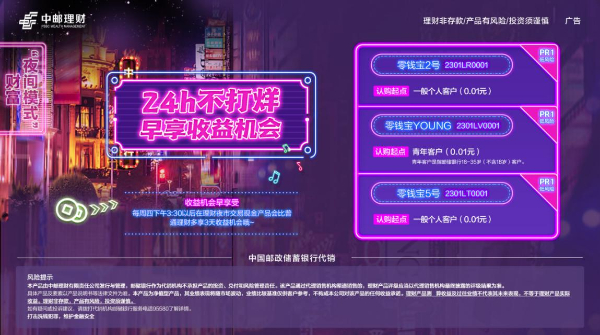
24小时不打烊 从容申购更舒心——中邮理财“理财夜市”再扩容
Xin Hua Wang· 2025-08-12 06:13
Core Insights - The introduction of the "Night Market" investment product by China Post Investment aims to address the needs of busy investors seeking more flexible and convenient investment options [1][3][4] Group 1: Product Features - The "Night Market" allows for investment transactions to be made until midnight on trading days, enabling investors to start earning returns the next day, thus enhancing the investment experience [3][4] - Three products have been launched under the "Night Market" initiative: "零钱宝2号", "零钱宝YOUNG", and "零钱宝5号" [3] Group 2: Customer-Centric Approach - The "Night Market" reflects China Post Investment's commitment to a customer-centric approach, focusing on meeting the flexible trading time needs of clients [4] - The company has issued 61 customized regional products over the past year, with sales exceeding 250 billion, indicating a strong focus on tailored investment solutions [4] Group 3: Growth and Future Plans - As of the end of March 2024, the total product scale of China Post Investment exceeded 866 billion, marking a nearly 12% growth since the beginning of the year [4] - The company aims to enhance its value creation capabilities and contribute to high-quality economic development through various financial initiatives, including technology finance and green finance [5]

“金融+慈善”深度融合 共筑儿童成长未来
Xin Hua Wang· 2025-08-12 06:13
Core Viewpoint - The charity sector in China is experiencing significant growth and innovation, integrating with various industries to enhance social welfare and promote common prosperity [2][8]. Group 1: Charity Development - The charity sector in China has evolved from a recovery phase to a period of innovation, with a focus on integrating charity with various sectors such as finance and technology [2][3]. - The "Charity+" ecosystem has emerged, promoting high-quality development of charity through deep integration with internet, projects, culture, and brands [2][3]. Group 2: Financial Institutions' Role - Financial institutions are taking on the responsibility of promoting social equity and justice, aligning with the goal of common prosperity [2][3]. - The introduction of charity financial products, such as charity trusts and public welfare funds, has broadened public participation in charity and strengthened the financial foundation of charitable activities [2][3]. Group 3: Company Initiatives - Xinyin Wealth Management has integrated charity into its strategic planning, launching the "Lighthouse Plan" and focusing on areas closely related to national interests [3][4]. - The "Jinqingxiang (Tongfu) Series" charity financial products raised 1.17 billion yuan, generating 1.55 million yuan for projects supporting left-behind children [3][4]. Group 4: Children's Welfare Focus - Xinyin Wealth Management is actively responding to national population strategies by focusing on children's growth, directing charity donations towards medical, educational, and health initiatives [4][5]. - The "Warm Children's Journey" charity financial brand has raised over 10.5 billion yuan, with expected charity funds exceeding 10 million yuan, benefiting various children's welfare organizations [5][6]. Group 5: Impact and Future Outlook - The successful implementation of charity financial projects demonstrates the potential for deep integration between finance and charity, contributing to common prosperity and modernizing China's economy [7][8]. - The "Warm Children's Journey" project aims to continue its mission of serving the real economy and promoting common prosperity, using financial resources to support children's welfare [8][9].
老“邮”所养 解锁个人养老金理财产品“成绩单”
Xin Hua Wang· 2025-08-12 06:13
中邮理财 理财非存款 产品有风险 投资须谨慎 广告 PSBC WEALTH MANAGEMENT I ■ 成为全民热议话题, 养老金账户 截至2024年3月22日,产品合计规模为2.89亿份 真主体育 0 44 4 2 1 2 累计服务客户0.94万户, 其中心额 0.56元间 代销机构 邮储银行、招商银行、兴业银行、 平安银行、宁波银行、光大银行 数据来源: 理财产品净值公告: 成立以来年化收益率:用本期单位净值与产品成立 时的净值比较,而非最终持有期到期收益率;成立以来年化收益率=(本期产品单 位净值-1)/(本期估值日期-产品成立日前一日)*365;最大回撤指的是在考察时间 范围内任一历史时点往后推,产品净值走到最低点时的收益率回撤幅度的最大值。 理财产品过往业绩不代表其未来表现,不构成对任何新发理财产品业绩表现的保 证,不等于理财产品实际收益,投资须谨慎。 添颐・波锦霞短時1825天 高(6253) 个人养老金理财产品不断上新, 「香」在哪 中邮理财旗下3只 个人养老金理财产品的"成绩单"! 点击 为你的"养老小金库" 挑选最合适的"理财小伙伴"! 2023年. 中邮理财积极响应国家个人养老 金政策的 ...

这场与“糖”的人生持久战 何以一路“童”行?
Xin Hua Wang· 2025-08-12 06:12
Core Points - The article highlights the increasing prevalence of Type 1 diabetes among children in China, with a significant rise in cases and the need for better support and awareness for affected families [6][7][15] - The "Warm Child" charity initiative by Xinyin Wealth Management aims to provide financial support and resources for children with Type 1 diabetes, addressing both medical and emotional needs [10][14] Group 1: Type 1 Diabetes in Children - Type 1 diabetes is becoming more common among younger children, with hospitals seeing a 10% annual increase in cases [6] - Children diagnosed with Type 1 diabetes require daily insulin injections and frequent blood sugar monitoring, leading to significant emotional and financial burdens on families [7][8] - The "Hope Package" initiative has supported nearly 4,400 newly diagnosed children since its launch in 2019, providing essential management tools and educational resources [13] Group 2: Charity Initiatives and Support - Xinyin Wealth Management has launched the "Warm Child" charity financial product, which allocates funds to support Type 1 diabetes initiatives and other children's health programs [10][14] - The charity has successfully raised over 140 million yuan for various children's welfare projects, including direct support for families in need [15] - The initiative aims to create a sustainable support network for children with Type 1 diabetes and other birth defects, enhancing public awareness and participation in charitable activities [11][15]

信银理财:用心用情 做好养老金融大文章
Xin Hua Wang· 2025-08-12 06:12
"适老化"服务有温度暖心敬老提升养老金融服务体验 养老金融既是我国金融事业的重要组成部分,又是养老事业的重要支撑,更是走中国特色金融发展 之路的必然要求。金融机构要坚持政治性、人民性,要始终把不断实现人民对美好生活的向往作为金融 工作的出发点和落脚点,做好养老金融大文章,建设金融强国。 信银理财自成立以来,始终将养老金融作为重点赛道积极布局,不断探索养老金融高质量发展,丰 富养老主题相关产品及策略研发,并在实践中加快提升适老化服务水平,用心用情做好养老金融大文 章。截至2024年9月底,信银理财持续做大做强"信颐"养老品牌,产品总规模近600亿元,直销APP上 线"适老化"版本,客户服务开通"敬老专线",积极打造养老金融新产品、新服务,以优质金融服务助力 养老金融发展,奋力做好养老金融大文章。 "专业化"服务有力度稳健理财护航银发经济发展 与发达国家相比,我国养老金融体系在总量和结构上存在短板,由于过于依赖第一支柱,第二支柱 起步晚、增长空间有限,第三支柱养老金余额占比较低。 为加快推进多层次养老保障体系,特别是第三支柱建设,近年来国家及相关部门利好政策频出,各 类金融机构应需而动、抢抓机遇。诞生于商业银行的 ...
业绩比较基准集中下调 低利率时代理财产品如何突围
Xin Hua Wang· 2025-08-12 06:11
中国证券报记者梳理发现,民生理财、招银理财、华夏理财、中银理财等理财公司近期密集发布下 调理财产品业绩比较基准的公告,部分产品下调幅度超100个基点。 理财产品业绩比较基准下调与其底层资产收益率走低密切相关。在当前低利率环境下,理财公司适时调 降业绩比较基准,可避免理财产品实际收益率与业绩比较基准偏离过大的问题,及时调整投资者收益预 期。 展望2025年,业内人士认为,资产荒料持续,在适度宽松的货币政策下,低利率环境难言完结。为应对 债市波动,不少理财公司调整产品底层资产投资策略,加强投资者预期管理;同时,加强投研能力建 设,积极布局权益市场,为投资者提供更加多元的投资选择。 加强投资者预期管理 近日,多家理财公司密集发布下调理财产品业绩比较基准的公告。例如,1月13日,民生理财发布公告 称,根据理财合同约定及当前市场情况,决定自下一投资周期(2025年1月15日开放日后)起,将"民生 理财贵竹慧赢添利固收增强半年定开1号理财产品"的业绩比较基准调整为2.7%-3.1%,较此前下调10个 基点。 又如,招银理财1月6日宣布,根据理财产品合同约定,该公司发行的"招睿卓远系列一年定开9号增强型 固定收益类理财计划 ...
信银理财五周年 致投资者的一封信
Xin Hua Wang· 2025-08-12 06:07
Core Viewpoint - The company reflects on its five-year journey, emphasizing its commitment to serving the real economy and contributing to common prosperity, while aiming for high-quality development in line with Chinese banking characteristics [3][12]. Group 1: Company Mission and Vision - The company aims to create a platform that meets world-class standards, focusing on market credibility, brand strength, and connectivity [3]. - It emphasizes the importance of aligning with national strategies and enhancing financial services to support the real economy, with over 1 trillion yuan directed towards this goal [5][12]. Group 2: Achievements and Growth - Over the past five years, the company has achieved significant milestones, including over 200 awards, operating income exceeding 16 billion yuan, and net profit surpassing 10 billion yuan, with a compound annual growth rate of 11% [12]. - The company has served over 25 million clients and generated nearly 200 billion yuan in returns for investors [8][12]. Group 3: Governance and Risk Management - The company has established a governance structure that emphasizes independent operations and risk management, adhering to regulatory requirements [11]. - A comprehensive risk management system has been implemented to address credit, market, and liquidity risks [11]. Group 4: Future Strategy - The company plans to accelerate its strategic layout in new sectors, aiming to build a comprehensive and diverse product and service system [13]. - It will focus on enhancing both quantitative and qualitative aspects of its offerings, ensuring a sustainable growth trajectory [15].

数字化帮你实现指尖上的财富自由?信银理财五周年的数字金融答卷有哪些惊喜?
Xin Hua Wang· 2025-08-12 06:06
在广西柳州一家企业担任文员的00后陆晓(化名)未曾料到,自己四年前在信银理财App随手购买 的理财产品,不仅支撑了她大学时期的"旅行自由",更在毕业后化为一把车钥匙——那是她用理财收益 解锁的人生首辆汽车。 与此同时,34岁的重度残障人士张宁(化名)在信银理财App上完成了从零到百万持仓的蜕变。无 法外出工作的她通过指尖操作实现了财富稳健增值:"在手机上就能操作,产品选择自由,信银理财 App像亲人一样给了我安全感和温暖鼓励。" 在信银理财成立五周年之际,这两个普通人的财富故事,成为中国资管行业数字化变革的生动注 脚。当金融"五篇大文章"的国家战略照进现实,这家管理规模近2万亿元的头部机构,正用科技的温度 与专业的厚度,将金融服务嵌入千万人的生活肌理。 四年前,读大一的她在信银理财App上的初始投入5000元,此后每年定投2万,最终在复利增长中 悄然沉淀,化作毕业季的方向盘——这不仅是个人财富的增值轨迹,更是金融科技重构资管逻辑的微观 普惠的温度 金融为民 残障人士持仓百万收获满满幸福感 近年来,党中央、国务院高度重视发展普惠金融,多次指出大力发展普惠金融可提高金融服务的覆 盖率、可得性和满意度,增强广大人民 ...
信银理财助力壮大耐心资本 做强科技金融大文章
Xin Hua Wang· 2025-08-12 06:06
作为业内最早开展科技企业股权直投的理财公司之一,信银理财采取多维策略"驰援"科创企业发 展。依托中信集团产融结合优势和母行客户网络,信银理财通过专业化投资团队,推动细分行业研究, 以股权投资和资本市场业务为抓手,强化对优质企业的筛选和甄别,促进科技金融业务和专精特新"小 巨人"的项目储备,目前多个项目已经结出成果。 在选择股权投资项目时,重点考量的因素包括宏观环境情况、所在细分行业情况、企业的资源禀赋 及风险状况、协同发展赋能和投资成本等。具体需要判断企业在未来较长期限内能够符合经济和金融政 策,考核被投企业的估值合理性,还需考察企业科技属性成色、前景预期、行业壁垒、竞争态势和企业 的团队人员、技术实力、股东支持,以及财务稳健性、融资能力、专利技术、法律合规等。这些都离不 开信银理财"耐心"的研究和"潜心"的研究。 从"精准滴灌"到"生态共建" 服务企业全生命周期投融资需求 面对科技型企业"轻资产、高风险、长周期"的特性,信银理财科学构建了"精准滴灌"与"生态共 建"的发展模式,服务企业全生命周期的投融资需求。 在方向选择上,信银理财会优先聚焦当前国家经济发展的核心领域,帮助破解企业融资难题。在先 进制造业方 ...
信银理财“温暖童行”捐赠仪式启幕:当金融温度遇见教育未来
Xin Hua Wang· 2025-08-12 06:06
Core Viewpoint - The company, Xinyin Wealth Management, has made a charitable donation of 3.4264 million yuan to support the education development in Huangpu District, Shanghai, benefiting over 30,000 teachers and students across 14 schools [1][3]. Group 1 - The donation is part of the "Warm Journey for Children" initiative, which serves as an important vehicle for the company to fulfill its social responsibility [3]. - Over the past two years, the initiative has raised more than 18 billion yuan in financial resources and has donated over 10 million yuan [3]. - The company aims to continue supporting high-quality education in Huangpu District, positioning itself as a "runner" for the healthy growth of children [3][6]. Group 2 - Future plans for the "Warm Journey for Children" initiative include close collaboration with the government and various social sectors to enhance educational projects, such as the establishment of "Little Warm Elephant" AI laboratories [6]. - The Huangpu District government has expressed high recognition of the initiative and encourages the company to continue its support for local education, aiming for high-quality development through mutual efforts [6][8]. - The company will uphold the public welfare philosophy of "making charity simpler through financial management" and deepen cooperation with the Huangpu District Education Foundation [8].
