
高等教育

Search documents
物理学家王迅在上海因病逝世,享年91岁!在复旦执教多年
Nan Fang Du Shi Bao· 2025-12-06 04:11
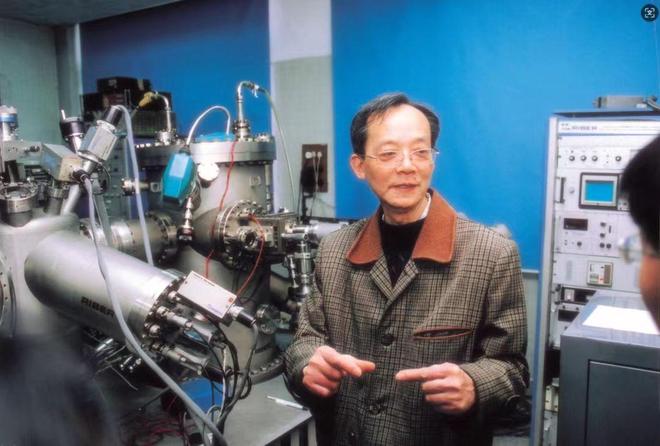
王迅。 据复旦大学官网信息,王迅,1934年生于上海,1960年以复旦大学物理学系副博士身份毕业,同年留校 任教;1999年当选中国科学院院士;历任复旦大学半导体物理教研室副主任,微电子教研室副主任,表 面物理研究室副主任、主任,应用表面物理国家重点实验室主任、学术委员会主任,复旦大学学术委员 会副主任,复旦大学研究生教育指导委员会主任等职。他曾担任国际纯粹与应用物理联合会(IUPAP) 半导体委员会委员(1993-1999年)、国际学术刊物《Surface Science》顾问编委。 12月5日,复旦大学发布讣告称,著名物理学家,中国科学院院士,复旦大学物理学系教授、博士生导 师王迅因病医治无效,于12月5日6时22分在上海新华医院不幸逝世,享年91岁。6日上午,南都N视频 记者注意到,复旦大学官网首页已变成黑白色。 对于青年教师,他更是 "甘为人梯" 。他像对待子女一样关心他们的住房、配偶工作,甚至冒雨骑自行 车去公证处为青年教师担保出国。他说,要破除"继承衣钵"的观念,主动让出"跑道",把最好的仪器交 给年轻人,让他们不受束缚地开拓新领域。 采写:南都N视频记者 杨婷 从上个世纪80年代开始,王迅协助恩 ...

教育厅公示!河北航空航天大学、河北政法职业大学要来了
Jing Ji Guan Cha Bao· 2025-12-06 03:22
(原标题:教育厅公示!河北航空航天大学、河北政法职业大学要来了) 公示时间为2025年12月5日至12月11日。 经济观察网 据河北省教育厅,12月5日,河北省教育厅网站发布关于高等学校设置事项的公示。根据 《中华人民共和国高等教育法》《普通高等学校设置暂行条例》《高等职业学校设置标准(暂行)》等有 关规定,经河北省高等学校设置评议委员会专家考察和评议,北华航天工业学院更名河北航空航天大 学、以河北政法职业学院为基础设立河北政法职业大学事项获得通过,现将学校名单向社会公示。 ...
多所高校调整重组外语学院,外语专业批量停招
Di Yi Cai Jing· 2025-12-05 11:07
Core Viewpoint - The development of artificial intelligence (AI) poses significant challenges to foreign language programs in higher education, prompting many universities to restructure their foreign language departments into interdisciplinary colleges to adapt to the changing landscape [2][3]. Group 1: Challenges Faced by Foreign Language Programs - The integration of AI has led to a decline in the employment prospects for foreign language graduates, with a graduation placement rate of 84.5% for the 2023 cohort, which is 1.9 percentage points lower than the national average [3]. - Many universities, including top-tier institutions, have begun to suspend or eliminate foreign language undergraduate programs, with notable examples including the University of Science and Technology of China and Beijing Language University [3][4]. - The trend of restructuring foreign language departments is evident, as institutions are merging foreign language studies with other fields such as communication and cultural studies to create new interdisciplinary programs [2][4]. Group 2: Strategic Responses from Universities - Universities are increasingly adopting a model of interdisciplinary integration, combining foreign language studies with fields like computer science and international business to enhance the relevance and competitiveness of their programs [4][5]. - The focus of talent cultivation is shifting from producing pure language specialists to developing versatile, application-oriented professionals with cross-disciplinary knowledge and international competencies [5]. - There is a strong emphasis on regional and country-specific studies as a growth area, aligning academic programs with national strategies and societal needs [5].
多所高校调整重组外语学院 外语专业批量停招
Di Yi Cai Jing· 2025-12-05 11:06
随着人工智能的发展及多种因素,外语类专业面临着诸多挑战,一些高校也对外语学院进行了调整。 近日,随着景德镇陶瓷大学在原有外国语学院基础上,整合文化研究、新闻传播、中文教育等方面的师 资力量和软硬条件,成立文化传播学院,关于"外语学院调整组建"的讨论再度在高教领域引起关注。 早在去年12月举行的将景德镇陶瓷大学外国语学院更名为"文化传播学院"的专家论证会上,专家组就提 出,希望学院在更名后能进一步转型发展,改造升级老旧专业,围绕中国陶瓷文化国际传播进一步凝练 特色,做好以陶瓷文化为主要对象的区域国别研究,切实提高中国陶瓷文化国际传播的效能和水平,为 服务国家对外战略,构建人类命运共同体贡献陶大力量。 根据高教领域媒体统计,近期就有多所高校将传统外语学院调整组建成新学院。其中,不少将外语专业 与传播等专业合并组建复合型学院。整体来看,各高校通过对外语学院合并、重组、更名,来应对AI 时代的诸多挑战。 厦门大学经济学系副教授丁长发对第一财经分析,随着人工智能的发展,AI对很多领域的冲击很大, 其中外语类专业受AI影响非常大,所以这些外语类学院需要调整和整合。 麦可思研究院《2023年中国本科生就业报告》显示,202 ...
1.16亿元!大连理工大学近期大批仪器采购意向
仪器信息网· 2025-12-05 09:07
摘要 : 近日,大连理工大学发布多批政府采购意向,仪器信息网特对其中的仪器设备品目进行梳理,统 计出38项仪器设备采购意向,预算总额达1.16亿元。 特别提示 微信机制调整,点击顶部"仪器信息网" → 右上方"…" → 设为 ★ 星标,否则很可能无法看到我 们的推送。 近日, 大连理工大学发布 38 项仪器设备采购意向,预算总额达 1.16亿 元,涉及三维形貌 扫描测量系统 、大口径平面形貌仪、曲面面型测量仪、动态激光干涉仪 、超分辨转盘共聚焦 显微镜 等,预计采购时间为202 5 年 6~12 月。 详细采购清单: | 意向汇总表 | | --- | | 仪器设备采购 | | 采购 | | 预算 | 采购 | | --- | --- | --- | --- | | | 需求概况 | | | | 项目 | | 万元 | 时间 | | | 拟采购稳态瞬态荧光光谱仪1套,广泛用于化学、生物、 | | | | | 物理、食品、材料等领域的科学研究,例如通过研究材料 | | | | | 的发光特性,可以揭示材料的结构、形貌、复合比例等; | | | | | 可实现稳态光谱测试(荧光及磷光激发和发射光谱,动力 | | ...

高校买房爆改宿舍?“去库存”“加床位”双赢
21世纪经济报道· 2025-12-05 07:24
Core Insights - The article discusses the recent trend of universities in China purchasing existing residential properties to convert them into student dormitories due to a shortage of accommodation [1][2] - This strategy not only addresses the immediate need for student housing but also helps developers reduce inventory by selling properties at discounted prices [1][2] Group 1: Reasons for Universities Buying Properties - Universities are facing a significant shortage of bed spaces, with examples like Hubei University increasing student numbers from 6,000 to 7,500 while having only 6,000 dormitory beds [1] - Hubei University purchased 352 units for nearly 200 million yuan, adding 2,800 beds, demonstrating a quick solution to the accommodation crisis [1] - The properties were acquired at an average price of 4,653 yuan per square meter, which is significantly lower than the market price, allowing for immediate occupancy after minor renovations [1] Group 2: Alternative Solutions and Benefits - Some universities, like Zhejiang University, are opting to rent existing properties, with a budget of 24.5 million yuan to secure at least 3,000 beds [2] - This approach is seen as a win-win situation, as it alleviates the housing shortage for students while revitalizing the real estate market [2] - Key challenges include ensuring the properties are conveniently located, that costs are covered through rental or sale prices, and that student feedback is incorporated into the decision-making process [2] Group 3: Policy Support and Future Directions - The "14th Five-Year Plan" encourages the activation of idle properties, with government support for converting them into various uses, including student housing [3] - Collaboration between local governments and universities is essential to identify suitable locations and streamline approval processes [3] - The article suggests that this trend of repurposing existing properties could lead to innovative uses in the future, such as for elderly care and tourism, contingent on further policy support [3]

日本早稻田大学考虑上涨留学生学费
Yang Shi Xin Wen· 2025-12-05 06:42
当地时间12月3日,总台记者获悉,日本早稻田大学正在考虑上涨外国留学生的学费。早稻田大学是日 本著名的综合性私立大学之一。相关调查显示,截至2024年5月份,早稻田大学共有5562名外国留学 生,是日本国内接收留学生最多的大学。 早稻田大学方面称,外国留学生需要学校提供更多支持,这会产生相应成本,因此有必要上涨学费。 上个月底,日本东北大学计划上涨外国留学生的学费涨幅达1.7倍,而日本学生学费不变。东北大学是 日本知名的国立大学,这也是日本国立大学首次提出仅针对留学生上涨学费的措施。 (文章来源:央视新闻) ...
2025年中国城市潜力榜:深圳力压广州,杭州险胜苏州
Sou Hu Cai Jing· 2025-12-05 06:14
Core Insights - The 2025 China City Potential Ranking has been released, highlighting the dynamic changes in cities as economic, consumption, and cultural hubs, based on comprehensive evaluations of over 300 cities using various authoritative data sources [2][4]. Group 1: City Rankings - The top ten cities in the 2025 potential ranking are Beijing, Shanghai, Shenzhen, Guangzhou, Chongqing, Chengdu, Hangzhou, Suzhou, Wuhan, and Nanjing [4]. - The leading cities are primarily located in the Beijing-Tianjin-Hebei, Yangtze River Delta, Pearl River Delta, and Chengdu-Chongqing urban agglomerations, which are characterized by economic vitality, dense populations, and well-developed infrastructure [7][8]. Group 2: Comparative Analysis of Major Cities - Beijing leads with a strong foundation in technology, education, and healthcare, showcasing its "internal strength" [9]. - Shanghai maintains its position through its role as an "open portal," leveraging global port throughput and foreign investment [11]. - Shenzhen excels in R&D investment and high-tech industries, ranking third, while Guangzhou benefits from its historical commercial significance and strong consumer market, ranking fourth [12][15]. - Chongqing outperforms Chengdu in overall potential scores, driven by its large economic scale and infrastructure investments [16]. - Chengdu, however, shows higher economic and commercial vitality, attributed to its innovative environment and strong consumer culture [18]. Group 3: Economic and Commercial Vitality - Shanghai ranks first in economic vitality, followed by Shenzhen and Beijing, with Guangzhou and Chengdu also in the top five [31]. - Guangzhou leads in incremental economic indicators, while Chengdu shows superior growth rates in key metrics, reflecting strong internal growth and market resilience [33]. - In the newly introduced commercial vitality dimension, Guangzhou and Chengdu surpass Shanghai and Shenzhen, indicating their robust commercial networks and consumer engagement [35][37]. Group 4: Transportation and Infrastructure - Beijing, Shanghai, and Chongqing rank as the top three cities in transportation, forming a "diamond hub" for national transport networks [43]. - Beijing's extensive public transport system and road network support its status as a major urban center, while Shanghai's international transport capabilities enhance its global connectivity [43][44]. Group 5: Healthcare and Education - Beijing ranks first in social healthcare, followed by Shenzhen and Shanghai, reflecting their strong healthcare systems supported by economic strength [48]. - In education, Beijing and Shanghai lead, with Guangzhou recognized as a key educational center in South China, contributing to regional talent supply [52][54]. Group 6: Technological Innovation - The top three cities in technological innovation are Beijing, Shenzhen, and Shanghai, due to their advantages in basic research and technology commercialization [56]. - Guangzhou also demonstrates significant technological capabilities, particularly in biomedicine and information technology, indicating a solid foundation for future growth [58].
1.21亿元!复旦大学近期大批仪器采购意向
仪器信息网· 2025-12-05 03:55
Core Insights - Fudan University has announced procurement intentions for 48 items of laboratory equipment, with a total budget of 121 million yuan [2][3] - The procurement includes advanced instruments such as confocal microscopes, automated protein preparation workstations, and high-throughput protein detection systems, expected to be purchased between October and December 2025 [3][4] Procurement Overview - The total budget for the procurement is 121 million yuan, covering various high-tech instruments [3] - Key items include: - Confocal microscopes for observing cellular structures and monitoring protein distribution [7] - Automated protein preparation workstations capable of identifying over 9,000 human proteins in a single experiment [7] - Fully automated cell and biological microenvironment physical property detection instruments [4][5] - Laser microdissection systems for high-precision cutting of biological samples [4][5] - High-throughput targeted protein detection systems [4][5] Instrument Specifications - The fully automated cell and biological microenvironment physical property detection instrument features rapid detection capabilities and AI algorithms to enhance accuracy [4] - The fully automated single-cell sorting and preprocessing system can achieve a single-cell separation rate of up to 98% [5] - The high-throughput targeted protein detection system is designed to detect over 9,000 proteins in a single run, covering more than 200 biological pathways [8] Additional Details - The procurement is part of Fudan University's efforts to enhance research capabilities in life sciences and related fields [3][4] - The expected procurement timeline is set for late 2025, indicating a strategic planning approach to upgrading laboratory facilities [3][6]

上海财经大学校长刘元春:海南应持续挖掘现代农业和海洋经济潜力
Hai Nan Ri Bao· 2025-12-05 02:52
Core Insights - Hainan is transitioning from a relatively weak economic base to a high-standard free trade port, showcasing its development vitality and future potential [2] - The core drivers of economic development are identified as the "new three drivers": basic research and development, industrial upgrading, and technology finance [2] - Hainan should leverage its unique policy advantages to focus not only on consumer centers and trade distribution but also on solidifying high-end industrial foundations, infrastructure, talent aggregation, and technological innovation [2] Industry Focus - The emerging sectors of interest include aerospace, low-altitude economy, modern agriculture, and marine economy, which align closely with Hainan's geographical advantages [2] - There is a call for Hainan to continuously explore the potential of modern agriculture and marine economy, as well as to expand into cutting-edge industries like biomanufacturing [2] Collaboration and Support - Shanghai University of Finance and Economics has established comprehensive cooperation with Hainan, leveraging its national think tank advantages in free trade zone research [3] - The university's research team has conducted systematic studies on over 20 free trade zones, providing valuable insights to support Hainan's free trade port development [3] - The university's advancements in offshore finance and financial modeling will also contribute to the financial development of Hainan's free trade port [3]