
农业服务

Search documents
中合(广西)再生资源有限公司成立 注册资本1000万人民币
Sou Hu Cai Jing· 2025-11-02 14:47
Core Insights - A new company, Zhonghe (Guangxi) Renewable Resources Co., Ltd., has been established with a registered capital of 10 million RMB [1] Company Overview - The legal representative of the company is Li Xitong [1] - The company’s business scope includes the recycling and secondary utilization of used power batteries for new energy vehicles, excluding hazardous waste operations [1] - Additional services offered include resource recycling technology research and development, technical consulting for resource recycling services, and sales of various metal products [1] Industry Focus - The company is involved in the development and sales of new materials technology and non-ferrous metal alloys [1] - It also provides services related to wind power technology and the sale of wind turbine generators and components [1] - The company engages in supply chain management services and agricultural-related activities, including the sale of fertilizers and agricultural machinery [1]
农业服务免征增值税
蓝色柳林财税室· 2025-11-02 14:43
Group 1 - The article emphasizes the promotion of rural characteristic industry development through tax incentives for agricultural production [1][2] - Agricultural services such as tillage, irrigation, pest control, and related technical training are exempt from value-added tax (VAT) [1][2] - The exemption applies to taxpayers providing specific agricultural services, including livestock breeding and disease prevention [2] Group 2 - Conditions for enjoying the tax exemption include the use of agricultural machinery for various farming activities and the provision of agricultural insurance [2] - The policy is based on the notice from the Ministry of Finance and the State Administration of Taxation regarding the transition from business tax to value-added tax [3]


一文了解:支持农产品生产、流通等环节的税收政策
蓝色柳林财税室· 2025-11-01 01:24
Agricultural Production Tax Policies - The value-added tax (VAT) on self-produced agricultural products sold by agricultural producers is exempt [1] - Income from agricultural, forestry, animal husbandry, and fishery projects can be exempted or reduced from corporate income tax [2][3] - Individuals and sole proprietorships engaged in planting, breeding, and fishing activities are temporarily exempt from individual income tax [4][5] - Vessels registered as fishing or aquaculture boats are exempt from vehicle and vessel tax [6][7] - Land directly used for agricultural production is exempt from urban land use tax [8][9] Agricultural Circulation Tax Policies - VAT is exempt on the sale of vegetables and certain fresh meat and egg products by wholesalers and retailers [10][11] - Farmers and cooperatives are exempt from stamp duty on contracts for purchasing agricultural materials or selling agricultural products [12][13] - Properties and land used in agricultural wholesale and retail markets are temporarily exempt from property tax and urban land use tax [14][15] Agricultural Service Tax Policies - VAT is exempt for services related to agricultural tillage, irrigation, pest control, and animal health [16] Support for Agricultural Industrialization Tax Policies - VAT is exempt for sales of livestock under the "company + farmer" operating model [17] - Agricultural cooperatives selling products produced by their members are treated as agricultural producers and are exempt from VAT [18][19] - Land leased for agricultural production is exempt from VAT [21][22] - Companies using the "company + farmer" model in agricultural projects can enjoy corporate income tax reductions [23][24] - Income from initial processing of agricultural products is exempt from corporate income tax [25][26]

“抢”在地头 助力粮安
Jin Rong Shi Bao· 2025-10-30 00:44
Core Viewpoint - Grain security is a crucial foundation for national security, and recent continuous autumn rain in Zaozhuang, Shandong, has adversely affected the autumn grain collection and storage [1] Group 1: Financial Support for Grain Collection - Zaozhuang Agricultural Commercial Bank has provided timely financial support to local farmers, facilitating the purchase of agricultural machinery and ensuring the collection of autumn grain despite adverse weather conditions [4][5] - The bank has issued a total of 19.101 billion yuan in loans for autumn production and retail, an increase of 1.131 billion yuan since the beginning of the year [3] - A dedicated leadership group has been established to enhance the urgency and responsibility of financial support for autumn grain collection, with a focus on quick loan processing and support for farmers' needs [3][6] Group 2: Innovative Financial Products - The bank has introduced innovative financial products such as "Agricultural E-loan" and "Facility Agriculture Loan" to meet the diverse needs of farmers during the autumn season [5] - A "direct reach" initiative has been implemented to ensure that financial services are accessible to farmers, with dedicated personnel providing on-site support and guidance [4][6] Group 3: Community Engagement and Support - The bank has organized 79 small teams to provide financial support for autumn grain collection, utilizing local communication methods to disseminate information about financial services to farmers [4][6] - Over 50,000 households have received guidance and support related to autumn production, benefiting more than 200,000 individuals [6]
大疆农业全球政策负责人:把农业从靠“天数”转变为看“数据”
2 1 Shi Ji Jing Ji Bao Dao· 2025-10-29 11:25
Core Insights - The article emphasizes the importance of transforming agriculture from being reliant on weather to adopting data-driven management practices [1] - DJI's global policy head for agriculture, Wang Yaqiong, highlights the role of drones in collecting and visualizing farmland data to guide smart agricultural operations [1] - DJI's drone products have been implemented in the agricultural sector across over 100 countries worldwide [1] Group 1 - The 2025 International Agricultural Service Trade Conference was successfully held in Guangzhou, attracting around 200 domestic and international guests, including agriculture ministers and industry giants [1] - The conference focused on promoting agricultural openness and cooperation [1] Group 2 - Wang Yaqiong stated that the shift to digital management in agriculture is crucial for enhancing productivity and efficiency [1] - The use of drones for comprehensive data collection in agriculture is presented as a key innovation for the industry [1]
利比里亚农业部官员答21:中国将利农业机械化推至新高
2 1 Shi Ji Jing Ji Bao Dao· 2025-10-29 11:25
Core Viewpoint - The 2025 International Agricultural Service Trade Conference successfully took place in Guangzhou, highlighting China's commitment to agricultural cooperation and modernization in the sector [1] Group 1: Event Overview - The conference attracted around 200 domestic and international guests, including agriculture ministers, ambassadors, and representatives from major industry players such as Louis Dreyfus, BASF, DJI, and Beidahuang [1] - The event was held at the Nansha International Convention Center in Guangzhou [1] Group 2: International Cooperation - Peter D. Gbawoquiya, an official from the Ministry of Agriculture of Liberia, announced that China will soon establish its first agricultural mechanization center in Liberia, which is expected to significantly enhance agricultural mechanization in the country [1] - Gbawoquiya expressed enthusiasm for participating in the conference to explore new directions for agricultural development [1]
永州创发纸制品有限公司成立 注册资本100万人民币
Sou Hu Cai Jing· 2025-10-28 05:56
Core Viewpoint - Yongzhou Chuangfa Paper Products Co., Ltd. has been established with a registered capital of 1 million RMB, indicating a new player in the paper products manufacturing industry [1] Company Summary - The legal representative of Yongzhou Chuangfa Paper Products Co., Ltd. is Ai Xiaoling [1] - The company is engaged in various activities including the manufacturing and sales of paper and paperboard containers, as well as other agricultural services [1] Industry Summary - The company operates in the general project category, which includes paper products manufacturing and sales, agricultural machinery services, and crop cultivation services [1] - The scope of business also covers the processing and utilization of agricultural by-products and the wholesale and retail of edible agricultural products [1]
富邦科技2025年第三季度业绩稳健增长——科技创新驱动绿色转型,构筑可持续发展新格局
Quan Jing Wang· 2025-10-26 08:26
Overall Performance - The company reported a revenue of 1.016 billion yuan for the first nine months of 2025, representing a year-on-year growth of 9.19% [2] - The net profit attributable to shareholders was 80.6494 million yuan, with a net profit of 76.4804 million yuan after deducting non-recurring gains and losses [2] - The company is leveraging national policies for agricultural modernization to optimize its business structure and drive performance growth [2] Main Business Development - The company is focusing on the strategic transformation towards "precision, greenness, efficiency, and nutrition" in its agrochemical and specialty fertilizer business [3] - Product structure optimization has enhanced the comprehensive performance of products, improving market competitiveness [3] Research and Development Investment - The company invested 37.8507 million yuan in R&D during the first three quarters, targeting core technology areas such as new green agrochemical additives and digital agriculture [6] - Continuous R&D investment supports product innovation and technological upgrades, laying a solid foundation for sustainable development [6] Green Manufacturing System - The company was recognized as a "Green Factory" by the Hubei Provincial Economic and Information Technology Department, indicating substantial progress in green manufacturing [7] - Efforts in clean production process upgrades and resource recycling have improved raw material utilization efficiency and reduced pollutant emissions [7] Zero-Carbon Agriculture Innovation - The company has developed a zero-carbon agricultural park model integrating zero-carbon energy supply, low-carbon agricultural production, and ecological circular development [10] - The park received certifications for "Zero-Carbon Agricultural Park" and "Carbon Neutral Park," marking significant progress in agricultural carbon neutrality technology [10] Strategic Outlook - The company aims to continue its focus on "technological innovation and green development," enhancing core competitiveness through continuous technological advancements [11] - The strategic direction aligns with national policies promoting agricultural modernization and green development, providing broader growth opportunities [11]


利津农商银行 “粮食收储贷”护航“三秋”生产
Qi Lu Wan Bao· 2025-10-23 09:44
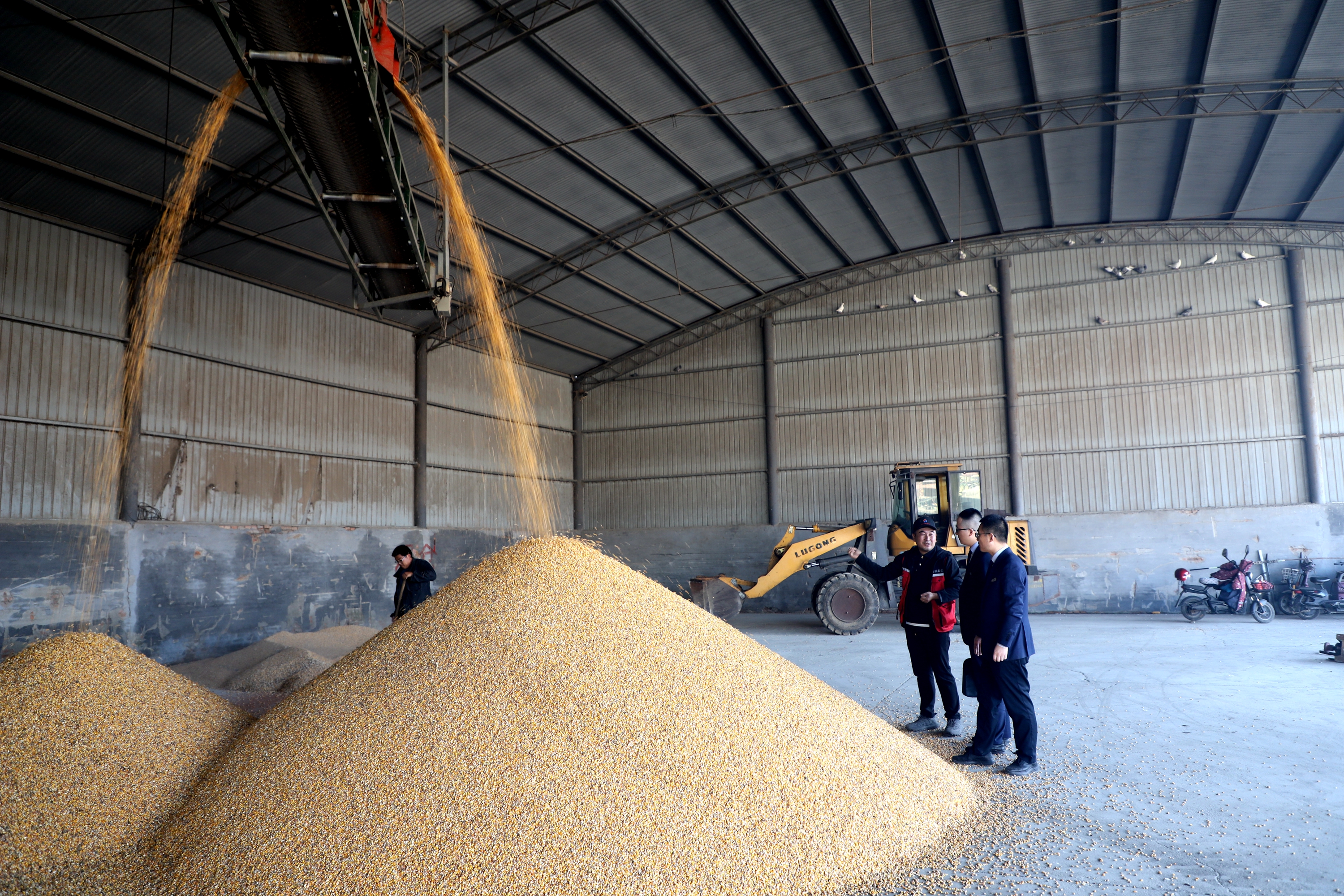
Core Points - The article highlights the importance of timely grain drying and storage in the context of recent rainy weather affecting the harvest in Dongying, Shandong Province [1][4] - Dongying Gurun Agricultural Co., Ltd. has increased its grain drying capacity to handle the influx of wet corn, supported by financial assistance from Lijin Rural Commercial Bank [4][5] Group 1: Company Operations - Dongying Gurun Agricultural Co., Ltd. operates two drying towers and a standardized storage warehouse, achieving a daily processing capacity of 300 tons of corn [4] - The company faced challenges due to high operational costs and insufficient working capital before receiving a loan from Lijin Rural Commercial Bank [4] Group 2: Financial Support - Lijin Rural Commercial Bank identified the need for financial support for key agricultural service providers like Dongying Gurun Agricultural Co., Ltd. during the peak harvest period [4] - The bank provided a loan of 3 million yuan through a green credit channel, enabling the company to continue its operations without financial worries [4] - The bank has issued over 70 million yuan in "grain storage loans" to more than 40 grain dealers in the county to support the autumn harvest [5]
荆州鑫发再生资源有限公司成立 注册资本10万人民币
Sou Hu Cai Jing· 2025-10-23 05:21
Core Viewpoint - A new company, Jingzhou Xinfan Renewable Resources Co., Ltd., has been established with a registered capital of 100,000 RMB, focusing on various agricultural and biomass-related services [1] Company Summary - The legal representative of Jingzhou Xinfan Renewable Resources Co., Ltd. is Zhu Xiaojun [1] - The company’s registered capital is 100,000 RMB [1] - The business scope includes services related to crop straw processing and utilization, crop harvesting, agricultural professional and auxiliary activities, primary agricultural product purchasing, timber purchasing, biomass fuel processing, biomass molded fuel sales, forestry product sales, and forestry professional and auxiliary activities [1]