
农业服务

Search documents
安徽乡村变革六记
Xin Lang Cai Jing· 2026-02-25 16:55
Group 1: Rural Transformation in Anhui - The article highlights the transformation of rural areas in Anhui, showcasing new developments and opportunities in the digital age [1] - A focus on the Dabeishan Ski Resort, which has attracted investment due to its geographical advantages, indicates a shift towards developing the "cold economy" in southern China [2] - The rise of "village coffee" along the "Wannan Canggu Line" illustrates how local businesses are revitalizing rural tourism and attracting visitors [3] Group 2: E-commerce and Agricultural Innovation - The success of live-streaming sales in rural areas, with one instance generating over 200,000 yuan, demonstrates the potential of e-commerce in enhancing farmers' income [4] - The use of drones in modern agriculture, as exemplified by a young farmer in Tianchang City, shows how technology is improving efficiency and productivity in farming [8] Group 3: Cultural and Community Engagement - The creation of a local theater group by elderly residents in rural areas reflects a cultural revival and community engagement, showcasing their creativity and storytelling [5][6] - The role of "industry village heads" in guiding rural development and integrating tourism with local culture has led to significant revenue growth in communities [7]
1.78万公顷土地实现“保姆式”托管
Xin Lang Cai Jing· 2026-02-24 18:20
Group 1 - The core viewpoint of the articles highlights the significant investment and development of a comprehensive agricultural service system in Haixi Prefecture, benefiting over 7,360 farming households through a "nanny-style" management approach [1][2] - A total of 18.12 million yuan (approximately 2.5 million USD) has been invested by the central government to promote 17,800 hectares of land under this management model [1] - The initiative aims to connect small farmers with modern agriculture, enhancing efficiency and resource integration through a structured system involving county-level coordination and village-level implementation [1] Group 2 - The "small management" approach has led to substantial benefits, with a focus on addressing the production technology gaps of small farmers, thereby significantly improving agricultural productivity [2] - Key crops such as wheat, barley, and rapeseed have seen increased yields, with barley averaging 443.88 kg per mu, representing a 10.97% increase compared to traditional farming methods [2] - A smart regulatory service platform has been established to manage contracts, operational records, and fund disbursement, ensuring traceability and quality of services [2]
极飞科技:我们服务于农户 帮助农户服务于土地
2 1 Shi Ji Jing Ji Bao Dao· 2026-02-24 05:52
Core Insights - The company focuses on providing services to farmers, aiming to enhance their productivity and connection to the land [1] Group 1 - The company emphasizes its role in supporting farmers, which is crucial for agricultural development [1] - The services offered are designed to help farmers optimize their operations and improve their yield [1] - The company's mission aligns with the broader goal of sustainable agricultural practices [1]
寒天里为民服务不停歇
Xin Lang Cai Jing· 2026-02-17 17:35
Core Viewpoint - The article highlights the implementation of a rural land contract management rights certification project in Minhe County, aimed at updating land ownership records to reflect recent changes and ensure farmers' rights are protected [1][2]. Group 1: Project Overview - The rural land contract management rights certification project in Minhe County started in 2025, focusing on updating records based on land transfers, inheritance, and changes in household members [1]. - The project involves 22 townships and 312 administrative villages, covering approximately 29,000 households and 230,000 acres of contracted land [1]. - The project team is actively working in the field to collect boundary coordinates and conduct ownership surveys, ensuring a seamless connection between fieldwork and data processing [1]. Group 2: Technological Integration - High-resolution remote sensing images were obtained using drone technology to assist in the project, facilitating the extraction of changed land plots and on-site ownership investigations [2]. - The project aims to complete the issuance of certificates for 29,000 households by the end of June this year, with 115 villages already having received their certificates [2]. Group 3: Process Efficiency - The certificate issuance process is designed to be efficient, taking about 5 minutes per household, with a "one-stop service" approach to minimize waiting times [2]. - The project emphasizes the importance of accurately verifying changes in information to ensure the proper issuance of new certificates, thereby clarifying land rights for farmers [3]. Group 4: Impact on Farmers - The issuance of land rights certificates is seen as a significant step in securing farmers' livelihoods, providing them with a sense of security regarding their land [3]. - The project aims to enhance the management of rural land, supporting large-scale land transfers and modern agricultural development, thereby unlocking the potential of rural "sleeping assets" [3].
打造“低空经济+现代农业”融合发展新生态
Xin Lang Cai Jing· 2026-02-13 16:23
Core Viewpoint - The low-altitude economy, relying on airspace below 1000 meters (with some areas extending to 3000 meters), is emerging as a new engine for agricultural modernization and rural revitalization through the use of unmanned aerial vehicles (UAVs) and related services and technologies [1] Group 1: Agricultural Production Enhancement - The low-altitude economy significantly empowers agricultural production systems by innovating operational methods, such as using UAVs for precision pesticide spraying, which can cover hundreds of acres in a single day [2] - Low-altitude surveying technology can quickly generate high-precision 3D models of farmland, aiding in land leveling and structural optimization [2] - The integration of low-altitude monitoring and smart irrigation systems allows for real-time sensing of soil moisture and crop water needs, enabling precise control of irrigation amounts and timing [2] Group 2: Value Expansion in Agriculture - The low-altitude economy can enhance agricultural economic value by establishing delivery networks that solve transportation challenges in remote areas and creating unique tourism resources through low-altitude applications [2] - Electric vertical takeoff and landing vehicles (eV-TOL) can facilitate direct connections between farms and cities, shortening the fresh produce supply chain and enabling rapid circulation of agricultural products [2] Group 3: Technological Innovation - Focusing on technological innovation is essential for the low-altitude economy to empower agriculture, necessitating the development of specialized UAV models that overcome traditional limitations such as payload capacity and flight duration [3] - The integration of UAV-collected multispectral images, terrain data, and crop growth information is crucial for building an intelligent decision-making system that operates across air and ground [3] - The "5G Gannan Fruit Industry Big Data Service Platform" in Jiangxi Province exemplifies the use of real-time monitoring data from UAVs for comprehensive digital management in agriculture, enhancing yield while reducing fertilizer usage [3] Group 4: Policy Support - A systematic support ecosystem is needed for the high-quality development of the low-altitude economy, focusing on airspace management, approval processes, and infrastructure construction [4] - Innovative airspace management, such as designating agricultural-specific air corridors and pilot zones, can help overcome institutional barriers to low-altitude resource utilization [4] - The establishment of agricultural UAV service centers, like the one in Quzhou, Zhejiang Province, provides comprehensive services, significantly reducing downtime for UAVs [4] Group 5: Service Upgrades - The large-scale application of the low-altitude economy relies on the construction of a market-oriented service network, which can lower the barriers for agricultural operators to engage in low-altitude economic activities [5] - The cultivation of specialized service organizations focused on agricultural low-altitude services can enhance service efficiency through centralized operations [5] - Training programs in collaboration with government, enterprises, and educational institutions can develop a new workforce suited for the low-altitude economy, addressing the "last mile" issue in agricultural production [5]
织出京津冀农业协同发展新纽带
Xin Lang Cai Jing· 2026-02-09 18:13
Core Viewpoint - The establishment of the Agricultural Chamber of Commerce in Dingzhou, Hebei Province, aims to enhance agricultural resource sharing, industrial collaboration, and complementary advantages among Beijing, Tianjin, and Hebei, injecting new momentum into regional agricultural development [1][2] Group 1 - The Agricultural Chamber of Commerce will integrate the entire agricultural supply chain resources in Dingzhou, facilitating government-enterprise connections and cross-regional cooperation [1] - Dingzhou, as a major agricultural city in the Beijing-Tianjin-Hebei region, leverages its strengths in specialty grain and oil, high-end dairy products, and meat processing to become a core node for agricultural product supply [1] - The chamber's mission includes promoting high-quality agricultural development through private sector empowerment and fostering a transition from isolated efforts to collective action [1][2] Group 2 - The chamber will adopt a collaborative innovation model of "Beijing-Tianjin research and Hebei transformation," focusing on technology sharing and results conversion in areas such as seed breeding, smart agricultural machinery, and deep processing of agricultural products [2] - By utilizing Dingzhou's advantages in nursery flowers and high-quality agricultural products, the chamber aims to deepen market connections with Beijing and Tianjin, allowing "Dingzhou flavors" to reach more households in the region [2] - The Agricultural Chamber of Commerce is positioned as a "connector" and "accelerator" for regional agricultural collaboration, actively contributing to food security, industrial integration, and farmer income growth [2]
供销总社:2026年全系统新建或改造200家为农服务中心
Zhong Guo Xin Wen Wang· 2026-02-09 07:59
Group 1 - The core viewpoint of the meetings is the commitment to enhance agricultural services and infrastructure through the establishment and renovation of service centers and logistics networks [1][2] - The system plans to build or renovate 200 agricultural service centers this year and aims to establish 1,600 service centers by 2025, with a focus on urgent needs like drying and storage services [1] - The total cold storage capacity of the system exceeds 13 million tons, and it has procured agricultural products worth 406.2 billion yuan from poverty alleviation areas [1] Group 2 - By 2026, the system aims to construct or renovate around 20 national strategic agricultural material (reserve) warehouses and 239 county-level agricultural material distribution centers [2] - The plan includes the establishment of 2,000 standardized recycling stations and 100 green sorting centers by 2026 [2] - The "14th Five-Year" development plan suggests building or renovating approximately 1,000 productive agricultural service centers and nurturing over 80 key wholly-owned enterprises by the end of the period [2]
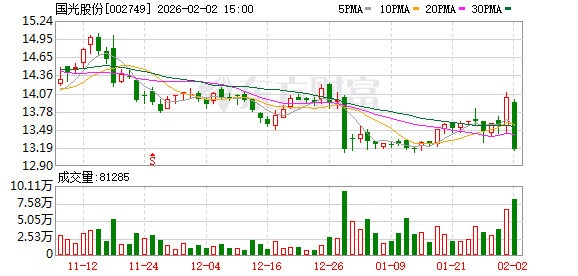
国光股份:公司的技术服务模式对终端推广人员的需求大、技术要求高
Zheng Quan Ri Bao· 2026-02-02 08:40
Core Viewpoint - Guoguang Co., Ltd. emphasizes the importance of technical service models in meeting the demands of terminal promotion personnel, highlighting the need for increased technical marketing staff to cover more untapped markets and crops [2] Group 1: Recruitment and Training - The company plans to enhance campus recruitment efforts, aiming to hire approximately 300 graduates from agricultural colleges in 2025 who have received systematic and professional training [2] - Continuous strengthening of talent training and development is a priority to improve professional technical service capabilities [2] - New sales personnel undergo comprehensive training through centralized training, team training, and mentorship programs, with assessments conducted through written tests and presentations at various learning stages [2]


新农机新服务新活力
Xin Lang Cai Jing· 2026-01-19 22:17
Core Insights - The agricultural development in Zhijiang, Hubei is leveraging technology and socialized service systems to enhance efficiency and reduce costs in farming practices [1][2][3] Group 1: Technological Advancements - The use of agricultural drones equipped with BeiDou navigation systems has significantly improved operational efficiency, completing tasks in 1 hour for 100 acres, a 5-fold increase compared to 3 years ago, while production costs have decreased by 20% [1] - The integration of automated seedling production lines and intelligent environmental control systems in modern nurseries allows for precise management of seedling growth [2] Group 2: Socialized Service System - The "1+3+N" socialized service system, which includes government guidance and the integration of service companies, cooperatives, and family farms, aims to consolidate resources and enhance agricultural productivity [2] - By 2025, the city plans to cultivate 652 socialized service organizations, covering 1.9813 million acres and serving 100,400 households [2] Group 3: Infrastructure and Mechanization - Over the past five years, 278,900 acres of high-standard farmland have been established, achieving a comprehensive mechanization rate of 92.84% for major crops [2] - The focus is on comprehensive governance of land, water, and infrastructure to facilitate efficient agricultural practices [2] Group 4: Future Development Plans - The "14th Five-Year Plan" emphasizes enhancing agricultural production capacity and quality, aiming for a seamless integration of smallholders with modern agriculture [3] - Future initiatives will include customized agricultural machinery services for specific crops and livestock, promoting high-quality farmland construction and advanced agricultural technologies [3]
【宝鸡】新技术新模式扎根田间地头
Shan Xi Ri Bao· 2026-01-19 00:55
Core Viewpoint - The establishment of modern agricultural service centers in Baoji City aims to enhance agricultural productivity and ensure food security through technology-driven solutions and comprehensive support for farmers [1][11]. Group 1: Agricultural Service Centers - The Lai'ao Te Livestock Goat Comprehensive Service Center in Qianyang County is part of Baoji's initiative to create agricultural service centers by 2025, providing technical guidance, material supply, and market connections for farmers [1][11]. - The Ministry of Agriculture and Rural Affairs, along with five other ministries, has issued guidelines to strengthen the construction of modern agricultural service centers, emphasizing the need for an efficient agricultural social service system [1][11]. - Baoji City plans to cultivate over 100 functional and competitive agricultural service centers by the end of 2030, integrating technology and market access to support farmers [11]. Group 2: Smart Farming and Technology Integration - The comprehensive service center has introduced smart farming techniques, such as automated cleaning systems in goat farming, significantly reducing labor and increasing efficiency for farmers [2][4]. - The "Dudu Agricultural Machinery" sharing platform serves as a digital hub for managing agricultural resources, allowing farmers to access a range of services from planting to harvesting [5][6]. - Farmers are increasingly adopting digital solutions, transitioning from traditional methods to more efficient practices, which enhances their confidence in agricultural production [5][6]. Group 3: Education and Knowledge Transfer - The service centers provide educational opportunities for farmers, including workshops on disease prevention and modern farming techniques, fostering a culture of continuous learning [3][4]. - Professional agricultural service companies are actively involved in educating farmers, offering expert guidance and facilitating knowledge sharing through various channels, including online platforms [9][10]. - The integration of expert-led training and digital resources is helping farmers improve their agricultural practices and increase their yields [10]. Group 4: Market Access and Economic Impact - The service centers are designed to create a complete service chain from production to sales, enabling small farmers to connect effectively with larger markets [6][8]. - By leveraging technology and professional support, farmers are experiencing improved sales and reduced production costs, contributing to the overall economic development of the agricultural sector [9][10]. - The initiative aims to ensure that small farmers can benefit from modern agricultural advancements, thereby enhancing their livelihoods and promoting rural revitalization [10][11].