农化

Search documents
国泰海通·策略前瞻丨危中有机:油价冲击下的行业配置
国泰海通证券研究· 2026-03-25 14:27
Core Viewpoint - The current oil price shock will not lead China into a "stagflation" scenario; improved inflation expectations will help catalyze the upward cycle of inventory, and the global energy transition and production security will accelerate capital goods exports from China, presenting opportunities in manufacturing and cyclical industries [6] Group 1: Impact of High Oil Prices on the Industry Chain - High oil prices affect the economic inflation center and rhythm significantly, primarily through industrial production and consumer prices [8] - The cost impact of high oil prices is most pronounced in transportation, chemicals, electricity, and construction, with the ability to transmit costs ranked as upstream > downstream > midstream [10] - High oil prices promote manufacturing price increases and inventory replenishment, with the petrochemical chain being the most benefited [17][19] Group 2: Review of Oil Price Shock Impact on A-shares - The oil price shocks from 2010-2012 and 2021-2022 had diverse impacts on A-shares, with four main mechanisms identified: 1) Rising oil prices boost resource prices and inventory replenishment, benefiting the oil chain and its substitutes [24] 2) Sustained high oil prices increase costs for oil-dependent industries, eroding profits [24] 3) Rising oil prices suppress export demand due to increased global manufacturing costs [24] 4) High oil prices trigger monetary tightening, negatively impacting stock market risk appetite [24] Group 3: Review of the 2010-2012 Oil Price Shock - During the 2010-2012 oil shock, the profitability of cyclical industries was negatively impacted by rising costs, particularly during high oil price plateau periods [27] - The manufacturing sector's profitability was less affected, with stable net profit margins in the machinery and electrical equipment sectors [29] - The consumer and technology sectors were generally less impacted by oil price shocks, although some downstream sectors like agriculture and textiles experienced declines [32][44] Group 4: Review of the 2021-2022 Oil Price Shock - The oil price shock during the 2021-2022 period had limited impact on the supply side, with oil prices rising initially but then declining significantly [40] - The cyclical industries showed resilience, with net profit margins remaining stable despite initial pressures from rising costs [41] - The consumer and technology sectors maintained low sensitivity to oil prices, although some sectors like agriculture and textiles faced challenges [44][49] Group 5: Industry Recommendations - Industries recommended for investment include petrochemicals, coal, and agricultural chemicals, which benefit from price differentials due to rising oil prices [4] - Capital goods sectors such as power equipment, new energy vehicles, and engineering machinery are expected to benefit from global energy transition and production security demands [4] - Industries likely to see inventory replenishment driven by price expectations include construction materials, steel, and chemicals [4]


危中有机:油价冲击下的行业配置
国泰海通· 2026-03-23 11:44
Group 1 - The report indicates that high oil prices will not lead to stagflation in China, as improved inflation expectations can catalyze an upward inventory cycle, benefiting manufacturing and cyclical industries amid global energy transition and capacity security [1] - High oil prices impact the A-share market through four main pathways: cost shock, inventory changes, external demand pressure, and valuation effects [4][33] - The report highlights that the cost transmission ability is ranked as upstream > downstream > midstream, with industries like transportation, chemicals, electricity, and construction being more affected by high oil prices [14][18] Group 2 - Historical analysis of the oil price shocks during the Libyan civil war (2010-2012) and the Russia-Ukraine conflict (2021-2022) shows that while upstream sectors benefited initially, sustained high oil prices eventually suppressed external demand and led to stagflation concerns [33][39] - The report emphasizes that the current economic cycle in China is in a recovery phase rather than overheating, suggesting that rising oil prices could accelerate the recovery of the Producer Price Index (PPI) [27][31] - Recommended sectors include those benefiting from the energy transition and capital goods exports, such as power equipment, new energy vehicles, and construction materials, which are expected to see price increases and inventory replenishment [4][33]
高油价下煤化工等能源套利空间再扩大,蛋氨酸景气持续提升,CAC农展会反馈积极
Shenwan Hongyuan Securities· 2026-03-22 14:06
Investment Rating - The report maintains an "Optimistic" rating for the chemical industry [3][4]. Core Insights - High oil prices are expected to sustain, leading to expanded arbitrage opportunities in coal chemical and natural gas chemical sectors. The price of methionine continues to rise due to strong demand, and positive feedback from the CAC Agricultural Exhibition is noted [3][4]. - The report suggests focusing on companies such as Baofeng Energy, Hualu Hengsheng, Luxi Chemical, Satellite Chemical, and Wanhua Chemical due to favorable market conditions [3][4]. Summary by Sections Macro Economic Judgments - Oil prices are likely to remain high due to geopolitical tensions affecting supply routes. Coal prices are stabilizing at a low point, while natural gas prices are expected to rise temporarily due to conflicts, with potential for reduced import costs as the U.S. accelerates natural gas export facility construction [3][4]. Chemical Sector Configuration - The report highlights the expansion of arbitrage opportunities in coal and natural gas chemicals, with natural gas arbitrage space at $12.11 per million British thermal units and coal arbitrage at 844 RMB per ton, both showing significant increases since the beginning of the year [3][4]. - The report emphasizes the importance of the agricultural chemical chain, with steady growth in fertilizer demand and rising prices for various pesticide products due to supply tightness and seasonal demand [3][4]. Investment Analysis - The report recommends a diversified investment strategy focusing on four areas: alternative energy (coal and natural gas chemicals), agricultural chemicals, fine chemicals with high overseas production ratios, and sectors with improving supply-demand dynamics [3][4]. - Specific companies to watch include Xinjiang Tianye and Wanwei High-tech in the PVA sector, and Yangnong Chemical and Anpon in the agricultural chemicals sector [3][4]. Key Material Focus - The report identifies key materials for growth, including semiconductor materials, OLED panel materials, and lithium battery materials, suggesting companies like Yake Technology and Dinglong Co. for investment opportunities [3][4].




北交所策略专题报告:开源证券春耕需求遇上地缘扰动,行业景气度走高利好北交所农化标的
KAIYUAN SECURITIES· 2026-03-22 10:44
Group 1 - The report highlights that the ongoing geopolitical tensions in the Middle East are causing a significant increase in fertilizer prices, which is expected to boost demand for Chinese fertilizers during the spring farming season [3][12][17] - Urea prices have surged approximately 30% within a week, reaching the highest level since 2022, while domestic production capacity remains sufficient, leading to a relatively stable price increase in China [3][17] - The report identifies key companies in the agricultural chemical sector on the Beijing Stock Exchange, including Ying Tai Biological, Nongda Technology, and Deer Chemical, which are positioned to benefit from rising agricultural input prices and increasing international grain prices [4][25] Group 2 - The report notes a 7.70% decline in the chemical new materials sector on the Beijing Stock Exchange, with all sub-sectors experiencing downturns, including battery materials and chemical products [5][33][34] - Specific companies such as Tian Gong Co. and Ge Bi Jia have shown varied performance, with Tian Gong Co. increasing by 3.84% while others like Jilin Carbon Valley and Guo Liang New Materials faced declines [35][38] - The report provides insights into the price trends of various chemical products, indicating fluctuations in prices for raw materials like MDI and TDI, as well as agricultural chemicals like glyphosate, which has risen to 28,500 yuan per ton [39][40][41] Group 3 - The report discusses the financial performance of companies like Minshida and Kexin New Materials, with Minshida reporting a 26.7% increase in net profit for 2025, driven by strong demand in the electric transformer and AI data center sectors [6][80] - Kexin New Materials also reported a significant increase in revenue and net profit, highlighting the importance of technological innovation and environmental upgrades in a competitive market [6][80] - The report emphasizes the potential for agricultural companies to capitalize on rising prices for fertilizers and pesticides, suggesting a favorable outlook for the agricultural chemical industry [4][25][24]
溯源涨价源头-化工怎么配
2026-03-18 02:31
Summary of Conference Call Records Industry Overview - The conference call primarily discusses the chemical industry and its dynamics in the context of macroeconomic factors, particularly inflation and commodity prices [1][2]. Key Points and Arguments Macroeconomic Context - The risk of stagflation is influenced by the Federal Reserve's monetary policy and the wage-inflation spiral, with expectations of one rate cut in early 2026 [1] - China is more focused on profit distribution within the industrial chain rather than prolonged stagflation [1] - The asset allocation preference is for physical assets (gold, commodities) over real estate/inflation-linked bonds and stocks/bonds [1] Industry Performance - The energy and manufacturing sectors are expected to perform well, while consumer discretionary and technology sectors face dual pressures from costs and demand [1] - The Producer Price Index (PPI) is projected to turn positive by Q2 2026, driven by rising oil prices [1] Cost Transmission in Chemical Chain - Cost transmission varies significantly across the chemical chain, with chemical raw materials and fibers having a transmission coefficient greater than 1, allowing for effective cost pass-through [1][5] - Conversely, rubber and plastics, along with export-oriented manufacturing (automobiles, ships), have a transmission coefficient below 0.5, indicating significant pressure [1][5] Specific Sector Insights - Coal chemical sector shows the highest certainty due to rising oil costs against controlled domestic coal prices, benefiting companies like Baofeng Energy and Hualu Hengsheng [1][6] - The agricultural chemicals sector is entering a peak season, with rising oil prices boosting demand for pesticides, particularly benefiting Yangnong Chemical [1][7] - The refrigerant sector is expected to experience an independent boom cycle over the next 8-10 years, with companies like Juhua Co. and Sanmei Co. being highlighted for potential investment opportunities [1][8] Investment Opportunities - The coal chemical and agricultural sectors are identified as having the highest investment certainty due to favorable market conditions and supply constraints [1][6][7] - Specific companies to watch include Baofeng Energy, Hualu Hengsheng, Yangnong Chemical, and Yara International [1][7] Additional Important Insights - The historical performance of asset classes during stagflation indicates that physical assets outperform financial assets, with commodities being particularly favorable [3][4] - The impact of rising oil prices on the industrial chain is complex, with potential for both profit redistribution and demand suppression [4][5] - The agricultural sector's strong performance is attributed to seasonal demand peaks and supply-side constraints, making it a key area for investment [7] This summary encapsulates the critical insights from the conference call, focusing on the chemical industry and its interplay with macroeconomic factors, investment opportunities, and sector-specific dynamics.


国信证券晨会纪要-20260313
Guoxin Securities· 2026-03-13 01:50
Group 1: Macro and Strategy - The U.S. February CPI data shows a month-on-month increase of 0.3%, with a year-on-year increase of 2.4%, aligning with expectations [8] - The AH premium index is primarily influenced by the financial sector and mid-cap stocks, with the Hang Seng-Hushen Connect AH premium index preferred as a reference [9][10] - The AH premium is inversely related to market capitalization, with larger companies generally exhibiting lower AH premiums [10] Group 2: Public Utilities and Environmental Protection - The government work report emphasizes the construction of a clean, low-carbon, safe, and efficient new energy system, aiming for a reduction of carbon emissions by approximately 3.8% per unit of GDP in 2026 [12] - The public utilities sector saw a 3.42% increase, while the environmental index decreased by 1.41%, indicating a mixed performance across sectors [12] - Investment recommendations include major thermal power companies and renewable energy leaders, highlighting the importance of energy transition and infrastructure development [14] Group 3: Chemical Industry - The potassium fertilizer market is experiencing a stable price increase, with domestic prices rising by 0.46% month-on-month and 6.06% year-on-year [15] - Phosphate rock prices are expected to remain high due to increasing demand from new energy materials, with current prices for 30% grade phosphate rock around 1,040 CNY/ton [15][16] - The demand for glyphosate is anticipated to rise, with prices increasing to 26,500 CNY/ton, driven by geopolitical factors and export opportunities [18][19] Group 4: Pharmaceutical Industry - The IgA nephropathy treatment market is projected to reach a median commercialization scale of approximately $8.3 billion, driven by a significant patient population in China [20] - The government work report positions the biopharmaceutical sector as a new pillar industry, emphasizing innovation and market expansion [25] - Key catalysts for IgAN treatments include upcoming clinical data releases and regulatory approvals, with several drugs expected to enter the market in the near term [23][24] Group 5: Company-Specific Insights - Bilibili's advertising revenue grew by 27% year-on-year, driven by increased demand in various advertising scenarios, while overall revenue reached 8.321 billion CNY [26][27] - Hutchison China MediTech's overseas sales of furmonertinib increased by 26%, with a positive revenue outlook for 2026 [30] - Far East Horizon's net profit remained stable at 3.9 billion CNY, with a focus on maintaining high dividend yields [32][35]
“HALO交易”与“抱团”新战场
CAITONG SECURITIES· 2026-03-02 02:22
1. Report Industry Investment Rating - Not provided in the content 2. Core Viewpoints of the Report - In the current market, the clear - direction and easy - choice stage may have passed. For the US stock market, although the technology sector has good performance and continuous capital investment, its valuation is high, and there are uncertainties such as the sustainability of capital expenditure and the impact of AI on software/light - asset industries. Thus, the market has turned to HALO trading (heavy - asset and low - obsolescence) as a substitute and hedge for technology holdings [3]. - In the A - share market, HALO assets (cyclical/stable/heavy - asset manufacturing) also have high long - term investment value when their valuation is cost - effective, and are important alternative choices for investors who do not want to fully chase the technology sector. From the perspective of fund clustering, there are two strategies: offensive and defensive [4]. - The configuration directions include offensive HALO (such as industries related to price increase and overseas expansion) and defensive HALO (such as low - holding industries and TMT - low - related industries). There are also some technology trading directions with more catalysts and difficult - to - falsify features [5]. 3. Summary According to Relevant Catalogs 3.1 HALO Trading - **Concept and Background** - HALO trading in the US stock market has emerged in recent months, mainly involving cyclical/utility - stable/heavy - asset manufacturing sectors. These sectors have high asset thresholds and low probability of being eliminated in the AI era. Since November 2025, HALO assets in the US stock market have performed well, while software - related sectors have been under pressure. In the A - share market, the corresponding HALO sectors also have an advantage [10]. - The US technology market is difficult to prove or disprove, and although the market cannot be said to have ended, there may be inflection points in the medium - to - long - term. The relative valuation of US technology is at a high level, and the relative valuation of HALO assets is at a low level, showing high long - term cost - effectiveness [13][15]. - **Catalysts** - Recently, commodities such as industrial metals and oil prices have risen rapidly, which will promote the upward movement of HALO sectors such as cyclicals. There is also a risk of re - inflation in the medium - to - long - term, and HALO assets may directly benefit from price increases (cyclicals) or be relatively immune to price increases (utilities) [18]. - **A - share HALO Experience** - When the relative valuation of A - share cyclical and stable sectors is at a low level, they can outperform TMT/All A in the 1 - 2 - year long - term investment perspective. Currently, the relative valuation of cyclical and stable sectors to TMT is at a low level, and it can be used as an alternative choice in the later stage of the technology market [21]. - At the primary industry level, cyclical and stable sectors such as steel, coal, chemical, and building materials have medium - to - low relative valuations, high cash - flow - to - market - value ratios, and recent performance has also improved. Stable sectors such as electricity and transportation have clear long - term barriers and high cash - flow - to - market - value ratios, and have reached the cost - effective range [24]. - At the tertiary industry level, HALO assets are screened according to criteria such as [fixed assets + construction in progress]/total assets > 50% quantile of the whole industry, etc. [27] 3.2 Fund Clustering - **Current Situation** - The TMT position of active funds in this round of the technology wave has reached 40%, exceeding the historical critical point of about 30%. After the collapse of previous rounds of clustering, the position ratio generally declined to below 20% [29]. - **Historical Experience** - In the last year of the four historical rounds of clustering, there were about two quarters with significant win - rate and odds. The win - rate and odds in the middle two quarters were mediocre [31]. - **Alternative Strategies** - **Low - holding/low - correlation reverse layout**: Whether from the "low - holding" or "low - correlation" perspective, the reverse layout strategy at the peak of clustering is effective. The average excess returns of the 12 industry samples in the four rounds of clustering are +20 and +18 pct respectively, with win - rates of 83% and 75% respectively. Currently, "low - holding" industries include textile and clothing, retail, real estate, coal, and construction; industries with "low - correlation" with TMT include banks, coal, petrochemicals, and food and beverage [35][37]. - **New battlefields with industrial catalysts**: The perspective of finding new battlefields in clustering has certain odds. The average excess return of 17 industry samples in the one - year period after the peak of clustering is +8 pct, but the win - rate is average and needs to be combined with industrial trends. Currently, four clues are attracting attention: varieties benefiting from the large - cycle price - spread repair, some upstream equipment radiated by the AI boom, securities companies benefiting from the warming of the capital market, and the infrastructure and real - estate chain [40][41]. 3.3 Overseas Expansion - **Fund Allocation** - In the fourth quarter of 2025, active funds generally increased their positions in overseas - expansion directions, including industries such as communications, non - ferrous metals, and basic chemicals. Most of these industries' position quantiles are still relatively low and have large room for improvement [42]. - **Export Situation** - In December 2025, the year - on - year export increased to +6.6%, and the CAGR marginal growth rate since 2019 has increased. Non - US regions and products such as automobiles, rare earths, integrated circuits, and ships have strong resilience [45]. 3.4 Impact of Geopolitical Conflicts - Historical experience shows that in the short - term impact of geopolitical conflicts, gold and crude oil rise due to risk - aversion, while the risk appetite of A - shares and US stocks is under pressure. The current new round of the Iran - Israel conflict is a type of Middle - East regional conflict, which may mainly affect oil prices and precious - metal prices, with limited impact on the equity side [48]. 3.5 Market Review in February - **Market Trends** - The spring market started steadily, and the cyclical style performed prominently. The cyclical sectors such as steel, building materials, and machinery had relatively high monthly returns, while sectors such as real estate, agriculture, and medicine had negative returns [53][55]. - **Policy** - In February, real - estate policy measures were introduced, such as Shanghai relaxing housing - purchase regulations. There were also policies in other fields, including the release of the "Low - Altitude Economy Standard System Construction Guide (2025 Edition)" and the "Implementation Plan for the High - Quality Development of the Traditional Chinese Medicine Industry (2026 - 2030)" [58][59]. 3.6 Macroeconomic Situation - **Overseas** - US Treasury bonds continued to decline, global funds turned from flowing out of the stock market to flowing in, the US PMI rebounded significantly, and the European OECD leading index continued its upward trend [63][66]. - **China** - In February, the long - and short - term Chinese Treasury bonds showed differentiation, the RMB continued to appreciate, the corporate financing demand rebounded from a low level, the growth rates of M2 and M1 both increased, and the BCI in February increased, with high - frequency data stronger than that of the same period last year [69][71][76]. 3.7 Corporate Profit and Index Valuation - **Corporate Profit** - In January, corporate profits rebounded, with high profit growth in industries such as ferrous metal smelting, non - ferrous metal mining and dressing, and transportation equipment [82]. - **Index Valuation** - There is still room for the stock - bond yield spread, international comparison, and monetary effect. From different perspectives such as the implied ERP, stock - bond yield spread, global valuation comparison, and stock - market - value - to - bond/monetary/GDP ratio, there is potential for the index to rise [87]. 3.8 Transaction Characteristics and Market Trends - **Transaction Characteristics** - The index volatility increased, and the industry rotation speed continued to decline. The margin trading balance as a proportion of the A - share floating market value decreased, and the turnover rate and single - month trading volume both decreased significantly [95][96]. - **Market Trends** - Passive funds flowed into the large - financial sector, and leveraged funds tended to flow out. Southbound funds flowed into the media and banking sectors in February, and the private - equity fund positions continued to rise [98][100]. 3.9 Mid - level Industry Prosperity - **Upstream and Mid - stream** - The prosperity of upstream rare earths, tungsten - molybdenum and other small metals, and mid - stream TMT & new energy sectors increased marginally [103]. - **Downstream** - The prosperity of household appliances and traditional Chinese medicine rebounded, and the prosperity of oil transportation reached a high level and further increased [105]. 3.10 Market Style - **Prosperity Style** - When the prosperity is rising, focus on high ROE and high G; when the prosperity is falling, focus on high DP. In the medium - term, it may gradually shift to high ROE and high expected performance [108]. - **Market - Capitalization Style** - In the short - term, with internal monetary easing and external tightening, small - cap stocks are expected to take the lead. The follow - up needs to pay attention to the central bank's actions [111]. - **Dumbbell Portfolio** - The over - crowdedness of the TMT sector has declined, and its relative performance has recovered. The over - crowdedness of the dividend sector has also fallen to a low level [114].
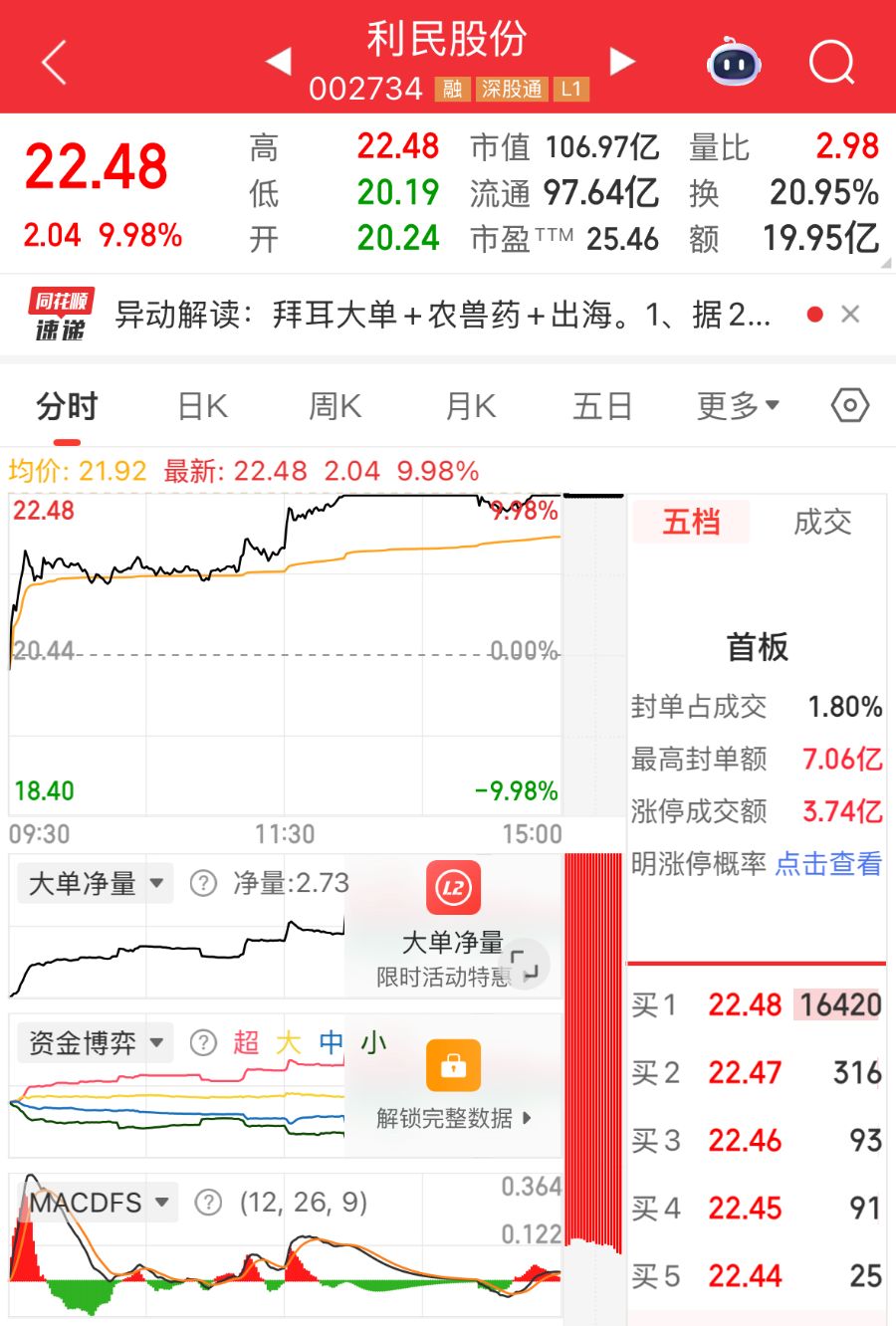
官宣与拜耳签16亿大单,利民股份直线涨停
2 1 Shi Ji Jing Ji Bao Dao· 2026-02-27 08:27
Group 1 - The core viewpoint of the news is that Limin Co., Ltd. has signed a long-term supply contract with Bayer S.A. for agricultural chemicals, which is expected to positively impact the company's financial performance in the coming years [1] - The contract duration is three years, with an estimated total value of 800 million yuan for the first three years, which accounts for approximately 18.83% of the company's audited main business revenue for 2024 [1] - The company emphasizes that this contract is a routine operational contract and will not affect its business independence or create dependency on the counterparty [1] Group 2 - The agricultural chemical market is currently experiencing a price increase, with significant rises in the prices of various agricultural production materials, including a 20.6% increase in urea and a 21.4% increase in pesticides [2] - Limin Co., Ltd. has reported a strong performance forecast for 2025, expecting a net profit attributable to shareholders of 465 million to 500 million yuan, representing a year-on-year growth of 471.55% to 514.57% [2] - The company's substantial profit growth is attributed to increased sales and prices of its main products, improved gross margins, and increased investment income from its affiliated companies [2]

农化板块批量涨停,四部门新政送“融资大礼”,哪些企业要起飞?
Sou Hu Cai Jing· 2026-02-24 08:55
Core Viewpoint - The recent surge in the agricultural chemical sector is driven by favorable policies and marginal improvements in the industry fundamentals, particularly following the announcement of a new financial support mechanism aimed at preventing poverty and promoting rural revitalization [3]. Policy Impact - The joint announcement by the People's Bank of China and other regulatory bodies emphasizes enhancing support for rural enterprises to facilitate their access to multi-tiered capital markets, addressing long-standing financing challenges faced by agricultural chemical companies [3][4]. - The new policy aims to provide more resources for listing guidance, enabling quality agricultural chemical firms to broaden their financing channels through IPOs and refinancing, thus supporting technological upgrades and capacity expansion [3][4]. Industry Dynamics - The agricultural chemical industry is closely linked to food security and agricultural modernization, benefiting significantly from supportive agricultural policies [3]. - The policy also focuses on strengthening financial resource allocation in key areas and developing supply chain financial services, which will promote collaborative development across the agricultural chemical industry's supply chain [4]. Company-Specific Insights - Companies like XinYangFeng, which are engaged in a full industry chain layout, will benefit from the policy support to solidify their market position and alleviate funding pressures for large-scale projects [4]. - Jinzhengdazhong, focusing on technological upgrades and green transformation, will find critical support in overcoming development bottlenecks through enhanced financing options provided by the new policy [5]. - Companies specializing in new fertilizers, such as Batian Co., will see increased demand driven by policy direction and market needs, allowing them to expand capacity and optimize product structures [6].



钱诚天眼:6股争王,2月24日牛妖股风云录(一)
Sou Hu Cai Jing· 2026-02-24 04:52
Group 1 - A-shares experienced a significant surge on February 24, 2026, with all three major indices rising over 1% and trading volume increasing by 307.4 billion [2][3] - The market is witnessing a shift in risk appetite, with resource stocks like oil, gold, and chemicals leading the charge due to macroeconomic factors, while AI hardware stocks also show strong performance [3] - A dual-driven market structure is emerging, characterized by resource inflation and technology growth, indicating a healthy market dynamic [3] Group 2 - Six stocks identified as "bull stocks" share common traits: they are not market leaders but are positioned in mid-low tiers with high safety margins and speculative value [4] - Each stock has a strong thematic driver, such as significant orders or major asset restructurings, which act as catalysts for price surges [4] - Despite underwhelming 2025 Q3 reports, the market focuses on future expectations, with companies like YN Holdings and Roman Shares indicating potential reversals in fundamentals [4] Group 3 - Falsheng (000890) is experiencing a rebound due to a major asset sale, which is expected to optimize its asset structure and improve its financial situation [5] - In 2025 Q3, Falsheng reported a revenue of 205 million, a 24.06% decline year-on-year, but a significant reduction in losses by 44.95% [6] - Yaxing Anchor Chain (601890) benefits from the global shipbuilding cycle and plans to invest in deep-sea mooring equipment, with a 5.28% revenue increase in 2025 Q3 [8][9] Group 4 - Roman Shares (605289) is transitioning into the computing and renewable energy sectors, with recent contracts totaling approximately 2.92 billion, leading to a 63.10% revenue increase in 2025 Q3 [12][13] - YN Holdings (001896) successfully turned a profit in 2025 Q3 with a net profit of 288 million, driven by its investment in computing power [15][16] - Hancable (002498) is positioned to benefit from a significant increase in state grid investments, although it reported an 18.55% decline in net profit in 2025 Q3 [18][19] Group 5 - Meibang Shares (605033) is capitalizing on the chemical cycle and potential price increases, despite a 2.23% revenue decline in 2025 Q3 [21][22] - The company is actively reducing inventory, but faces increased pressure on receivables [22] - The overall market sentiment is leaning towards stocks with strong thematic drivers and positive fundamental shifts, indicating potential investment opportunities [25]