
医疗机构

Search documents
江苏开设619个体重管理门诊!多家医疗机构解锁享“瘦”新模式
Yang Zi Wan Bao Wang· 2025-08-25 09:05
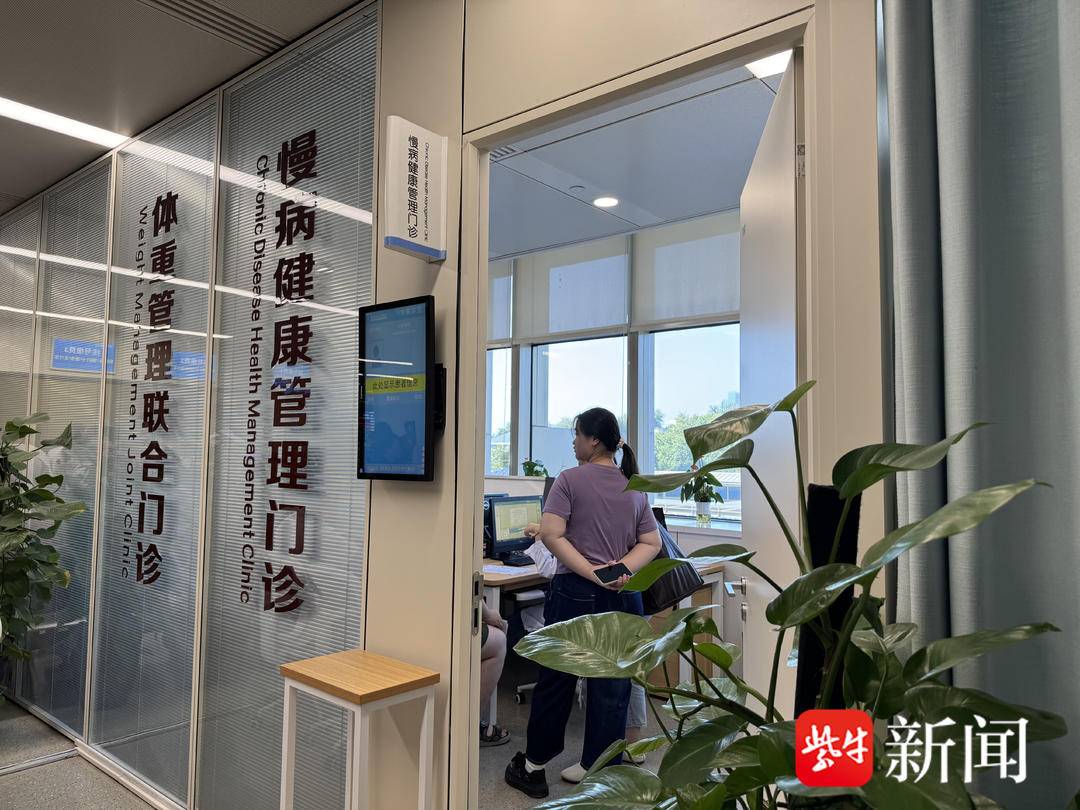
Core Viewpoint - Jiangsu province is actively promoting weight management services in medical institutions, aiming to transform weight loss from folk remedies to scientific treatment, enhancing health and effectiveness [1][3][4] Group 1: Weight Management Initiatives - Jiangsu has established 521 medical institutions with 619 weight management clinics, covering all levels of public hospitals [1] - The newly opened weight management joint outpatient clinic at Jiangsu Provincial People's Hospital has received positive feedback, allowing patients to consult multiple specialists in one visit [3][4] Group 2: Multidisciplinary Approach - The joint outpatient clinic integrates expertise from nutrition, rehabilitation, weight loss surgery, and health check-up centers, providing personalized weight loss plans based on comprehensive assessments [3][4] - The "1+N" model at Nanjing Traditional Chinese Medicine Hospital combines various specialties to offer standardized health weight management services [7] Group 3: Community and Individual Support - Community health service centers are implementing multi-disciplinary cooperation to provide one-stop services for overweight and obese individuals [9] - Personalized treatment plans are being developed for patients, incorporating dietary, exercise, and psychological support [9][10] Group 4: Future Directions - Jiangsu plans to enhance collaboration with education and sports sectors to promote obesity prevention and control among key populations [10][11] - The province aims to improve monitoring and intervention systems for common health issues related to obesity, utilizing smart technologies for health management [11]

全程2分钟,航天中心医院特病医保自助结算系统正式启用
Xin Jing Bao· 2025-08-22 05:59
Core Insights - The Aerospace Center Hospital has launched a self-settlement system for special disease medical insurance, becoming the first medical institution in Beijing to implement this feature [1] - This initiative represents a significant step in optimizing special disease medical insurance services and enhancing patient experience in Haidian District, providing a replicable model for smart medical insurance services across the city [1] Group 1 - The new system addresses the challenges faced by dialysis patients, who often experience long wait times and complex processes at traditional settlement windows [1] - The hospital's finance department collaborated with a technical team to integrate RPA robotic process automation, OCR intelligent recognition, and virtual machine heterogeneous collaboration technology into the hospital information system [1] - The implementation of the system has reduced the time for a single settlement from 15 minutes to under 2 minutes [1] Group 2 - The finance director highlighted that the use of robots in inpatient settlement has been successful, and the technology has now been adapted for outpatient special disease services [1] - Future plans for the hospital include the introduction of voice navigation and facial recognition payment features to further enhance smart payment services [1] - The goal is to minimize patient effort and expedite the settlement process [1]
聚焦2025半年报|贵州百灵上半年实现净利0.52亿元 同比下降40.73%
Zhong Guo Jing Ji Wang· 2025-08-20 09:39
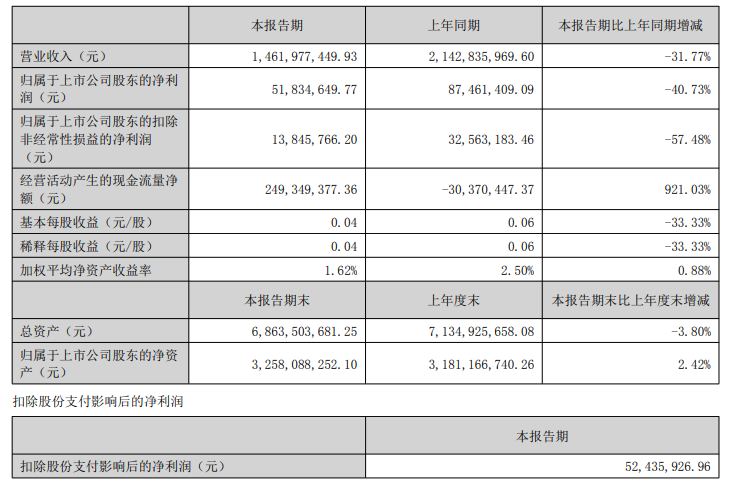
Core Insights - Guizhou Bailing reported a significant decline in both revenue and net profit for the first half of 2025, with revenue at 1.46 billion yuan, down 31.77% year-on-year, and net profit at 52 million yuan, down 40.73% [1][2]. Financial Performance - Total revenue for the reporting period was 1,461,977,449.93 yuan, compared to 2,142,835,969.60 yuan in the same period last year, reflecting a decrease of 31.77% [2][3]. - Net profit attributable to shareholders was 51,834,649.77 yuan, down from 87,461,409.09 yuan, marking a decline of 40.73% [2][3]. - The net profit after deducting non-recurring gains and losses was 13,845,766.20 yuan, a decrease of 57.48% from 32,563,183.46 yuan [2]. - Basic and diluted earnings per share both decreased by 33.33% to 0.04 yuan [2]. - The weighted average return on equity was 1.62%, down from 2.50% [2]. Cash Flow and Assets - The net cash flow from operating activities was 249,349,377.36 yuan, a significant increase of 921.03% compared to -30,370,447.37 yuan in the previous year [2]. - Total assets at the end of the reporting period were 6,863,503,681.25 yuan, down 3.80% from the previous year [2]. Revenue Breakdown by Segment - The pharmaceutical industry remained a crucial support for Guizhou Bailing's performance, contributing over half of the total revenue [1]. - Revenue from the industrial segment was 823,121,873.13 yuan, down 27.82% year-on-year [3]. - Revenue from the commercial segment was 595,118,100.12 yuan, down 37.84% [3]. - Revenue from medical institutions increased slightly to 33,130,122.43 yuan, up 2.21% [3]. - Other segments generated 10,607,354.25 yuan, down 15.89% [3]. Product Revenue Analysis - Revenue from traditional Chinese medicine was 1,271,416,424.40 yuan, a decrease of 37.07% [3]. - Revenue from Chinese medicinal materials increased significantly by 299.47% to 6,100,820.82 yuan [3]. - Revenue from other products rose by 121.55% to 27,939,307.54 yuan [3].

惠城查处3间医疗机构!涉防疫意识薄弱及医疗废物处理违规
Nan Fang Du Shi Bao· 2025-08-11 15:43
Core Viewpoint - The article highlights the enforcement actions taken against three medical institutions in Huicheng District for inadequate pandemic prevention awareness and violations in medical waste management [1] Group 1: Enforcement Actions - Three medical institutions, including Huicheng Li Yingjun Clinic, Huikang Dental Clinic, and Huicheng Puren Outpatient Department, were found to have weak pandemic prevention awareness and violations in medical waste handling [1] - The Huicheng Health Bureau conducted inspections on 35 medical institutions from August 9 to 10, 2025, identifying issues such as unskilled operations in pre-examination and referral processes [1] - Evidence has been preserved, and a formal investigation has been initiated against the identified institutions based on the Infectious Disease Prevention Law and Medical Waste Management Regulations [1] Group 2: Future Actions - The Huicheng District will enhance supervision and inspection of pandemic prevention measures across various industries [1] - Institutions failing to comply with relevant laws and regulations regarding pandemic prevention will face legal consequences [1]
国家级资质落地!毓璜顶医院获批烟威首家“中国血友病治疗中心”
Qi Lu Wan Bao Wang· 2025-08-11 10:40
Core Viewpoint - The establishment of the "China Hemophilia Treatment Center" at Yantai Yuhuangding Hospital marks a significant advancement in the treatment and management of hemophilia, a rare and complex disease, enhancing the overall diagnostic and therapeutic capabilities for patients in the region [1][5]. Group 1: Event Overview - The on-site evaluation and awarding ceremony for the "China Hemophilia Treatment Center" took place at Yantai Yuhuangding Hospital, attended by experts from the China Hemophilia Alliance and other medical professionals [1]. - The event included a comprehensive assessment of the hospital's capabilities in treating hemophilia, involving multiple clinical departments and specialists [3][5]. Group 2: Expert Evaluation - Experts conducted thorough evaluations of various aspects of hemophilia treatment, including patient information registration, diagnosis, laboratory testing, drug supply, multidisciplinary collaboration, emergency treatment processes, rehabilitation, and follow-up education [3][5]. - The evaluation process lasted nearly six months, with a focus on treatment standards, equipment configuration, team building, and patient management [5]. Group 3: Recognition and Future Plans - Yantai Yuhuangding Hospital successfully passed the certification process, becoming the first medical institution in Yantai and Weifang to receive national-level hemophilia treatment certification [5]. - The hospital's leadership expressed commitment to further improving the hemophilia treatment system and providing high-quality medical services to patients in Yantai and surrounding provinces [9].
新泰市人民医院在全省医保基金监管稽核政策座谈研讨会上作交流发言
Qi Lu Wan Bao Wang· 2025-08-11 05:44
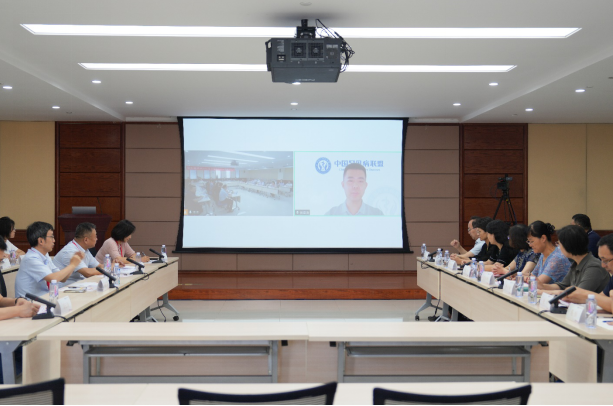
Core Viewpoint - The meeting focused on the implementation of national and provincial medical insurance fund supervision policies, emphasizing the importance of regulatory compliance for the high-quality development of hospitals [1] Group 1: Payment Reform and Cost Management - The hospital is promoting standardized diagnosis and treatment and refined cost management through three measures: 1. Standardizing treatment behaviors by monitoring clinical pathways and insurance payment standards, aiming for a DIP payment rate of around 80% by mid-2025 [2] 2. Strengthening cost control, achieving a 7.08% reduction in average costs per case and a 9.39% decrease in patient out-of-pocket expenses, with a total savings of 183 million yuan in medical insurance funds from drug and consumable procurement [2] 3. Establishing a self-inspection mechanism to enhance fund security, reducing unreasonable charges by 7.86 million yuan annually [2] Group 2: Performance Distribution Optimization - The hospital is implementing differentiated assessments for medical insurance indicators, setting thresholds based on departmental disease characteristics and providing positive incentives, along with a dynamic data feedback mechanism to assist in clinical adjustments [3] Group 3: Recommendations for Regular Supervision - The establishment of a "supervision-hospital" collaborative mechanism is recommended to enhance risk prevention capabilities through training and case sharing, alongside the promotion of intelligent regulatory tools to improve self-inspection efficiency at the grassroots level [4] - The meeting was guided by the provincial medical insurance bureau, with representatives from various medical insurance bureaus and over forty designated medical institutions, highlighting the hospital's innovative "regulation embedded in service" model [4]
国家卫生健康委:医疗机构门诊命名不得标新立异
Ren Min Ri Bao· 2025-08-06 05:38
Core Points - The National Health Commission has issued a notice to standardize the naming of outpatient departments in medical institutions to enhance patient experience and ensure compliance with regulations [1] - Medical institutions are required to align outpatient names with their diagnostic specialties and ensure that specialty outpatient names accurately reflect their characteristics and treatment scope [1] - The notice prohibits names that contradict socialist core values, violate public order, or cause social anxiety and controversy [1] Summary by Categories Regulatory Compliance - Medical institutions must adhere to principles of legality, scientific norms, and clarity in naming outpatient departments [1] - Institutions are instructed to rectify any non-compliant naming practices immediately [1] Patient Experience - Institutions are encouraged to improve signage and management processes to enhance patient navigation and experience [1] - Information about outpatient services should be disseminated through official websites and social media to facilitate patient access [1] Naming Standards - Specialty outpatient names should be concise and clearly reflect the specialty and treatment range [1] - Multidisciplinary outpatient departments must include "Joint Outpatient" or "MDT Outpatient" in their names [1]
国家卫生健康委通知要求医疗机构门诊命名不得标新立异
Ren Min Ri Bao· 2025-08-06 00:28
Core Viewpoint - The National Health Commission has issued a notification to standardize the naming of outpatient departments in medical institutions, aiming to enhance patient experience and ensure compliance with legal and ethical standards [1] Group 1: Notification Requirements - Medical institutions must adhere to principles of legality, scientific accuracy, and clarity in naming outpatient departments [1] - Outpatient names should align with the corresponding medical specialties, and specialty outpatient names must accurately reflect the specialty and treatment scope [1] - Multidisciplinary outpatient names should include the suffix "联合门诊" or "MDT门诊" [1] Group 2: Prohibited Practices - The notification prohibits names that contradict socialist core values, violate public order, or cause social anxiety and controversy [1] Group 3: Implementation Measures - Medical institutions are required to review and rectify any non-compliant naming practices immediately [1] - Institutions should update signage and optimize management processes to improve patient navigation and experience [1] - Information about outpatient services should be disseminated through official websites and social media to facilitate patient access [1]
广西将系统推进医疗机构社会工作
Guang Xi Ri Bao· 2025-07-14 01:37
Core Points - The article discusses the implementation plan for social work in medical institutions in Guangxi, aiming to enhance service quality and improve doctor-patient relationships [1][2] - The plan outlines a timeline for pilot projects starting in 2025, with a goal of full coverage in secondary and higher medical institutions by 2027 [1][2] Summary by Sections Implementation Plan - The plan aims to professionalize, standardize, and systematize social work in medical institutions, emphasizing its role in improving healthcare quality and equity [1] - Pilot projects will be initiated in various types of medical institutions across 14 cities in Guangxi, with a review of experiences in 2026 [1] Service Content - Medical institutions are required to provide diverse social work services, including psychological support, communication coordination, resource linking, multidisciplinary collaboration, health promotion, and charity [1][2] Organizational Structure and Workforce Development - Specific requirements for organizational structure, workforce development, and funding mechanisms are outlined, encouraging the establishment of social work departments in medical institutions [2] - The plan promotes collaboration between universities and hospitals for training, and establishes a comprehensive management mechanism for talent development [2] Financial Support - Medical institutions are encouraged to include social work funding in their annual budgets and explore diverse funding sources for sustainability [2] Shift in Medical Service Model - The implementation of this plan represents a significant shift from a disease-centered to a patient-centered integrated medical service model, aiming to alleviate doctor-patient conflicts and enhance patient experiences [2]
海陵:靶向监督护航医保基金安全
Xin Hua Ri Bao· 2025-07-10 23:02
Group 1 - The article highlights the ongoing efforts in Taizhou's Hailing District to ensure the safe use of medical insurance funds through a special rectification campaign aimed at preventing fraud and misuse [1] - A three-tiered supervision mechanism has been established involving the district's disciplinary inspection and supervision commission, functional departments, and medical institutions, leading to the investigation of 15 corruption and misconduct cases, with 8 individuals formally charged [1] - The campaign is part of a broader initiative to protect the integrity of medical insurance funds, which are crucial for the public's well-being [1] Group 2 - The Taizhou Fourth People's Hospital has implemented a "one-stop service" for chronic disease management, significantly reducing processing time from 5 working days to immediate completion, serving approximately 12,000 people annually [2] - A new prescription management model has been introduced, allowing for an average of over 200 prescriptions to be processed daily, covering 70% of chronic disease patients, while also preventing fraudulent prescriptions [2] - The hospital has adopted a multi-modal real-name medical system to combat the misuse of medical insurance cards, enhancing patient identification through facial recognition and ID verification [2] Group 3 - A regional testing center has been established to address the issue of repeated medical examinations, which is expected to reduce over 600 duplicate tests monthly, saving more than 200,000 yuan in medical expenses and insurance funds annually [3] - The district's disciplinary inspection and supervision commission emphasizes the dual role of safeguarding medical insurance funds while protecting the interests of the public [3] - Future efforts will focus on deepening the results of the special rectification campaign and establishing a long-term regulatory mechanism for medical insurance funds [3]