
Display

Search documents
维信诺:拟与参股公司股东签署《一致行动协议》
Ge Long Hui· 2025-12-18 09:50
Core Viewpoint - The company, Visionox (维信诺), has approved an investment cooperation agreement for the construction of a 6th generation flexible active matrix organic light-emitting diode (AMOLED) module production line, with a total investment of 11 billion RMB [1] Group 1: Investment Agreement - The investment cooperation agreement involves Visionox, Hefei Dongxin Investment Co., Ltd. (合肥东欣), and Hefei Xincheng State-owned Assets Management Co., Ltd. (合肥鑫城) [1] - The total investment for the project is 11 billion RMB, with registered capital of 5.5 billion RMB [1] - Visionox and Hefei Dongxin will each contribute 2.5 billion RMB, holding 45.4545% of the equity, while Hefei Xincheng will contribute 500 million RMB, holding 9.0910% [1] Group 2: Shareholding and Control - As of now, the registered capital of the project company is 2.63 billion RMB, with Hefei Dongxin and Visionox each having contributed approximately 1.195 billion RMB [2] - Hefei Xincheng has transferred its 9.0910% equity stake in the project company to its wholly-owned subsidiary, Hefei Xinzhan Technology Industry Development Group Co., Ltd. [2] - Visionox plans to sign a concerted action agreement with Hefei Xinzhan Technology, establishing a unified action relationship, ensuring Visionox maintains control over the project company [2]

利亚德:显示产品暂未拓展到头盔领域
Ge Long Hui· 2025-12-18 09:23
Core Viewpoint - Liard (300296.SZ) has indicated that its products are widely used across various sectors, including enterprise clients, military units, government agencies, basic energy, public safety, traffic dispatch command, and cinemas, but have not yet expanded into the helmet sector [1] Group 1 - The company’s products are applied in enterprise clients [1] - The company’s products are utilized by military units [1] - The company’s products serve government agencies [1] Group 2 - The company’s products are used in basic energy sectors [1] - The company’s products are involved in public safety [1] - The company’s products are employed in traffic dispatch command [1] Group 3 - The company’s products are utilized in cinemas [1] - The company has not yet expanded into the helmet sector [1]

维信诺:拟签署《投资合作协议二》推进合肥第8.6代AMOLED生产线项目 二期资本金94.43亿元
Xin Lang Cai Jing· 2025-12-18 09:21
Core Viewpoint - The company, Visionox, plans to sign the "Investment Cooperation Agreement II" to advance the Phase II capital investment of the 8.6-generation AMOLED production line project in Hefei, with a total capital of 9.443 billion yuan [1] Group 1 - Visionox announced the collaboration with Hefei Jianxiang and Hefei Xincheng to initiate the capital contribution for the Hefei Guoxian Phase II project [1] - The second phase of capital investment is set at 9.443 billion yuan [1]
2.21亿元,京东方8.6代OLED产线购入新设备
WitsView睿智显示· 2025-12-18 04:56
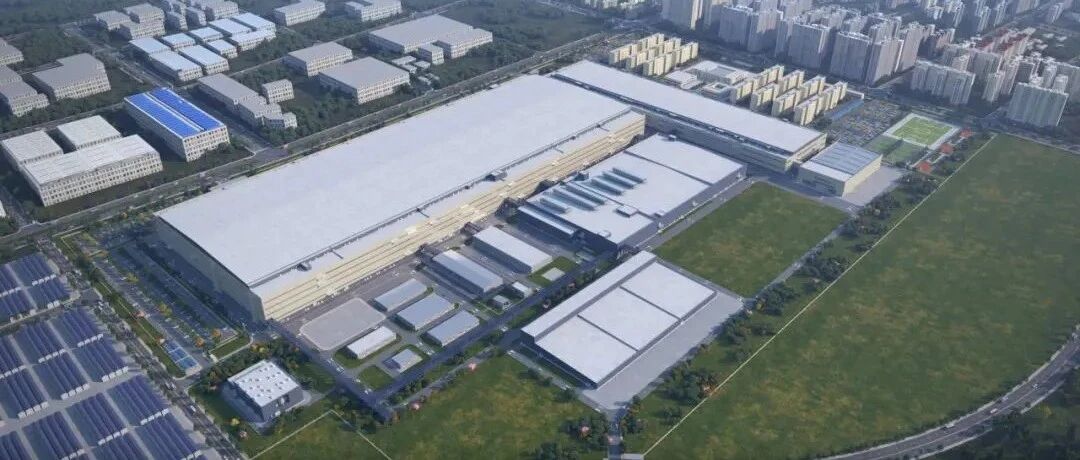
Core Insights - Meerecompany has signed a contract with BOE (Beijing Oriental Electronics) to supply core equipment worth approximately 46.4 billion KRW (about 221 million RMB) for its 8.6-generation IT OLED production line in Chengdu [1][2]. Group 1: Contract and Equipment Details - The equipment supplied by Meerecompany includes edge grinding machines, which are crucial for precisely processing the edges of OLED panels to prevent micro-damage, thereby enhancing durability and quality [2]. - The 8.6-generation IT OLED production line in Chengdu has a total investment of 63 billion RMB and is designed to produce 32,000 glass substrates per month, primarily for high-end touch OLED displays used in laptops and tablets [2]. - The project milestones include the foundation completion in March 2024, topping out in September, and the first lighting expected in December of this year, with mass production targeted for the second half of next year [2]. Group 2: Market Implications - BOE's 8.6-generation OLED production line has already started producing 14-inch OLED panels and supplying them to IT clients such as ASUS and Acer [2]. - Meerecompany views this contract as a recognition of its technological strength and reliability, indicating potential for securing more orders from major panel manufacturers in China and globally [2].


京东方2家控股公司签订加工协议
WitsView睿智显示· 2025-12-12 04:33
Core Viewpoint - The article discusses the signing of a processing agreement between BOE Technology Group Co., Ltd. and BOE Vietnam, which allows for the manufacturing of TFT/TP modules and other products from December 11, 2025, to December 31, 2027 [1][2]. Group 1: Agreement Details - The processing agreement allows BOE Precision Electric to commission BOE Vietnam to provide manufacturing services on a non-exclusive basis for TFT/TP modules and other products [1][2]. - The agreement specifies that BOE Vietnam will charge processing fees based on a cost-plus method, with a profit margin not exceeding 5% of direct costs [4]. - The annual cap for the processing transactions is set at HKD 8 million for the period from December 11, 2025, to December 31, 2025, HKD 40 million cumulatively by December 31, 2026, and HKD 670 million cumulatively by December 31, 2027 [4]. Group 2: Strategic Implications - The strategy of BOE Precision Electric focuses on improving local presence, product diversification, quality, market responsiveness, and cost competitiveness to enhance global sales [5]. - The establishment of overseas production capacity is being explored to meet diverse customer needs regarding cost, origin, and quality [5]. - The processing agreement is expected to provide two strategic advantages: reducing risks associated with establishing production facilities in less experienced regions and effectively utilizing existing assets [5]. Group 3: Company Background - BOE Precision Electric primarily engages in the automotive and industrial display screen business, with capabilities in monochrome display manufacturing and TFT/TP display module assembly [5]. - BOE Precision Electric is the only platform for automotive display modules and systems under BOE, which holds approximately 53.02% control over the company [3][5]. - BOE Vietnam focuses on the research, production, and processing of electronic products such as televisions, displays, and electronic tags, and is a wholly-owned subsidiary of BOE [5].
安徽芯视佳12英寸Micro OLED产线成功点亮
WitsView睿智显示· 2025-12-08 11:59
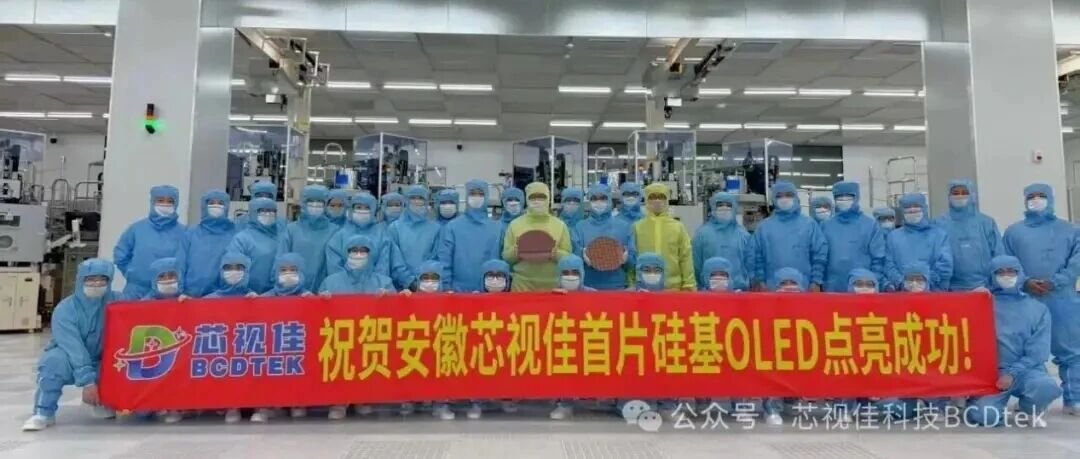
Core Viewpoint - The company, Chipview, has successfully lit up its 12-inch Micro OLED production line (K2 project), marking a new phase in the commercialization of silicon-based OLED products [1]. Group 1: Product Details - The newly lit product features a screen size of 0.49 inches, a resolution of 1920x1080, and a full-color brightness exceeding 3000 nits. After passing reliability tests, it will soon be supplied in bulk to customers [2]. - Chipview specializes in the research and development of silicon-based OLED microdisplay technology, providing silicon-based OLED microdisplay devices and flexible AMOLED display modules for various applications, including VR/AR, electronic viewfinders, special applications, automotive, and mobile portable smart devices [2]. Group 2: Production Capacity and Investment - The company has invested 100 million yuan in its K1 factory located in Huainan, which began production in April 2023, primarily manufacturing silicon-based OLED microdisplays, flexible OLED smartphone screens, and automotive display modules, with an annual output value expected to reach 200 million yuan [2]. - The K2 project has a total investment of 1.5 billion yuan, with the first phase starting construction in June 2023 in Huainan, aiming for a monthly production capacity of 4,000 12-inch wafers, mainly for Micro OLED microdisplays used in AR/VR/MR applications [2]. - Additionally, Chipview is expanding its capacity with the establishment of the K3 factory in Fengcheng, Jiangxi, which was officially set up in November this year [2]. Group 3: Future Plans - The company plans to invest 1 billion yuan in a project focused on high-end OLED module manufacturing, which will be executed in two phases: the first phase aims for an annual production of 12 million flexible OLED modules with two fully automated production lines, while the second phase targets 2.5 million silicon-based OLED display modules, also with two fully automated production lines. The first phase is expected to be operational by the end of December 2025, with a projected annual output value exceeding 1 billion yuan upon full production [4]. - Chipview aims to continuously optimize product performance, enhance production line capabilities, and collaborate with industry partners to promote the industrialization of Micro OLED technology, contributing to the innovative development of the global new display industry [4].
全球电竞显示器头部企业落户安徽合肥
WitsView睿智显示· 2025-12-05 07:14
"幸福肥东"消息,近日,深圳市世纪创新显示电子有限公司(以下简称"世纪创新")肥东智慧显 示产业园项目签约仪式在安徽合肥肥东县政府举行。 肥东项目计划建设厂房约3万平方米,满产后年产值不低于10亿元。 项目将发挥世纪创新在显示器研发制造及市场渠道布局优势,结合肥东产业载体资源,补强区域 显示产业链关键环节,助力肥东融入合肥"芯屏汽合"产业格局,推动新型显示产业集群发展。 创新显示总部位于深圳南山区,公司旗下拥有两个自有品牌:INNOCN(专业显示产品)和泰坦 军团(电竞显示产品)。 在ODM代工方面,公司与宏碁、小米、中兴、阿里巴巴、海尔、创维、TCL、微星等品牌合作, 为客户提供显示器研发和生产服务。 生产方面,公司拥有两大制造基地:广西世纪创新显示电子有限公司一期占地5万平方米,年产 500万台高端显示产品,二期规划年产值超百亿元。另外,湖北世纪联合创新科技有限公司占地2 万平方米,年产120万台高端显示产品。 图片来源:幸福肥东 在上游供应链上,公司与LG、三星、BOE、AUO等屏厂建立战略合作,并与INTEL、NVIDIA、 MSTAR、NOVATK等芯片厂及AUSU、GIGABYTE等板卡集成商建立 ...
柔性屏,打开“显示”新视窗
Ren Min Ri Bao· 2025-12-05 00:07
Core Insights - The display technology is rapidly transitioning from "rigid" to "flexible," with flexible displays increasingly applied in consumer electronics, commercial spaces, and smart interactions [1] - Recent advancements include the development of high-performance stretchable polymer light-emitting diodes (PLED) by the Chinese Academy of Sciences and a prototype stretchable display by LG, achieving approximately 53% stretchability [1] - Flexible displays are reshaping human-computer interaction and creating a new generation of industrial clusters with applications ranging from foldable phones to curved screens [1] Group 1: Flexible Display Technology - Flexible displays are not merely bent versions of traditional glass screens; they require a multi-layered structure that includes flexible substrates, electronic components, packaging films, and cover plates [2] - The flexible substrate materials, such as polyimide and polyester, are essential for withstanding high temperatures and numerous folds without deformation [2] - Core electronic components like thin-film transistors (TFT) and organic light-emitting diodes (OLED) rely on high-performance materials to ensure rapid current flow and self-emission capabilities [3] Group 2: Packaging and Protection - Packaging technology is crucial for protecting flexible displays from environmental factors like oxygen and moisture, with ideal materials being lightweight, flexible, and offering excellent moisture and oxidation resistance [4] - Researchers are developing multi-layer composite packaging and exploring self-healing coatings to enhance the longevity of flexible displays while maintaining their flexibility [4] Group 3: Market Expansion and Applications - The global market for flexible displays is expanding, with projections indicating that shipments of flexible AMOLED panels will reach 631 million units by 2024, accounting for 42% of the smartphone screen market [5] - By 2031, the flexible display market is expected to exceed $173 billion, with a compound annual growth rate of 34.3% [5] - Applications of flexible displays are broadening across various sectors, including smart terminals, wearables, automotive, healthcare, and public services [5] Group 4: Innovations in Wearables and Automotive - In the smart terminal sector, flexible displays are enhancing product forms, with Huawei set to release a foldable laptop with an 18-inch screen in 2025 [5] - Flexible displays are transforming automotive interfaces, with companies like Mercedes and BMW integrating flexible OLED screens into their vehicles for improved interaction [6] Group 5: Healthcare and Public Services - In healthcare, flexible displays are being integrated into wearable medical devices for real-time monitoring of health parameters [7] - Public services are adopting large flexible OLED screens for advertising and information dissemination, with applications in venues like the Paris Olympics [7] Group 6: Future of Intrinsic Flexibility - Current flexible displays rely on external structures for deformation, facing challenges such as fragility and resolution loss [8] - The development of intrinsic flexible materials aims to address these issues by enabling the display itself to withstand deformation through molecular structure and micro-design [9] - Intrinsic flexibility could lead to new applications, integrating sensors and AI for real-time data analysis and adaptive interaction [9][10]
维信诺(002387.SZ):AMOLED产品可应用于智能穿戴、智能手机等领域
Ge Long Hui· 2025-12-01 01:08
格隆汇12月1日丨维信诺(002387.SZ)在投资者互动平台表示,公司AMOLED产品可应用于智能穿戴、智 能手机、平板、笔记本电脑、车载显示、智慧家居等领域,产品具体应用主要依据客户需求。 ...
TCL科技:现有G5.5印刷OLED产线产能正稳步提升至9K/月
Xin Lang Cai Jing· 2025-11-27 09:55
Core Viewpoint - TCL Technology is advancing the industrialization process of printed OLED technology, with significant capacity expansion and quality improvements expected by Q3 2025 [1] Group 1: Production Capacity - TCL Huaxing's existing G5.5 printed OLED production line (t12) capacity is steadily increasing from 3K units per month to 9K units per month [1] Group 2: Quality Improvement - The product yield and quality of the printed OLED technology are continuously improving [1]
