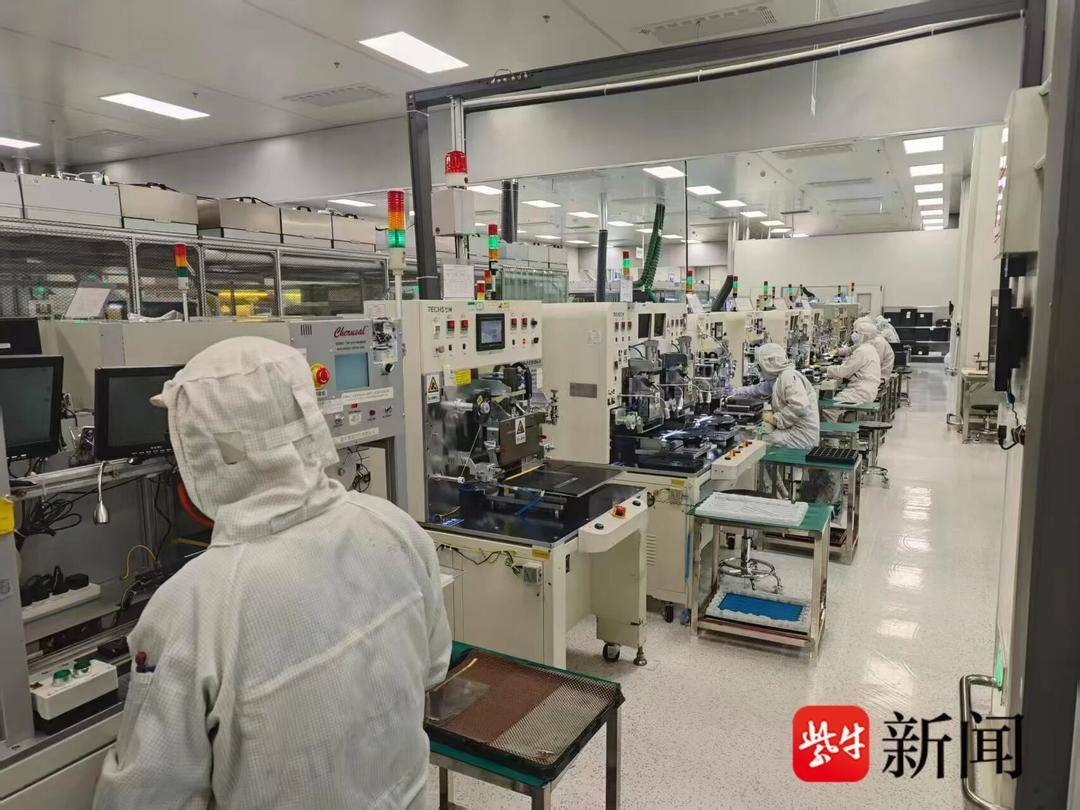
液晶显示模组

Search documents
盐南高新区新河街道企业开足马力冲刺新年“开门红”
Sou Hu Cai Jing· 2026-02-26 07:25
Group 1 - The festive atmosphere of the Spring Festival has not yet dissipated, and companies in the Yannan High-tech Zone are rapidly resuming production to achieve a strong start in the first quarter [1] - Companies are adopting a proactive approach, with many employees returning to work promptly after the holiday, aiming for significant growth in sales and tax revenue in 2025 [1][3][4] - Anbofo Connector Systems (Yancheng) Co., Ltd. has increased its workforce by 106 employees compared to last year, with a total of 670 employees now working to meet production demands [1] Group 2 - Newhui Technology (Jiangsu) Co., Ltd. is focusing on expanding its business in smart automotive, smart home, and mobile protection screen sectors, aiming to become a leading international manufacturer of touch display products [3] - The company reported a 65.9% year-on-year increase in industrial invoiced sales for January 2026, reaching 46.82 million yuan compared to 28.22 million yuan in the same month last year [3] - New Stoneware (Yancheng) Intelligent Manufacturing Co., Ltd. has achieved a remarkable 284.2% year-on-year growth in industrial invoiced sales for January 2026, totaling 34 million yuan compared to 8.85 million yuan in January 2025 [4] Group 3 - The production capacity of New Stoneware's Yancheng factory is set to double from 10,000 to 20,000 units per year, enhancing its ability to meet market demands and support the development of the intelligent equipment industry cluster in Yancheng [4] - The companies are collectively striving for a "good start" in the new year, injecting strong momentum into the high-quality development of the region [5]

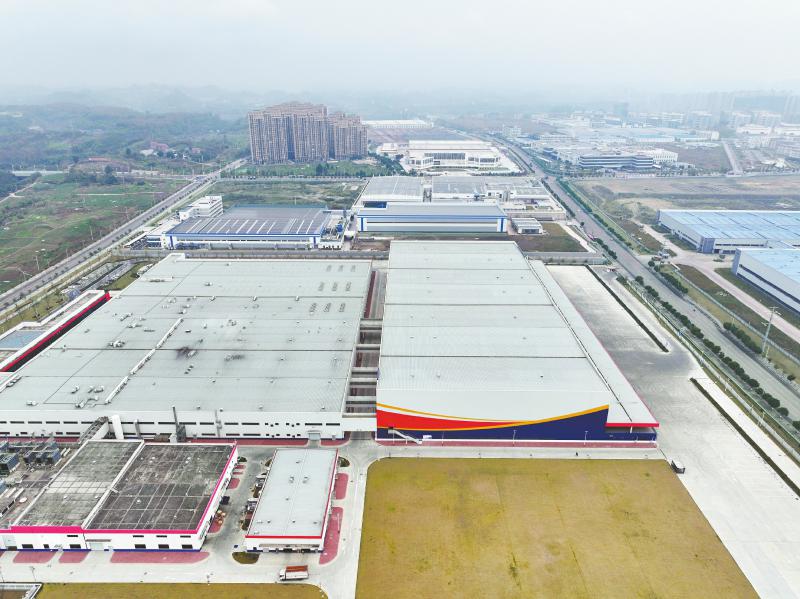
内江经开区:开局之年,以改革破题以创新制胜
Xin Lang Cai Jing· 2026-02-02 23:09
Core Viewpoint - The Neijiang Economic and Technological Development Zone is actively pursuing a "strong industry zone" strategy during the 14th Five-Year Plan period, focusing on cultivating advanced manufacturing clusters and establishing a modern industrial system with key sectors including food and beverage, electronic information, biomedicine, equipment and automotive parts, and new materials [2][3]. Group 1: Development Strategies - The Neijiang Economic and Technological Development Zone aims to achieve high-quality development by becoming a leading area in Sichuan-Chongqing, demonstrating as a model in the West, and ranking among the top 50 nationwide [2]. - The zone has initiated a "first rent then transfer" model for industrial land supply, allowing companies to start projects by paying a rental fee of 1.8 million yuan per acre for five years, addressing the financial pressure and long project timelines associated with traditional land supply methods [2][3]. Group 2: Policy Innovations - Neijiang Economic and Technological Development Zone has been selected as a provincial pilot for "two new and two high" development, achieving second place in the province, which opens new opportunities for high-quality development [3]. - The zone is implementing fiscal reforms and increasing special bond quotas by 120 million yuan to support projects like those of Central Pu Biotechnology Co., Ltd. and Huiyuan Juice, ensuring sufficient funding for industrial development [3]. Group 3: Efficiency Improvements - The zone has streamlined project approval processes, reducing application materials from 93 to 69 items and cutting the number of approval steps from 22 to 11, which has significantly decreased the number of visits required by companies from 18 to 4 [4]. - The full process approval time has been compressed to 37 working days, enhancing operational efficiency for businesses [4]. Group 4: Technological Advancements - Neijiang Jin Hong Crankshaft Co., Ltd. has implemented AI technology in its operations, resulting in a productivity increase of 87.33% and saving over 2,000 work hours [6][7]. - The zone is promoting a "5G+AGV" intelligent warehousing logistics system, which has shown significant cost reduction and efficiency improvements for companies [7]. Group 5: Industry Collaboration - Central Pu Biotechnology's new production facility is expected to generate an annual output value of 1.5 billion yuan, benefiting from a strong local supply chain with suppliers located nearby [8]. - The food and beverage industry in the Neijiang Economic and Technological Development Zone has seen a revenue growth rate of 9.19% in 2025, becoming a core driver of industrial growth [8][9].
2025年广州地区生产总值3.2万亿元 同比增长4.0%
Zhong Guo Xin Wen Wang· 2026-01-30 11:12
Economic Overview - In 2025, Guangzhou's GDP reached 3.2 trillion yuan, with a year-on-year growth of 4.0% [1] - The primary industry added value was 317.02 billion yuan, growing by 3.3%; the secondary industry added value was 7.71 trillion yuan, growing by 1.6%; and the tertiary industry added value was 24.01 trillion yuan, growing by 4.8% [1] Industrial Performance - The industrial added value of large-scale industries in Guangzhou grew by 1.2% year-on-year [1] - The automotive manufacturing sector, undergoing transformation, saw a narrowing decline, with new energy vehicle production increasing by 21.6% [1] - The manufacturing of display devices and integrated circuits grew by 16.1% and 43.0% respectively, with significant increases in production for various components [1] Investment Trends - Fixed asset investment in Guangzhou showed structural optimization, with significant growth in transportation projects, particularly in water and air transport, which grew by 15.9% and 16.1% respectively [2] - Investment in high-tech manufacturing, specifically in aerospace and equipment manufacturing, surged by 60.6% [2] - In high-tech services, investments in information services and R&D design services grew by 22.0% and 29.5% respectively [2] Consumer and Income Data - The total retail sales of consumer goods reached 1.1 trillion yuan, with a year-on-year increase of 5.5% [2] - The per capita disposable income of residents in Guangzhou was 80,591 yuan, growing by 3.6% year-on-year [2] - Over 70% of public budget expenditure was allocated to social welfare, education, and housing security, with respective growth rates of 15.4%, 2.8%, and 2.6% [2] Economic Challenges and Future Outlook - The economic environment in Guangzhou is characterized by ongoing challenges, with industrial production in a low recovery phase and a need for stronger internal demand [3] - Future strategies include market expansion driven by demand, project support, technological innovation, and revitalizing industrial momentum to sustain economic recovery [3]
成都都市圈2025年GDP超3万亿元 同比增长5.8%
Xin Hua Cai Jing· 2026-01-29 09:08
Core Insights - The Chengdu metropolitan area is projected to achieve a GDP of 31,310.2 billion yuan in 2025, with a year-on-year growth of 5.8%, surpassing the provincial average by 0.3 percentage points, and accounting for 46.3% of Sichuan's total GDP [1][2] Economic Performance - Chengdu leads with a GDP of 24,763.6 billion yuan, while Meishan shows impressive growth with a GDP of 2,008.72 billion yuan; Deyang and Ziyang also progress steadily with GDPs of 3,387.1 billion yuan and 1,150.8 billion yuan, reflecting year-on-year growth rates of 5.4% and 5.8% respectively [1] - The industrial added value of the Chengdu metropolitan area is expected to grow by 7.4% year-on-year, exceeding the provincial growth rate by 0.9 percentage points, indicating strong momentum and complementary dynamics among the cities [2] Industrial Development - The metropolitan area is focusing on industrial collaboration, with nine key industrial chains projected to exceed a combined output of 12,000 billion yuan, and over 2,860 cross-city cooperative enterprises established [1] - Notable industrial growth includes Chengdu's new energy vehicles and lithium-ion batteries, with production increasing by 181.0% and 33.9% respectively; Deyang's electronic and communication equipment manufacturing rising by 44.9%; Meishan's lithium battery growth at 31.1%; and Ziyang's electronic information industry growing by 40.1% [2] Investment and Consumption - Fixed asset investment in the Chengdu metropolitan area is expected to grow by 1.8% year-on-year, outpacing the provincial growth rate by 4.2 percentage points [2] - The total retail sales of consumer goods in the metropolitan area are projected to reach 13,790.5 billion yuan in 2025, with a year-on-year growth of 5.4%, also exceeding the provincial average by 0.3 percentage points, and representing 47.3% of Sichuan's total [2]
成都都市圈GDP站上三万亿元台阶
Sou Hu Cai Jing· 2026-01-29 01:24
Economic Overview - The GDP of the Chengdu metropolitan area reached 31,310.2 billion yuan in 2025, accounting for 46.3% of the province's total [1] - The GDP growth rate for the Chengdu metropolitan area was 5.8%, surpassing the provincial average by 0.3 percentage points [1] - The total retail sales of consumer goods in the Chengdu metropolitan area amounted to 13,790.5 billion yuan, with a year-on-year growth of 5.4%, representing 47.3% of the province's total [2] Industrial Growth - The industrial added value above designated size in the Chengdu metropolitan area grew by 7.4% year-on-year, exceeding the provincial growth rate by 0.9 percentage points [2] - Key sectors showed significant growth: - Chengdu's new energy vehicles and lithium-ion batteries saw production increases of 181.0% and 33.9% respectively [2] - Deyang's main industries grew by 5.4%, with electronic and communication equipment manufacturing increasing by 44.9% [2] - Meishan's lithium battery production grew by 31.1%, and liquid crystal display modules increased by 20.6% [2] - Ziyang's electronic information industry grew by 40.1%, and lithium-ion batteries increased by 63.3% [2] Investment Trends - Fixed asset investment in the Chengdu metropolitan area increased by 1.8% year-on-year, outperforming the provincial growth rate by 4.2 percentage points [2] Strategic Initiatives - The "2026 Chengdu Metropolitan Area Collaborative Plan" aims to promote brand matrix expansion and diversify market outreach, focusing on key industries such as electronic information, equipment manufacturing, photovoltaic, and dental medical sectors [3] - The plan targets the expansion of over 800 product categories into overseas markets, with goals to add more than 700 foreign trade enterprises and exceed 4,000 cross-border e-commerce companies [3]
增速达百分之五点八,高于全省零点三个百分点 成都都市圈GDP站上三万亿元台阶
Si Chuan Ri Bao· 2026-01-29 00:25
Economic Overview - The GDP of the Chengdu metropolitan area reached 31,310.2 billion yuan in 2025, accounting for 46.3% of the province's total [1] - The GDP growth rate for the Chengdu metropolitan area was 5.8%, surpassing the provincial average by 0.3 percentage points [1] - Chengdu led the metropolitan area with a GDP of 24,763.6 billion yuan, while Meishan's GDP reached 2,008.72 billion yuan, entering the "200 billion club" [1] Industrial Growth - The industrial added value above designated size in the Chengdu metropolitan area grew by 7.4% year-on-year, exceeding the provincial growth rate by 0.9 percentage points [2] - Notable growth in specific sectors included a 181.0% increase in Chengdu's new energy vehicles and a 33.9% rise in lithium-ion battery production [2] - Deyang's main industries saw a 5.4% increase, with electronic and communication equipment manufacturing growing by 44.9% [2] Investment and Consumption - Fixed asset investment in the Chengdu metropolitan area increased by 1.8% year-on-year, outperforming the provincial growth rate by 4.2 percentage points [2] - The total retail sales of consumer goods reached 13,790.5 billion yuan, with a year-on-year growth of 5.4%, accounting for 47.3% of the province's total [2] Strategic Initiatives - The "2026 Chengdu Metropolitan Area Outbound and Overseas Plan" aims to promote brand matrix expansion and diversify market outreach, focusing on key industries such as electronic information and equipment manufacturing [3] - The plan targets the expansion of over 800 product categories into overseas markets and aims to add more than 700 foreign trade enterprises and exceed 4,000 cross-border e-commerce companies [3]
2025年成都都市圈地区生产总值突破3万亿元
Sou Hu Cai Jing· 2026-01-26 17:13
Core Insights - The Chengdu metropolitan area achieved a historic GDP milestone of 31,323.12 billion yuan in 2025, indicating significant progress in the coordinated development of Chengdu, Deyang, Meishan, and Ziyang [1] - Chengdu remains the economic leader with a GDP of 24,763.6 billion yuan, while Meishan entered the "200 billion club" with a GDP of 2,008.72 billion yuan [1] - The metropolitan area focuses on nine key industrial chains, achieving a total industrial chain output value exceeding 1.2 trillion yuan [1] Industrial Growth - The industrial economy across the four cities is experiencing rapid growth, with Chengdu's industrial added value increasing by 7.0% year-on-year [2] - Strategic emerging industries in Chengdu, such as new energy vehicles, lithium-ion batteries, and integrated circuits, saw significant production increases of 181.0%, 33.9%, and 23.3% respectively [2] - Deyang aims to recreate its industrial landscape, achieving an industrial output value surpassing 500 billion yuan [2] - Meishan's "1+3" industrial output reached 1,842.7 billion yuan, with key sectors like lithium batteries and photovoltaics growing by 31.1% and 5.2% respectively [2] - Ziyang's industrial added value surged by 13.3%, with leading growth in electronic information, clean energy, and equipment manufacturing sectors [2] Fixed Asset Investment - Fixed asset investment in Chengdu grew by 2.2% year-on-year, with significant increases in primary (20.2%) and secondary (20.0%) industry investments [3] - Industrial investment in Chengdu rose by 19.7%, while high-tech industry investment increased by 14.7%, and high-tech manufacturing saw a remarkable growth of 23.4% [3] - Deyang's fixed asset investment grew by 5.1%, maintaining a steady growth trend [3] - Meishan's second industry investment increased by 7.7%, laying a solid foundation for industrial upgrading and sustained economic development [3]
2025年福建GDP破6万亿元 民营经济支撑作用凸显
Zhong Guo Xin Wen Wang· 2026-01-23 17:26
Economic Overview - In 2025, Fujian Province's GDP is projected to reach 60,199.45 billion RMB, reflecting a 5% increase from the previous year at constant prices [1] - The primary industry value added is expected to be 3,354.37 billion RMB, growing by 3.6%; the secondary industry value added is projected at 25,497.34 billion RMB, with a growth of 5.1%; and the tertiary industry value added is anticipated to be 31,347.74 billion RMB, also increasing by 5.1% [1] High-Quality Development - The economic operation in Fujian Province is described as generally stable with progress, indicating stronger resilience and higher quality development [1] - Despite the positive outlook, uncertainties in the external environment and insufficient effective demand are noted as challenges that need to be addressed for sustained economic recovery [1] High-Tech Manufacturing Growth - The value added of high-tech manufacturing above designated size is expected to grow by 14.6%, with specific sectors such as aerospace and equipment manufacturing increasing by 22.9% and electronic and communication equipment manufacturing by 16% [1] - The digital transformation is accelerating, with the value added of digital product manufacturing above designated size projected to increase by 10.9% [1] - Production outputs for key products are expected to rise significantly, including liquid crystal display modules (25.7%), integrated circuit wafers (21.5%), semiconductor discrete devices (19.8%), and electronic components (9.5%) [1] Private Sector Contribution - In 2025, the value added of private industrial enterprises above designated size is projected to grow by 7.2%, surpassing the growth rate of the overall industrial sector by 0.7 percentage points, accounting for 62.8% of the total industrial value added [2] - The private sector is expected to contribute 69.9% to the growth of the industrial sector [2] Consumer Market Dynamics - Policies such as trade-in programs are expected to stimulate consumer potential, with retail sales of household appliances and audio-visual equipment projected to increase by 23.1% and new energy vehicle sales by 27% [2] - The equipment manufacturing sector is anticipated to strengthen its leading role due to increased efforts in equipment upgrades and renovations [2]
北京GDP首破5万亿元大关,意味着什么?
Xin Jing Bao· 2026-01-21 13:13
Economic Overview - In 2025, Beijing achieved a GDP of 52,073.4 billion yuan, marking a 5.4% increase from the previous year, making it the second city in China to surpass the 50 trillion yuan mark after Shanghai [1][2] - The economic growth from 40 trillion to 50 trillion yuan occurred within five years, highlighting a significant milestone in the "14th Five-Year Plan" [2][3] Economic Structure - The primary industry in Beijing contributed an added value of 109.2 billion yuan, a decrease of 0.7%, while the secondary industry added 7,187.4 billion yuan, growing by 3.5%, and the tertiary industry reached 44,776.9 billion yuan, increasing by 5.8% [4] - The service sector accounted for 45,000 billion yuan of the GDP, contributing 4.9 percentage points to the growth, with information services and finance being the key drivers [4][5] Industrial Performance - The industrial sector in Beijing saw a notable performance with a 6.5% increase in added value, surpassing the national average [4] - The electronics manufacturing sector grew by 20.2%, and the automotive manufacturing sector increased by 17.7%, together contributing over 90% to the industrial growth [5] Emerging Industries - The digital economy in Beijing grew by 8.7%, with significant advancements in new energy vehicles, which saw production rise from 20,000 to nearly 700,000 units, making up 47.7% of the city's total automotive production [6][7] - The city has invested heavily in technology innovation, maintaining a research and development expenditure intensity of over 6% for three consecutive years, positioning it as a leader among Chinese provinces [6] Future Outlook - The successful completion of the "14th Five-Year Plan" sets a solid foundation for the "15th Five-Year Plan," with a focus on industrial structure adjustment and the cultivation of emerging growth drivers [9][10] - In 2026, Beijing's economy is expected to continue its upward trajectory, supported by ongoing initiatives to promote economic recovery and stability [10]
北京GDP首破5万亿元大关,意味着什么?|城市论
Xin Jing Bao· 2026-01-21 13:12
Economic Overview - In 2025, Beijing's GDP reached 52,073.4 billion yuan, marking a 5.4% increase from the previous year, making it the second city in China to surpass the 50 trillion yuan mark after Shanghai [2][3] - The economic growth from 40 trillion to 50 trillion yuan occurred within five years, showcasing a significant milestone for the city's economic development [3][4] Economic Structure - The primary industry in Beijing contributed an added value of 109.2 billion yuan, a decrease of 0.7%, while the secondary industry added 7,187.4 billion yuan, growing by 3.5%, and the tertiary industry contributed 44,776.9 billion yuan, increasing by 5.8% [5][6] - The service sector accounted for 45,000 billion yuan of the GDP, contributing 4.9 percentage points to the growth, with information services and finance being the key drivers [5][6] Industrial Performance - The electronic equipment manufacturing industry saw a 20.2% increase in added value, while the automotive manufacturing sector grew by 17.7%, together contributing over 90% to the growth of the industrial sector [6][7] - The production of new energy vehicles reached 699,000 units, a 140% increase year-on-year, making up 47.7% of the total automotive production in Beijing [6][7] Innovation and New Industries - The digital economy in Beijing grew by 8.7%, with significant advancements in artificial intelligence and new energy vehicles, reflecting the city's commitment to technological innovation [7][8] - Approximately 150,000 new technology-based enterprises were established in Beijing, representing over 40% of all new businesses, indicating a robust growth in specialized and innovative sectors [8] Future Outlook - The successful completion of the 14th Five-Year Plan sets a solid foundation for the 15th Five-Year Plan, with expectations for continued economic growth and structural adjustments in the coming years [10]