
Trusts

Search documents
转型深化、质效提升 信托业锚定高质量发展新航向
Zhong Guo Zheng Quan Bao· 2025-12-24 00:28
Core Insights - The trust industry in China is expected to see significant growth and structural optimization by 2025, driven by the implementation of the "1+N" regulatory framework, which aims to solidify the industry's foundation and enhance its service capabilities [1][2]. Regulatory Framework - The "1+N" regulatory system is crucial for the sustainable development of the trust industry, with key policies established to guide the sector's transformation [2]. - The release of the "Asset Management Trust Management Measures (Draft for Comments)" and the revised "Trust Company Management Measures" provides a comprehensive policy framework for the industry [2]. - The "three-category" policy delineates three main business directions: asset service trusts, asset management trusts, and public welfare trusts, which serve as fundamental guidelines for the industry's restructuring [2]. Asset Growth and Market Position - As of June 2025, the total trust assets in China reached 32.43 trillion yuan, reflecting a year-on-year growth of 20.11% and a 9.73% increase from the end of the previous year [3]. - The trust industry holds a significant position within the broader asset management sector, ranking third after insurance asset management and public fund products [3]. - The asset management trust and asset service trust categories have replaced traditional financing and channel trust models, becoming the primary drivers of asset growth since 2021 [3]. Investment Focus and Structural Optimization - By June 2025, 61.60% of funds from trust assets were directed towards financial markets, indicating a shift towards more stable capital market investments [4]. - Trust companies are moving away from traditional lending models to create a framework that supports both the real economy and public welfare [4]. Differentiated Development - The trust industry's asset scale of over 32 trillion yuan marks a significant milestone and serves as a foundation for differentiated development [5]. - Trust companies are leveraging their unique resources to explore specialized sectors, with firms like Huaneng Trust focusing on energy and advanced manufacturing, while Kunlun Trust targets the oil and gas financial sector [5]. Future Outlook - The trust industry is poised for substantial growth, driven by increasing demand for wealth management and comprehensive services due to demographic changes and wealth transfer trends [6]. - Family trusts are recognized as a core growth area, with expectations for high-quality development in compliance, professionalism, and diversification over the next 3-5 years [6]. - Challenges remain in risk management, business transformation, and talent development, necessitating improvements in research capabilities and operational systems [6].
信托业锚定高质量发展新航向
Zhong Guo Zheng Quan Bao· 2025-12-23 20:18
Core Insights - The trust industry in China is undergoing a transformation with the implementation of the "1+N" regulatory framework, which aims to solidify its foundation and optimize its structure while achieving significant growth in scale [1][2][3] Regulatory Framework - The "1+N" regulatory system is crucial for the stable development of the trust industry, with key policies guiding the transformation towards high-quality development [1] - The release of the "Asset Management Trust Management Measures (Draft for Comments)" and the revised "Trust Company Management Measures" provides a comprehensive policy framework for the industry [1] - The "three-category" policy delineates three main business directions: asset service trusts, asset management trusts, and public welfare trusts, which serve as fundamental guidelines for restructuring business functions [1][2] Industry Growth and Structure Optimization - As of June 2025, the total trust asset balance reached 32.43 trillion yuan, reflecting a year-on-year growth of 20.11% and a 9.73% increase from the end of the previous year [2][3] - The trust industry has solidified its position within the broader asset management sector, ranking third in asset scale behind insurance and public funds [2] - The asset management trust and asset service trust models have replaced traditional financing models, becoming the primary drivers of growth since 2021, with asset management trusts accounting for approximately 75.33% of total trust assets [3] New Opportunities and Market Trends - The trust industry is exploring differentiated development paths, focusing on specialized sectors such as energy and advanced manufacturing [4] - The growing demand for wealth management and comprehensive services, driven by demographic changes and wealth transfer, presents significant opportunities for the trust industry [4] - Family trusts are recognized as a core area for growth, with expectations for the market to achieve new breakthroughs in the next 3-5 years due to increasing personalized needs and the promotion of property and equity trust registration trials [4]
官方披露:李民吉,严重违纪违法
Xin Lang Cai Jing· 2025-12-23 03:49
Group 1 - The core point of the article is the serious disciplinary and legal violations involving Li Minji, former Party Secretary and Chairman of Huaxia Bank, as confirmed by the Beijing Municipal Committee's recent meeting [1][3] - The Beijing Municipal Committee's eighth plenary session approved the resolution regarding Li Minji's violations, indicating significant political repercussions for him [1] - Li Minji has a strong background in finance and state-owned assets, having held various significant positions in financial institutions, including Huaxia Bank [3] Group 2 - Li Minji was born in January 1965 and has advanced degrees in economics and management, highlighting his academic qualifications [3] - His career includes roles such as Deputy General Manager at Beijing State-owned Assets Management Co. and Chairman of Beijing International Trust Co., showcasing his extensive experience in the financial sector [3] - In January 2025, Li Minji resigned from his position as Chairman of Huaxia Bank for personal reasons, which may have been influenced by the ongoing investigations [3]


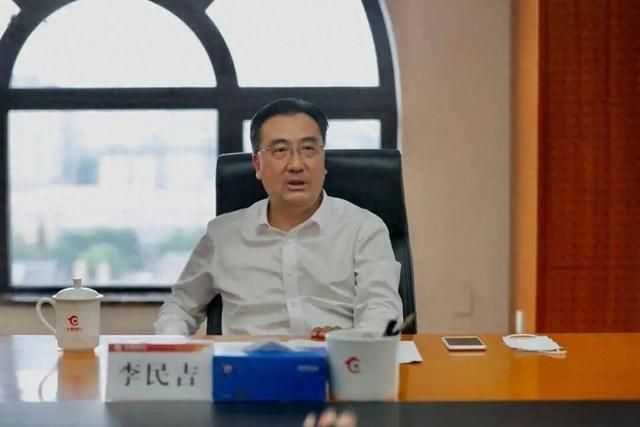
官宣!华夏银行原董事长李民吉,严重违纪违法
Zheng Quan Shi Bao Wang· 2025-12-23 01:44
Core Viewpoint - The former chairman of Huaxia Bank, Li Minji, has been officially confirmed to be under investigation for serious violations of discipline and law, following his sudden resignation 11 months prior [1][4]. Group 1: Resignation and Investigation - Li Minji resigned from his position as chairman of Huaxia Bank on January 27, 2025, citing "personal reasons," which occurred during a controversial period of extended service [1][5]. - His resignation came just over a month after being elected as the chairman of the ninth board of directors on December 13, 2024 [1][5]. - The official announcement of his resignation lacked the customary expression of gratitude typically included for departing executives, raising suspicions about his situation [2][5]. Group 2: Background and Career - Li Minji has a significant background in finance and state-owned assets, having held multiple positions, including chairman of Beijing International Trust [6]. - He was born in January 1965 and holds advanced degrees in economics and management [6]. - His tenure at Huaxia Bank lasted nearly 8 years, exceeding the regulatory limit of 7 years for key personnel [1][5]. Group 3: Regulatory Issues - Since 2025, Huaxia Bank has faced regulatory penalties totaling approximately 118 million yuan, primarily related to issues in loan management, payment processing, and anti-money laundering practices [3][6]. - The bank has stated its commitment to addressing these regulatory issues and implementing corrective measures [3][6].
官宣!华夏银行原董事长李民吉,严重违纪违法
券商中国· 2025-12-23 01:25
Group 1 - The former chairman of Huaxia Bank, Li Minji, has been confirmed to be under investigation after resigning suddenly 11 months ago [1][2] - The Beijing Municipal Committee recently reviewed and approved a report on Li Minji's serious disciplinary violations, marking the first official acknowledgment of his issues [2] - Li Minji resigned from his position as chairman of Huaxia Bank on January 27, 2025, citing "personal reasons," shortly after being elected to the role [2][3] Group 2 - Notably, the resignation announcement for Li Minji lacked the customary expression of gratitude typically included for departing executives, which raised suspicions about his situation [3] - By June 2025, the National Committee of the Chinese People's Political Consultative Conference confirmed the revocation of Li Minji's status as a committee member [3] - Li Minji has a significant background in finance and has held various positions, including roles at Beijing International Trust and the China Trust Association [3] Group 3 - Several executives from Beijing International Trust, where Li Minji previously worked, have also been investigated for serious violations [4] - Both Huaxia Bank and Beijing Trust are under the jurisdiction of the Beijing State-owned Assets Supervision and Administration Commission [4] - Since 2025, Huaxia Bank has faced regulatory penalties totaling approximately 118 million yuan, primarily related to issues in core business areas such as loan management and anti-money laundering [4]

官方披露:华夏银行原董事长李民吉严重违纪违法
Xin Lang Cai Jing· 2025-12-22 13:23
Group 1 - The core point of the article is the serious disciplinary and legal violations involving Li Minji, former chairman of Huaxia Bank, as confirmed by the Beijing Municipal Committee's recent meeting [1] - The meeting approved the resolution regarding the serious violations of Li Minji, indicating significant governance issues within the financial institution [1] - Li Minji has a strong background in finance and state-owned assets, having held various significant positions in financial institutions, which raises concerns about governance and compliance in the banking sector [1] Group 2 - Li Minji was born in January 1965 and has an extensive educational background, including a master's degree in economics and a doctorate in management [1] - His career includes roles such as the deputy general manager of Beijing State-owned Assets Management Co., and chairman of Beijing International Trust Co., highlighting his influence in the financial sector [1] - The article notes that Li Minji resigned from his position as chairman of Huaxia Bank in January 2025 for personal reasons, which may indicate underlying issues within the bank's leadership [1]
万亿元市场可期,绿色信托凭多元创新激活双碳金融
Hua Xia Shi Bao· 2025-12-19 09:02
Core Viewpoint - The green trust sector is positioned to play a crucial role in the low-carbon transformation of the trust industry, driven by the dual goals of "dual carbon" targets and high-quality transformation of the trust industry [2][5]. Group 1: Green Trust Development - The China Trust Industry Association has released the "Top Ten Green Trust Cases for 2025," showcasing diverse practices in asset services, asset management, and public welfare charity within the green development sector [2]. - Green trusts can serve as protectors of ecological conservation, supporters of rural revitalization, and enablers of industrial upgrades, indicating a broad potential for future development [2][5]. Group 2: Case Examples - In asset services, the "Solar Energy Series" household photovoltaic service trust by Foreign Trade Trust has enabled farmers to generate their own electricity and sell it, resulting in an average annual income increase of over 3,000 yuan per household, with some remote areas seeing income growth of 40% [3]. - The Shandong Guoxin CCER carbon asset income rights project has successfully mobilized trust funds to help enterprises realize carbon asset benefits, supporting expansion and environmental upgrades [4]. - The Yunnan Trust's endangered species protection charity trust has raised 470,000 yuan, focusing on habitat restoration and species protection, while also emphasizing cultural and talent development [4]. Group 3: Market Trends and Challenges - In 2024, the green trust sector is projected to see a significant increase, with 390 new projects and a total scale exceeding 300 billion yuan, driven by investments in infrastructure and energy transition [6][8]. - Despite growth, challenges such as structural imbalances and insufficient research capabilities hinder the development of green trusts, with many smaller firms struggling to participate [7]. - The introduction of the "Green Trust Guidelines" and ESG disclosure standards aims to clarify operational boundaries and improve the recognition of new green projects, providing a clearer framework for trust companies [7]. Group 4: Future Outlook - By 2025, the green trust market is expected to exceed 1.2 trillion yuan, accounting for 27% of the total trust market, with a compound annual growth rate of over 28% [8]. - The marginal profit margin for green trusts is projected to be 58%, surpassing the industry average by 17 percentage points, highlighting their potential as a key growth driver for the industry [8].

上海慈善信托小步快跑 2024年备案增长63.6%
2 1 Shi Ji Jing Ji Bao Dao· 2025-12-19 05:05
Group 1 - The core viewpoint of the article highlights Shanghai's exploration of charitable trusts as an innovative tool to enhance public welfare and promote social philanthropy under the backdrop of "finance for good" and "third distribution" [1][7] - As of December 31, 2024, Shanghai has recorded a total of 57 charitable trusts with a total asset scale of approximately 136 million yuan, showing a steady and accelerated growth trend [1][2] - In 2024, Shanghai established 18 new charitable trusts, representing a year-on-year increase of 63.6%, with small charitable trusts under one million yuan becoming the main contributors to this growth [2][3] Group 2 - The "small-scale" trend in Shanghai's charitable trusts is a result of institutional optimization, including the lowering of the registration capital threshold for establishing charitable trusts [3][4] - The report indicates that the majority of established charitable trusts are categorized into four types: precise assistance, sector support, strategic leadership, and professional construction [4][5] - In terms of asset management, 73% of the charitable trust assets are invested in cash management products, with an average return rate concentrated in the 1.5%-2.0% range [5][6] Group 3 - In 2024, the total charitable expenditure from Shanghai's charitable trusts reached 15.22 million yuan, with various expenditure categories reflecting a diverse range of funding needs [6] - All 57 charitable trusts in Shanghai have appointed supervisors, primarily from law firms, ensuring compliance and effective oversight [6][7] - The report emphasizes the potential for high-quality development of charitable trusts in Shanghai, driven by effective integration between the charitable and trust sectors [7][8] Group 4 - The population of Shanghai is projected to reach approximately 24.8 million by the end of 2024, with a rapidly aging demographic creating new social welfare needs [8] - The report suggests that financial tools can be explored to meet the socialized "entrustment" needs of the population, particularly in long-term care and asset protection for vulnerable groups [8]
中国信托业协会发布2025绿色信托十大案例
2 1 Shi Ji Jing Ji Bao Dao· 2025-12-18 08:09
Core Viewpoint - The 2025 Central Economic Work Conference emphasizes the importance of "dual carbon" goals, promoting a comprehensive green transformation, with green trust emerging as a key tool for activating green assets and enabling low-carbon transitions [1] Group 1: Green Trust Development - The China Trust Industry Association recently released the "Top Ten Green Trust Cases of 2025," showcasing the achievements of the trust industry in green transformation [2] - The ten cases cover three main categories: asset services, asset management, and public welfare charity, highlighting exemplary practices in the trust business [2] - Notable projects include carbon asset revenue rights, biodiversity charity trusts, and various renewable energy investment trusts [2] Group 2: Industry Insights - The development of green trust is seen as a necessary choice for the trust industry to return to its core, reshape business logic, and find new growth points [3] - The release of these cases reflects the industry's active exploration and aims to inspire more capital and professional resources to participate in green development [3] - Trusts are recognized for their diverse, full-chain service capabilities in supporting the green transformation of the economy and society [3] Group 3: Future Directions - The trust industry is encouraged to enhance innovation in green trusts to further advance green transformation [4] - Green trusts are positioned as protectors of ecological conservation, supporters of rural revitalization, and enablers of industrial upgrades [3][4] - The published cases provide replicable and promotable practice models for the industry, indicating a broad and promising future for green trust development [3]
“凤凰振翼” 国民信托再获上证报“最佳风险处置服务信托奖”
Jin Rong Jie· 2025-12-17 11:14
Core Viewpoint - The "Phoenix 16" trust plan by Guomin Trust has been recognized for its excellence in risk disposal services, winning the "Best Risk Disposal Service Trust" award at the 2025 Nantong Investment Conference, marking its second consecutive win and fifth consecutive year on the "Integrity Trust" list [1]. Group 1 - The "Phoenix 16" trust plan supports the coordinated restructuring of listed companies, specifically Helitai Technology Co., Ltd. and Jiangxi Helitai Technology Co., Ltd., facilitating the optimization of asset and governance structures [2]. - Guomin Trust's design of the trust plan, which involves asset stripping as the underlying asset, has effectively promoted the smooth implementation of the restructuring plan and helped restore normal operations for the restructured companies [2]. - The trust plan has demonstrated the advantages of risk isolation and asset independence, ensuring the rights of creditors are protected [2]. Group 2 - The "Phoenix 16" trust plan provides valuable practical experience for future bankruptcy restructuring cases, particularly for listed companies, serving as a good example in the industry [3]. - Guomin Trust has established itself as a leading risk disposal service trust institution in China, with its "Phoenix" series of restructuring trusts becoming one of the most recognized service brands in the field [3]. - Since 2024, the company has successfully secured multiple restructuring service trusts for listed companies, exploring various business models to enhance the effectiveness of restructuring services and contribute to the high-quality development of China's capital market [3].