
互联网医疗

Search documents
港股异动丨互联网医疗股拉升 平安好医生一度涨超16% 方舟健客盘中涨至9%
Ge Long Hui· 2025-09-03 02:45
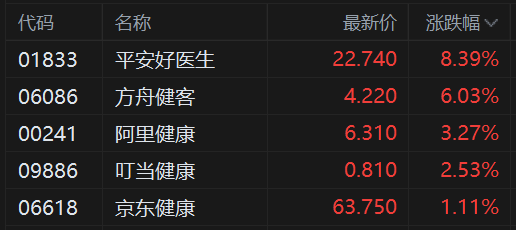
Group 1 - The core viewpoint of the news highlights a significant rise in Hong Kong's internet healthcare stocks, particularly Ping An Good Doctor, which saw an increase of over 16%, reaching a new high [1] - Companies like Ping An Good Doctor, Alibaba Health, JD Health, and WeDoctor are increasingly investing in AI, which is believed to provide greater capital imagination and allow these platforms to move away from low-margin businesses such as selling drugs, advertising, and appointment bookings [1] - The National Healthcare Security Administration has included AI-assisted diagnosis in the pricing structure, indicating a policy shift that could reshape the cost structure, service radius, and business models in the healthcare industry over the next decade [1] Group 2 - Stock performance data shows that Ping An Good Doctor is priced at 22.740 with an increase of 8.39%, Ark Health at 4.220 with a rise of 6.03%, Alibaba Health at 6.310 with a gain of 3.27%, Dingdang Health at 0.810 with an increase of 2.53%, and JD Health at 63.750 with a rise of 1.11% [2]


里昂:升阿里健康目标价至6.5港元 原研与创新药销售强劲且持续增长
Zhi Tong Cai Jing· 2025-09-02 06:55
Core Viewpoint - The report from Citi indicates an accelerated trend of original research drugs moving from "in-hospital" to "out-of-hospital" markets, leading to an upward revision of Alibaba Health's (00241) adjusted net profit forecasts for fiscal years 2026 and 2027 by 8% and 12% respectively, reflecting a more optimistic outlook on drug sales [1] Group 1: Financial Projections - Alibaba Health has raised its revenue growth guidance for fiscal year 2026 to 10% to 20%, up from the previous range of 5% to 10% [1] - The adjusted net profit growth guidance has also been increased to 20% to 30%, compared to the earlier forecast of 10% to 20% [1] - The strong sales performance of original and innovative drugs, particularly GLP-1 medications, has contributed to these positive adjustments [1] Group 2: Market Trends - The robust sales data from Alibaba Health and JD Health (06618) confirms the accelerating and sustainable trend of prescription drug outflow [1] - As original and innovative pharmaceutical companies expand new sales channels, online platforms like Alibaba Health and JD Health emerge as the biggest beneficiaries [1] Group 3: Target Price Adjustment - The target price for Alibaba Health has been raised from HKD 4.8 to HKD 6.5, while maintaining an "outperform" rating [1]
港股异动 | 阿里健康(00241)涨超5% 里昂看好药品销售前景 上调公司目标价
智通财经网· 2025-09-02 06:13
Core Viewpoint - Alibaba Health (00241) shares rose over 5%, reaching HKD 6.14, with a trading volume of HKD 14.52 billion, following an upgrade in revenue and profit growth guidance by Citi [1] Group 1: Financial Guidance - Citi raised Alibaba Health's revenue growth forecast for FY2026 to 10%-20% from the previous 5%-10% [1] - The adjusted net profit growth guidance was also increased to 20%-30% from 10%-20% [1] Group 2: Market Trends - The strong sales performance of original and innovative drugs, particularly GLP-1 medications, exceeded expectations [1] - The trend of prescription drug outflow is accelerating and appears sustainable, with Alibaba Health and JD Health being the primary beneficiaries [1] Group 3: Profit Forecast Adjustments - Based on the accelerated shift of original drugs from "in-hospital" to "out-of-hospital" markets, Citi adjusted Alibaba Health's net profit forecasts for FY2026 and FY2027 upwards by 8% and 12% respectively [1] - The target price for Alibaba Health was raised from HKD 4.8 to HKD 6.5, maintaining an "outperform" rating [1]
里昂:上调阿里健康目标价至6.5港元
Zheng Quan Shi Bao Wang· 2025-09-02 05:58
Core Viewpoint - The report from Citi highlights that Alibaba Health has raised its revenue growth guidance for the fiscal year 2026 to 10%-20% and adjusted net profit growth guidance to 20%-30%, primarily driven by better-than-expected sales performance of innovative drugs, particularly GLP-1 medications [1] Company Summary - Alibaba Health's strong sales data, along with that of JD Health, confirms the acceleration and sustainability of the trend of prescription drug outflow [1] - The online platforms are identified as the biggest beneficiaries for innovative pharmaceutical companies in expanding new sales channels [1] - Citi has revised its adjusted net profit forecasts for Alibaba Health for fiscal years 2026 and 2027 upwards by 8% and 12% respectively [1] - The target price for Alibaba Health has been increased from HKD 4.8 to HKD 6.5, while maintaining an "Outperform" rating [1]
独家|丁香园最快今年赴港上市:历经25年从BBS到中国最大的专业医生平台
IPO早知道· 2025-09-02 02:00
Core Viewpoint - The article discusses the upcoming IPO of Dingxiangyuan, a digital healthcare technology company, marking a significant milestone for the 25-year-old enterprise [2][3]. Company Overview - Dingxiangyuan started as a BBS forum in 2000, aimed at providing a platform for academic exchange among doctors. It began commercial operations around 2007, exploring various business models including recruitment, B2B e-commerce, and marketing solutions [3]. - The company has served over 100 million general users and has more than 9 million professional users, accounting for 80% of the national health technicians, including over 4.05 million doctors, covering more than 90% of doctors in the country [3]. Vision and Mission - The founder and chairman, Li Tiantian, stated that Dingxiangyuan's vision is "more health, better life," aiming to promote healthy living habits through health education, products, and online consultations. The mission is to "gather professional strength and create reliable products," focusing on delivering evidence-based medical knowledge safely and reliably to the public [4]. Investment and Market Trends - Since its establishment, Dingxiangyuan has received investments from notable institutions such as DCM, Shunwei Capital, Tencent, Zhi Xin Capital, and Hillhouse Capital. Recently, several leading domestic internet healthcare companies, including WeDoctor, Weimai, Meixin, Qingsong Health, and Health 160, have initiated their IPO processes in Hong Kong [5].

互联网医疗平台谋变,押注AI争夺下一个十年
3 6 Ke· 2025-09-01 08:28
Core Insights - The integration of AI has become essential for internet healthcare platforms, with companies like Alibaba Health, JD Health, and WeDoctor making significant investments in AI to enhance their business models and profitability [1][3][5] - AI is expected to transform the cost structure, service radius, and business models of the healthcare industry over the next decade, as evidenced by the increasing focus on AI in financial reports from major players like Ping An Good Doctor [3][5][8] Group 1: AI Adoption and Financial Impact - Major internet healthcare platforms are leveraging AI to escape low-margin business models centered around drug sales, advertising, and appointment bookings [5][6] - Ping An Good Doctor reported a slight increase in gross margin to 33.6% in the first half of the year, up from 32.2% the previous year, attributed to AI empowerment and business structure optimization [3][5] - JD Health's revenue from pharmaceutical and health product sales reached 488 billion RMB in 2024, a 6.9% increase from the previous year, demonstrating the positive impact of AI on operational efficiency and sales [11] Group 2: Market Trends and Valuation - The stock prices of companies prioritizing AI strategies, such as JD Health and Ping An Good Doctor, have surged significantly, with JD Health's stock increasing by 1225.68% since August 2022 [8] - The AI healthcare market in China is projected to grow from 27 billion RMB in 2019 to nearly 300 billion RMB by 2028, indicating a robust expansion driven by technological and policy support [8][9] - AI platforms are expected to enjoy higher valuations, transitioning from healthcare service providers to technology stocks, as the application of AI in healthcare is seen as highly undervalued [6][8] Group 3: Strategic Differentiation Among Platforms - Different platforms are adopting distinct strategies based on their resources, with Alibaba Health and JD Health focusing on operational efficiency while vertical platforms like WeDoctor and Ark Health aim for growth through technology [9][12] - Smaller platforms face challenges in profitability, as those not selling products often struggle to generate revenue, highlighting the importance of a clear business model [12][19] - The AI narrative in healthcare is complicated by high R&D costs and long return cycles, making it difficult for smaller players to compete effectively [17][19] Group 4: Challenges and Market Dynamics - The healthcare AI sector faces a trust deficit among consumers, which can hinder adoption and willingness to pay for AI services [23][25] - The high costs associated with AI products and limited reimbursement from insurance policies create barriers for healthcare institutions to invest in AI solutions [25][26] - The competitive landscape is characterized by a lack of differentiation among AI healthcare products, making it challenging for smaller platforms to establish a unique market position [25][26]

【真灼港股名家】美股回落港股争持,平安好医生业绩强劲增长
Xin Lang Cai Jing· 2025-09-01 06:16
Group 1: Market Overview - US stock market declined last Friday due to persistent high inflation data, limiting the prospects for interest rate cuts, leading to a drop in major indices [1] - The US dollar weakened, while the yield on the US ten-year treasury rose to 4.23%, gold prices remained strong, and oil prices fluctuated downwards [1] - Hong Kong stocks are expected to open higher following the positive performance of pre-market securities, with the market continuing to hover around the 25,000-point level [1] Group 2: Company Performance - Ping An Good Doctor (1833) reported total revenue of 2.502 billion RMB for the first half of the year, a growth of 19.5% [2] - Adjusted net profit reached 165 million RMB, marking an increase of 83.6%, with a gross margin of 33.6%, up 1.4 percentage points from the same period last year [2] - The company deepened collaboration with Ping An Group hospitals, with F-end revenue growing by 28.5% to 1.433 billion RMB and a paid user base of approximately 20 million, up 34.6% [2] Group 3: Business Segments - B-end enterprise business revenue increased by 35.2% to 527 million RMB, serving over 3,500 paid enterprise clients, a growth of 37.2% [2] - The number of B-end paid users exceeded 3.6 million, reflecting a growth of 39.2% [2] - The company launched a "7+N+1" medical AI product system, with AI-assisted consultation accuracy at approximately 98% and complex disease MDT treatment plan accuracy near 80% [2] Group 4: Future Outlook - The user base for family doctor rights exceeded 35 million, with an average usage frequency of 5 times per year [2] - Home care services have expanded to cover 85 cities nationwide, adding 10 new cities since the end of last year [2] - The synergistic effects with Ping An in financial and business channels continue to expand, driving strong revenue growth, and the integration of artificial intelligence further supports margin expansion, indicating a positive outlook for the company [2]
阿里健康与利奥制药达成战略合作,共探数字化健康管理新模式
Zheng Quan Shi Bao Wang· 2025-09-01 03:40
Core Insights - Alibaba Health and LEO Pharma have announced a strategic partnership focused on digital health management and innovative drug accessibility, aiming to enhance patient care and streamline health services [1] - The collaboration marks a significant milestone in the integration of internet platforms with the pharmaceutical industry, emphasizing patient-centered digital health management [1] - Both companies aim to leverage their strengths to improve the management of chronic skin diseases, providing personalized and efficient health management solutions [1] Company Collaboration - The partnership will explore scientific management of post-diagnosis home care scenarios, enhancing the treatment adherence and accessibility of innovative medications [1] - Alibaba Health's CEO highlighted the integration of LEO's innovative drugs with their digital capabilities to facilitate easier treatment adherence for patients [1] - LEO Pharma's executive emphasized the transformative impact of digital technology on healthcare, aiming to provide comprehensive support for patients with skin diseases [1] Project Outcomes - Previous collaborations have yielded significant results, with a notable 30% increase in medication adherence among patients involved in the skin disease management project [2] - Patients participating in chronic disease community management experienced a 3.2 times increase in medication adherence, leading to improved disease control [2] - These outcomes demonstrate the effectiveness of digital interventions in managing chronic skin diseases and provide valuable insights for the industry [2]
中绩盈利拐点显现,探索方舟健客“AI+H2H”生态背后的投资确定性
Zhi Tong Cai Jing· 2025-09-01 03:25
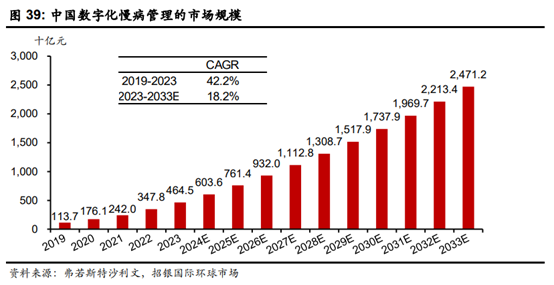
Core Viewpoint - The article highlights Ark Health's impressive mid-year performance for 2025, showcasing its strong growth in revenue and profitability, while positioning itself as a leader in AI-driven chronic disease management [1][12]. Financial Performance - Ark Health reported a revenue of approximately 1.494 billion RMB for the first half of 2025, reflecting a year-on-year growth of 12.9% [2]. - The company achieved a net profit of about 12.5 million RMB, marking a turnaround from losses, with adjusted net profit increasing by 16.8% year-on-year to approximately 17.6 million RMB, setting a historical high [2]. User Growth and Engagement - As of mid-2025, Ark Health's registered user base reached 52.8 million, a 15.8% increase year-on-year, with monthly active users rising to 11.9 million, a significant growth of 34.4% [3]. - The company boasts a high repurchase rate of 85.4% among paying users, indicating strong user retention and engagement [3]. Supply Chain and Ecosystem - Ark Health has established partnerships with over 1,650 suppliers and more than 980 pharmaceutical companies, expanding its drug SKU to 216,000, with prescription drugs accounting for approximately 62% [4]. - The company's strong supply chain supports its long-term medication needs, enhancing user retention and overall performance [4]. AI Integration and Competitive Advantage - The company has integrated advanced AI technologies into its operations, launching several AI solutions to enhance efficiency in chronic disease management [5][6]. - Ark Health's "familiar doctor-patient" model fosters long-term relationships, leading to higher user loyalty and engagement compared to traditional one-time consultation models [5][7]. Industry Trends and Market Potential - The AI and healthcare sector is experiencing significant growth, driven by policy support and increasing demand for efficient chronic disease management services [8][9]. - The digital chronic disease management market in China is projected to grow from 113.7 billion RMB in 2019 to 464.5 billion RMB in 2023, with a compound annual growth rate of 42.2% [9]. Future Outlook - Ark Health's AI-driven chronic disease management solutions are expected to expand further, capitalizing on the growing demand and ongoing digitalization of healthcare services [12]. - The company's current market valuation does not reflect its growth potential, suggesting significant upside potential for investors [13].
港股异动 | 方舟健客(06086)涨近9% 中期经调整净利润同比增长16.8%创新高 AI赋能业务突破
智通财经网· 2025-09-01 03:19
Core Insights - Ark Health (06086) reported a significant increase in stock price, rising nearly 9% to 4.06 HKD, with a trading volume of 45.47 million HKD [1] - For the first half of 2025, the company achieved total revenue of 1.494 billion HKD, representing a year-on-year growth of 12.9% [1] - The company turned a profit with a net income of 12.5 million HKD, and adjusted net profit reached a record high of 17.6 million HKD, up 16.8% year-on-year [1] - Online retail pharmacy service revenue surged to 864 million HKD, a substantial increase of 28.2% year-on-year, while comprehensive medical service revenue grew to 357 million HKD, up 11.4% [1] Business Model and Strategy - The company has integrated advanced large models and completed the "AI+H2H" (AI+Hospital To Home) technology upgrade, focusing on creating a comprehensive AI application matrix covering user services, supply chain, and content production [2] - The "familiar doctor-patient" model is a cornerstone of the company's "AI+H2H" ecosystem, emphasizing the establishment of long-term doctor-patient relationships, which enhances user loyalty, activity, and willingness to pay compared to industry averages [2] - Citigroup initiated coverage of Ark Health with a "Buy" rating and a target price of 8.5 HKD, recognizing the growth certainty brought by its high-stickiness ecosystem [2]