
水利工程

Search documents
钱江水利: 钱江水利2025年第一次临时股东大会会议资料
Zheng Quan Zhi Xing· 2025-07-04 16:12
Meeting Details - The meeting is scheduled for July 11, 2025, at 9:30 AM in Hangzhou, Zhejiang Province [1] - Voting will be conducted through a combination of on-site and online methods [1][3] - Online voting will be available on the Shanghai Stock Exchange platform from 9:15 AM to 3:00 PM on the same day [1] Meeting Guidelines - The meeting will adhere to relevant laws and regulations, ensuring orderly conduct [2] - Attendees must bring valid identification and registration documents for entry [2] - Registration will close at 9:30 AM, and latecomers will not be allowed to vote [2] - Personal recording devices are prohibited during the meeting [2] Voting Process - Shareholders can choose either on-site or online voting, but not both; the first vote will be considered valid in case of duplication [3] - Voting will be conducted by a designated team including company lawyers and shareholder representatives [3] Agenda Items - Proposal to change certain board members, specifically recommending Mr. Wang Dongquan as a non-independent director [4] - Mr. Wang Dongquan's qualifications include extensive experience in water management and engineering [4][6] - Proposal to reappoint ShineWing Certified Public Accountants as the auditing firm for the fiscal year 2025, with a total fee of 960,000 yuan [7] - The breakdown of the audit fees includes 600,000 yuan for annual report audit, 250,000 yuan for internal control audit, and additional fees for quarterly reviews and tax services [7][10]

全面推进江河保护治理,水利部详解时间表和路线图
Di Yi Cai Jing· 2025-07-04 07:27
Core Viewpoint - The increasing frequency and intensity of extreme weather events pose significant challenges for flood and drought prevention, necessitating the establishment of a robust national water security barrier [4][5]. Group 1: River Protection and Governance - The recently published "Opinions on Comprehensive Promotion of River Protection and Governance" outlines a strategic framework for river management in China, emphasizing integrated protection and systematic governance from river sources to estuaries [2][4]. - By 2035, the goal is to have a modernized flood prevention and disaster reduction system in place, significantly enhancing flood safety capabilities and improving water resource utilization [2][4]. Group 2: Flood and Drought Disaster Prevention - The "Opinions" detail 24 measures across six areas, including ensuring river safety, enhancing water resource conservation, and improving river ecological protection [4][5]. - As of July 4, 2023, 329 rivers have experienced floods exceeding warning levels, highlighting the urgent need for improved flood and drought management systems [4][5]. Group 3: National Water Network Construction - The construction of a national water network is a critical component of river protection governance, with significant projects underway to enhance water resource allocation and flood control capabilities [6]. - Major water diversion projects have been completed, adding an annual water diversion capacity of 124.8 billion cubic meters and enhancing flood control storage by 26.6 billion cubic meters [6]. Group 4: Investment and Policy Support - The National Development and Reform Commission has revised investment support policies for the water sector, increasing central investment support by an average of 20 percentage points for various water projects [7]. - The focus is on accelerating the construction of major water projects, ensuring quality management, and promoting long-term benefits from these investments [7].

国家发展改革委:加大对重大水利工程的支持和改革力度
news flash· 2025-07-04 04:17
Core Viewpoint - The Chinese government is accelerating the construction of major water conservancy projects, with a focus on modernization and infrastructure improvements in various regions [1] Group 1: Project Planning - The National Development and Reform Commission (NDRC) and the Ministry of Water Resources have issued an implementation plan for the "two major" construction in the water sector, emphasizing the modernization of large irrigation areas such as Inner Mongolia's Hetao and Sichuan's Xiangjiaba Phase II [1] - Key projects include the construction of large and medium-sized reservoirs like Guangdong's Huangmaoxia and major flood control infrastructure in the Yangtze River Basin, particularly in the Dongting Lake area [1] Group 2: Financial Support - The average central investment support ratio has increased by approximately 20 percentage points, expanding the support scope to include new medium-sized irrigation areas and water diversion projects [1] - The central investment support ratio for medium-sized projects has been raised to the same level as that for large projects, indicating a significant boost in funding for these initiatives [1] Group 3: Institutional Development - The NDRC and the Ministry of Water Resources will ensure the integration of flood control projects with upstream and downstream connections, as well as the coordination between irrigation projects and high-standard farmland construction [1] - The focus is on enhancing the comprehensive benefits of major infrastructure projects through better connectivity and collaboration among various engineering components [1]
国家发改委:截至6月底已将水利领域年度中央投资全部下达完毕
news flash· 2025-07-04 03:17
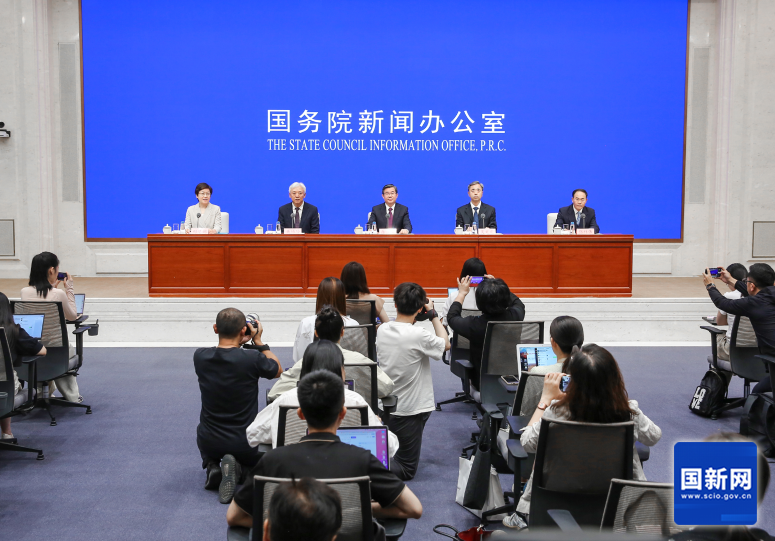
国家发展改革委农村经济司负责人关锡璠在国新办新闻发布会上表示,在资金支持方面,国家发展改革 委修订了水利领域中央投资支持政策,明确了超长期特别国债和中央预算内投资的各自支持领域。中央 投资支持比例平均提高约20个百分点,支持范围扩展到新建中型灌区、中型引调水等工程类型,并将中 型工程的中央投资支持比例提高到大型工程的同等水平。截至6月底,国家发展改革委已将水利领域年 度中央投资全部下达完毕。(人民财讯) ...
政策+市场“托底” 8000亿“两重”项目资金全部下达
Jing Ji Guan Cha Wang· 2025-07-03 11:04
Core Insights - The National Development and Reform Commission (NDRC) has allocated over 300 billion yuan to support the third batch of "two重" construction projects for 2025, completing the annual allocation of 800 billion yuan for "two重" projects [1][2] - The "two重" projects focus on both "hard investment" and "soft construction," targeting key areas such as ecological restoration, major transportation infrastructure, and urban underground pipeline networks [1][2][3] - The 2025 government work report emphasizes a shift in infrastructure investment towards strategic and forward-looking sectors, including future industry development and low-altitude economy [2][3] Hard Investment - A total of 800 billion yuan has been allocated for 1,459 projects in 2025, covering areas like ecological restoration along the Yangtze River, high-standard farmland, and major water conservancy projects [1][2] - The "three北" project, which focuses on afforestation in the northern regions of China, is included in the "two重" construction, with a target of completing 600 million mu by 2030 [3] Soft Construction - The NDRC plans to introduce innovative reform measures in key areas, such as optimizing financing models for railways along the Yangtze River and improving urban underground pipeline management [1][2] - The government aims to enhance the adaptability of talent cultivation to meet economic and social development needs [1][2] Economic Impact - The "two重" construction is seen as a crucial driver for stabilizing economic growth amid increasing downward pressure, with significant investments expected to boost consumption and employment [3][5] - In the first five months of the year, net financing from government bonds reached 6.3 trillion yuan, indicating strong financial support for "two重" projects [5] Project Progress - Nearly 500 billion yuan of the 800 billion yuan "two重" construction projects were arranged by mid-June, with rapid progress in ecological restoration and pollution control projects [4][5] - Key infrastructure projects, such as the Huangbai Railway in the western land-sea new channel, are advancing, enhancing economic connections in the region [4] Policy Coordination - The NDRC emphasizes the need for coordinated fiscal and monetary policies to support "two重" projects, with a focus on opening competitive infrastructure sectors to private capital [5][6] - The collaboration between policy funding and market vitality is expected to drive the implementation of national strategies and enhance security capabilities [7]
★《中共中央办公厅 国务院办公厅关于全面推进江河保护治理的意见》发布 加快推进西南地区水电基地建设
Zheng Quan Shi Bao· 2025-07-03 01:55
Group 1 - The core objective of the recent policy document is to enhance flood prevention and disaster reduction capabilities by 2035, establishing a modernized flood control system and improving water resource utilization [1][2] - The policy emphasizes the need for a comprehensive flood control engineering system, including reservoirs, river channels, and flood retention areas, to be developed and managed effectively [1][2] - The document outlines the importance of urban planning and infrastructure development that accommodates flood drainage and retention, as well as the gradual implementation of flood insurance in high-risk areas [1] Group 2 - To enhance water supply security, the policy calls for accelerated construction of key water source projects and improvements to urban water supply networks [2] - The document advocates for the integrated management of water resources, including the development of hydropower bases in the southwest and the promotion of green upgrades for small hydropower stations [2] - It emphasizes the need for ecological restoration of rivers and lakes, with specific strategies tailored to the unique challenges faced by northern and southern regions [2] Group 3 - The policy aims to reform the water industry by promoting independent operations in natural monopoly sectors and market-oriented reforms in competitive areas [3] - It highlights the importance of water rights reform and the establishment of a sound water pricing mechanism, along with the implementation of tax policies related to water resource fees [3] - The document stresses the need for improved investment mechanisms in major water projects, enhancing government investment to attract social investment, and broadening financing channels [3]
库容翻倍!新疆这项重点水利工程全面升级
Zhong Guo Jing Ji Wang· 2025-07-01 09:28
Core Insights - The completion of the main structure of the Shartohai Water Conservancy Hub Phase II project, constructed by China Energy Engineering Group, marks a significant milestone for this multi-functional water conservancy project, which is crucial for irrigation, flood control, and future power generation [1] - The project is located in Jinghe County, Bortala Mongol Autonomous Prefecture, Xinjiang, and aims to enhance water resource allocation in the region [1] Group 1 - The Phase II project will increase the total reservoir capacity from 9.98 million cubic meters to 21.93 million cubic meters, effectively doubling the water storage capacity, which is equivalent to one West Lake [1] - The dam's top elevation will be 620.5 meters, with a normal water level of 618 meters and a design flood level of 617.92 meters, significantly improving flood control capabilities [1] - The project is part of the dual key initiatives outlined in the "14th Five-Year Plan" for water security in the Yellow River Basin and Xinjiang, ensuring robust ecological safety and public welfare in the region [1] Group 2 - Once completed, the Shartohai Water Conservancy Hub Phase II will effectively irrigate 208,500 acres of farmland, addressing seasonal water shortages in the Dahuai irrigation area and enhancing irrigation reliability [2] - The project is expected to provide a strong impetus for the modernization of local agriculture, optimization of the ecological environment, and high-quality economic and social development [2]
首台盾构机顺利始发 杭州城西这一重要排涝工程迎来关键节点
Mei Ri Shang Bao· 2025-06-30 22:33
Group 1 - The project marks the commencement of the underground tunnel excavation phase for the Hangjia Lake South Drainage West Channel Expansion Project, with the first shield machine "Xianxing" successfully starting its operation [1] - The shield machine is approximately 90 meters long, weighs about 2500 tons, and has a diameter of 12.1 meters, designed to excavate a 5-kilometer underground tunnel [1] - The assembly of the shield machine involved over 12,000 components and was completed in 88 days, showcasing the efficiency of the municipal water group [1] Group 2 - The project aims to enhance flood control and drainage standards in the western region of Hangzhou from a 20-year to a 50-year occurrence level [2] - The construction includes multiple water inlets and a Y-shaped underground drainage channel, which is 29 kilometers long and buried 55 meters underground [2] - The drainage capacity is designed at 250 cubic meters per second, with a backup capacity of 300 cubic meters per second [2]
水利工程如何延长使用寿命 —河南郏县恒压灌区调查
Jing Ji Ri Bao· 2025-06-30 22:10
Core Viewpoint - The article highlights the successful operation and management of the Henan Province's constant pressure irrigation project in Jiajian County, which has been in service for 26 years, showcasing its significant contributions to agricultural productivity and water conservation [1][2][3]. Group 1: Project Overview - The constant pressure irrigation project was established in 1984, designed to irrigate 6,397 acres, and has since expanded its irrigated area to 102,000 acres with ongoing projects [5]. - The project has saved 40 million cubic meters of water and increased grain production by 90 million jin, yielding a comprehensive economic benefit of 420 million yuan, which is over 270 times the initial investment [1][5]. - The project utilizes advanced irrigation techniques, achieving a high irrigation water utilization coefficient of 0.88, and has transitioned from traditional irrigation methods to more efficient micro-spray and drip irrigation systems [7][8]. Group 2: Management and Maintenance - Effective management has been a key factor in the project's longevity, with a dedicated management team established during the project's design phase, ensuring maintenance and operational efficiency [3][6]. - The project faced challenges such as aging infrastructure and funding shortages, but proactive maintenance and community involvement have helped sustain its operations [3][6]. - The establishment of the Farmers' Water Users Association has empowered local farmers to participate in water management, enhancing the project's sustainability and efficiency [8]. Group 3: Economic and Social Impact - The irrigation project has significantly boosted local agricultural productivity, with crop yields increasing by 150 kilograms per mu for wheat and substantial income growth for farmers [6][7]. - The project has also improved local environmental conditions, demonstrating a successful integration of agricultural, ecological, and community needs [5][7]. - The use of modern technology and community engagement has led to better water management practices, ensuring that the benefits of the irrigation project are maximized for local farmers [8].
引绰济辽工程年引调水4.54亿立方米,惠及300余万人 内蒙古最大水利工程全线试通水成功(重大工程一线)
Ren Min Ri Bao· 2025-06-30 21:54
Group 1 - The "Yin Chuo Ji Liao" project is a major water conservancy project in Inner Mongolia, with a total investment of 31.155 billion yuan, aimed at alleviating severe water shortages in the eastern region of Inner Mongolia [1] - The project will annually divert 454 million cubic meters of water from the Chuoer River, benefiting over 3 million people in the Inner Mongolia region [1] - The project is crucial for the agricultural and energy sectors in the region, particularly in Tongliao City, which has a per capita water resource availability of only 56% of the national average [1][2] Group 2 - The main water conveyance line of the project extends 391 kilometers, with additional 395 kilometers of branch lines connecting various counties and industrial parks [2] - The project supports industrial transformation by providing a stable water source for chemical production, which is essential for companies like Tongliao Jinmei Chemical Co., Ltd. [2] - Inner Mongolia is implementing strict water usage quotas for high-water-consuming industries to ensure sustainable water management [2] Group 3 - The project enhances water security for agriculture, ensuring that approximately 410,000 acres of farmland receive adequate water supply [3] - It aims to reverse the declining groundwater levels in the West Liao River basin and supports ecological restoration efforts in the region [3]