
粮食加工

Search documents
天门市企业快马扬鞭抢开局 奏响复工复产和项目建设“最强音”
Zhong Guo Fa Zhan Wang· 2026-02-27 09:13
Group 1: Industry Overview - Tianmen City is focusing on high-quality development, with significant projects in the nylon and textile industries, including a 300,000-ton nylon 6 polymerization project and various textile projects [1][2] - The city is investing heavily in the textile and chemical fiber industry, with a total investment of 8 billion yuan to build a chemical fiber textile industrial park [2] Group 2: Tianyue New Materials - Tianyue New Materials has a 300,000-ton nylon 6 polymerization project with a total investment of 1.35 billion yuan, producing high-end nylon 6 slices [2][3] - The company has already established one production line and is expected to achieve an output value of over 2 billion yuan by the end of the year [2][3] Group 3: Yongchang New Materials - Yongchang New Materials is implementing smart packaging solutions, significantly increasing efficiency in their production lines [4] - The company is expected to reach an annual output value of 1 billion yuan by 2025, with plans to enhance production capacity further [4] Group 4: Shenghe Nylon - Shenghe Nylon is expanding its production capacity with a second phase project expected to be operational by June, aiming for an annual output of 100,000 tons of nylon [5][6] - The company has already achieved sales revenue of 20 million yuan within two months of operation and plans to increase its market share significantly [6] Group 5: Tonghui Technology - Tonghui Technology is enhancing its production capabilities with new automated assembly lines, aiming for an annual output value of 1.5 billion yuan by 2025 [7] - The company has a high production recovery rate post-holiday, indicating strong operational efficiency [7] Group 6: Liming Aluminum - Liming Aluminum has invested 1.2 billion yuan in a digital workshop, achieving a production capacity of 200,000 tons of high-end aluminum materials [8] - The company is attracting upstream and downstream enterprises, forming a complete industrial chain [8] Group 7: Zhuangpinjian - Zhuangpinjian has rapidly ramped up production post-holiday, achieving a shipment of over 1,000 tons in a single day [9][10] - The company aims to enhance its production efficiency by over 30% this year and expand its market presence significantly [10]
小麦变身记(三餐四季)
Ren Min Ri Bao· 2026-02-27 06:07
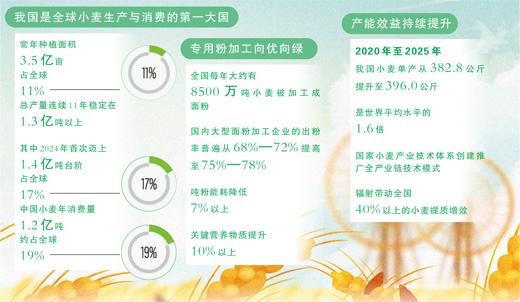
Core Insights - Wheat is a staple food in China, with a planting area of 350 million acres and a production exceeding 130 million tons for 11 consecutive years, accounting for 17% of global production and consumption [1] - The trend of specialized wheat for various food products is growing, with specialized flour now making up 30% of total wheat flour production [3][5] Group 1: Wheat Production and Quality - The quality of wheat is crucial for different types of flour products, leading to the development of specialized wheat varieties such as "Xinmai 26" and "Zhengmai 1860" [2] - The average yield of wheat in China has reached 1.6 times the world average, with ongoing efforts to improve yield through modern breeding techniques [8] Group 2: Technological Innovations in Processing - Advanced processing techniques have increased flour yield from 68%-72% to 75%-78%, with energy consumption reduced by over 7% and key nutritional content improved by 10% [5] - Companies are utilizing smart technology for precise flour blending, achieving consistency in product quality with minimal variability [5] Group 3: Market Trends and Consumer Preferences - The demand for functional wheat products is rising, with examples like "Chuanmai 98" mooncakes achieving significant sales, indicating a shift towards health-oriented food options [10] - The cultural significance of wheat is highlighted through traditional crafts like flower dough art, showcasing its versatility beyond just food [11] Group 4: Economic Impact and Industry Growth - The wheat industry is expanding into various sectors, contributing to a total output value of 15.2 billion yuan in regions like Yan Jin, supporting local farmers and creating job opportunities [12] - The integration of the wheat supply chain is enhancing the overall economic value, with a focus on high-end processing and sustainable practices [12]

2020-2026年1月下旬稻米(粳稻米)市场价格变动统计分析
Chan Ye Xin Xi Wang· 2026-02-24 03:58
Core Insights - The report by Zhiyan Consulting outlines the market dynamics and investment prospects of the grain processing industry in China from 2026 to 2032 [1] Price Trends - As of late January 2026, the market price for rice (Japonica rice) is projected to be 3961.7 yuan per ton, reflecting a year-on-year increase of 2.34% and a month-on-month increase of 0.18% [1] - The price of rice reached its peak in late January 2021 at 4099.9 yuan per ton, indicating significant fluctuations over the past five years [1]

龙江粮储交出“十四五”亮眼成绩单
Xin Lang Cai Jing· 2026-02-18 23:27
Group 1 - The core focus of the Heilongjiang grain storage system is on enhancing grain storage, industry development, and emergency support, achieving significant results in these areas during the "14th Five-Year Plan" period [2] - The province secured 3 billion yuan in central government funding for six major grain-producing counties, leading the nation in both the number of projects and funding amount, with 29 projects attracting 4.69 billion yuan in social investment, accounting for over half of the national total [2] - The grain processing and transformation rate is expected to increase by over 1 percentage point, generating an additional annual output value of over 3 billion yuan [2] Group 2 - The province implemented innovative market price monitoring and enterprise purchasing scheduling, resulting in a 0.08 yuan per jin increase in corn prices compared to the previous year, benefiting farmers [2] - As of January 25, the province's enterprises had cumulatively purchased 944 billion jin of new grain, indicating a stable and orderly purchasing situation with prices remaining steady [2] - The province's deep processing of grain has led to 30 enterprises achieving a total revenue of 35.92 billion yuan, with raw grain consumption increasing by 4.53 million tons compared to the previous year [3] Group 3 - The emergency support system has expanded to include 2,722 grain emergency support enterprises, establishing a comprehensive three-tiered network for emergency grain support [3] - The province has initiated the construction of a Northeast regional grain emergency support center, recognizing 58 regional emergency support enterprises and conducting cross-regional emergency transport drills [3] - The provincial reserve grain green storage enhancement project is in planning, with an investment of 1.325 billion yuan aimed at creating 1 million tons of intelligent high-standard storage capacity [3]
企业订单足产销两旺
Xin Lang Cai Jing· 2026-02-09 22:25
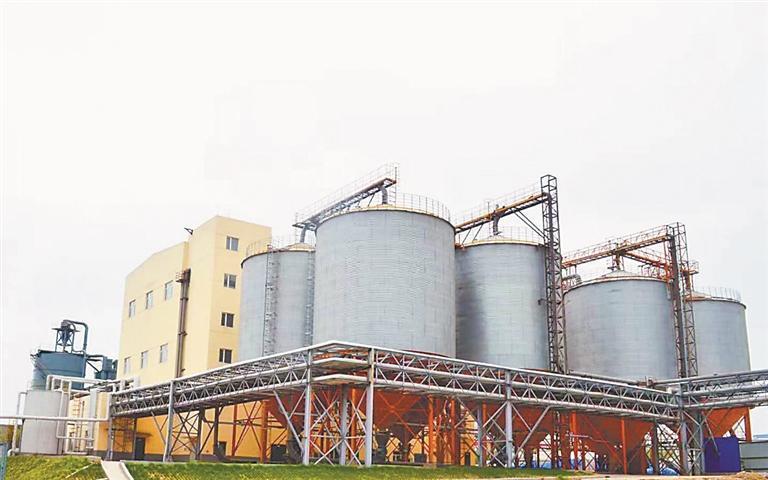
Group 1 - The core viewpoint of the article highlights the robust production activities in Fenggang County, with local companies ramping up operations to meet increasing demand, particularly for exports [1] - The Xiongyun Underwear Factory has received orders that extend until April, indicating strong market demand and successful equipment upgrades that enhance production efficiency and complexity of designs [1] - The Hongfa Rice Industry Co., Ltd. has implemented automated production lines, ensuring high efficiency in processing rice, which includes multiple steps from cleaning to packaging, and has already sold over 1,400 tons of rice, generating sales exceeding 6 million yuan [1]
2020-2026年1月中旬稻米(粳稻米)市场价格变动统计分析
Chan Ye Xin Xi Wang· 2026-02-06 03:16
Core Insights - The report by Zhiyan Consulting outlines the market dynamics and investment outlook for the grain processing industry in China from 2026 to 2032 [1] Price Trends - As of mid-January 2026, the market price for rice (Japonica rice) is projected to be 3954.4 yuan per ton, reflecting a year-on-year increase of 2.11% and a month-on-month increase of 0.01% [1] - The highest recorded price in the past five years for Japonica rice was 4086.3 yuan per ton in mid-January 2021 [1]

破解粮食加工产能结构性失衡
Jing Ji Ri Bao· 2026-02-04 22:15
Core Viewpoint - The grain processing industry in China faces a structural imbalance characterized by an excess of primary processing capacity and a lack of deep processing capacity, necessitating coordinated efforts to enhance deep processing capabilities and ensure food security while promoting rural revitalization [1][2][5]. Group 1: Structural Imbalance - The grain processing capacity is currently imbalanced, with primary processing capacity being excessive and deep processing capacity insufficient [2]. - Many small and medium-sized processing enterprises operate at low efficiency, while only a few leading companies maintain high operating rates [2]. - There is a lack of high-value-added products in deep processing, with most rice processing focused on ordinary rice, and limited development of specialty products like selenium-rich rice and rice oil [2]. Group 2: Industry Development Strategy - A systematic approach is needed to build a modern grain industry system that emphasizes high value, advanced technology, and effective utilization of by-products [2][4]. - The industry should transition from a focus on scale expansion to prioritizing quality and efficiency, enhancing the overall sustainable development of the grain sector [1][2]. Group 3: Planning and Optimization - The government should strengthen planning and create a national grain processing industry map to guide capacity integration and development in key production areas [3]. - There is a need to avoid blind investments in low-level projects and instead focus on coordinated development of primary processing, deep processing, and by-product utilization [3]. Group 4: Chain Extension and Value Addition - The grain industry should extend its value chain by moving from primary processing to deep processing, developing specialized grains and functional foods, and exploring new strategic industries [4]. - By fully utilizing by-products and enhancing their value, the industry can break free from low-end competition and achieve a balance between economic and ecological benefits [4]. Group 5: Technological Innovation - The grain deep processing sector is technology-intensive but currently faces challenges such as insufficient R&D investment and poor integration of research and application [5]. - There is a need to implement a technology-driven development strategy, focusing on enhancing domestic capabilities in key equipment and integrating various technologies for improved processing [5]. - Building a collaborative innovation system that connects academia, industry, and research will be crucial for driving high-quality development in the grain sector [5].
(乡村行·看振兴)山西长子:传统石磨“磨”出乡村产业增收路
Xin Lang Cai Jing· 2026-01-27 03:23
Core Insights - The company operates a traditional stone mill flour factory in Shanxi, focusing on low-temperature and low-speed grinding methods to preserve the nutritional value of wheat [3][5] - The factory has established a diversified sales network, partnering with supermarkets for offline sales and entering an e-commerce platform for online sales [3][5] - The factory processes 1.2 million jin (approximately 600,000 kg) of wheat annually, producing 630 tons of flour and generating a net profit of 500,000 yuan, while providing stable employment for over 10 villagers [5] Production Process - The production involves multiple meticulous steps including dust removal, stone removal, washing, crushing, grinding, and separating bran, resulting in fresh stone-milled flour with a rich natural aroma [3] - The traditional stone milling process effectively avoids high-temperature processing, preserving essential nutrients such as proteins, carotenoids, calcium, phosphorus, iron, vitamins, and dietary fiber [3] Market Strategy - The factory aims to enhance market competitiveness by establishing long-term cooperation agreements with various supermarkets and expanding its online presence through the local e-commerce platform [3][5] - Future plans include exploring a "company + farmer" industrial cooperation model, signing agreements for designated wheat planting and purchasing with local farmers to ensure quality raw materials and support farmer income [5]
以技术破局 促粮食加工产业向高值化跃迁
Xin Lang Cai Jing· 2026-01-21 01:00
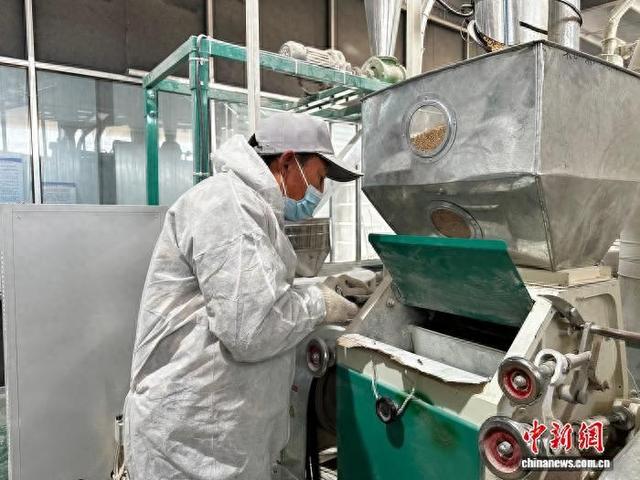
Core Insights - Agricultural deep processing is a key track for the upgrading of agricultural industrialization, directly impacting the enhancement of grain value and the high-quality development of the agricultural economy [1] - Huazi Industrial Co., Ltd. has achieved multiple breakthroughs in microbial fermentation and high-value utilization of agricultural products, driven by technological innovation [1] Innovation Foundation - The grain processing industry, traditionally focused on primary processing, faces common issues of low added value and weak risk resistance, necessitating a shift towards deep processing and technological innovation for modernization [2][3] - Since its strategic transformation began in 2024, Huazi Industrial has established "technology empowerment" as its core principle, emphasizing that technological innovation is the primary productive force in the grain deep processing sector [3] Multi-Dimensional Innovation System - Huazi Industrial has built a multi-dimensional innovation system based on "platform + project + technology," collaborating with research institutions to establish specialized R&D centers and an open collaborative R&D network [3] - The company has initiated key projects like the "High-Value Utilization of Wheat Starch Slurry," which aims to significantly enhance grain resource utilization efficiency and product added value [3] Full Chain Transformation Mechanism - The company has developed a full-chain transformation mechanism from laboratory research to industrialization, ensuring that technological advancements align closely with market demands [4] Addressing Industry Challenges - Huazi Industrial has formed a clear strategy to tackle common industry challenges, such as grain price fluctuations, by establishing stable supply relationships and optimizing production processes through technological innovation [6] - The company integrates environmental responsibility into its production processes, achieving a balance between production efficiency and environmental sustainability [6] Expanding Differentiation Advantages - The food industry is undergoing transformation influenced by cutting-edge technologies like biotechnology and artificial intelligence, prompting a reconfiguration of traditional production models [7] - Huazi Industrial faces challenges in the adoption of new technologies, including complex production processes and the need for skilled talent, and is actively addressing these through targeted initiatives [8] Long-Term Strategic Focus - The long-term strategy of Huazi Industrial focuses on global industrial layout, continuous talent resource development, and international platform construction, aiming to enhance its differentiation advantages in the high-value grain sector [9] - The company plans to establish an office in Saudi Arabia by 2026 to expand its overseas market share of high-value products [9] Comprehensive Strategic Planning - Huazi Industrial has completed a comprehensive layout for the next 3 to 5 years, aiming to become a leading domestic grain deep processing enterprise and a top player in the biotechnology sector [10] - The company will focus on optimizing core product production lines, enhancing product quality, and increasing market share while leveraging digital and intelligent technologies to improve operational efficiency [10] Conclusion - Huazi Industrial is transforming from a traditional grain enterprise to a high-tech industry leader, driven by technological innovation and a commitment to sustainable development, thereby contributing to the advancement of the grain deep processing industry [11]


华资实业董事长张志军:以技术破局 促粮食加工产业向高值化跃迁
Zheng Quan Ri Bao Zhi Sheng· 2026-01-20 16:36
Core Insights - The core viewpoint of the article emphasizes the importance of technological innovation in the deep processing of agricultural products, which is crucial for enhancing the value of grain and promoting high-quality agricultural economic development [1][2]. Group 1: Innovation Foundation - The grain industry, while traditional, is not devoid of technological innovation, which is becoming the key engine for value enhancement [2]. - The company has established a multi-faceted innovation system based on "platform + project + technology," collaborating with research institutions to enhance its R&D capabilities [3]. - A full-chain transformation mechanism has been established to ensure that laboratory research translates into industrial applications, aligning R&D with market needs [4]. Group 2: Addressing Industry Challenges - The company has developed clear strategies to tackle common industry challenges, such as price volatility, by forming stable supply relationships and optimizing production processes through technological innovation [5]. - Environmental responsibility is integrated into the production process, demonstrating that production efficiency and environmental responsibility can coexist [5]. Group 3: Expanding Differentiation Advantages - The company is focusing on three core strategic areas for long-term growth: global industrial layout, continuous talent resource development, and international platform construction [8]. - Plans are in place to establish an office in Saudi Arabia by 2026 to expand the overseas market share of high-value-added products [8]. - The company aims to explore the health industry, leveraging academic and research platforms to further expand the boundaries of grain high-value processing [8]. Group 4: Strategic Planning and Goals - The company has completed a comprehensive layout for the next 3 to 5 years, aiming to become a leading domestic grain deep processing enterprise and a top player in the bio-manufacturing sector [9]. - The strategic path focuses on quality, brand-driven initiatives, and technological empowerment, with efforts to optimize existing product lines and enhance market share [9]. - The company plans to enhance its operational efficiency through digital and intelligent technologies, while also fulfilling social responsibilities and promoting green production [9].