Autos

Search documents
深度|木头姐:Robotaxi五年内主导特斯拉盈利,Optimus将于28年达到人类水平,接力下一个十万亿市场
Z Potentials· 2026-03-24 03:40
Core Insights - ARK Investment Management focuses on disruptive innovation, with a strong emphasis on sectors like AI, robotics, gene editing, blockchain, and autonomous driving [3][4] - The current market sentiment is characterized by significant concerns, particularly regarding geopolitical tensions and economic conditions, which may present both challenges and opportunities for investors [4][6][7] Market Trends - The rise of low-cost autonomous solutions in defense, driven by the Ukraine conflict, is leading to the emergence of venture-backed defense companies [5][12] - Tesla's Robotaxi is expected to dominate its overall story and valuation logic in the next five years, potentially generating substantial cash flow per vehicle [5][14] - The oncology sector is poised for growth as more diagnostic tests gain commercial reimbursement, enhancing pricing power for related companies [5][26] AI and Technology - OpenAI and Anthropic are leading in the AI space, with OpenAI's annual revenue estimated at $25 billion and Anthropic's rapidly growing to $19 billion [19] - Microsoft is lagging in the AI competition, with its productivity applications growing at a low double-digit rate compared to the explosive growth of AI companies [20][21] - The integration of AI with multi-omics is accelerating the commercialization of gene therapies, driven by advancements in AI and regulatory support [24][30] Gene Therapy and Biotech - The market for gene therapies is expanding, with CRISPR Therapeutics showing significant potential in treating common diseases, with a projected total addressable market of $2.8 trillion [35] - Regulatory changes are facilitating the development of innovative therapies, with the FDA streamlining approval processes for rare diseases [31] - The increasing reimbursement for gene therapies is expected to drive market growth, as seen with the CRISPR therapy CasGevi achieving a 90% reimbursement rate for eligible patients [32] Bitcoin and Cryptocurrency - Bitcoin has experienced a significant pullback of approximately 52% since its peak last October, but there are positive signals from regulatory developments and technical analysis indicating a potential rebound [38][39] - The Clarity Act is anticipated to drive new demand for Bitcoin, with regulatory clarity expected to emerge in 2026 [38] - On-chain data suggests a bullish sentiment in the market, with indicators showing a favorable supply-demand balance [39][40]



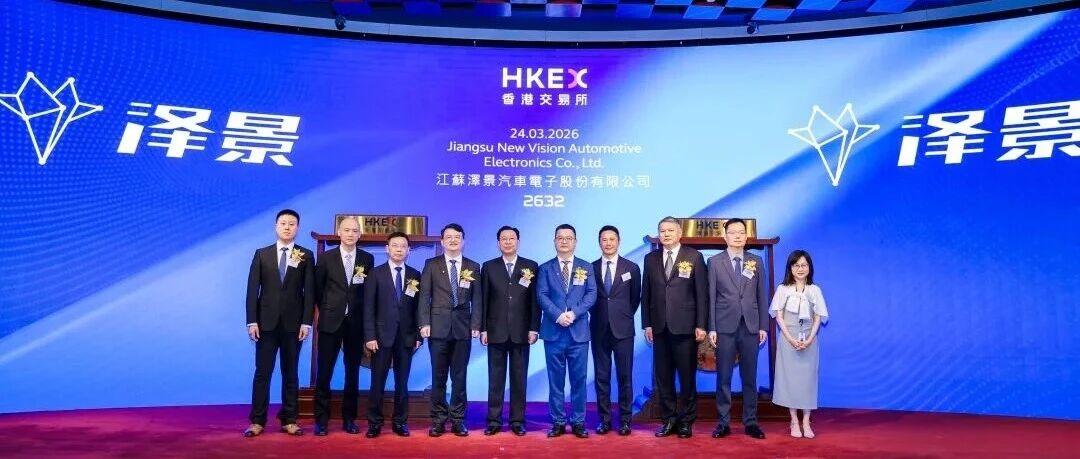
刚刚,国产HUD第一股敲钟!
FOFWEEKLY· 2026-03-24 03:26
Core Viewpoint - The successful IPO of Jiangsu Zejing Automotive Electronics Co., Ltd. (Zejing Co.) on the Hong Kong Stock Exchange marks a significant milestone for China's automotive HUD (Head-Up Display) sector, establishing it as the first company in this field to be listed in Hong Kong and highlighting the advancement of domestic optical technology in the global capital market [1][5]. Group 1 - Zejing Co. raised approximately 162.27 million shares through its H-share public offering, with the funds primarily allocated for expanding and automating HUD production lines, enhancing core technology research and development related to smart cockpits, and establishing strategic collaborations in the optical imaging and near-eye display sectors [2]. - The company has achieved significant milestones since its establishment in 2015, overcoming key technological challenges in optical system modular design and breaking the long-standing foreign monopoly in the industry [5][6]. - As of the first three quarters of 2025, Zejing Co. has secured 23 CyberVision model projects and has achieved mass production applications in 15 vehicle models, holding a 16.2% market share and ranking second in the domestic HUD industry [6]. Group 2 - Shunchuang Investment, as the manager of the Yingke Industrial Fund, has leveraged its industrial resource advantages in Shunyi District to invest in Zejing Co., focusing on the localization of HUD technology and enhancing collaboration with automotive manufacturers [6][7]. - The listing of Zejing Co. represents a significant breakthrough for Shunchuang Investment in the smart automotive supply chain, validating its investment philosophy of "investing early, investing small, and investing in hard technology" [7]. - Moving forward, Shunchuang Investment aims to continue focusing on core areas such as smart automobiles, semiconductors, and advanced manufacturing, driving the upgrade of the smart automotive supply chain towards localization and high-end development through a dual approach of "capital empowerment + industrial collaboration" [7].
近期汽车市场发展趋势
数说新能源· 2026-03-24 03:02
Group 1 - The core viewpoint of the article highlights the challenges and improvements in the domestic and export sales of passenger vehicles in early 2026, with a focus on the impact of the vehicle replacement policy and the upcoming new car launches [2][3]. - In January and February 2026, domestic passenger car sales were under pressure, primarily due to a vacuum period in the vehicle replacement policy, but the structure of sales showed improvement with an increase in the proportion of B-class and above vehicles [2]. - Passenger car exports in January and February 2026 reached 1.17 million units, representing a year-on-year increase of 53%, indicating strong performance in the export market [2]. Group 2 - The article anticipates a marginal improvement in passenger car sales in March and April 2026, driven by the effects of the vehicle replacement policy and the launch of new models by automakers [3]. - A series of flagship models and new technologies are expected to be released by various car manufacturers before the Beijing Auto Show at the end of April, which may further stimulate sales [3]. - Notable upcoming releases include the second-generation Xiaomi SU7, new products from Hongmeng Zhixing, and several flagship SUVs from brands like NIO, Xpeng, and Great Wall [3].

Are Any of These Tesla Competitors Buys in 2026?
The Motley Fool· 2026-03-24 02:41
Core Insights - Tesla is facing increasing competition in the electric vehicle (EV) market from both pure-play EV manufacturers like Rivian and BYD, as well as legacy automakers such as Ford and General Motors [1] Tesla Overview - Tesla's current stock price is $380.94, with a market cap of $1.4 trillion and a gross margin of 18.03% [2] Rivian Analysis - Rivian is set to launch its R2 fleet, which is expected to be high-tech and affordable, and has partnered with Uber for a $1.25 billion investment over five years to provide 50,000 self-driving taxis [3][5] - Despite not being profitable, Rivian benefits from a joint venture with Volkswagen, which provides a cash cushion and contributes to a positive overall gross profit [4] - The success of Rivian's R2 launch and Uber partnership is crucial for its path to profitability, making it a speculative buy for investors [5] BYD Insights - BYD has surpassed Tesla as the world's best-selling EV maker, benefiting from a vertically integrated structure that includes in-house production of batteries and semiconductors [6] - The company is expanding globally with new factories in Southeast Asia, Europe, and Latin America, but faces declining sales in China due to increased competition [7][9] - BYD's stock has fallen nearly 27% over the past year, indicating a need for sustainable profitability overseas while regaining market share in China [9] Ford's Position - Ford is successfully transitioning into the EV market, with its EV models being affordable and competitive, although it struggles to gain momentum in the U.S. [10][11] - The company's diverse vehicle lineup, including hybrids, provides a more reliable cash flow and a larger competitive moat [12] - Ford's stock is more suited for value investors, offering a dividend yield of 5.15%, but EV sales are currently not a strong point [13] General Motors Overview - General Motors, similar to Ford, has a diverse range of gas, hybrid, and electric vehicles, and is investing in software to boost revenue [14] - GM's stock has risen over 47% in the past year, with a low forward price-to-earnings ratio under 6, indicating potential value [16] Investment Considerations - Ford and GM are established and profitable, presenting lower risk, while Rivian and BYD offer higher growth potential but come with greater speculation [17]




理想汽车(2015.HK)2025年报点评:25Q4毛利率略高于预期 具身智能&L9发布后或迎新周期
Ge Long Hui· 2026-03-24 02:27
Group 1 - The company reported a revenue of 112.3 billion yuan for 2025, a year-on-year decrease of 22%, and a net profit of 1.14 billion yuan, down 86% year-on-year [1] - In Q4 2025, the company achieved a revenue of 28.8 billion yuan, with a year-on-year and quarter-on-quarter change of -35% and +5% respectively; the net profit for Q4 was 20 million yuan, with a Non-GAAP net profit of 274 million yuan, aligning with expectations [1] - Vehicle sales in Q4 amounted to 27.3 billion yuan, with a vehicle gross margin of 16.8%, slightly above expectations, primarily due to supplier rebates; the number of vehicles delivered was 109,200, with an average selling price of 250,000 yuan, down 27,500 yuan from Q3 [1] Group 2 - The launch of the L9 and future embodied intelligence products is expected to provide new momentum for the company; the i6 has achieved stable deliveries, and orders for the i8 increased by 180% month-on-month [2] - The new generation L9 is set to launch in Q2, featuring self-developed chips and a complete drive-by-wire chassis, which may give the company a generational advantage [2] - The company is transitioning to an embodied intelligence enterprise, with R&D investment of 11.3 billion yuan in 2025, a year-on-year increase of 2.2%, driven by AI technology and new product development [2] Group 3 - The company is currently at a historical low in stock price, and with the release of new vehicles and embodied intelligence products, it is expected to enter a new growth cycle; projected revenues for 2026-2028 are 131.2 billion, 169.2 billion, and 195.7 billion yuan, with net profits of 1.2 billion, 5.1 billion, and 9.1 billion yuan respectively [3]

LOBO Announces Pricing of $2 Million Public Offering
Globenewswire· 2026-03-24 02:00
Core Viewpoint - LOBO Technologies Ltd. has announced a public offering expected to raise approximately $2 million to fund development programs and general corporate purposes [1][3]. Offering Details - The offering consists of 3,921,567 units, each unit includes one Class A ordinary share, one Series A warrant, and one Series B warrant [2]. - The public offering price per unit is set at $0.51, while pre-funded units are priced at $0.509 [2]. - Each Series A and Series B warrant has an exercise price of $0.561 per Class A ordinary share, immediately exercisable upon issuance and expiring two years after the issuance date [2]. - The offering is expected to close on or about March 25, 2026, pending customary closing conditions [3]. Use of Proceeds - The net proceeds from the offering will be utilized for development programs, working capital, and other general corporate purposes [3]. Company Overview - LOBO Technologies Ltd. is a manufacturer of electric mobility products, specializing in eco-friendly electric vehicles and home-used robotic products [6]. - The product range includes e-bicycles, electric motorcycles, e-tricycles, solar-powered vehicles, and smart products aimed at promoting sustainable transportation [6].

科技未来:视觉语言动作- 自动驾驶的下一个 AI 前沿-Future of Tech_ VLA as the next AI frontier in autonomous driving
2026-03-24 01:27
Summary of Key Points from the Conference Call Industry Overview - The focus is on the autonomous driving industry, particularly advancements in AI technologies and their implications for various automakers in Japan and China [1][4][5][12][13]. Core Insights and Arguments Global Autonomous Driving Penetration - Global L2+/L2++ penetration is projected to reach 36% by 2030, up from 15% in 2025, while L3 adoption is expected to be limited due to complexity and regulatory hurdles [1][25][28]. - In China, L2+/L2++ penetration is expected to rise to approximately 70% by 2030, significantly higher than the global average [30][34]. - The US market is anticipated to see L2+/L2++ penetration of around 36% by 2030, supported by consumer acceptance of advanced features [43][47]. Japan's Approach to Autonomous Driving - Japanese automakers are adopting varied strategies for commercialization, with Toyota leading through a 'multi-pathway' approach, combining internal development and partnerships [4][9][12]. - Upcoming models like Toyota's RAV4 and Sony Honda Mobility's Afeela are expected to drive the rollout of software-defined vehicles (SDVs) [8][12]. - The Japanese market is characterized by a cautious approach, prioritizing safety and reliability, with L2+/L2++ penetration projected at 29% by 2030 [48][49]. China's Competitive Landscape - Leading Chinese EV manufacturers such as XPeng and Li Auto are at the forefront of adopting Vision-Language-Action (VLA) models, enhancing user experience and decision-making capabilities [5][13]. - The intense competition among Chinese OEMs is accelerating the development of advanced driver-assistance systems (ADAS), which are becoming essential features in premium EVs [5][13]. - Concerns remain regarding the monetization potential of these technologies and the ability of Chinese OEMs to introduce advanced features in international markets [5][13]. Technological Shifts - The transition from rule-based systems to end-to-end (E2E) architectures is being driven by the need for faster deployment and improved handling of edge cases [2][9]. - VLA models are seen as the next frontier in E2E development, with companies like Waymo leveraging advanced AI to enhance navigation capabilities [3][9]. Additional Important Insights - Traditional auto parts suppliers face challenges as automakers assert more control over software layers, potentially reducing suppliers' revenue from design changes [11]. - Japan's government is promoting SDVs as a national priority, aiming for a 30% penetration target by 2030-2035, which may accelerate strategic initiatives across the sector [12]. - The role of high-definition (HD) maps remains relevant even in E2E systems, as they provide essential localization support and training data for AI models [66][67]. Investment Implications - Ratings for Japanese automakers include Outperform for Suzuki and Toyota, Market-Perform for Honda and Denso, and Underperform for Nissan, Mazda, and Subaru [12][14]. - In China, BYD and Xiaomi are rated as Outperform, while XPeng, NIO, and Li Auto are rated as Market-Perform [14]. This summary encapsulates the key points discussed in the conference call, highlighting the advancements and strategic directions of the autonomous driving industry in Japan and China.


顺周期-冰火转换-时刻-策略对话汽车
2026-03-24 01:27
Summary of Key Points from the Conference Call Industry Overview - The overseas penetration rate of new energy vehicles (NEVs) is currently only 10%, with long-term potential expected to reach 50%-60%, allowing Chinese automakers to access a market capacity of approximately 40-50 million vehicles [1][4] - The global automotive market's annual sales volume is estimated to be between 80 million to 100 million vehicles, excluding the Chinese market of about 20-24 million and the U.S. market of approximately 15-16 million [3] Company-Specific Insights BYD - BYD's overseas sales are projected to reach 1.6 to 1.7 million units by 2026, contributing profits of 30-35 billion yuan, which will account for 60%-70% of the company's total profits [1][6] - The company is expected to further increase its overseas sales to 2.8 to 3.5 million units by 2027, indicating a strong growth trend [6] Geely - Geely's export volume is expected to grow from 420,000 units in 2025 to 750,000-800,000 units in 2026, with nearly 40% being NEVs [6] - The profit contribution from Geely's NEV exports is estimated to be between 6-8 billion yuan, with overall export business contributing over 50% to the company's profits [6] Chery - Chery's NEV exports are projected to exceed 600% year-on-year growth in 2025, with expected exports of 550,000-600,000 units by 2026 [1][6] Market Dynamics - The demand for NEVs in overseas markets has been positively impacted by the recent U.S.-Iran conflict, particularly in oil-sensitive regions like Europe and Singapore, where foot traffic in stores has increased by approximately 80%-90% year-on-year [2] - The penetration rate of NEVs in Europe is nearing 30% by 2025, indicating a high market acceptance compared to China's current rate of about 55% [2] Competitive Advantages - Chinese NEV manufacturers and their supply chains exhibit significant cost advantages, particularly in battery costs, with domestic battery costs at around 0.3 yuan/Wh compared to 0.8-1.0 yuan/Wh overseas [5] - The export gross margin for domestic NEV manufacturers is generally over 20%, with some regions approaching 30%, translating to a per-vehicle profit of around 20,000 yuan, which is 8-10 times higher than domestic profit levels [5] Supply Chain Beneficiaries - Companies like Fute Technology and Weimais are expected to benefit significantly from the growth in the European NEV market, with profit contributions projected at 35%-40% and over 30%, respectively [7] - Fute Technology's European NEV business is anticipated to account for 25%-30% of its total revenue [7] - Other suppliers such as United Power and Jingjin Electric are also expected to benefit from the trend of NEVs going overseas [7]

小米集团:小米 SU7 改款版极大概率取得成功
2026-03-24 01:27
Summary of Xiaomi Corp Conference Call Company Overview - **Company**: Xiaomi Corp (Ticker: 1810.HK) - **Industry**: Greater China Technology Hardware - **Market Cap**: US$118.34 billion - **Current Stock Price**: HK$36.32 - **Price Target**: HK$62.00, representing a 71% upside potential from the current price [5][5][5] Key Takeaways 1. **Xiaomi EV Success**: The company is confident that its electric vehicle (EV) will achieve success, supported by significant viewer engagement during the SU7 launch, with over 55 million viewers [1][1][1] 2. **Product Enhancements**: The new SU7 model features improvements such as: - Longer driving range - Stronger motor and chassis - Enhanced safety measures - More comfortable seating - New color options - Better noise control and sun protection - Smoother smart cabin experiences [2][2][2] 3. **AI Integration in EVs**: Xiaomi has launched the XLA Cognitive Large Model, which enhances the ADAS experience and includes features like automated parking assistance in shopping malls [3][3][3] 4. **Investment in AI**: Xiaomi is committed to investing Rmb60 billion in AI over the next three years, demonstrating its competitiveness in the AI sector, as evidenced by the performance of its Hunter Alpha model, which topped the daily API call volume list on OpenRouter [4][4][4] Financial Projections - **Revenue Estimates**: - FY 2024: Rmb365.9 billion - FY 2025: Rmb457.1 billion - FY 2026: Rmb464.1 billion - FY 2027: Rmb572.3 billion [5][5][5] - **Earnings Per Share (EPS)**: - FY 2024: Rmb1.07 - FY 2025: Rmb1.43 - FY 2026: Rmb0.97 - FY 2027: Rmb1.35 [5][5][5] Risks and Considerations - **Upside Risks**: - Better-than-expected orders and customer feedback for the second EV model - Successful ramp-up of offline expansion in China - Increased market share in overseas markets [11][11][11] - **Downside Risks**: - Intense competition in the EV market - Pressure on smartphone gross margins due to inventory de-stocking and weak demand - Concerns regarding smart EV investments [11][11][11] Analyst Ratings - **Current Rating**: Overweight - **Industry View**: In-Line - **Analyst**: Andy Meng, CFA [5][5][5] Conclusion Xiaomi Corp is positioned for growth with its innovative EV offerings and significant investments in AI technology. The company’s strong viewer engagement during product launches and ambitious revenue targets indicate a positive outlook, although it must navigate competitive pressures and market dynamics.

PLTR, UGRO, QS, EL, GM: 5 Trending Stocks Today
Benzinga· 2026-03-24 01:10
Market Overview - Major U.S. indexes closed higher, with the Dow Jones Industrial Average rising 1.38% to 46,208.47, the S&P 500 gaining 1.15% to 6,581, and the Nasdaq advancing 1.38% to 21,946.76 [1] Palantir Technologies Inc. - Palantir's stock closed up 6.78% at $160.90, reaching an intraday high of $161.08 and a low of $153.24, trading closer to its 52-week high of $207.52 than its low of $66.12 [1] - The stock's rise was supported by easing geopolitical tensions after Donald Trump signaled a pause in military action and the Pentagon's formal adoption of Palantir's Maven AI system, securing long-term funding [2] - Palantir shares have shown improving technical momentum, up over 63% in the past year, as investors position ahead of the upcoming May earnings report [2] - Benzinga Edge Stock Rankings indicate Palantir stock has a Momentum in the 78th percentile and Value in the 1st percentile [9] Urban-gro - Urban-gro's stock surged 182.11% to close at $6.15, with an intraday high of $7.23 and a low of $3.06, while the stock's 52-week high is $19.76 and its low is $2.02 [3] - The stock increased significantly after Innovative Production Group completed its all-stock merger with Flash Sports & Media, bringing T20 cricket league rights onto the Nasdaq-listed platform [3][4] - In after-hours trading, Urban-gro's stock shot up 35.61% to $8.34 [3] QuantumScape Corporation - QuantumScape's shares rose 6.98% to $7.05, with a high of $7.12 and a low of $6.69, while the stock's 52-week high is $19.07 and its low is $3.40 [5] - The stock gained momentum as the broader market improved, particularly benefiting from a sharp drop in energy costs affecting auto-related stocks [5] Estée Lauder Companies Inc. - Estée Lauder's stock fell 7.72% to $79.29, with an intraday high of $91.06 and a low of $78.01, while the stock's 52-week high is $121.64 and its low is $48.37 [6] - The company is in discussions over a potential business combination with Spanish luxury fashion and beauty company Puig, although no agreement has been reached [6][7] General Motors Co - GM's stock increased by 4% to $75.72, with a high of $76.85 and a low of $74.60, while the stock's 52-week high is $87.62 and its low is $41.60 [8] - GM shares moved higher as falling oil prices improved the outlook for auto demand, following de-escalation signals from President Trump [8] - Crude prices dropped nearly 8%, easing fuel costs and inflation concerns, which can support vehicle affordability and boost consumer demand for GM's lineup ahead of its April 28 earnings report [8]