
Satellite Internet

Search documents
Is Buying AST SpaceMobile Stock a Once-In-a-Generation Opportunity?
The Motley Fool· 2025-08-24 10:12
Core Viewpoint - AST SpaceMobile is positioned to disrupt the satellite internet market with its innovative direct-to-device connectivity model, potentially leading to significant revenue growth despite currently being pre-revenue [1][4][14] Company Overview - AST SpaceMobile has seen its stock price increase from approximately $2 in April 2024 to $45 as of August 21, 2025, indicating strong market interest [1] - The company has developed large satellites capable of connecting smartphones directly to the internet, eliminating the need for traditional infrastructure [3] Business Model and Strategy - The company plans to launch between 45 and 60 satellites by 2026, with six already in orbit [4] - AST SpaceMobile has spent $543 million on capital expenditures over the past year while generating minimal revenue, indicating a heavy investment phase [5] - The company has secured $1.5 billion in liquidity to support its growth and satellite manufacturing [5] Revenue Projections - AST SpaceMobile anticipates generating $50 million to $75 million in revenue in the second half of the year once its service is operational in the U.S. [9] - The company aims to expand its service to the U.K., Canada, and Japan by 2026, which could accelerate revenue into the hundreds of millions [9] - If 10 million customers subscribe to its service at $10 per month, projected revenue could reach $1.2 billion, potentially increasing to $1.5 billion with government contracts [10] Financial Outlook - Revenue sharing with mobile providers may reduce the total revenue, but AST SpaceMobile could still achieve $500 million to $1 billion in net income within five years [11] - The current market cap of $16 billion is high compared to zero revenue, leading to a projected price-to-earnings ratio of 32 if net earnings reach $500 million in five years [13] Market Position - AST SpaceMobile is viewed as an exciting disruptor in the satellite internet sector, but its current stock valuation may be excessive, suggesting it is not a buy at this time [14]



X @Bloomberg
Bloomberg· 2025-08-20 05:06
South Africa is prioritizing a policy-review process that may result in SpaceX and other satellite-internet companies being allowed to operate there without ceding ownership https://t.co/uVB2f8b4cP ...
股东要知道震有科技上半年创收3.50亿元,回应称多项目均在交付或验收中
Huan Qiu Wang· 2025-08-20 01:37
Group 1 - The core viewpoint of the articles highlights the rapid development of the satellite internet industry, with a projected market size of 2.8 trillion yuan by 2025, driven by advancements in commercial space and satellite internet networking [1][2] - The company, Zhenyou Technology, reported a revenue of 350 million yuan in the first half of 2025, indicating continuous breakthroughs in core network equipment and optical communication solutions [1] - The recent successful launches of low Earth orbit satellites and the acceleration of satellite internet construction in China demonstrate the industry's growth momentum [1] Group 2 - Analysts from Changcheng Securities predict that major satellite internet projects will enter an accelerated launch phase between 2025 and 2026, creating new development opportunities for the industry [2] - Zhenyou Technology has established a comprehensive layout in satellite internet technology, covering ground stations, satellite payloads, and access terminals, with applications in both high and low Earth orbit satellite communication [2] - The domestic satellite internet sector is entering an industrialization phase, with market forecasts suggesting that the market size will exceed 45 billion yuan by 2025, positioning Zhenyou Technology to capitalize on growth opportunities [2]

星链遭遇大规模网络中断
财联社· 2025-08-19 04:50
Core Viewpoint - SpaceX's Starlink satellite internet service experienced a significant network outage, raising concerns about its reliability, especially given the high costs paid by customers [3][4]. Group 1: Service Outage Details - On a recent Monday, Starlink faced a brief network interruption, affecting over 40,800 users across major U.S. cities and reported issues from users in South America, the UK, and Australia [3][4]. - This outage marked the second significant failure within weeks, with independent monitoring indicating that the overall connection rate dropped to only 32% of normal levels [4]. - The previous outage on July 24 lasted several hours and was attributed to a failure in key internal software services [4]. Group 2: User Base and Coverage - Starlink currently covers 140 countries with over 6 million registered users, although specific figures on paying users and churn rates have not been disclosed [5]. - According to recent statistics, Starlink has more than 7,000 satellites in orbit, significantly outpacing competitors in the satellite broadband market [6]. Group 3: Expansion and Regulatory Challenges - SpaceX successfully launched a new batch of satellites from Vandenberg Space Force Base, continuing to expand the Starlink constellation [7]. - The company aims to increase its launch frequency from 50 to approximately 100 times per year, but faced a setback when the California Coastal Commission unanimously denied a request to raise launch frequency due to environmental concerns [8]. - In response to regulatory challenges, former President Trump signed an executive order aimed at easing environmental regulations that hinder commercial space operations [9].

计算机周报20250817:详解算力“上天”-20250817
Minsheng Securities· 2025-08-17 10:24
Investment Rating - The report maintains a "Recommended" rating for the industry [5] Core Insights - The satellite internet industry is poised for significant development opportunities under strong policy support, marking the beginning of a "great maritime era" in commercial aerospace. The integration of satellite internet and computing power, particularly in the field of space computing, shows long-term growth potential. The construction of relevant satellite constellations in China is accelerating, positioning it as a crucial new direction for the development of both satellite internet and computing industries [3][45]. Summary by Sections Market Review - During the week of August 11-15, the CSI 300 Index rose by 2.37%, the SME Index increased by 3.11%, and the ChiNext Index surged by 8.58%. The computer sector (CITIC) saw a rise of 6.31% [1][53]. Industry News - The National Data Bureau announced plans to introduce over 10 new systems, including data property rights, to enhance the data market [46]. Company Dynamics - Hanxin Technology's major shareholders plan to reduce their holdings by up to 620,000 shares, which is approximately 0.9987% of the total share capital, without affecting the company's control [2][50]. - Tangyuan Electric's subsidiary completed a capital increase, raising its registered capital from 2 million to 15 million yuan [2][50]. Investment Recommendations - Key companies to focus on in the space computing sector include Putian Technology, Zhongke Xingtou, Zhongke Shuguang, Kaipu Cloud, Ruantong Power, Qianfang Technology, Jiadu Technology, and China Software. Additionally, attention is recommended for leading companies in the satellite internet niche, such as Chuangyi Information, Shanghai Hantong, Nanjing Panda, Meiansen, and Liujiumer [3][45]. Related Research - The report references several previous studies and industry reports that provide insights into the development of AI and satellite technologies, indicating a growing interest in these sectors [8].


4 key takeaways from Amazon's Q2 earnings
Business Insider· 2025-08-01 03:19
Core Viewpoint - Amazon's Q2 earnings exceeded expectations with net sales of $167.7 billion and earnings of $1.68 per share, but the stock fell 7% in after-hours trading due to concerns over profit guidance and AI competition [1][2]. Group 1: Financial Performance - Amazon reported net sales of $167.7 billion and earnings of $1.68 per share, surpassing analyst estimates [1]. - The company's profit outlook for Q3 projected operating income between $15.5 billion and $20.5 billion, below Wall Street's estimate of $19.41 billion [2]. Group 2: Market Dynamics - CEO Andy Jassy noted that tariffs have not significantly impacted the business in 2025, citing strong consumer demand during Prime Day [3]. - Jassy emphasized that Amazon's 2 million third-party sellers provide a competitive advantage with flexible pricing [4]. Group 3: Competitive Landscape - The competition in satellite-based broadband is primarily between Amazon's Project Kuiper and Elon Musk's Starlink, with pricing being a key differentiator [5]. - Amazon plans to launch Kuiper's commercial beta by late 2025 or early 2026, with a goal of deploying a constellation of 3,236 satellites [6]. Group 4: Technological Advancements - Amazon introduced Alexa+, an AI-enabled voice assistant, which is designed to perform tasks beyond answering questions, receiving positive feedback from early users [11][12]. - Jassy mentioned the potential for Alexa+ to incorporate advertisements or subscription models in the future [13]. Group 5: AWS and AI Competition - Jassy addressed concerns regarding AWS's position in the AI race, stating that it is still early in the industry and that AWS is well-positioned for future AI adoption [14][15]. - He highlighted that a significant portion of global IT spending remains on-premises, indicating potential growth for cloud services as this shifts [16].

重庆,又有千亿基金要来了
FOFWEEKLY· 2025-07-18 10:10
Core Viewpoint - The article discusses the launch of the "Mingyue Lake Collaborative Innovation Action Plan," which aims to enhance innovation capabilities through five major actions, focusing on the integration of technology and industry, and establishing a comprehensive service system for the transformation of scientific and technological achievements [1][2]. Group 1: Innovation Leadership - The plan emphasizes the establishment of high-level innovation platforms, including the Mingyue Lake Laboratory and national-level centers for satellite internet and light metal technology, with a goal of facilitating at least 1,000 successful technology transfers by 2027 [3]. Group 2: Industry Aggregation - The initiative will explore the "Research Institute + Sci-tech Park" model, leveraging leading companies like Chang'an, Seres, and StarNet to cultivate a pyramid-shaped enterprise cluster [4]. Group 3: Financial Empowerment - A comprehensive investment system will be developed, including a "transfer and direct investment + fund" model, with annual allocations of no less than 50 million yuan for special funds and 100 million yuan for direct project investments, aiming for a total fund scale exceeding 100 billion yuan [5]. Group 4: Talent Support - The plan focuses on local key industries, aiming to establish the Mingyue Lake Excellent Engineer Alliance and cultivate at least 1,000 excellent engineers and 3,000 master's and doctoral graduates through industry-education integration by 2027 [6]. Group 5: Service Enhancement - The initiative will create various professional service platforms and host innovation activities, with a target of establishing no less than 100 specialized technical service platforms by 2027 to enhance the "Mingyue Lake" innovation brand [7].

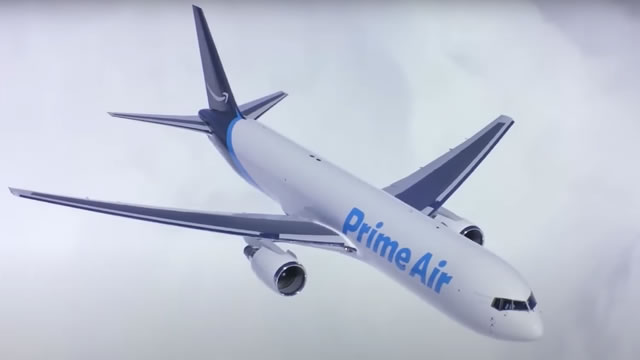
Amazon Plans to Offer Satellite Internet Service in Late 2025
PYMNTS.com· 2025-07-14 21:54
Core Insights - Amazon's Project Kuiper aims to provide satellite broadband service, targeting areas with poor internet coverage globally, with a projected revenue of $7.1 billion by 2032 if it captures 30% of the consumer market [1][4][2] Group 1: Project Kuiper Overview - Project Kuiper plans to launch commercial satellite broadband service by late 2025, offering three tiers of service with speeds up to 1 gigabit per second [1][4] - The initiative is expected to generate synergies with Amazon's core businesses, including AWS data transfers, IoT management, and logistics connectivity [1][13] Group 2: Market Potential and Financial Projections - Approximately 2.6 billion people lack fast broadband access, presenting a significant market opportunity for Amazon [4] - BofA Global Research analysts estimate that Amazon could generate $7.1 billion in consumer revenue by 2032, assuming a 30% market share [4][2] - Amazon is projected to invest $23 billion in building out its satellite service, excluding consumer equipment costs [4] Group 3: Competitive Landscape - SpaceX's Starlink currently has 6 million subscribers, but Amazon's entry into the market is seen as a viable opportunity due to its plans for affordable satellite service [5][9] - Amazon's satellite service aims to overcome the high costs associated with deploying wired broadband in rural areas, which is often not cost-effective [5] Group 4: Technological Aspects - Project Kuiper has launched low Earth orbit (LEO) satellites, which are designed to provide faster and more reliable internet compared to traditional geostationary satellites [3][11] - The Federal Communications Commission (FCC) has approved 3,200 satellites for Amazon to launch, with plans to utilize multiple launch providers to keep costs down [10] Group 5: Synergies with Other Amazon Services - Project Kuiper will enhance Amazon's AWS offerings by providing private connectivity without routing data through the public internet [13] - The satellite service may be bundled with AWS for IoT management, allowing real-time optimization of logistics and delivery assets [13] - Improved logistics connectivity through Project Kuiper could enhance Amazon's management of its own logistics assets, including future drones and robots [13]

民生证券:给予普天科技买入评级
Zheng Quan Zhi Xing· 2025-07-07 13:15
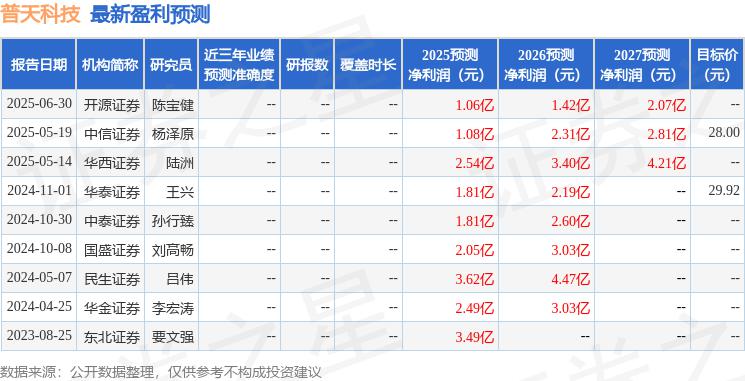
Core Viewpoint - Puxin Technology is positioned as a leading player in the satellite internet sector, backed by strong state-owned enterprise support, and is focused on enhancing its core competencies through continuous research and development in AI and satellite internet technologies [2][4]. Company Overview - Puxin Technology is a state-controlled listed company under China Electronics Technology Group Corporation, focusing on information communication, including public and private network communications, smart applications, and intelligent manufacturing [2]. - The company serves as a key platform for the Guangdong-Hong Kong-Macao Greater Bay Area and plays a significant role in national cybersecurity infrastructure development, benefiting from comprehensive support in resource allocation and industry integration [2]. Industry Development - The domestic satellite internet industry is rapidly growing, with a market size projected to increase from 29.162 billion yuan in 2021 to 37.6 billion yuan by 2025, reflecting a compound annual growth rate (CAGR) of 7% [3]. - Puxin Technology is actively involved in the development of industry standards and has made significant advancements in product offerings, including high-end PCB products and satellite communication technologies [3]. Strategic Initiatives - The company is enhancing its competitive positioning by participating in the formulation of industry standards and advancing its product lineup, including the development of a portable satellite communication terminal that connects directly to low-orbit satellites [3]. - Puxin Technology is also focusing on applications in emergency communication and other specialized sectors, leveraging its research in direct satellite communication technologies [3]. Investment Outlook - Puxin Technology is expected to achieve net profits of 108 million yuan, 145 million yuan, and 201 million yuan for the years 2025, 2026, and 2027, respectively, with corresponding price-to-earnings (PE) ratios of 143X, 107X, and 77X [4]. - The company is recognized as a "national team" in the satellite internet field, with a commitment to advancing communication technology and exploring new growth opportunities in AI and low-altitude economies [4].
普天科技携手氦星光联、忆芯科技成立空天智算联合研发中心
news flash· 2025-07-02 02:07
Group 1 - The core viewpoint of the article is the strategic collaboration between Putian Technology, Helistar Lightlink (Shenzhen) Co., Ltd., and Beijing Yixin Technology Co., Ltd. to establish a joint enterprise R&D center aimed at advancing key technologies in the aerospace computing field and contributing to the national satellite internet strategy [1] Group 2 - The collaboration is focused on integrating the technological strengths of the three parties to achieve breakthroughs in critical technologies [1] - The initiative is part of a broader effort to promote the commercialization of aerospace computing technologies [1]