建筑业

Search documents
南京邑珑建设发展有限公司成立,注册资本20000万人民币
Sou Hu Cai Jing· 2025-08-11 16:52
Group 1 - Nanjing Yilong Construction Development Co., Ltd. has been established with a registered capital of 200 million RMB [1] - The company is wholly owned by Nanjing Yiju Construction Development (Group) Co., Ltd. [2] - The legal representative of the new company is Zhou Xiaoxiang [1] Group 2 - The business scope includes real estate development, construction engineering, project supervision, and design [2] - Additional services offered include engineering management, cost consulting, and property management [2] - The company is registered in Jiangsu Province, Nanjing City, with an operational period until August 11, 2025, and no fixed term thereafter [2]
土耳其基建挑战中国,底气在哪里?
Hu Xiu· 2025-08-11 13:04
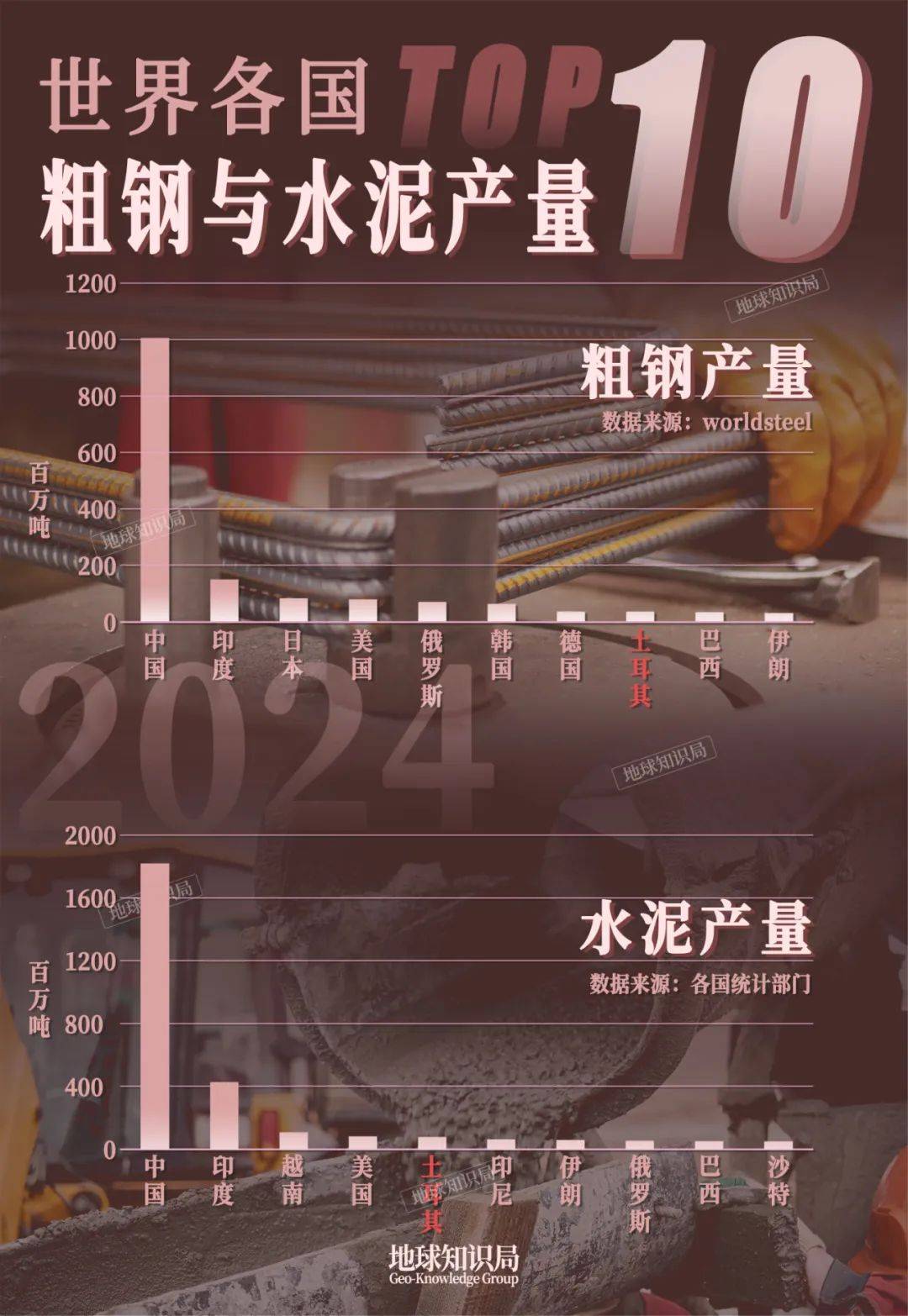
Core Viewpoint - Turkey is emerging as a new "infrastructure powerhouse," similar to China, competing for overseas markets in infrastructure development [3]. Group 1: Turkey's Infrastructure Era - Turkey's rise in infrastructure capability is closely linked to its real estate sector becoming a pillar of the economy [4]. - The skyline of Turkish cities is characterized by numerous construction projects, reflecting a rapid urbanization similar to China's [5]. - The economic model of Turkey heavily relies on public construction and real estate investment to drive growth, a trend established under Erdogan's long-term governance [6]. Group 2: Urbanization and Housing Demand - Turkey experienced accelerated urbanization from the 1980s, with urbanization rates rising from 48.1% in 1983 to 65.95% in 2002 [7]. - This rapid urbanization led to the emergence of substandard housing, with approximately 62% of buildings being illegal constructions by the early 21st century [9]. - The demand for improved housing conditions became urgent after Erdogan took office, prompting significant growth in the real estate sector [10]. Group 3: Construction Industry Capacity - Turkey ranks as the 7th largest steel producer and 5th largest cement producer globally, maintaining a strong industrial base for construction [12][13]. - The number of building permits issued in Turkey is ten times the EU average, indicating a robust construction sector [14]. - From 2002 to 2014, Turkey's GDP grew at an average rate of 4.9%, with the construction sector growing at 6.5%, highlighting its role as an economic driver [17]. Group 4: Institutional Dependence on Infrastructure - Post-2008 financial crisis, Turkey's economy became increasingly reliant on infrastructure and real estate to stimulate domestic demand [20][25]. - The construction and real estate sectors also significantly impact the consumption of industrial goods, helping to mitigate declines in foreign trade [26]. - Erdogan's government has expanded the powers of urbanization authorities to facilitate large-scale infrastructure projects [31]. Group 5: Transformation into National Capability - Erdogan's administration has successfully transformed infrastructure capabilities into national capabilities, enhancing wealth distribution through construction projects [36]. - The construction sector has created new middle-class citizens from rural areas, reinforcing Erdogan's political support base [38]. - However, the close ties between the government and major construction firms have raised concerns about corruption and favoritism in public procurement [40]. Group 6: Future Outlook - As the domestic real estate market becomes saturated, Turkish construction firms are likely to seek opportunities abroad [46]. - The competitive positioning of Turkish construction companies in the international market, particularly against Chinese firms, will be a focal point for future analysis [47].

泰达股份:8月11日召开董事会会议
Mei Ri Jing Ji Xin Wen· 2025-08-11 12:50
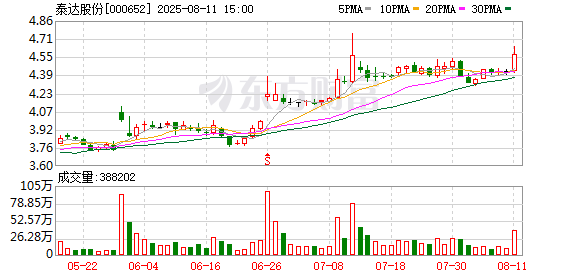
Group 1 - The company, Teda Co., Ltd. (SZ 000652), announced a temporary board meeting on August 11, 2025, to discuss the appointment of a new chief auditor [2] - For the fiscal year 2024, the company's revenue composition is as follows: wholesale industry accounts for 89.33%, environmental management for 6.82%, construction for 2.8%, real estate for 0.74%, and textile and apparel for 0.29% [2]

点“废”成金 向“绿”而行
Liao Ning Ri Bao· 2025-08-11 01:24
Core Viewpoint - Dalian San Chuan Construction Group is transitioning into the circular economy sector, establishing a comprehensive recycling system with a focus on sustainable resource management and waste reduction [1][2][3] Group 1: Company Overview - Dalian San Chuan has evolved from a small group of bricklayers in 1957 to a comprehensive industrial group involved in engineering construction, manufacturing, green circular economy, and urban operation services [2] - The company holds top-level qualifications in construction and municipal engineering, being the only private construction enterprise in Northeast China with dual top qualifications [2] - The firm has received over 1,000 national and provincial awards for its engineering projects, including the prestigious "Luban Award" and "Zhan Tianyou Award" [2] Group 2: Strategic Transition - In response to the slowing growth of the construction industry, the company is embracing transformation as a new mission, aligning with national and societal needs [2] - The strategic shift towards the circular economy was initiated in April 2024, leveraging the company's existing capabilities in integrated sanitation and resource recycling [2][3] Group 3: Circular Economy Initiatives - The first project of the Dalian Green Circular Economy Industrial Park, a recycling resource sorting center, commenced construction in October 2024, aiming to sort approximately 550,000 tons of recyclable materials annually [3] - The company plans to establish 1,298 integrated recycling stations and smart recycling bins across Dalian, providing a comprehensive range of services including waste sorting, recycling, and green point redemption [3] - A smart city management system will be implemented to track the lifecycle of waste, ensuring transparency and efficiency in the recycling process [3][4] Group 4: Future Outlook - Dalian San Chuan is committed to deepening its engagement in the circular economy through systematic and digital approaches, fostering sustainable development [4]
中国中小企业协会公布最新数据显示:中小企业运行发展预期平稳
Zhong Guo Zheng Quan Bao· 2025-08-11 01:02
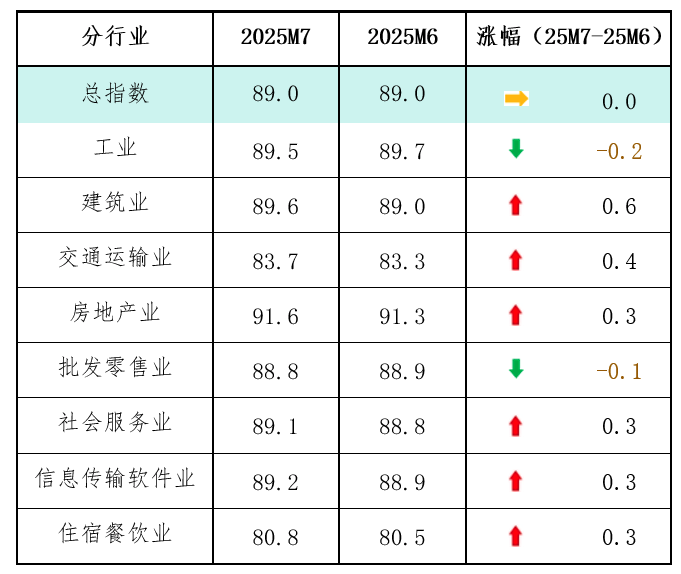
Core Insights - The China SME Development Index for July remains stable at 89.0, indicating a steady performance amidst external uncertainties and slow domestic demand growth [1] - The index shows a positive trend in various sectors, with six industries experiencing growth while two saw slight declines [1] Industry Performance - The construction, transportation, real estate, social services, information transmission software, and accommodation and catering sectors all reported significant increases in their indices, rising by 0.6, 0.4, 0.3, 0.3, 0.3, and 0.3 points respectively [1] - The industrial and wholesale retail sectors experienced minor declines of 0.2 and 0.1 points respectively [1] Financial Conditions - The financial situation for SMEs has improved, with the funding index rising by 0.2 points in July [1] - There is an increase in working capital and a faster turnover of accounts receivable, with six out of eight surveyed industries reporting growth in working capital and quicker collection of receivables [1] Investment Sentiment - Investment willingness among SMEs has shown signs of recovery, with the investment index increasing by 0.1 points in July [1] - Six out of the eight surveyed industries reported an increase in their investment indices [1] Future Outlook - The China SME Association emphasizes the need for comprehensive economic reforms to stimulate domestic demand, foster new growth points in service consumption, and enhance private and SME investment vitality [2] - The focus will be on stabilizing employment, businesses, markets, and expectations to support the innovative development and quality improvement of private and small enterprises [2]
中国中小企业协会公布最新数据显示 中小企业运行发展预期平稳
Zhong Guo Zheng Quan Bao· 2025-08-10 21:14
Group 1 - The China SME Development Index for July is 89.0, remaining stable compared to the previous month, indicating a steady but pressured performance of SMEs amid external uncertainties and slow domestic demand growth [1] - In July, the industry index showed 6 sectors rising and 2 declining, with notable increases in construction, transportation, real estate, social services, information transmission software, and accommodation and catering sectors, rising by 0.6, 0.4, 0.3, 0.3, 0.3, and 0.3 points respectively [1] - The funding situation for SMEs improved in July, with the funding index rising by 0.2 points, indicating better liquidity and faster accounts receivable turnover across 6 out of 8 surveyed industries [1] Group 2 - The investment willingness of SMEs showed signs of recovery, with the investment index increasing by 0.1 points in July, as 6 out of 8 surveyed industries reported an increase in investment [1] - The China SME Association emphasizes the need for comprehensive economic reforms to effectively release domestic demand potential, stimulate private investment, and support the innovation and quality improvement of SMEs [2]
中小企业运行发展预期平稳
Zhong Guo Zheng Quan Bao· 2025-08-10 21:05
Group 1 - The China SME Development Index for July is 89.0, remaining stable compared to the previous month, indicating that SMEs are facing significant external uncertainties and slow domestic demand growth [1] - In July, the index for six industries increased, while two industries saw a decline, suggesting an overall positive trend in industry operations [1] - The construction, transportation, real estate, social services, information transmission software, and accommodation and catering industries showed notable increases in their indices, rising by 0.6, 0.4, 0.3, 0.3, 0.3, and 0.3 points respectively [1] Group 2 - The funding situation for SMEs improved in July, with the funding index rising by 0.2 points, indicating better liquidity and faster accounts receivable turnover [1] - Investment willingness among SMEs has also increased, with the investment index rising by 0.1 points in July, reflecting a positive outlook in six out of eight surveyed industries [1] - The China SME Association emphasizes the need for comprehensive economic reforms to stimulate domestic demand, support private and small enterprises, and achieve the goals set for the 14th Five-Year Plan [2]
7月份中国中小企业发展指数与上月持平
Zheng Quan Ri Bao· 2025-08-10 16:42
Group 1 - The Small and Medium Enterprises Development Index (SMEDI) in China remained stable at 89.0 in July, unchanged from June [1] - In July, the funding index and input index increased by 0.2 points and 0.1 points respectively compared to June, while the comprehensive operation index and efficiency index remained flat [1] - The construction, transportation, real estate, social services, information transmission software, and accommodation and catering industries showed significant increases in their development indices, rising by 0.6, 0.4, 0.3, 0.3, 0.3, and 0.3 points respectively [1] Group 2 - The development environment for small and medium enterprises in China is stabilizing, with improved funding conditions and reduced operational cost pressures [2] - There is an increasing willingness for investment among enterprises, supported by effective macroeconomic policies [2] - Future efforts will focus on deepening economic reforms, stimulating domestic demand, and supporting innovation and efficiency improvements in private and small enterprises [2]
中国中小企业协会:7月中国中小企业发展指数与上月持平
Zheng Quan Shi Bao Wang· 2025-08-10 00:04
Core Viewpoint - The China Small and Medium Enterprises Development Index (SMEDI) for July remains stable at 89.0, unchanged from the previous month [1] Industry Summary - The index shows a positive trend in various sectors, with 6 industries experiencing growth and 2 industries seeing a decline [1] - Notable increases were observed in the construction, transportation, real estate, social services, information transmission software, and accommodation and catering industries, with respective increases of 0.6, 0.4, 0.3, 0.3, 0.3, and 0.3 points [1] - The industrial and wholesale retail sectors experienced slight declines of 0.2 and 0.1 points, respectively [1] - Overall, the operational status of the industries is improving [1]
中国中小企业协会:7月中国中小企业发展指数为89.0,与上月持平
Xin Lang Cai Jing· 2025-08-09 23:52
Core Insights - The Small and Medium Enterprises Development Index (SMEDI) for July in China is reported at 89.0, remaining unchanged from the previous month [1] Industry Performance - The index shows a positive trend with 6 industries increasing and 2 decreasing in July [1] - Significant increases were observed in the following sectors: - Construction: up by 0.6 points to 89.6 - Transportation: up by 0.4 points to 83.7 - Real Estate: up by 0.3 points to 91.6 - Social Services: up by 0.3 points to 89.1 - Information Transmission and Software: up by 0.3 points to 89.2 - Accommodation and Catering: up by 0.3 points to 80.8 [2] - The Industrial sector saw a slight decline of 0.2 points to 89.5, while Wholesale and Retail decreased by 0.1 points to 88.8 [2]