
Quantum Computing

Search documents
How IonQ's New $3.5 Billion Balance Sheet Changes the Investment Thesis
Yahoo Finance· 2025-11-14 17:05
Core Insights - IonQ is a prominent player in the quantum computing sector, integrating its systems with major cloud providers like Amazon, Microsoft, and Alphabet, which enhances its market appeal [1] - The company has a substantial cash reserve of $3.5 billion, raising questions about its potential to lead in the quantum AI revolution [2] Financial Profile - IonQ's financial performance shows a stark contrast between its revenue growth and profitability, with significant operating losses despite increasing sales [3] - The revenue figures include contributions from recent acquisitions, indicating that the reported growth may not solely stem from organic performance [5] Expense Dynamics - For the nine-month period ending September 30, IonQ incurred $210 million in R&D and $154 million in SG&A expenses, reflecting annual growth rates of 116% and 275%, respectively [6] - The rapid increase in expenses outpaces revenue growth, suggesting that recent acquisitions have not yet positively impacted the company's financial health [7] - Despite the mounting losses, IonQ maintains a strong cash position of $3.5 billion, attributed to its revenue growth from acquisitions [7]

This is the Only Quantum Computing Stock You Should Buy
247Wallst· 2025-11-14 16:51
Quantum computing has generated huge buzz, with potential to tackle problems in drug discovery, materials science, and optimization that stump traditional computers. ...



MicroCloud Hologram Inc. Releases Next-Generation Quantum Convolutional Neural Network Multi-Class Classification Technology, Driving Quantum Machine Learning Towards Practicalization
Prnewswire· 2025-11-14 16:30
Core Viewpoint - MicroCloud Hologram Inc. has launched a multi-class classification method based on Quantum Convolutional Neural Network (QCNN) using hybrid quantum-classical learning, showcasing the potential of quantum computing in artificial intelligence and addressing limitations of traditional computing architectures [1][12]. Technology Development - The new technology addresses bottlenecks in classical neural networks, particularly in computing power, energy consumption, and model complexity, as data scales and classification categories expand [2][10]. - The core of the technology is a multi-class classification model that integrates quantum convolutional neural networks with a hybrid quantum-classical optimization framework, utilizing the TensorFlow Quantum platform [3][9]. Model Design - HOLO introduced a quantum perceptron model that leverages quantum state evolution and measurement, enhancing feature extraction through quantum gates, which allows for high-dimensional feature mappings [4][9]. - The model optimizes circuit complexity and improves expressive power by reducing redundant gate operations and enhancing entanglement structures [4][9]. Training Mechanism - The hybrid quantum-classical learning mechanism significantly improves training efficiency and model convergence speed by combining quantum state encoding with classical optimization algorithms [5][12]. - The training process involves quantum circuits encoding input samples, producing measurement results that are normalized and used to update quantum circuit parameters iteratively [5][8]. Experimental Results - Experimental results indicate that HOLO's quantum convolutional neural network achieves accuracy comparable to classical convolutional networks in four-class classification tasks, validating the feasibility of quantum neural networks for practical applications [6][12]. Industry Context - The technology is positioned to address challenges in various fields such as computer vision, medical image analysis, and natural language processing, where traditional deep learning methods face limitations due to high energy consumption and long training times [10][12]. - HOLO's quantum convolutional neural network method aims to reduce computational complexity and leverage future advancements in quantum hardware for significant breakthroughs in computing power [10][11]. Future Prospects - The technology lays the groundwork for broader applications of quantum machine learning, with expectations for expansion into large-scale image recognition and real-time video processing as quantum hardware advances [11][12]. - HOLO plans to further optimize quantum circuits and explore multi-layer quantum convolutional networks combined with deep residual structures in future research [11].


Jim Cramer on Rigetti: “You Sell Half of It”
Yahoo Finance· 2025-11-14 16:13
Group 1 - Rigetti Computing, Inc. (NASDAQ:RGTI) has seen a significant increase in its stock price, rising from $0.149 a year ago to approximately $28, with a peak of $58 last month [1] - Despite the stock's performance, Rigetti is experiencing declining revenues and substantial losses, raising concerns about the sustainability of its stock price [1] - The company is categorized as a hyper-speculative investment, with the current market environment suggesting that the era of high-risk investing may be coming to an end [1] Group 2 - Rigetti develops quantum computing systems and superconducting processors, offering cloud-based access through its Quantum Computing as a Service platform [2] - There is a belief that certain AI stocks may present greater upside potential and lower downside risk compared to Rigetti [2] - The article suggests that investors should consider undervalued AI stocks that could benefit from current economic trends, such as tariffs and onshoring [2]

美股异动 | 多数量子计算概念股强势反弹 昆腾(QMCO.US)涨超10%
智通财经网· 2025-11-14 15:21
智通财经APP获悉,周五,多数量子计算概念股强势反弹,截至发稿,昆腾(QMCO.US)涨超10%, Quantum Computing(QUBT.US)涨超10%,D-Wave Quantum(QBTS.US)涨超2%,Rigetti Computing(RGTI.US)微涨。 ...


快4.5亿倍!量子计算,有新消息
财联社· 2025-11-14 13:04
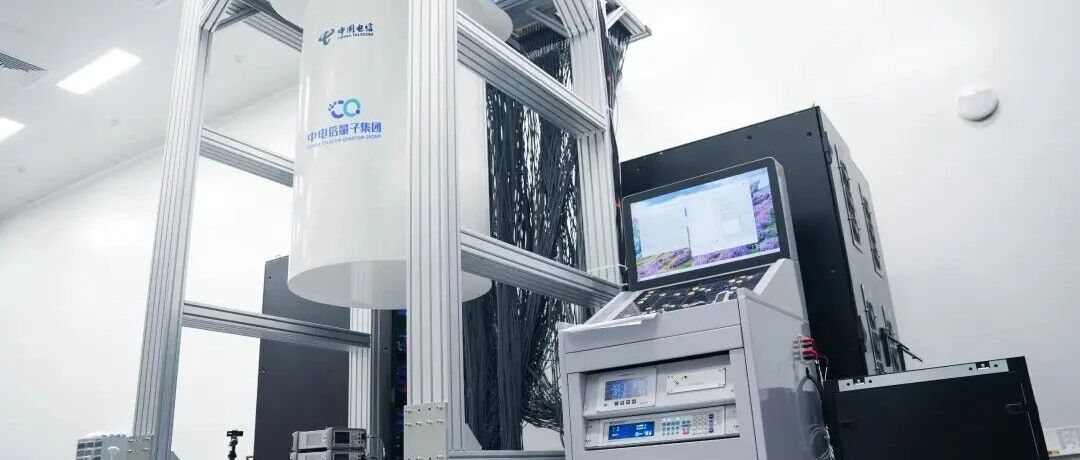
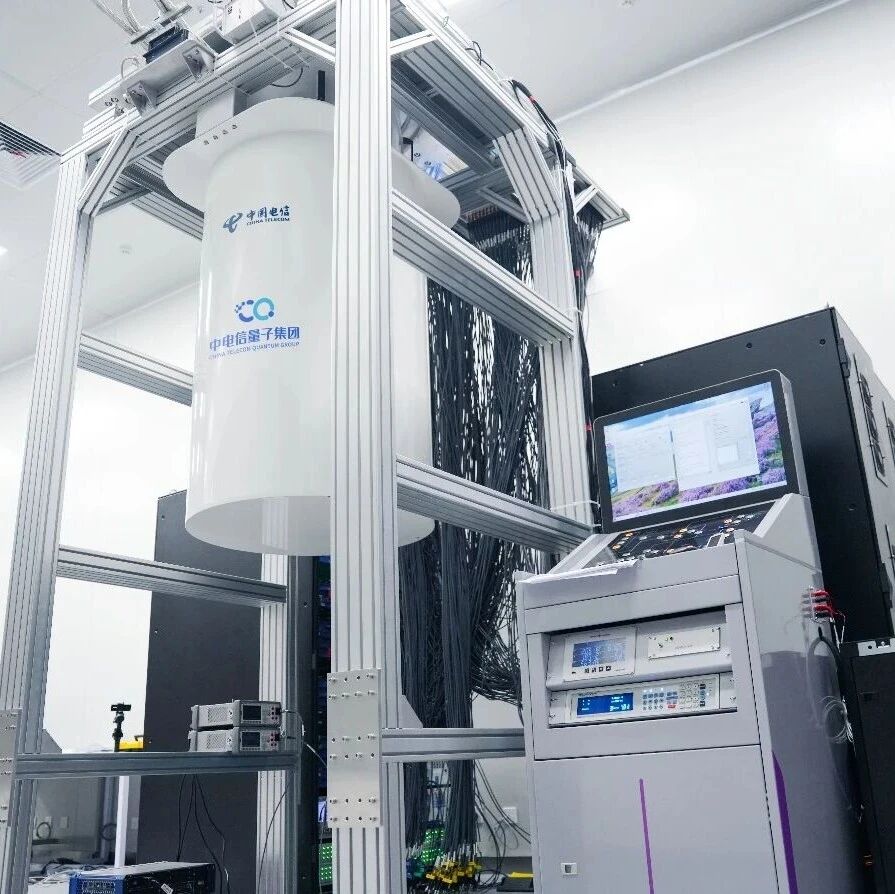
Core Viewpoint - The successful construction of the "Tianyan-287" superconducting quantum computer marks a significant advancement in China's efforts to promote the practical application of quantum computing, showcasing the country's capabilities in developing a fully domestic quantum computing supply chain and integrating AI technology for enhanced performance [1][4]. Group 1: Quantum Computer Development - The "Tianyan-287" quantum computer features 105 data qubits and 182 coupling qubits, developed by China Telecom Quantum Group in collaboration with Keda Guandun Quantum Technology Co., Ltd [1]. - This quantum computing system demonstrates "quantum computing superiority," processing specific problems 450 million times faster than the fastest supercomputers currently available [4]. Group 2: Technological Breakthroughs - The construction process highlighted three key technological breakthroughs: full domestic production, AI empowerment, and ultra-large integration [4]. - All hardware and components used in the quantum computer were developed and produced by domestic manufacturers, establishing a fully domestic superconducting quantum computing supply chain [4]. - An AI-enabled automatic calibration system for superconducting chip parameters was developed, allowing for efficient and precise calibration and maintenance of the quantum computing system [4]. Group 3: Cloud Platform Integration - In November 2023, the "Tianyan" quantum computing cloud platform was officially launched, integrating Tianyi Cloud supercomputing capabilities with 176 qubits of superconducting quantum computing power [5]. - The platform has surpassed 37 million visits and serves users in over 60 countries, with more than 2.7 million experimental tasks completed [5]. - The goal is to provide computational support to various industry users and research institutions, expanding the application boundaries of quantum computing and enhancing China's core competitiveness in this field [5].

BofA Expert Warns AI Boom Needs 'More Land' Than Singapore,' More Energy' Than Japan,' As Growth Faces Massive Bottleneck - First Trust DJ Internet Index Fund (ARCA:FDN), Fidelity MSCI Information Tec
Benzinga· 2025-11-14 10:11
Core Insights - The rapid growth of artificial intelligence (AI) is facing significant infrastructure challenges, particularly in data center capacity and energy requirements [2][4] - The potential of AI extends far beyond current applications, with transformative capabilities in various fields such as drug discovery and climate modeling [3][4] - The demand for natural resources, including land, energy, and water, is escalating due to the AI boom, necessitating a balance between technological advancement and sustainable resource management [5] Infrastructure Challenges - A 50% increase in data center capacity is required within the next year to support AI's rapid expansion, which would necessitate land greater than Singapore and energy output exceeding that of Japan [2] - The current energy infrastructure is unprepared for the demands of the AI revolution, highlighting the need for significant upgrades [4] Transformative Potential of AI - The focus on superficial AI applications overlooks its broader potential, which includes groundbreaking advancements in various sectors [3] - The critique of the industry's short-term focus on quarterly results emphasizes the need for a long-term perspective on AI's societal impact [4] Resource Demands - The AI boom is increasing the demand for natural resources, with applications like ChatGPT consuming significant amounts of water [5] - The urgency for sustainable energy generation strategies is underscored by the rapid pace of technological progress [5] Quantum Computing - Quantum computing is anticipated to surpass classical computing sooner than expected, intensifying the demand for computational resources [6][7] - This next frontier will not replace classical systems but will further challenge the existing global infrastructure [7] Investment Opportunities - Several AI-linked and quantum stocks and ETFs are highlighted as potential investment opportunities in light of growing demand [7] - Performance data for various technology ETFs and stocks is provided, indicating their year-to-date and one-year performance [8][9]

快4.5亿倍!量子计算,大消息!
证券时报· 2025-11-14 09:23
Core Viewpoint - The article highlights the successful establishment of the "Tianyan-287" superconducting quantum computer, which demonstrates "quantum computing superiority" by processing specific problems 450 million times faster than the fastest supercomputers, marking a significant milestone in China's quantum computing capabilities [1][3]. Group 1: Quantum Computing Development - The "Tianyan-287" quantum computing system is equipped with the same series of chips as the renowned "Zuchongzhi 3," featuring 105 data qubits and 182 coupling qubits, showcasing its quantum computing superiority [3][4]. - The construction of the quantum computer reflects breakthroughs in three areas: "fully domestic production," "AI empowerment," and "super fusion" [4]. Group 2: Technological Innovations - The project utilized domestically produced superconducting quantum computing hardware and components, establishing a fully domestic supply chain for superconducting quantum computing [4]. - An AI-enabled automatic calibration system for superconducting chip parameters was developed, enhancing the efficiency and precision of the quantum computing system [5]. Group 3: Cloud Platform and Applications - The "Tianyan" quantum computing cloud platform integrates supercomputing capabilities and is designed to lower the technical application threshold, facilitating the transition of quantum computing from research to practical applications [7]. - As of November 2023, the "Tianyan" quantum computing cloud platform has achieved over 37 million visits, serving users in more than 60 countries and completing over 2.7 million experimental tasks [7]. Group 4: Industry Outlook - The current landscape of quantum computing in China is characterized by breakthroughs in hardware, completion of software tools, and collaborative industry advancement, indicating a shift from research breakthroughs to commercial applications [7][8].
Palantir Stock vs. Rigetti Computing Stock: Billionaires Buy One and Sell the Other
The Motley Fool· 2025-11-14 09:12
Group 1: Palantir Technologies - Palantir Technologies develops analytics software for public and private sectors, with core platforms Gotham and Foundry integrating data and machine learning models into a decision-making framework [3] - The company reported strong third-quarter results, with revenue increasing 63% to $1.1 billion and non-GAAP net income rising 110% to $0.21 per diluted share, leading to a raised full-year revenue forecast of 53% for 2025 [4] - Despite strong performance, Palantir's price-to-sales (PS) ratio is 112, significantly higher than the next closest S&P 500 company, AppLovin, at 36 times sales, indicating a disconnection from valuation reality [5][6] Group 2: Hedge Fund Activity - Israel Englander at Millennium Management increased his stake in Palantir by purchasing 3.6 million shares, making it his eighth largest holding, while completely exiting his position in Rigetti by selling 298,000 shares [5] - Cliff Asness at AQR Capital Management bought 439,700 shares of Palantir, increasing his stake by 20%, while reducing his position in Rigetti by selling 4,100 shares [5] Group 3: Rigetti Computing - Rigetti Computing utilizes superconducting qubit processors for calculations and has a vertically integrated approach, controlling much of its hardware supply chain [9][10] - The company trades at an extremely high valuation of 1,087 times sales, which is nearly 10 times more expensive than Palantir, suggesting that the market may have overvalued the stock [10]


Prediction: Quantum Computing Stocks IonQ, Rigetti Computing, and D-Wave Quantum Will Plunge 50% (or More) in 2026
The Motley Fool· 2025-11-14 08:51
Core Insights - The article suggests that while artificial intelligence (AI) has been a major growth trend, quantum computing is emerging as a significant competitor, with stocks in this sector experiencing substantial gains over the past year [2][3]. Group 1: Quantum Computing Growth - Quantum computing stocks such as IonQ, Rigetti Computing, D-Wave Quantum, and Quantum Computing Inc. have seen price increases ranging from 123% to 2,090% over the past year, indicating strong investor interest and potential for early investors [2]. - The potential economic value of quantum computing is projected to reach up to $850 billion by 2040, with applications in AI, weather modeling, cybersecurity, and drug development [3]. Group 2: Financial Performance and Valuation Concerns - Despite significant sales growth, companies in the quantum computing sector are currently facing substantial operational losses, with IonQ reporting a loss from operations of $168.8 million, up from $53.1 million year-over-year [10][11]. - Valuations for quantum computing stocks are considered unsustainable, with IonQ, Rigetti, D-Wave, and Quantum Computing Inc. trading at price-to-sales (P/S) ratios that are historically high, indicating potential for a significant decline in stock prices [13][20]. Group 3: Historical Context and Market Trends - Historical trends show that new technologies often take time to mature, with past examples including the internet and other technological advancements, suggesting that quantum computing may follow a similar trajectory [5][6][7]. - The current stock market is also viewed as historically pricey, with the S&P 500's Shiller P/E Ratio peaking at 41.20, indicating that a market correction could adversely affect high-valuation stocks like those in the quantum computing sector [22][23].
