
农业服务

Search documents
从赋能到共生央企解锁乡村振兴新密码
Zhong Guo Zheng Quan Bao· 2025-10-16 20:11
Core Insights - Central enterprises in China are actively participating in rural revitalization efforts, leveraging their resources and expertise to improve local economies and infrastructure [1][2][3][4][5][6][7] - Significant investments have been made by these enterprises, with over 120 billion yuan allocated for various support initiatives since the start of the 14th Five-Year Plan [3][6] - The focus is on creating sustainable development models that empower local communities, transitioning from mere financial aid to fostering self-sufficiency [3][4][5][6] Group 1: Investment and Economic Impact - The National Energy Group's solar project in Qinghai generates 360 million kWh annually, providing stable income for local herders [1] - In Inner Mongolia, China National Chemical has invested 348 million yuan since 2018, benefiting over 5,200 households and increasing agricultural yields by 8%-10% [2] - China Telecom's smart production initiatives in Sichuan have increased the value of local agricultural products by three times, benefiting over 600 impoverished households [4] Group 2: Technological Innovation - Central enterprises are integrating advanced technologies into agricultural practices, enhancing productivity and market access for local farmers [2][4][5] - The establishment of a red date research institute in Makeyti has improved market recognition for local products through traceability systems [2] - Digital transformation initiatives have led to significant improvements in production efficiency and product quality across various agricultural sectors [4] Group 3: Social Development and Education - The establishment of medical facilities, such as the Longle Hospital in Hubei, has improved healthcare access for local communities, with over 16,000 outpatient visits recorded [6] - Educational initiatives by China Coal have resulted in a 100% college admission rate for students in their rural programs, significantly enhancing local educational outcomes [6][7] - The "善建" colorful classroom project by China National Building Material Group has provided summer care and educational resources for nearly 4,000 left-behind children [7]
“抢烘”“备耕”不愁“等贷”,邮储“资”持历久弥新
Qi Lu Wan Bao· 2025-10-16 08:17
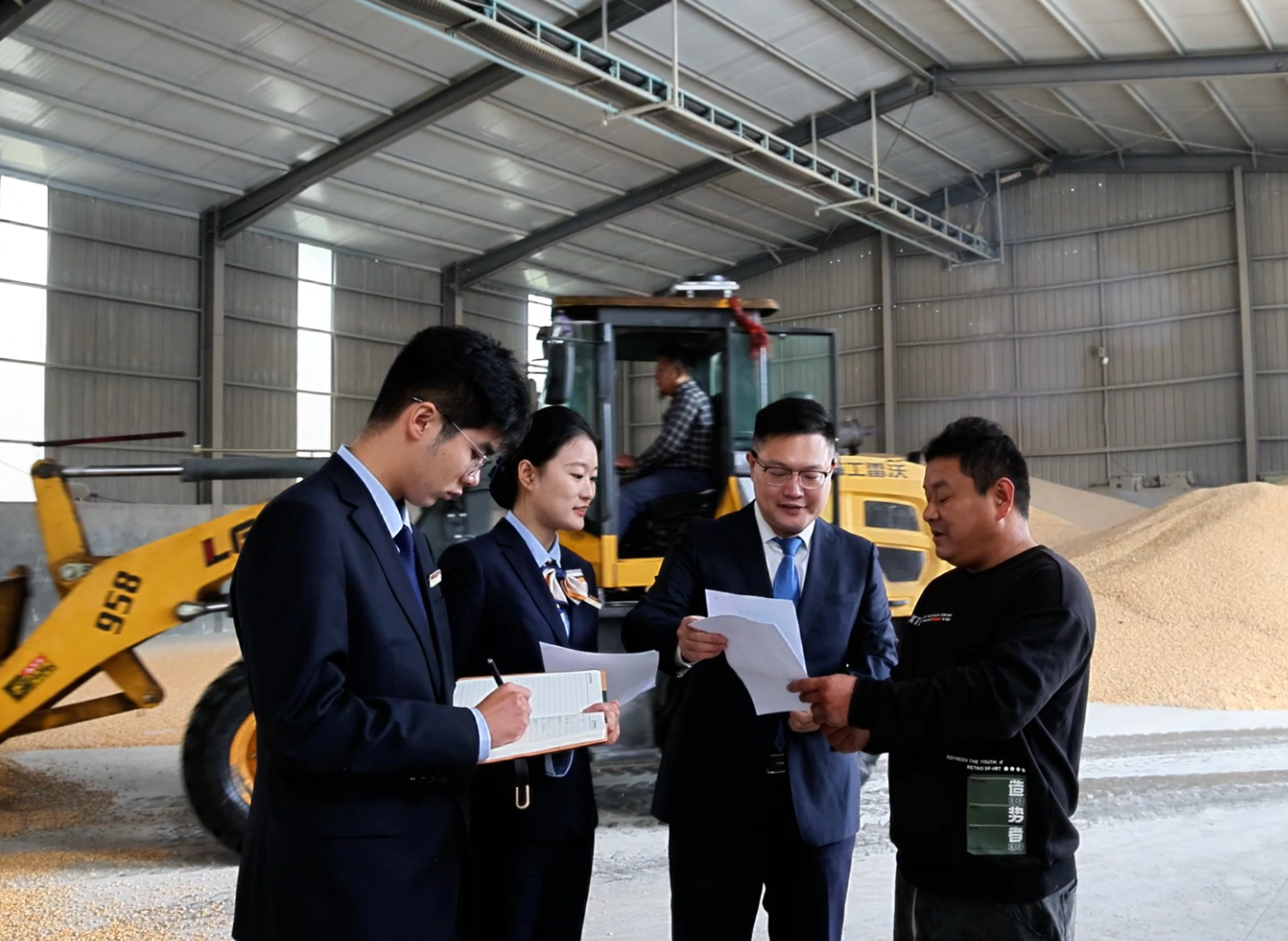
Core Insights - The article highlights the challenges faced by farmers in Shandong due to continuous rainfall during the autumn harvest, which has delayed grain collection and created difficulties in grain processing [1] - The timely financial support from banks, particularly Postal Savings Bank, is crucial in addressing the urgent needs of farmers and ensuring food security [2] Group 1: Financial Support and Solutions - Postal Savings Bank has been actively providing loans to farmers and agricultural cooperatives to facilitate the purchase of essential equipment like high-end drying machines, which are critical for preventing grain spoilage [3][4] - The bank's quick loan approval process, exemplified by a 10-minute online loan application that provided 500,000 yuan, demonstrates its commitment to supporting farmers during this critical period [3] - In total, Postal Savings Bank's branches in Shandong have issued over 1.83 billion yuan in agricultural loans this autumn, benefiting nearly 765 entities involved in grain collection and processing [10] Group 2: Impact on Local Agriculture - The establishment of drying facilities, such as those operated by Guosheng Agricultural Technology Company, has significantly improved the efficiency of grain processing, allowing for the drying of up to 1,000 tons of grain daily [7] - The drying services provided by these facilities have alleviated the anxiety of farmers regarding grain spoilage due to adverse weather conditions, ensuring that their harvest can be safely stored [7][8] - The proactive measures taken by Postal Savings Bank, including the introduction of credit loans without collateral, have enabled agricultural enterprises to scale up their operations and meet the urgent demands of the harvest season [12][14]


城乡融合、协同创新双提速——长三角一体化涌动发展新活力
Xin Hua She· 2025-10-13 13:51
Core Insights - The Yangtze River Delta is transforming into a hotspot for urban-rural integration and collaborative innovation, driven by the removal of administrative barriers and improved systems [1][2][4] Group 1: Urban-Rural Integration - The establishment of the "Two Provinces and One Street" police station has facilitated cross-province governance, exemplified by a resident obtaining a residence permit across provincial lines [2] - The "Mingyue Shantang" scenic area project has unified architectural styles and shared tourism resources, enhancing cross-border tourism experiences [2] - Urban-rural integration is creating development benefits and reducing disparities, as seen in the collaboration between Shanghai's Jinshan District and Zhejiang's Pinghu City [3] Group 2: Innovation and Collaboration - The relocation of Huizhi Kang (Zhejiang) Intelligent Technology Co., Ltd. to the Yangtze River Delta's talent innovation base highlights the benefits of breaking administrative barriers for talent and technology flow [4] - The establishment of the "Yangtze River Delta Language Computing Innovation Alliance" aims to tackle challenges in voice recognition technology, showcasing collaborative innovation among regional entities [4] - The Fudan-Opp Global Smart Lighting Joint Laboratory is advancing research on adaptive lighting environments, demonstrating the integration of academic and industrial resources [5] Group 3: High-Quality Development - The agricultural service company in Jiaxing is leveraging technology to provide comprehensive farming services across the Yangtze River Delta, having cultivated 30,000 acres of farmland [6] - Advanced technologies like 5G are being utilized for real-time monitoring of agricultural conditions, enhancing productivity and product quality [6] - Significant innovations, such as the world's first 8-inch silicon-based gallium nitride production line, are being implemented in the Yangtze River Delta, reflecting the region's growth in urban-rural integration and collaborative innovation [7]
决胜“十四五” 打好收官战丨城乡融合、协同创新双提速——长三角一体化涌动发展新活力
Xin Hua She· 2025-10-13 13:47
Core Viewpoint - The article highlights the rapid development of urban-rural integration and collaborative innovation in the Yangtze River Delta, emphasizing the breaking down of administrative barriers and the enhancement of regional cooperation as key drivers for high-quality development [1][6]. Group 1: Urban-Rural Integration - The Yangtze River Delta is transforming from a "non-governed" neighboring area into a hotspot for urban-rural integration, with significant improvements in governance and regional development levels [2][3]. - The establishment of cross-province governance models, such as the "Two Provinces and One Street" police service, exemplifies effective integration and service delivery across administrative boundaries [2]. - The collaboration between Shanghai and Zhejiang in tourism and commerce has led to a seamless experience for visitors, showcasing the benefits of administrative integration [2]. Group 2: Collaborative Innovation - The removal of administrative barriers has facilitated the flow of talent and technology, as seen in the case of Huizhi Kang (Zhejiang) Intelligent Technology Co., which moved its R&D operations closer to manufacturing bases [4]. - The establishment of the "Yangtze River Delta Language Computing Innovation Alliance" demonstrates successful collaborative efforts in tackling complex technological challenges, resulting in practical applications in the automotive industry [4]. - Legislative measures, such as the recent approval of regulations promoting collaborative technological innovation, signify a commitment to fostering an integrated innovation ecosystem across the region [6]. Group 3: High-Quality Development - Agricultural enterprises in the region are leveraging technology to enhance productivity, with significant areas of farmland being cultivated, showcasing the integration of technology in traditional sectors [7][8]. - The use of advanced monitoring technologies in agriculture, such as 5G, is enhancing crop management and quality, exemplified by the premium pricing of local rice products [8]. - Major innovations, including the production lines for advanced semiconductor and robotics technologies, highlight the new momentum generated by urban-rural integration and collaborative innovation [8].
决胜“十四五” 打好收官战|城乡融合、协同创新双提速——长三角一体化涌动发展新活力
Xin Hua She· 2025-10-13 13:45
Core Viewpoint - The integration of urban and rural areas, along with collaborative innovation, is accelerating in the Yangtze River Delta, driving high-quality development through the removal of administrative barriers and the enhancement of institutional frameworks [1][6]. Group 1: Urban-Rural Integration - The Yangtze River Delta is transforming previously neglected neighboring areas into hotspots for urban-rural integration, exemplified by the establishment of cross-province governance models like the "Two Provinces and One Street" police service [2][3]. - The collaboration between Anhui and Jiangsu provinces has led to significant improvements in development levels through talent exchange and regional coordination mechanisms [2][3]. - The integration has also facilitated seamless travel and commerce across provincial borders, enhancing the overall experience for residents and tourists alike [2][3]. Group 2: Collaborative Innovation - The removal of administrative barriers has enabled companies like Huizhi Kang to relocate and benefit from the flow of talent, technology, and manufacturing resources within the Yangtze River Delta [4][5]. - The establishment of innovation alliances, such as the "Yangtze River Delta Language Computing Innovation Alliance," is fostering technological advancements in voice recognition and other fields, with practical applications in the automotive industry [4][5]. - Legislative measures, such as the recent collaborative laws passed by local governments, aim to promote coordinated technological innovation across the region [6]. Group 3: High-Quality Development - Agricultural enterprises in the region are leveraging technology to provide comprehensive services, with significant land cultivated across the Yangtze River Delta, showcasing the synergy between technological innovation and urban-rural integration [7]. - Advanced monitoring systems for agriculture, utilizing 5G technology, are enhancing productivity and quality, exemplified by the premium pricing of local rice varieties [7]. - Major innovations, including the world's first 8-inch silicon-based gallium nitride production line and advanced robotics, are being realized in the Yangtze River Delta, highlighting the new momentum generated by accelerated urban-rural integration and collaborative innovation [7].
川渝跨区域合作推动农村集体经济发展
Xin Hua Wang· 2025-10-13 01:08
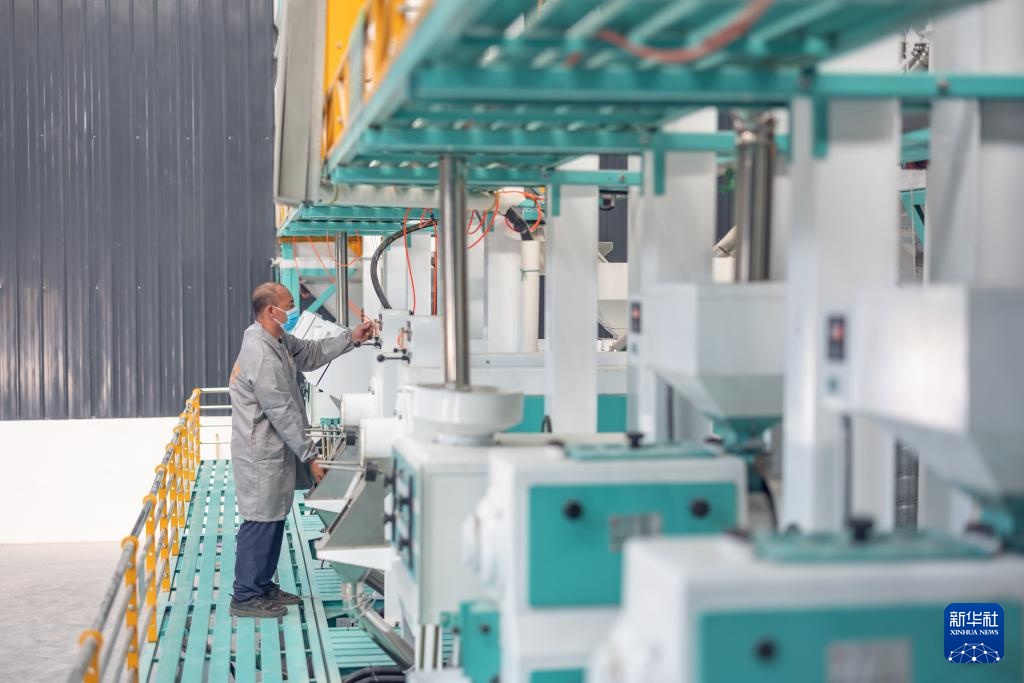
Core Viewpoint - The article highlights the establishment of a new model for cross-regional cooperation in rural collective economies between Ji'an Town in Chongqing and Lishi Town in Luzhou, Sichuan, through the formation of Chongqing Yonglu Qiang Village Agricultural Development Co., Ltd, focusing on agricultural services and rural tourism development [1] Group 1 - Chongqing Yonglu Qiang Village Agricultural Development Co., Ltd was formed by ten villages from Ji'an Town and Lishi Town to enhance rural collective economic development [1] - The company aims to promote high-quality development of rural collective economies by leveraging agricultural planting and processing, as well as sales of agricultural products [1] - The company is involved in various activities, including agricultural services and the development of agritourism [1] Group 2 - On October 11, staff at the Yonglu Agricultural Service Center in Hanlu Village were seen operating smart equipment to process rice [3] - The company also engages in packaging and sealing rice products for sale [4] - Additionally, the company utilizes online live streaming to sell rice, showcasing modern marketing techniques [4]
清远农博生物科技有限公司成立 注册资本200万人民币
Sou Hu Cai Jing· 2025-10-12 09:54
Core Viewpoint - Recently, Qingyuan Nongbo Biotechnology Co., Ltd. was established with a registered capital of 2 million RMB, focusing on various agricultural and environmental services [1] Company Overview - The legal representative of Qingyuan Nongbo Biotechnology Co., Ltd. is Cao Jian'an [1] - The company has a registered capital of 2 million RMB [1] Business Scope - The company’s business activities include technology services, development, consulting, and transfer related to agriculture and environmental protection [1] - It engages in the sale of fertilizers, agricultural products, and various agricultural machinery and equipment [1] - The company also provides services related to soil pollution treatment, wastewater treatment, and ecological restoration [1] - Additional activities include resource recycling consulting, crop harvesting, and cultivation services [1]
河北:电力护航烘干作业保障秋粮归仓
Xin Hua She· 2025-10-12 09:01
Core Points - Hebei province is facing challenges in drying and storing autumn grain due to continuous rainy weather, prompting the local power department to provide comprehensive electricity services to grain drying enterprises [1][2] - Stable electricity supply is crucial for efficient drying operations, helping to minimize grain spoilage during storage [1] - The local power company has conducted inspections and maintenance on power supply lines and drying equipment to ensure uninterrupted electricity for grain drying [1][2] Group 1 - The power supply company in Hengshui has provided electricity services to 114 autumn grain drying points and identified over 30 electrical hazards [1] - The drying process can reduce the moisture content of corn from over 40% to around 14%, meeting safe storage and market sales standards [1] - In Cheng'an County, 62 grain processing enterprises and 312 grain-growing cooperatives have expressed drying needs, with 23 enterprises experiencing tight electricity loads [2] Group 2 - A composite team has been formed by local government and power, agriculture departments to ensure precise electricity support for grain drying, implementing tailored solutions for each enterprise [2] - The power company has prepared emergency power vehicles and repair materials to minimize power outage times during the grain drying process [2] - The company is actively guiding users to install moisture-proof and leakage-proof devices, and to replace aging wires and damaged switches for reliable power supply [2]
内蒙古鑫曜科技有限责任公司成立 注册资本50万人民币
Sou Hu Cai Jing· 2025-10-12 00:45
Core Viewpoint - Inner Mongolia Xinyao Technology Co., Ltd. has been established with a registered capital of 500,000 RMB, focusing on fertilizer production and related services [1] Company Summary - The legal representative of Inner Mongolia Xinyao Technology Co., Ltd. is Hu Dawei [1] - The company has a registered capital of 500,000 RMB [1] - The business scope includes licensed projects such as fertilizer production, which requires approval from relevant authorities [1] - General projects include production and sales of chemical products (excluding licensed chemical products), fertilizer sales, and various agricultural services [1] Industry Summary - The company operates in the agricultural sector, specifically in fertilizer production and sales [1] - It also engages in a wide range of services including grain acquisition, agricultural machinery services, and pest control services [1] - The company is involved in technology services, development, consulting, and software development related to agriculture [1]
衡水乐增农业服务有限公司成立 注册资本3万人民币
Sou Hu Cai Jing· 2025-10-12 00:22
Group 1 - The establishment of Hengshui Lezeng Agricultural Service Co., Ltd. has been registered with a legal representative named Bai Song and a registered capital of 30,000 RMB [1] - The company's business scope includes general projects such as crop pest and disease prevention services, fertilizer sales, agricultural machinery leasing, and various technical services [1] - The company is also involved in licensed projects including pesticide production, wholesale, retail, and fertilizer production, which require approval from relevant authorities before operation [1]