
氢能

Search documents
本月已有7个,国家文件 “扎堆”支持氢氨醇发展
势银能链· 2025-11-17 04:04
Core Viewpoint - The article highlights the strengthening signals for the development of the green hydrogen, ammonia, and methanol industry in China, supported by a series of government policies aimed at promoting technology research, industrial application, energy integration, and green trade [2][4]. Policy Support - The National Energy Administration has issued guidelines to steadily build a comprehensive industrial base for green hydrogen, ammonia, and methanol, and to explore certification mechanisms for non-electric energy carriers [2]. - The Ministry of Industry and Information Technology emphasizes the acceleration of clean low-carbon hydrogen applications in various sectors, focusing on multiple hydrogen production technologies [2]. - The National Development and Reform Commission and the National Energy Administration advocate for an integrated industry for the production, storage, transportation, and utilization of green fuels [3][4]. - The white paper from the State Council mentions that by the end of 2024, China's green hydrogen production capacity is expected to exceed 150,000 tons per year, ranking first in the world [4]. - The Ministry of Commerce encourages the development of green hydrogen trade and the establishment of a certification system for green fuels in shipping [4]. Industry Outlook - The series of policies create a multi-faceted support framework for the hydrogen and ammonia industry, indicating a potential transition into a phase of large-scale development as policy benefits continue to be realized and core technologies advance [4].


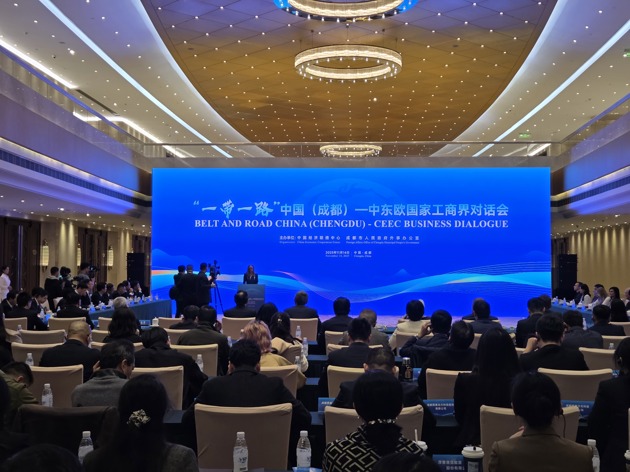
中东欧党政代表组团前来,为何看好成都?
Mei Ri Jing Ji Xin Wen· 2025-11-17 03:50
Core Insights - The article highlights the growing cooperation between China and Central and Eastern European (CEE) countries, particularly through the recent "Belt and Road" dialogue held in Chengdu, which aims to explore new business opportunities and strengthen economic ties [1][2][4]. Group 1: Economic Cooperation - Since 2012, trade between China and CEE countries has grown at an average annual rate of 8.8%, with imports from CEE countries increasing by 7.4%, both outpacing China's overall trade growth [2]. - The dialogue event marks a significant step in enhancing the long-term friendship between China and CEE countries into a forward-looking economic cooperation mechanism [4]. Group 2: Strategic Positioning - Chengdu is recognized as a key hub for cooperation due to its central location, similar to Poland's position in Europe, which enhances the significance of their collaborative efforts [5]. - The operation of the China-Europe Railway Express has significantly boosted business for companies like Chengdu Youstong E-commerce, which reported a tenfold increase in European business due to cost-effective and timely logistics [5]. Group 3: Focus on Green Energy and Future Industries - CEE representatives are particularly interested in Chengdu's advancements in new energy and smart manufacturing, with a strong emphasis on the potential for collaboration in these sectors [6]. - The energy investment potential in CEE is highlighted as a critical area for cooperation, especially in light of climate change and regulatory demands [6]. - The dialogue also emphasizes the need for digital transformation in traditional industries, with both regions having complementary strengths in innovation and manufacturing [7].
汉缆股份:汉缆氢能没有直接和台铃合作
Mei Ri Jing Ji Xin Wen· 2025-11-17 03:47
Core Viewpoint - Hanlan Hydrogen Energy has clarified that it does not have a direct collaboration with Tailin regarding the recently showcased hydrogen two-wheeled vehicle [1] Company Summary - Hanlan Co., Ltd. (002498.SZ) responded to an investor inquiry on November 17, stating that its hydrogen energy division has not partnered with Tailin [1] - The company has developed a comprehensive technological reserve over the years, covering various types of PEM fuel cell equipment required for hydrogen energy [1]

全球清洁氢发展东强西弱
Zhong Guo Hua Gong Bao· 2025-11-17 02:55
Core Insights - The global progress in clean hydrogen development is lagging behind the ambitious goal of achieving clean hydrogen by 2030, with a notable east-west disparity in development [1][2] - The International Energy Agency (IEA) projects a significant reduction in global low-carbon and clean hydrogen production by 2030, estimating a potential output of 37 million tons, down from a previous forecast of 49 million tons [1] - The cancellation of numerous hydrogen projects has been observed, with over 50 projects announced as canceled in the past 18 months [1] Regional Analysis - North America and Europe are facing challenges in hydrogen investment, while China is progressing relatively well [2] - The removal of the 45V tax credit in the U.S. is expected to lead to a more than 60% decline in electrolysis capacity, with only about 2.5 GW remaining by the end of 2030 [2] - The U.S. Department of Energy has canceled funding for significant hydrogen hub projects, which may lead to further funding withdrawals [2] European Challenges - Europe is experiencing regulatory bottlenecks and weak demand, leading to stagnation in hydrogen development despite a leading number of final investment decisions (FID) [3] - The cancellation of clean hydrogen capacity in Europe is projected to be the highest globally from 2024 to 2025 [3] China's Position - China holds a dominant position in global renewable hydrogen capacity, accounting for 60% of operational and under-construction projects [3] - By 2050, China's green hydrogen production is expected to reach 33.4 million tons, significantly surpassing the U.S. and EU [3] - The cost of renewable hydrogen in China is anticipated to become competitive with fossil fuel-based hydrogen by 2030, driven by decreasing capital expenditures and renewable energy costs [3] Current Applications and Future Outlook - Currently, clean hydrogen in China is primarily used in ammonia synthesis, refining, and power generation, with potential to become a major exporter as fuel cell vehicles gain traction [4]
COP30发起低排放氨肥倡议
Zhong Guo Hua Gong Bao· 2025-11-17 02:48
Core Viewpoint - The "Low Emission Ammonia Fertilizer Initiative" (LEAF) was launched during COP30 in Brazil, aiming to accelerate the large-scale application of low-emission ammonia fertilizers to ensure food security while reducing greenhouse gas emissions [1][2] Group 1: Initiative Overview - LEAF is a coalition formed by governments, international organizations, and companies from various sectors including food, agriculture, and fertilizers [1] - Traditional ammonia fertilizer production emits approximately 510 million tons of greenhouse gases annually, comparable to the total emissions of Brazil or Germany [1] Group 2: Key Actions and Partnerships - The initiative is led by the Hydrogen Council, with core partners including the United Nations Industrial Development Organization, PepsiCo, and the International Fertilizer Association [2] - The "Public-Private Sector Action Statement" outlines three priority actions: narrowing cost gaps to stimulate demand, enhancing investment confidence through standardization and market mechanisms, and deepening public-private collaboration to improve policy frameworks and financial tools [2] - The statement is open for signing until November 20, coinciding with COP30's "Agriculture and Food Security" theme day [2] Group 3: Support and Resources - To support the initiative, the Hydrogen Council, along with stakeholders in the agriculture and food sectors, and McKinsey, released a "Roadmap for the Large-Scale Adoption of Low-Emission Ammonia Fertilizers," providing market analysis and data to guide the priority actions [2]
“欧洲氢能周”:监管框架阻碍欧洲氢市场发展
Zhong Guo Hua Gong Bao· 2025-11-17 02:48
Core Insights - The European hydrogen sector is at a crossroads, facing regulatory challenges that could hinder the development of a clean hydrogen market [1] - Despite frustrations with the EU's regulatory framework, there is a consensus that Europe will become the largest center for low-carbon hydrogen demand globally [1] Group 1: Regulatory Challenges - Participants at the "European Hydrogen Week" expressed widespread frustration with the EU's complex regulatory framework [1] - The revised Renewable Energy Directive (RED III) mandates that by 2030, 42% of industrial hydrogen must come from renewable non-biological sources (RFNBO), with strict requirements on additionality, time correlation, and geographical correlation [1] - Industry representatives argue that these regulations will increase costs and are calling for a delay in implementation [1] Group 2: Project Developments - Significant projects were highlighted, including a green hydrogen procurement agreement between Germany's Rhine Group and France's TotalEnergies for 30,000 tons of green hydrogen annually, to be transported via a 600 km pipeline [1] - Shell's Rotterdam project, featuring a 200 MW electrolyzer, is expected to produce 22,000 tons of green hydrogen annually, with a new 30 km pipeline for delivery to an energy and chemical park [1] Group 3: Industry Perspectives - Representatives from Oman and India criticized the current EU regulations as difficult to implement, particularly regarding the standards for the electricity source used in green hydrogen production [2] - Thyssenkrupp's new CEO emphasized the need for a clear planning framework and supportive regulatory environment from the EU to facilitate industry compliance [2]
“绿色石油”时代:全国已规划800+氢氨醇项目,锚定900万吨绿氢产能
Zhong Guo Neng Yuan Wang· 2025-11-17 02:38
Core Insights - The National Energy Administration has identified "expanding non-electric utilization of renewable energy" as a key focus for the 14th Five-Year Plan, emphasizing the development of integrated wind-solar hydrogen, ammonia, and methanol production [1] - The wind-solar hydrogen-ammonia-methanol integration model is seen as a transformative approach to convert unstable green electricity into green hydrogen, which can then be synthesized into storable and transportable green ammonia and methanol, addressing the issue of renewable energy intermittency [2] - As of October 2023, over 800 hydrogen-ammonia-methanol integration projects have been planned in China, with a total planned green hydrogen capacity of nearly 9 million tons per year, positioning China as a global leader in this sector [2] Industry Development - Most of the green hydrogen and methanol projects are concentrated in resource-rich regions such as Northwest, North, and Northeast China, with provinces like Inner Mongolia, Jilin, and Xinjiang actively promoting large-scale development [3] - Notable operational projects include the China Petroleum & Chemical Corporation's green hydrogen demonstration project in Xinjiang and the 100,000-ton green methanol project in Inner Mongolia, among others [3][4] - The industry is witnessing increasing participation from both state-owned enterprises and private companies, creating a competitive landscape [4] Challenges and Future Outlook - The green hydrogen and methanol industry faces challenges such as high production costs, insufficient technological integration, and a lack of standardized systems [6] - Industry experts emphasize the need to reduce investment costs and improve operational rates to enhance competitiveness [6] - Despite current challenges, the market potential for green methanol and ammonia is significant, particularly in the context of low-carbon development trends in shipping and aviation, suggesting a promising long-term outlook for the hydrogen-ammonia-methanol market [6]




福建氢能储运与终端应用研究启动
Zhong Guo Hua Gong Bao· 2025-11-17 02:37
Core Viewpoint - The project "Strategic Research on Diversified Hydrogen Storage and Transportation and Terminal Applications in Fujian Province" aims to tackle challenges in hydrogen storage, transportation, and application, establishing a new hydrogen energy storage and transportation system for the green hydrogen industry in Fujian [1] Group 1: Project Overview - The project is initiated by the Fujian Research Institute and focuses on the entire chain of ammonia-based hydrogen storage [1] - It is a major consulting project for 2025, led by a team of academicians and experts, including Wu Minghong, Xu Zuxin, and others [1] Group 2: Significance and Goals - The development of clean energy in Fujian is crucial for regional economic transformation and national demonstration applications [1] - The project aims to deepen cooperation among various stakeholders to promote efficient implementation [1] Group 3: Technical Focus - The research will concentrate on the development paths for green ammonia synthesis and storage technology [1] - Emphasis is placed on breakthroughs in hydrogen storage and green hydrogen technology, which are critical for the industrialization phase of the hydrogen energy sector [1] Group 4: Strategic Value - Green ammonia is highlighted as an important carrier for long-distance hydrogen storage and transportation, with strategic value for both Fujian and the national hydrogen energy industry layout [1]
福大紫金氢能发布氨制氢加氢一体站项目
Zhong Guo Hua Gong Bao· 2025-11-17 02:37
Core Viewpoint - The launch of China's first 1000 kg-level commercial ammonia-based hydrogen production and refueling station by Fuda Zijin Hydrogen Energy Technology Co., Ltd. marks a significant advancement in the hydrogen energy sector, showcasing innovative technology and cost-effective solutions for hydrogen production and distribution [1] Group 1: Project Overview - The project utilizes Fuda Zijin's self-developed low-temperature ammonia decomposition hydrogen production technology, achieving an ammonia conversion rate exceeding 99.5% at 480°C [1] - The integrated station adopts a "liquid ammonia direct supply - on-site hydrogen production - immediate refueling" model, addressing the transportation cost issues associated with traditional high-pressure hydrogen storage [1] Group 2: Economic Impact - The end-user hydrogen price is reduced to approximately 30 yuan per kilogram, which is a 50% decrease compared to conventional methods [1] - The station is capable of producing 1000 kg of high-purity hydrogen daily, providing continuous refueling services for no less than 100 hydrogen fuel cell logistics vehicles weighing 4.5 tons each [1]
电力设备与新能源行业11月第3周周报:10月新能源汽车市占率首次过半,光伏“反内卷”稳步推进-20251116
Bank of China Securities· 2025-11-16 09:22
Investment Rating - The report maintains an "Outperform" rating for the electric equipment and new energy industry [1]. Core Insights - In October, the market share of new energy vehicles (NEVs) exceeded 50% for the first time, with a projected high growth in domestic NEV sales expected to continue into 2025, driving demand for batteries and materials [1][2]. - The price of lithium hexafluorophosphate continues to rise, indicating potential recovery in profitability for related companies in the power battery supply chain [1]. - The photovoltaic (PV) sector is focused on a "reverse involution" strategy, with future component pricing dependent on terminal installation demand and profitability of PV power plants [1][2]. - Wind power demand in China is expected to grow steadily, with recommendations to focus on wind turbine and offshore wind sectors [1]. - Energy storage remains in a high-demand phase, with prices for energy storage cells and integration still on the rise [1]. - Hydrogen energy is anticipated to see increased demand for green hydrogen, with a focus on downstream applications and the evolving relationship between green electricity, hydrogen, and green fuels [1]. - Nuclear fusion is highlighted as a long-term energy development direction, with recommendations to monitor core suppliers in this sector [1]. Summary by Sections New Energy Vehicles - In October, NEV sales reached 1.715 million units, a year-on-year increase of 20%, marking a market share surpassing 50% for the first time [2][24]. - Cumulative domestic power battery installation from January to October reached 578.0 GWh, a year-on-year increase of 42.4% [2][24]. Photovoltaic Sector - The report emphasizes the importance of maintaining a "reverse involution" strategy, with ongoing discussions about storage policies and their implementation [1][24]. - The price of silicon materials remains stable, with a focus on terminal demand influencing market prices [15][19]. Wind Power - Continuous growth in wind power demand is anticipated, with a focus on wind turbine and offshore wind sectors [1]. Energy Storage - The energy storage sector is experiencing high demand, with ongoing price increases for energy storage cells and integration [1]. Hydrogen Energy - The report suggests that the substitution of electricity with hydrogen will open up demand for green hydrogen, with a focus on enhancing penetration rates of hydrogen-based energy applications [1]. Nuclear Fusion - Nuclear fusion is identified as a future energy development direction, with recommendations to focus on core suppliers in this area [1].