采矿业
Search documents
6月工业利润边际改善 回升态势需要更多政策加力支持
Jing Ji Guan Cha Wang· 2025-07-28 13:04
Core Viewpoint - The industrial profit landscape in China shows signs of marginal recovery in June, with manufacturing profits turning positive, but overall industrial profits still face challenges due to insufficient demand and cost pressures [1][2][3]. Group 1: Industrial Profit Trends - In June, profits of industrial enterprises reached 715.58 billion yuan, a year-on-year decline of 4.3%, but the decline narrowed compared to May [1]. - For the first half of the year, profits totaled 3,436.5 billion yuan, reflecting a year-on-year decrease of 1.8% [1]. - Manufacturing profits improved from a 4.1% decline in May to a 1.4% increase in June, indicating a recovery trend [1][2]. Group 2: Economic Factors Influencing Profits - The industrial production index increased by 6.8% year-on-year in June, driven by strong export performance and domestic demand during the 618 shopping festival [2]. - The Producer Price Index (PPI) fell by 3.6% year-on-year in June, continuing to exert pressure on profit margins [2]. - Profit margins for industrial enterprises averaged 5.15% in the first half of the year, showing a year-on-year decline of 0.26 percentage points [2]. Group 3: Sector-Specific Insights - The equipment manufacturing sector showed significant profit growth, with revenues increasing by 7.0% year-on-year in June and profits rising by 9.6% [4]. - The automotive industry experienced a remarkable profit increase of 96.8%, driven by promotional activities and investment returns [4]. - Mining sector profits faced a larger decline due to price weakness and falling profit margins [2][4]. Group 4: Policy and Future Outlook - Recent government policies aim to stabilize employment and support industrial growth through various measures, including capacity replacement and technological upgrades [5]. - The continuation of demand expansion policies is expected to support profit recovery for industrial enterprises [5]. - The impact of "anti-involution" policies on market competition and profit margins will be crucial for future profitability [5].
工业盈利仍有压力
CAITONG SECURITIES· 2025-07-28 08:00
Group 1: Industrial Profitability - In June 2025, the total profit of industrial enterprises above designated size decreased by 4.3% year-on-year, with the decline narrowing by 4.8 percentage points compared to May[7] - The profit margin for industrial enterprises in June was down 6.9% year-on-year, contributing a 6.9 percentage point drag on profit growth, although this was an improvement from the 10.2 percentage point drag in May[8] - Industrial production showed resilience with a 6.8% year-on-year increase in industrial added value, outperforming May's 5.8%[8] Group 2: Future Profitability Pressure - The second half of 2025 is expected to see continued pressure on corporate profitability due to potential depletion of U.S. demand from prior "import rush" activities[10] - Tariffs have increased costs for enterprises, impacting profit levels, similar to the trend observed during the last U.S.-China trade friction from 2018 to 2019[10] - Multiple industries are pushing for "anti-involution," which may further compress profit margins in sectors with weak downstream demand[25] Group 3: Resilience in Equipment Manufacturing - Equipment manufacturing has shown relative resilience, with profit margins performing better than other sectors since April 2025[26] - The mining industry has maintained a profit margin of around 31% since April 2025, despite revenue growth remaining negative[26] - Companies that have already expanded overseas or are establishing factories abroad are likely to capture more market share amid trade frictions[27][28]
6月工业企业利润点评:等待ROA的企稳
Huachuang Securities· 2025-07-28 04:45
Group 1: Overall Industrial Profit Trends - In June, the profit growth rate of industrial enterprises decreased by 4.3% year-on-year, an improvement from the previous value of -9.1%[2] - As of June, inventory increased by 3.1% year-on-year, slightly down from 3.5% in the previous month[2] - The profit margin in June was 5.96%, compared to 6.33% in the same period last year[14] Group 2: ROA and Profitability Analysis - The Return on Assets (ROA) in June was 4.14%, down from 4.18% in the previous month, with a cumulative decline of 0.16% for the year[4] - Factors affecting ROA include a 5.1% growth in asset side and a 1.8% decline in profit growth from January to June[4] - The gross profit margin in June was 14.8%, down from 15.2% in the same month last year[14] Group 3: Industry-Specific Insights - In June, the mining industry saw a profit growth rate of -36.1%, while manufacturing grew by 1.43%[19] - The automotive sector experienced a significant profit increase of 96.8%, driven by promotional activities and investment returns[19] - The profit margin for the manufacturing upstream was 4.13%, slightly lower than the 4.2% recorded last year[10]
创金合信基金魏凤春:周期的边际动能在弱化
Xin Lang Ji Jin· 2025-07-28 03:35
Market Overview - The core viewpoint emphasizes that stocks are favored over bonds, with a weak outlook for gold and the US dollar. Investors are advised to focus on changes in equity structure and style, suggesting a strategy of "one body, two wings" [1] - The main focus is on cyclical stocks, which have outperformed technology stocks recently, with the Shanghai Composite Index reaching new highs around the 3600-point mark [1] Cyclical Sector Dynamics - The cyclical sector is driven by policies such as supply contraction and infrastructure projects, indicating a clear revival in this area [2] - The performance of large-cap stocks above 3600 points has created a positive wealth effect, with hopes for a sustained rally in cyclical stocks to surpass previous highs [2] Profitability Insights - In the first half of 2025, the total profit of industrial enterprises above designated size was 34,365 billion yuan, a year-on-year decrease of 1.8%. State-owned enterprises saw a profit drop of 7.6%, while private enterprises experienced a slight increase of 1.7% [2] - Despite a decline in overall industrial profits, certain sectors like manufacturing are showing improvement, with specific industries maintaining good growth [3] Coal Industry Analysis - The coal industry has faced long-term challenges, including competition from renewable energy and overcapacity issues. The cumulative profit for the coal sector in the first half of 2025 was down 53% [4] - The profitability of coal mining is closely linked to market conditions, and while there may be short-term rebounds, the long-term outlook remains uncertain due to fundamental changes in demand and production technology [4] Investment Strategy - The strategy suggests that while cyclical opportunities may be diminishing, localized opportunities exist, particularly in sectors like construction materials due to disaster recovery efforts [6] - Investors are encouraged to adopt a holistic view that integrates cyclical and technological investments, emphasizing the importance of strategic foresight in navigating market fluctuations [6][7]
中国盈利系列十二:盈利逐步修复
Hua Tai Qi Huo· 2025-07-28 02:59
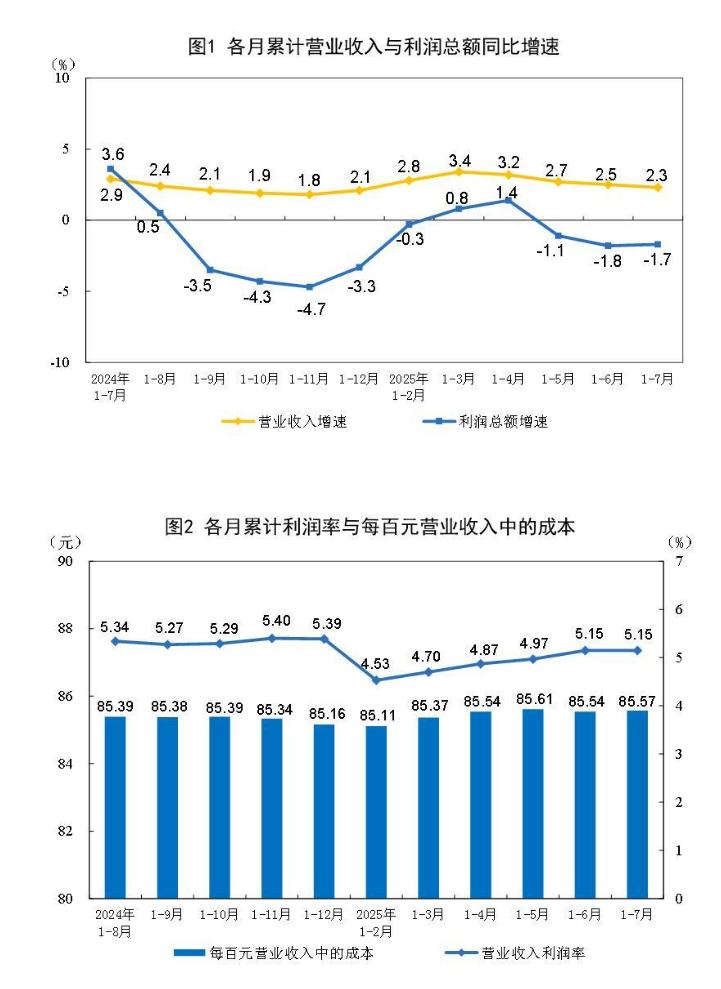
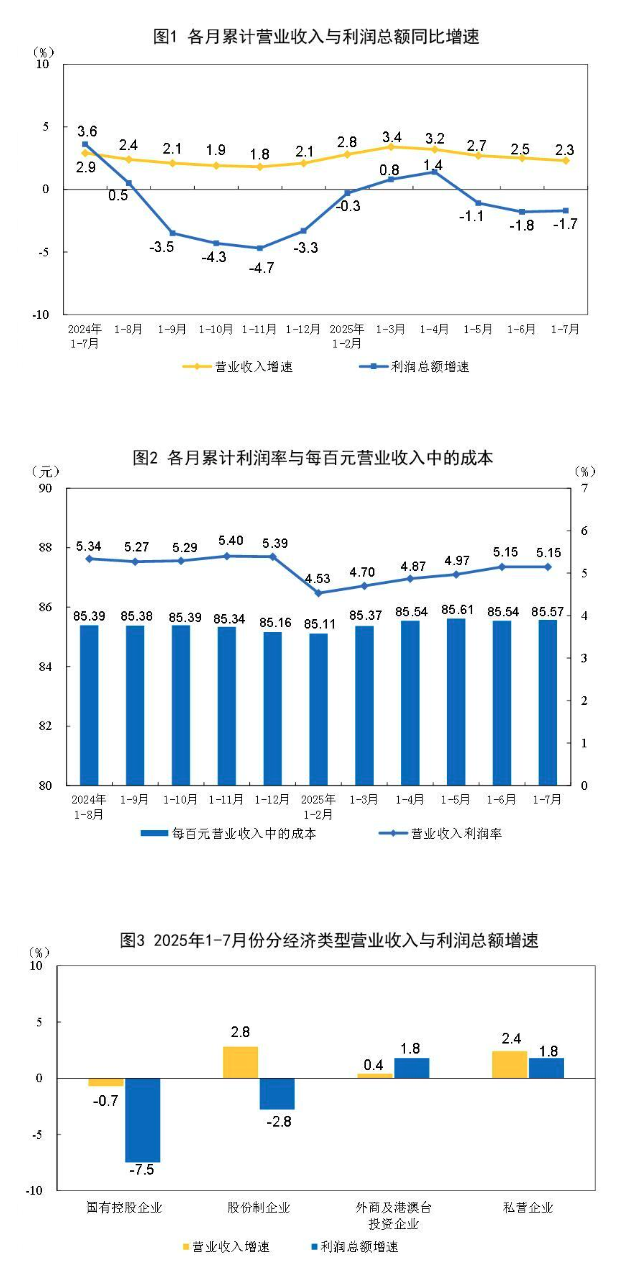
Group 1: Core Views - Total: The decline in profits has narrowed, and the manufacturing industry has improved significantly. In the first half of 2025, the total profit of large-scale industrial enterprises in China reached 343.65 billion yuan, a year-on-year decrease of 1.8%. In June, the year-on-year decline in profits narrowed significantly, with a profit of 71.558 billion yuan, a year-on-year decrease of 4.3%, narrowing by 4.8 percentage points compared with May. The profit of the manufacturing industry turned from a 4.1% decline in May to a 1.4% increase, becoming the main driving force. The equipment manufacturing industry performed particularly prominently, with the profit growth rate turning from negative to positive, a year-on-year increase of 9.6% (a 2.9% decline in May), contributing 3.8 percentage points to the overall industrial profit growth. In terms of operating income, it increased by 2.5% year-on-year from January to June, and the single-month growth rate in June was the same as that in May (1.0%), providing basic support for the recovery of corporate profits [3]. - Structure: The "Two New" policies continue to exert force, and high-end manufacturing and consumption upgrading lead the growth. The effects of the "Two New" policies continue to appear, and the midstream manufacturing industry has improved: the profit of medical instrument and equipment manufacturing increased by 12.1% year-on-year, the production of special equipment for printing, pharmaceutical, and daily chemical products increased by 10.5%, and the manufacturing of general parts increased by 9.5%. The replacement of consumer goods with old ones has activated demand: the policies in the fields of electronics and home appliances have shown results, the profit of intelligent unmanned aerial vehicle manufacturing soared by 160.0%, computer整机 manufacturing increased by 97.2%, and household air conditioner manufacturing increased by 21.0%. In addition, the profit of the automobile industry soared by 96.8% driven by promotions and exports, and the profit growth rates of the electrical machinery and instrumentation industries reached 18.7% and 12.3%. From an industry perspective, the transformation towards high-end, intelligent, and green has achieved remarkable results. The profit of electronic special material manufacturing increased by 68.1%, and the manufacturing of lithium-ion batteries increased by 72.8%. The profit of the upstream mining industry decreased by 30.3% year-on-year, and coal mining decreased by 53.0%. Traditional industries are still under pressure. Currently, the recovery of industrial profits mainly relies on structural improvement driven by policies. In the future, it is necessary to further consolidate the momentum of equipment manufacturing and consumption upgrading, and at the same time address the challenges of upstream costs and insufficient demand. With the increase of policies to expand domestic demand and the implementation of anti-involution policies, industrial profits are expected to continue the recovery trend in the third quarter [4]. Group 2: National Large-Scale Industrial Enterprise Profits from January to June 2025 - Overall profit: From January to June 2025, the total profit of large-scale industrial enterprises in China was 343.65 billion yuan, a year-on-year decrease of 1.8% (calculated on a comparable basis). Among them, state-owned holding enterprises achieved a total profit of 110.912 billion yuan, a year-on-year decrease of 7.6%; joint-stock enterprises achieved a total profit of 253.304 billion yuan, a decrease of 3.1%; foreign-invested and Hong Kong, Macao, and Taiwan-invested enterprises achieved a total profit of 88.231 billion yuan, an increase of 2.5%; private enterprises achieved a total profit of 93.897 billion yuan, an increase of 1.7% [31]. - Industry profit: From January to June, the mining industry achieved a total profit of 42.941 billion yuan, a year-on-year decrease of 30.3%; the manufacturing industry achieved a total profit of 259.006 billion yuan, an increase of 4.5%; the production and supply of electricity, heat, gas, and water achieved a total profit of 41.704 billion yuan, an increase of 3.3% [31]. - Main industry profit: From January to June, the profit of the ferrous metal smelting and rolling processing industry increased by 13.7 times year-on-year, the agricultural and sideline food processing industry increased by 22.8%, the electrical machinery and equipment manufacturing industry increased by 13.0%, the non-ferrous metal smelting and rolling processing industry increased by 7.8%, the general equipment manufacturing industry increased by 6.5%, the power and heat production and supply industry increased by 5.6%, the special equipment manufacturing industry increased by 4.4%, the automobile manufacturing industry increased by 3.6%, the computer, communication, and other electronic equipment manufacturing industry increased by 3.5%, the non-metallic mineral products industry decreased by 5.4%, the textile industry decreased by 8.1%, the chemical raw materials and chemical products manufacturing industry decreased by 9.0%, the oil and gas extraction industry decreased by 11.5%, the coal mining and washing industry decreased by 53.0%, and the oil, coal, and other fuel processing industry increased its losses year-on-year [32]. - Operating income and cost: From January to June, large-scale industrial enterprises achieved an operating income of 66.78 trillion yuan, a year-on-year increase of 2.5%; the operating cost was 57.12 trillion yuan, an increase of 2.8%; the operating income profit margin was 5.15%, a year-on-year decrease of 0.22 percentage points. At the end of June, the total assets of large-scale industrial enterprises were 183.17 trillion yuan, a year-on-year increase of 5.1%; the total liabilities were 105.98 trillion yuan, an increase of 5.4%; the owner's equity was 77.19 trillion yuan, an increase of 4.7%; the asset-liability ratio was 57.9%, a year-on-year increase of 0.2 percentage points [32]. - Accounts receivable and inventory: At the end of June, the accounts receivable of large-scale industrial enterprises were 26.69 trillion yuan, a year-on-year increase of 7.8%; the finished product inventory was 6.60 trillion yuan, an increase of 3.1%. From January to June, the cost per 100 yuan of operating income of large-scale industrial enterprises was 85.54 yuan, a year-on-year increase of 0.26 yuan; the expense per 100 yuan of operating income was 8.38 yuan, a year-on-year decrease of 0.10 yuan. At the end of June, the operating income per 100 yuan of assets of large-scale industrial enterprises was 73.9 yuan, a year-on-year decrease of 1.9 yuan; the per capita operating income was 1.823 million yuan, a year-on-year increase of 56,000 yuan; the turnover days of finished product inventory were 20.4 days, a year-on-year increase of 0.1 day; the average collection period of accounts receivable was 69.8 days, a year-on-year increase of 3.9 days [33]. Group 3: Interpretation of Industrial Enterprise Profit Data by Yu Weining, a Statistician of the Industrial Department of the National Bureau of Statistics - Revenue and profit: In June, the year-on-year decline in the profit of large-scale industrial enterprises narrowed compared with May. The operating income of large-scale industrial enterprises increased by 1.0% year-on-year, and the growth rate was the same as that in May. The continuous growth of industrial enterprise revenue created favorable conditions for the recovery of corporate profits. In June, large-scale industrial enterprises achieved a total profit of 71.558 billion yuan, a year-on-year decrease of 4.3%, and the decline narrowed by 4.8 percentage points compared with May. Among them, the manufacturing industry improved significantly, and the profit turned from a 4.1% decline in May to a 1.4% increase. From a cumulative perspective, from January to June, the operating income of large-scale industrial enterprises increased by 2.5%, and the profit decreased by 1.8% [36]. - Equipment manufacturing industry: In June, the operating income of the equipment manufacturing industry increased by 7.0% year-on-year, 0.3 percentage points faster than in May; the profit turned from a 2.9% decline in May to a 9.6% increase, driving the profit growth of all large-scale industrial enterprises by 3.8 percentage points, and playing a prominent supporting role in the profit of large-scale industrial enterprises. Among the 8 industries in the equipment manufacturing industry, the profits of 4 industries increased. Among them, the profit of the automobile industry increased by 96.8% due to factors such as the rapid increase in sales driven by promotions and the increase in investment income of key enterprises; the profits of the electrical machinery, instrumentation, and metal products industries increased by 18.7%, 12.3%, and 6.2% respectively [37]. - High-end, intelligent, and green manufacturing: In June, the profits of industries related to high-end, intelligent, and green manufacturing in the manufacturing industry increased rapidly, providing stable support for the high-quality development of the industry. Among them, the profits of industries such as electronic special material manufacturing, aircraft manufacturing, and marine engineering equipment manufacturing in the high-end equipment manufacturing industry increased by 68.1%, 19.0%, and 17.8% respectively year-on-year; the acceleration of the production of intelligent and automated products drove the increase in profits of related industries, and the profits of industries such as intelligent consumer equipment manufacturing and drawing, computing, and measuring instrument manufacturing increased by 40.9% and 12.5% respectively; the acceleration of the formation of green production and green lifestyle promoted the growth of profits of related industries, and the profits of industries such as lithium-ion battery manufacturing, biomass power generation, and environmental monitoring special instrument and meter manufacturing increased by 72.8%, 24.5%, and 22.2% respectively [38]. - "Two New" policy: Since this year, the scope of support categories and subsidies for the "Two New" policy has been continuously expanded, driving significant improvement in the profits of related industries. Driven by large-scale equipment renewal policies, in June, the profits of industries such as medical instrument and equipment manufacturing, printing, pharmaceutical, and daily chemical product production special equipment manufacturing, and general parts manufacturing increased rapidly, with year-on-year increases of 12.1%, 10.5%, and 9.5% respectively. The policies of replacing old consumer goods with new ones in the fields of electronics, home appliances, and kitchen and bathroom products continued to show results. In June, the profits of industries such as intelligent unmanned aerial vehicle manufacturing, computer整机 manufacturing, household air conditioner manufacturing, and household ventilation appliance manufacturing increased by 160.0%, 97.2%, 21.0%, and 9.7% respectively; the profits of industries related to the industrial chain, such as optoelectronic device manufacturing and computer component manufacturing, increased by 29.6% and 16.9% respectively [38].
铜:宏观热度逐渐消退,铜价回归
Nan Hua Qi Huo· 2025-07-28 02:53
Report Industry Investment Rating - Not provided in the content Core Viewpoints - Copper prices rose and then fell during the week. The rise was due to the positive impact of domestic anti - involution on commodities and the increased copper demand expectation from the Yajiang Hydropower Station construction. However, their short - term impact on copper should be limited. With the fading of anti - involution enthusiasm, copper prices may decline slightly in the next week. The last week of July will be a macro super - week, and copper prices may experience significant fluctuations. The weekly price range is expected to be between 79,200 - 78,200 yuan per ton [3] Summary by Relevant Catalogs 1. Market Performance - **Futures Prices**: The Shanghai copper main futures contract closed at around 79,200 yuan per ton, with a week - on - week decline of 0.56%. International copper closed at 70,360 yuan per ton, down 0.75%. LME copper 3 - month was at $9,796, up 0.02%. COMEX copper was at $580.4, up 3.99% [1][3] - **Spot Prices**: Shanghai Non - Ferrous 1 copper was at 79,450 yuan per ton, up 1%. Shanghai Wumaot was at 79,535 yuan per ton, up 1.14%. Guangdong Nanchu was at 79,380 yuan per ton, up 1.07%. Yangtze Non - Ferrous was at 79,640 yuan per ton, up 1.18% [7] 2. Industry Situation - Teck Resources' Quebrada Blanca open - pit mine in Chile is facing tailings storage problems, reducing this year's production forecast from 230,000 - 270,000 tons to 210,000 - 230,000 tons. The expansion project has exceeded the budget by $4 billion and been delayed for several years. However, Teck expects to solve the tailings problem soon and maintain its 2026 production forecast [2] 3. Inventory Status - **Domestic Inventories**: Shanghai copper warehouse receipts decreased by 57.81% to 16,133 tons, and Shanghai copper inventory decreased by 13.17% to 73,423 tons. International copper warehouse receipts remained unchanged at 4,667 tons [13] - **Overseas Inventories**: LME copper inventory increased by 5.16% to 128,475 tons, and COMEX copper inventory increased by 2.39% to 248,635 tons [13] 4. Intermediate Production and Utilization - **Output**: In June 2025, refined copper output was 1.302 million tons, a year - on - year increase of 14.2%. Copper product output was 2.214 million tons, a year - on - year increase of 6.8% [16] - **Capacity Utilization**: In June 2025, the capacity utilization rates of refined copper rods, scrap copper rods, copper strips, copper rods, and copper tubes were 62.32%, 32.01%, 68.73%, 51.52%, and 72.25% respectively [18] 5. Import Data - In June 2025, copper concentrate imports were 2.34969 million tons, a year - on - year increase of 2%. Anode copper imports were 68,548 tons, a year - on - year increase of 2%. Cathode copper imports were 300,506 tons, a year - on - year increase of 5%. Scrap copper imports were 183,244 tons, a year - on - year increase of 8%. Copper product imports were 460,000 tons, a year - on - year increase of 6.5% [22]
金融期货早评-20250728
Nan Hua Qi Huo· 2025-07-28 02:49
Report Industry Investment Ratings No industry investment ratings are provided in the report. Core Views - The overall trend of the stock index is positive, but it may experience a phased adjustment. Pay attention to the Politburo meeting this week [3]. - In the RMB exchange rate market, investors can use options to hedge tail risks. Focus on the progress of China - US trade consultations in the next week [2]. - For the container shipping industry, the SCFI European line has rebounded, but the near - term contracts may have a short - term correction, and the overall may fluctuate slightly downward [5]. - In the precious metals market, focus on the Fed FOMC meeting and important US economic data this week. The mid - to long - term trend of gold and silver may be bullish, while the short - term volatility is intense [5]. - For base metals, copper prices may decline slightly; aluminum is expected to fluctuate at a high level in the short term; zinc is in a high - level shock; nickel and stainless steel are expected to fluctuate within a certain range; tin prices may decline slightly; lead is mainly in a shock state [8][10][12][13][15][21]. - In the energy and chemical industry, crude oil is in a narrow - range shock adjustment stage; PX - PTA can be considered to expand the processing fee at low prices; for other energy and chemical products, pay attention to policy changes and market fundamentals [29][30][33]. - In the black metal market, the over - heated sentiment in the steel market may lead to a short - term correction, but the rise may not end; the contradiction in the iron ore market is accumulating; the coal - coke market may return to rationality; for silicon iron and silicon manganese, pay attention to risks [23][24][26][27]. - For agricultural products, the market game for live pigs has intensified [50]. Summaries by Related Catalogs RMB Exchange Rate - **Market Review**: On Friday, the on - shore RMB against the US dollar closed at 7.1679 at 16:30, down 132 basis points from the previous trading day, and closed at 7.1680 at night. The central parity rate of the RMB against the US dollar was reported at 7.1419, down 34 basis points [2]. - **Important Information**: Trump said the possibility of reaching an agreement with the EU was 50%, and most trade agreements would be reached before August. The Russian central bank cut the benchmark interest rate from 20% to 18% [2]. - **Core Logic**: The Fed's independence is being challenged. Investors can use options to hedge tail risks. Focus on China - US trade consultations in the next week [2]. Stock Index - **Market Review**: On Friday, the stock index showed mixed trends, with the large - cap index falling and the small - and medium - cap index rising. The trading volume of the two markets decreased by 573.69 billion yuan [3]. - **Important Information**: China's industrial enterprise profits in June decreased by 4.3% year - on - year, and the equipment manufacturing industry played a prominent supporting role. The State Council executive meeting deployed measures for gradually promoting free pre - school education [3]. - **Core Logic**: The stock index may experience a phased adjustment, but the overall trend is positive. Pay attention to the Politburo meeting this week [3]. Container Shipping - **Market Review**: On Friday, the futures prices of the container shipping index (European line) contracts fluctuated after a sharp decline at the opening. As of the close, the prices of EC contracts showed mixed trends [4]. - **Important Information**: The freight quotes of Maersk and ONE for shipping from Shanghai to Rotterdam showed different changes [4]. - **Core Logic**: The SCFI European line has rebounded, but the near - term contracts may have a short - term correction, and the overall may fluctuate slightly downward [5]. Precious Metals (Gold & Silver) - **Market Review**: Last week, the precious metals market showed a reverse V - shaped trend. COMEX gold non - commercial long positions increased sharply, and there was a large inflow of funds into US gold and silver ETFs at the beginning of the week, but the price reversed on Wednesday [5]. - **Important Information**: The US - Japan and US - EU trade agreements were close to being reached, and the domestic anti - involution policy led to a general rise in commodities and the stock market [5]. - **Core Logic**: Focus on the Fed FOMC meeting and important US economic data this week. The mid - to long - term trend may be bullish, while the short - term volatility is intense [5]. Base Metals Copper - **Market Review**: The main futures contract of Shanghai copper rose and then fell during the week, and the inventory showed different trends in different markets [8]. - **Important Information**: Teck Resources lowered the production forecast of its Chilean copper mine due to tailings storage problems [8]. - **Core Logic**: Copper prices may decline slightly as the anti - involution heat fades [9]. Aluminum - **Market Review**: The price of Shanghai aluminum showed a slight increase, and the trading volume and positions changed. The price of alumina and cast aluminum alloy also had corresponding changes [9]. - **Important Information**: The anti - involution policy affected the market sentiment, and the exchange issued a position limit notice [9][10]. - **Core Logic**: Aluminum is expected to fluctuate at a high level in the short term, considering the influence of macro events and fundamentals [10]. Zinc - **Market Review**: The main contract of Shanghai zinc fell slightly, and the trading volume and positions decreased [12]. - **Important Information**: The "anti - involution" sentiment affected the market [12]. - **Core Logic**: Zinc is in a high - level shock. The supply may gradually shift from tight to surplus, and the demand is weak. Appropriate short - selling at high prices is recommended [12]. Nickel and Stainless Steel - **Market Review**: The main contract of Shanghai nickel showed a strong trend during the week but回调 on Friday night. The price of stainless steel also showed an upward trend during the week [13]. - **Important Information**: The anti - involution policy and relevant news affected the market, and the supply of nickel ore was expected to be loose [14]. - **Core Logic**: Nickel and stainless steel are expected to fluctuate within the range of [118,000 - 126,000] yuan and [12,500 - 13,100] yuan respectively [15]. Tin - **Market Review**: The main futures contract of Shanghai tin rose and then fell during the week, and the inventory was stable [15]. - **Important Information**: The anti - involution policy affected the price [15]. - **Core Logic**: Tin prices may decline slightly as the anti - involution heat fades [16]. Lead - **Market Review**: The main contract of Shanghai lead rose slightly, and the trading volume and positions increased [21]. - **Important Information**: The production of a refinery in Anhui recovered, and a large - scale recycled lead refinery in Inner Mongolia was expected to produce lead next week [21]. - **Core Logic**: Lead is mainly in a shock state, affected by the supply - demand relationship and market sentiment [22]. Energy and Chemical Industry Crude Oil - **Market Review**: Speculative position reduction and inventory increase suppressed oil prices, and the prices of US and Brent crude oil futures fell [29]. - **Important Information**: Trump announced that the US and the EU reached a trade agreement, and the Houthi armed forces upgraded the maritime blockade [29]. - **Core Logic**: The crude oil market is in a narrow - range shock adjustment stage. Pay attention to the results of important macro meetings this week [30]. PTA - PX - **Market Review**: PX - PTA was generally strong under the influence of commodity sentiment and polyester demand improvement [30]. - **Important Information**: PX Tianjin Petrochemical carried out maintenance, and there were rumors of PTA plant maintenance in August [30][31]. - **Core Logic**: The PX - TA industry chain has limited fundamental drivers. Consider expanding the processing fee at low prices [32]. Other Energy and Chemical Products - **Market Review and Core Logic**: Each product has different market performances and core logics, mainly affected by factors such as supply - demand relationships, policies, and market sentiments. For example, MEG - bottle chips are recommended to wait and see; methanol is mainly driven by macro factors; PP and PE are affected by macro emotions and fundamentals; PVC is recommended to wait and see in the short term; BZ and styrene are affected by macro emotions and fundamentals; fuel oil and low - sulfur fuel oil have different supply - demand and inventory situations; asphalt follows the cost - end shock; urea is expected to fluctuate weakly; glass and soda ash are affected by anti - involution expectations and fundamentals; pulp is driven by macro emotions;烧碱 focuses on near - month warehouse receipts [32][33][35][37][38][39][41][42][43][44][45][47][48][50]. Black Metal Market Steel - **Market Review**: On Friday night, coking coal hit the daily limit down, and black metal varieties followed suit [23]. - **Important Information**: The profits of industrial enterprises in the first half of the year were announced, and there were price adjustment and position limit news in the coking coal market [23]. - **Core Logic**: The over - heated sentiment in the steel market may lead to a short - term correction, but the rise may not end. Pay attention to the actual demand and tariff policies [23]. Iron Ore - **Market Review**: The price of iron ore has corrected, while coking coal has maintained a strong upward trend [23]. - **Important Information**: The global iron ore shipping volume is at a seasonal high, and the dry bulk freight has increased [24]. - **Core Logic**: The fundamentals of iron ore are okay, but the room for improvement is limited. The contradiction in the market is accumulating, and it is recommended to wait and see [24]. Coking Coal and Coke - **Market Review**: The price of coking coal and coke fluctuated greatly this week, and the coking coal futures limit on Friday night caused the price to fall [24][26]. - **Important Information**: The supply and demand of coking coal and coke have changed, and the inventory situation is different [25]. - **Core Logic**: The coal - coke market may return to rationality, and pay attention to the Politburo meeting and China - US trade negotiations [26]. Silicon Iron and Silicon Manganese - **Market Review**: The prices of silicon iron and silicon manganese rose last week, and they were affected by the anti - involution meeting and the decline of coking coal futures on Friday night [27]. - **Important Information**: The supply and demand, inventory, and profit of silicon iron and silicon manganese have changed [27]. - **Core Logic**: The short - term risk of chasing high is high, and pay attention to the implementation of policies and risk control [28]. Agricultural Products Live Pigs - **Market Review**: The futures price of live pigs showed a slight increase [50]. - **Important Information**: No specific important information is provided. - **Core Logic**: The market game for live pigs has intensified [50].
宏观与大类资产周报:国内或开始为人民币汇率升值做准备-20250727
CMS· 2025-07-27 12:30
Domestic Economic Insights - High-frequency data indicates a year-on-year improvement in export volumes, but a potential slowdown is expected if the RMB appreciates in the second half of the year[2] - Industrial enterprise profit growth in June shows a narrowing decline, highlighting the need for structural adjustments[2] - The issuance of special bonds has accelerated, reaching a peak in June and July, preparing for a potential rise in interest rates and RMB appreciation[6] Factors Supporting RMB Appreciation - Economic growth exceeded targets in the first half, with a focus on structural adjustments in the second half[2] - Anticipated meetings between European and American leaders with Chinese counterparts in Q3 may influence market dynamics[2] - The depreciation of the USD could lead to increased domestic prices, making Chinese assets more attractive to foreign investors[2] International Trade Developments - Several countries have reached trade negotiation agreements with the US, with tariffs not exceeding 20%, which is more sustainable compared to previous threats[6] - The progress in tariff negotiations has alleviated some pressure on the US, allowing for greater leverage over countries that have not yet reached agreements[6] - The third round of US-China negotiations in Sweden is likely to pave the way for a future meeting between the two nations' leaders[6] Monetary Market Trends - The liquidity environment experienced fluctuations, with a shift from tight to neutral conditions, influenced by significant demand for funds and central bank operations[21] - The average weekly rate for DR001 decreased by 2.556 basis points to 1.443%, while DR007 increased by 0.226 basis points to 1.535%[21] - The net issuance of government bonds is projected to decrease significantly next week, with a planned issuance of approximately 517.75 billion CNY[22]
2025年6月工业企业盈利数据点评:企业利润继续承压,亟待“反内卷”政策提振
EBSCN· 2025-07-27 11:32
2025 年 7 月 27 日 总量研究 企业利润继续承压,亟待"反内卷"政策提振 ——2025 年 6 月工业企业盈利数据点评 作者 分析师:高瑞东 执业证书编号:S0930520120002 010-56513066 gaoruidong@ebscn.com 分析师:刘星辰 执业证书编号:S0930522030001 021-52523880 liuxc@ebscn.com 相关研报 中游制造业支撑利润增长——2025年4月工 业企业盈利数据点评(2025-05-27) 工业企业利润增速缘何回落?——2025 年 5 月工业企业盈利数据点评(2025-06-27) 工业企业盈利恢复向好——2025年3月工业 企业盈利数据点评(2025-04-27) 关注工业企业利润修复的持续性——2025 年 1-2 月工业企业盈利数据点评 (2025-03-27) 工业企业利润同比增速为何转正?——2024 年 12 月工业企业盈利数据点评 (2025-01-27) 工业企业盈利增速将继续改善——2024 年 11 月工业企业盈利数据点评(2024-12-27) 工业企业盈利或迎来曙光——2024 年 10 月 工业企 ...
工业企业利润点评:工业企业利润中的“内卷”线索
Huafu Securities· 2025-07-27 11:01
Group 1: Industrial Profit Trends - In June, industrial enterprise profits decreased by 4.5% year-on-year, a narrowing of 4.6 percentage points from May, but still in a contraction zone[3] - Cumulative year-on-year profit decline was 1.8%, widening by 0.7 percentage points compared to May[3] - The main reason for the narrowing monthly decline was a reduction in operating cost drag, with its negative contribution decreasing from 9.7 percentage points in May to 3.9 percentage points in June[3] Group 2: Revenue and Demand Dynamics - June operating revenue grew by 1.0% year-on-year, remaining flat from May and marking a near 7-month low[4] - This contrasts sharply with the industrial added value, which saw a year-on-year increase of 6.8%, the second-highest growth in 16 months[4] - The Producer Price Index (PPI) fell by 3.6% year-on-year in June, the deepest decline in nearly 23 months, indicating intensified price competition[4] Group 3: Profit Pressure and Cost Dynamics - Profit pressure is transmitted upstream, forcing the mining industry to pass on profits to downstream sectors[5] - Cumulative profit margins for mining, utilities, and manufacturing were 16.95%, 6.79%, and 4.46% respectively, showing marginal improvements due to falling coal prices[5] - The overall expense ratio for industrial enterprises rose to 8.38% in June, up 9 basis points from May, highlighting intensified competition[5] Group 4: Policy Recommendations - To alleviate excessive competition, monetary policy should stabilize real estate expectations, and fiscal policy should expand effective domestic demand[6] - The central government is expected to issue special bonds to support durable consumer goods subsidies and infrastructure investments if export growth declines[6] Group 5: Risk Factors - Risks include potential underperformance of monetary easing and fiscal expansion measures[7]