
热力

Search documents
【数据发布】2026年1—2月份全国规模以上工业企业利润增长15.2%
中汽协会数据· 2026-03-27 07:04
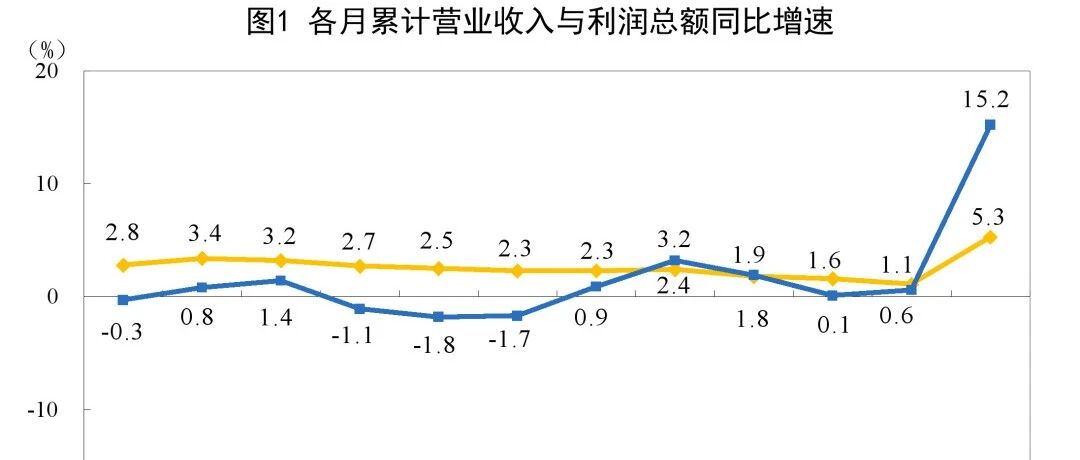
Core Viewpoint - In the first two months of 2026, China's industrial enterprises above designated size achieved a total profit of 10,245.6 billion yuan, representing a year-on-year increase of 15.2% [1] Group 1: Profit and Revenue Overview - In January-February, state-owned enterprises achieved a total profit of 3,665.6 billion yuan, up 5.3% year-on-year; joint-stock enterprises reported a profit of 8,032.9 billion yuan, an increase of 22.1%; foreign and Hong Kong, Macao, and Taiwan-invested enterprises saw profits decline by 3.8% to 2,167.5 billion yuan; private enterprises experienced a profit increase of 37.2% to 2,844.5 billion yuan [1] - The mining industry reported a total profit of 1,556.1 billion yuan, a year-on-year increase of 9.9%; the manufacturing sector achieved a profit of 7,321.5 billion yuan, up 18.9%; the electricity, heat, gas, and water production and supply industry reported a profit of 1,368.0 billion yuan, an increase of 3.7% [1] Group 2: Industry-Specific Profit Growth - The computer, communication, and other electronic equipment manufacturing industry saw profits increase by 2.0 times; the non-ferrous metal smelting and rolling processing industry grew by 1.5 times; the chemical raw materials and chemical products manufacturing industry increased by 35.9%; the non-metallic mineral products industry grew by 16.2% [2] - The textile industry reported a profit increase of 12.6%; the agricultural and sideline food processing industry grew by 8.0%; the electrical machinery and equipment manufacturing industry increased by 6.2% [2] - The coal mining and washing industry grew by 4.5%; the specialized equipment manufacturing industry increased by 4.3%; the general equipment manufacturing industry grew by 3.6%; the electricity and heat production and supply industry increased by 3.4% [2] - The automotive manufacturing industry saw a profit decline of 30.2%; the black metal smelting and rolling processing industry reported increased losses [2] Group 3: Financial Indicators - In January-February, industrial enterprises above designated size achieved operating revenue of 20.84 trillion yuan, a year-on-year increase of 5.3%; operating costs amounted to 17.68 trillion yuan, up 5.0%; the operating revenue profit margin was 4.92%, an increase of 0.43 percentage points year-on-year [2] - By the end of February, total assets of industrial enterprises above designated size reached 188.40 trillion yuan, a year-on-year increase of 5.5%; total liabilities amounted to 108.59 trillion yuan, up 5.8%; total owners' equity was 79.82 trillion yuan, an increase of 5.1% [3] - The asset-liability ratio stood at 57.6%, up 0.1 percentage points year-on-year; accounts receivable reached 26.55 trillion yuan, a year-on-year increase of 7.1%; finished goods inventory was 6.68 trillion yuan, up 6.6% [3] Group 4: Efficiency Metrics - The cost per 100 yuan of operating revenue was 84.83 yuan, a decrease of 0.24 yuan year-on-year; expenses per 100 yuan of operating revenue were 8.66 yuan, an increase of 0.02 yuan year-on-year [3] - By the end of February, the average revenue per 100 yuan of assets was 66.4 yuan, a decrease of 0.1 yuan year-on-year; per capita revenue was 1.749 million yuan, an increase of 95,000 yuan year-on-year [3] - The turnover days for finished goods inventory were 22.7 days, an increase of 0.4 days year-on-year; the average collection period for accounts receivable was 76.4 days, an increase of 1.3 days year-on-year [3]

1—2月份全国规上工业企业利润增长15.2%
21世纪经济报道· 2026-03-27 01:47
Group 1 - In the first two months of the year, the total profit of industrial enterprises above designated size reached 10,245.6 billion yuan, a year-on-year increase of 15.2% [1] - State-owned enterprises achieved a total profit of 3,665.6 billion yuan, growing by 5.3%, while private enterprises saw a significant increase of 37.2%, reaching 2,844.5 billion yuan [1] - The total revenue of industrial enterprises above designated size was 20.84 trillion yuan, with a year-on-year growth of 5.3%, and the profit margin was 4.92%, up by 0.43 percentage points [2] Group 2 - The mining industry reported a total profit of 1,556.1 billion yuan, a year-on-year increase of 9.9%, while the manufacturing sector's profit was 7,321.5 billion yuan, growing by 18.9% [2] - The computer, communication, and other electronic equipment manufacturing industry saw profits increase by 200%, and the non-ferrous metal smelting and rolling processing industry grew by 150% [2] - The total assets of industrial enterprises above designated size reached 188.40 trillion yuan, with a year-on-year growth of 5.5%, and the liability total was 108.59 trillion yuan, increasing by 5.8% [3] Group 3 - The average collection period for accounts receivable was 76.4 days, an increase of 1.3 days year-on-year, indicating a potential liquidity concern for industrial enterprises [3] - The cost per 100 yuan of revenue was 84.83 yuan, a slight decrease of 0.24 yuan year-on-year, while expenses per 100 yuan of revenue increased by 0.02 yuan to 8.66 yuan [3] - The inventory turnover days for finished goods were 22.7 days, which is an increase of 0.4 days compared to the previous year, suggesting a slower turnover rate [3]

八张图读懂基建口径调整
Guolian Minsheng Securities· 2026-03-21 12:50
Group 1: Infrastructure Adjustment Insights - The National Bureau of Statistics has adjusted the infrastructure investment reporting from a narrow to a broad scope, revealing a more comprehensive view of infrastructure investment[11] - After the adjustment, the investment growth rate for broad infrastructure has slightly increased, with a year-on-year growth rate of 11.4% for January-February 2026, compared to a range of 7.0% to 8.7% for narrow infrastructure[22] - The adjustment includes the removal of the warehousing industry and the addition of telecommunications and internet services, leading to a more refined calculation method for broad infrastructure[16] Group 2: Economic Overview and Events - The economic landscape at the start of 2026 shows a robust industrial sector, with industrial value-added growth at 6.3% year-on-year for January-February, alongside a stable consumer market with retail sales growth of 2.8%[46] - Key upcoming events include the Boao Forum from March 24 to 27, focusing on global governance and economic integration, with discussions on how to address global uncertainties[34] - The fiscal data for January-February indicates a stable overall budget revenue growth of 0.7% and a notable increase in budget expenditure by 3.6%, reflecting a proactive fiscal stance[42]
1-2月宏观数据点评:多重因素支撑,国内经济开局良好
Yintai Securities· 2026-03-18 02:55
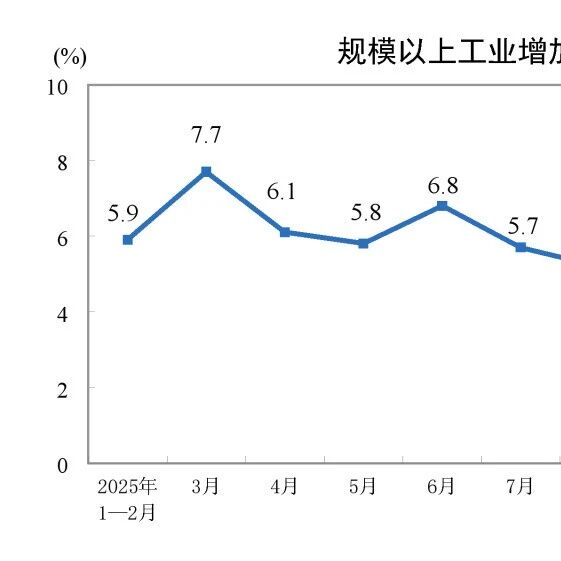
Economic Overview - In January-February 2026, the industrial value added of large-scale enterprises increased by 6.3% year-on-year, improving by 1.1 percentage points from December 2025, and exceeding the market expectation of 5.2%[3] - The total retail sales of consumer goods grew by 2.8% year-on-year, accelerating by 1.9 percentage points from December 2025, and surpassing the consensus forecast of 2.4%[3] - Fixed asset investment (excluding rural households) rose by 1.8% year-on-year, a significant improvement from the -3.8% recorded in the previous year, and better than the expected -2.7%[3] Industrial Production - The industrial production growth rate reached its highest level since October 2025, supported by a 21.8% year-on-year increase in exports in USD terms, significantly higher than the 5.5% growth for the entire year of 2025[7] - Among the three major sectors, mining increased by 6.1%, manufacturing by 6.6%, and electricity, heat, gas, and water production and supply by 4.7%, all showing improvements from December 2025[12] Consumer Spending - Retail sales of goods increased by 2.5%, while catering revenue grew by 4.8%, both showing significant acceleration from December 2025[16] - The sales of non-automotive consumer goods rose by 3.7%, up by 2.0 percentage points from the previous month, indicating a rebound in consumer spending due to the extended Spring Festival holiday[16] Fixed Asset Investment - Manufacturing investment grew by 3.1% year-on-year, a notable increase from 0.6% in the previous year, with significant contributions from sectors like transportation equipment manufacturing, which surged by 31.1%[28] - Infrastructure investment saw a substantial rebound, increasing by 11.4% year-on-year, compared to a decline of 1.5% in the previous year[28] Real Estate Market - Real estate development investment fell by 11.1% year-on-year, but the decline was less severe than the 17.2% drop recorded in the previous year, indicating a narrowing of the downturn[36] - New housing sales area decreased by 13.5% year-on-year, with sales revenue down by 20.2%, reflecting a continued struggle in the real estate market[37]
【数据发布】2026年1—2月份规模以上工业增加值增长6.3%
中汽协会数据· 2026-03-16 08:35
Core Viewpoint - The industrial value added of large-scale industries in January-February increased by 6.3% year-on-year, indicating a positive growth trend in the industrial sector [1][5]. Group 1: Industrial Growth - The industrial value added in January-February showed a month-on-month increase of 0.83% in February [1]. - By sector, mining increased by 6.1%, manufacturing by 6.6%, and electricity, heat, gas, and water production and supply by 4.7% [3][6]. - Among economic types, state-controlled enterprises grew by 4.2%, joint-stock enterprises by 6.9%, foreign and Hong Kong, Macao, and Taiwan-invested enterprises by 4.0%, and private enterprises by 7.4% [3][6]. Group 2: Industry Performance - Out of 41 major industries, 35 experienced year-on-year growth in value added [3]. - Notable growth sectors included coal mining and washing (7.2%), petroleum and natural gas extraction (5.8%), and high-tech manufacturing (13.1%) [3][6]. - The automotive manufacturing sector saw a growth of 3.4%, while the railway, shipbuilding, aerospace, and other transportation equipment manufacturing grew by 13.7% [3][6]. Group 3: Product Output - In January-February, 397 out of 626 major industrial products saw an increase in output year-on-year [4]. - Steel production was 22,119 million tons, down 1.1%, while cement production was 17,827 million tons, up 6.8% [4][7]. - The production of new energy vehicles was 1,604,000 units, down 13.7% [4][7]. Group 4: Sales and Exports - The sales rate of products from large-scale industrial enterprises was 95.4%, a decrease of 0.1 percentage points year-on-year [4][7]. - The export delivery value reached 2,405 billion yuan, reflecting a nominal growth of 6.3% year-on-year [4][7].
【数据发布】2026年1—2月份全国固定资产投资同比增长1.8%
中汽协会数据· 2026-03-16 08:35
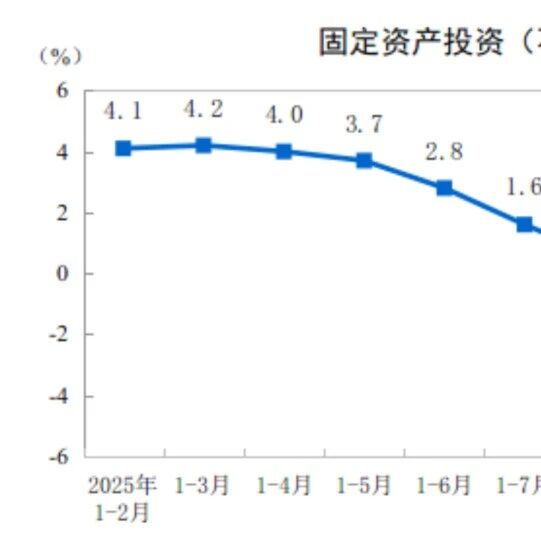
Core Viewpoint - In the first two months, China's fixed asset investment (excluding rural households) reached 52,721 billion yuan, showing a year-on-year growth of 1.8%. However, private fixed asset investment decreased by 2.6% [1][4]. Investment by Industry - Investment in the primary industry was 1,093 billion yuan, with a year-on-year increase of 17.4% - Investment in the secondary industry was 17,434 billion yuan, growing by 5.4% - Investment in the tertiary industry was 34,194 billion yuan, declining by 0.4% [3][4]. Industrial Investment Breakdown - Industrial investment increased by 5.4% year-on-year, with mining investment up by 13.0%, manufacturing investment up by 3.1%, and investment in electricity, heat, gas, and water production and supply up by 13.1% [3][4]. Infrastructure Investment - Infrastructure investment grew by 11.4% year-on-year, with notable increases in aviation transport investment (31.1%), gas production and supply investment (20.0%), and water transport investment (17.9%) [3][4]. Regional Investment Analysis - Investment in the eastern region increased by 1.8% year-on-year, while the central region saw a growth of 1.9%. In contrast, the western region experienced a decline of 0.5%, and the northeastern region saw a significant drop of 11.4% [3][4]. Investment by Registration Type - Domestic enterprises' fixed asset investment grew by 2.1% year-on-year, while investment from Hong Kong, Macau, and Taiwan enterprises decreased by 3.0%, and foreign-invested enterprises saw a decline of 9.1% [3][4].
【宏观经济】一周要闻回顾(2026年2月26日-3月3日)
乘联分会· 2026-03-03 08:38
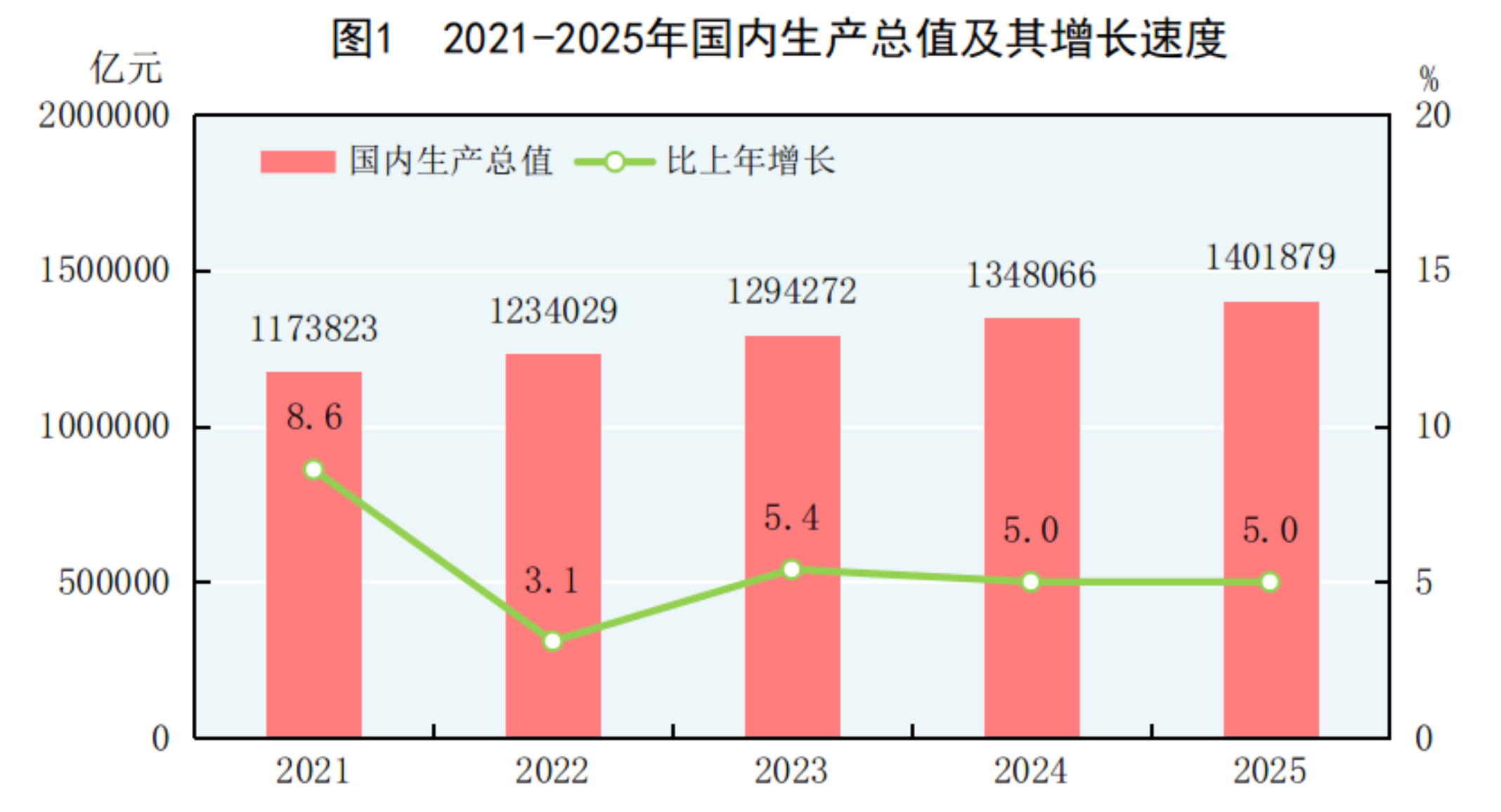
Economic Overview - In 2025, China's GDP reached 140,187.9 billion yuan, growing by 5.0% year-on-year, with the primary industry increasing by 3.9%, the secondary industry by 4.5%, and the tertiary industry by 5.4% [5] - The per capita GDP was 99,665 yuan, reflecting a 5.1% increase from the previous year [5] - The total national income was 1,393,700 million yuan, also up by 5.1% [5] Employment and Labor - The total employment reached 72,504 million, with urban employment accounting for 65.6% [6] - Urban new employment increased by 1,267 million, surpassing the previous year's figures by 110,000 [6] - The average urban survey unemployment rate was 5.2%, with a year-end rate of 5.1% [6] Industrial Growth - The total industrial output value was 416,826 billion yuan, marking a 5.8% increase [11] - The manufacturing sector saw a growth of 6.4%, with significant increases in automotive manufacturing (11.5%) and electrical machinery (9.2%) [12] - Profits from industrial enterprises reached 73,982 billion yuan, a slight increase of 0.6% [13] Agricultural Production - Total grain production was 714.88 million tons, an increase of 1.2% year-on-year [10] - The production of cotton rose by 7.7%, while oilseed production increased by 2.9% [10] Trade and Investment - The total import and export value was 454,685 billion yuan, growing by 3.8%, with exports increasing by 6.1% [20] - In January 2026, foreign direct investment amounted to 920.1 billion yuan, with a 25.5% increase in newly established foreign-invested enterprises [42] - The manufacturing sector attracted 260.9 billion yuan in foreign investment, while the service sector received 640.4 billion yuan [43] Consumer Market - The total retail sales of consumer goods reached 501,202 billion yuan, growing by 3.7% [16] - Online retail sales accounted for 26.1% of total retail sales, amounting to 130,923 billion yuan, a 5.2% increase [18] Financial Sector - The broad money supply (M2) increased by 8.5% to 340.3 trillion yuan [22] - The total social financing scale increased by 35.6 trillion yuan, with a year-end stock of 442.1 trillion yuan [22] Technological Development - R&D expenditure reached 39,262 billion yuan, growing by 8.1% [29] - The number of patents granted was 972,000, although this represented a 7.0% decrease from the previous year [29] Environmental Progress - Carbon emissions per unit of GDP decreased by 5.0% [9] - Clean energy generation increased by 14.4%, with significant growth in solar and wind energy [9]

中华人民共和国2025年国民经济和社会发展统计公报
Guo Jia Tong Ji Ju· 2026-02-28 01:33
Economic Overview - The GDP for the year reached 140,187.9 billion yuan, growing by 5.0% compared to the previous year [3] - The primary industry added value was 93,347 billion yuan (3.9% growth), the secondary industry was 499,653 billion yuan (4.5% growth), and the tertiary industry was 808,879 billion yuan (5.4% growth) [3] - The per capita GDP was 99,665 yuan, reflecting a 5.1% increase year-on-year [3] Population and Employment - The total population at the end of the year was 1,404.89 million, a decrease of 3.39 million from the previous year [9] - The urban population was 953.80 million, accounting for 67.9% of the total population [7] - The total employment reached 72.50 million, with an urban employment rate of 65.6% [8] Industrial Performance - The total industrial added value was 416,826 billion yuan, marking a 5.8% increase [24] - The manufacturing sector saw a growth of 6.4%, with significant increases in automotive manufacturing (11.5%) and high-tech manufacturing (9.4%) [26][31] - The profits of industrial enterprises reached 73,982 billion yuan, a 0.6% increase year-on-year [31] Agricultural Output - The total grain output was 714.88 million tons, an increase of 1.2% from the previous year [21] - The production of pork was 59.38 million tons, reflecting a growth of 4.1% [23] Service Sector Growth - The value added by the wholesale and retail sector was 145,808 billion yuan, growing by 5.0% [36] - The information transmission, software, and IT services sector grew by 11.1% [36] Trade and Investment - The total import and export value reached 454,685 billion yuan, with exports growing by 6.1% and imports by 0.5% [60] - Foreign direct investment amounted to 747.7 billion yuan, a decrease of 9.5% [69] Financial Sector - The broad money supply (M2) increased by 8.5% to 340.3 trillion yuan [76] - The total social financing scale increased by 35.6 trillion yuan, with a year-end balance of 442.1 trillion yuan [77]
2025年1-12月电力、热力、燃气及水生产和供应业企业有23461个,同比增长7.21%
Chan Ye Xin Xi Wang· 2026-02-22 03:41
Core Viewpoint - The report highlights the growth in the number of enterprises in the electricity, heat, gas, and water production and supply industry in China, indicating a positive trend in the sector's development [1] Industry Summary - As of January to December 2025, there are 23,461 enterprises in the electricity, heat, gas, and water production and supply industry, which is an increase of 1,577 enterprises compared to the previous year, representing a year-on-year growth of 7.21% [1] - This sector accounts for 4.46% of the total industrial enterprises in China [1] Company Summary - The report mentions several listed companies in the energy sector, including Shenzhen Energy, ShenNan Electric A, Dongxu Blue Sky, and others, indicating a diverse range of players in the market [1] - The data is sourced from the National Bureau of Statistics and organized by Zhiyan Consulting, a leading industry consulting firm in China [1]

锐财经|促进有效投资,更多举措落地
Ren Min Ri Bao Hai Wai Ban· 2026-02-10 06:31
Group 1 - The State Council's recent meeting emphasized the need to innovate and improve policies to promote effective investment, utilizing various financial tools such as central budget investments, ultra-long-term special bonds, and local government special bonds [1] - A series of policy measures aimed at promoting effective investment have been implemented, which are expected to stabilize investment and enhance its role in expanding domestic demand, optimizing supply, and benefiting people's livelihoods [1] Group 2 - In 2025, national fixed asset investment (excluding rural households) reached 48,518.6 billion yuan, a decrease of 3.8% from the previous year, indicating downward pressure on fixed asset investment due to local government debt and economic transition factors [2] - Investment in key sectors showed faster growth, with industrial investment increasing by 2.6%, contributing 0.9 percentage points to overall investment growth [2] Group 3 - In infrastructure investment, pipeline transportation investment grew by 36.0%, internet and related services investment increased by 23.8%, and multimodal transport and agency services investment rose by 22.9% in 2025 [3] - Private investment in infrastructure grew by 1.7%, accounting for 21.0% of total infrastructure investment, with significant growth in water management and road transport sectors [3] Group 4 - Equipment and tool purchase investment increased by 11.8% in 2025, contributing 1.8 percentage points to overall investment growth, with a focus on supporting over 8,400 equipment renewal projects through ultra-long-term special bonds [4] - The first batch of 936 billion yuan in ultra-long-term special bonds for 2026 has been allocated to support approximately 4,500 projects across various sectors, driving total investment exceeding 460 billion yuan [4] Group 5 - The National Development and Reform Commission (NDRC) is optimizing the implementation of "two new" policies to support equipment renewal by lowering investment thresholds and enhancing project review standards [5] - The NDRC aims to strengthen the management of equipment renewal projects and improve the efficiency of fund utilization through better coordination and monitoring [5] Group 6 - The NDRC highlighted the importance of effective government investment to avoid inefficient and redundant construction, focusing on improving project quality and maturity for central budget investments and special bonds [7] - The recent fiscal and financial policies aim to stimulate private investment, with measures including credit support, interest subsidies, and guarantees to lower financing costs and barriers for private enterprises [8]