医疗服务

Search documents
【宝鸡】血费减免一次都不跑
Shan Xi Ri Bao· 2026-01-21 00:27
"宝鸡市把落实'血费减免一次都不跑'作为改善献血体验、提升群众满意度的一项重要举措,持续 优化工作流程,提升服务效率,让无偿献血者的奉献得到实在、便捷的回馈。在工作方面,我们在全市 二级及以上医院开通血费直免系统,推进医院将办理窗口从输血科迁移到出院结算窗口,实现'出院即 减免'一站式办理。我们对医院直免系统进行升级,实现与全省献血信息平台联网,省内异地血费减免 更为高效。"宝鸡市中心血站站长净红利说。 1月20日,记者从宝鸡市中心血站获悉:为了让献血者的爱心能够得到暖心回馈,2025年以来,宝 鸡市全面落实"血费减免一次都不跑"政策,全市已有1381人次献血者及其家人从中受益,减免金额达 107万元,实现了从"群众跑腿"到"数据跑路"的暖心转变。 据了解,根据有关政策,献血者本人及其父母、子女、配偶享有血费减免的权益。2025年,为了让 爱心不被"跑腿"消耗,宝鸡市立足实际细化完善临床用血费用减免工作政策,简化亲属代办手续流程, 对全市所有二级及以上医院进行政策培训,确保血费减免政策不打折扣地落地见效,并通过医疗卫生单 位微信公众号等渠道推送政策指南,让献血者、用血者和工作人员"一眼看得见、随时查得着",确 ...
推广疫苗接种、关注重点人群 世卫组织呼吁全方位应对全球流感挑战
Ren Min Ri Bao· 2026-01-20 23:51
Core Insights - The World Health Organization (WHO) reports a severe global influenza virus transmission situation, with a significant rise in respiratory symptom consultations and hospitalizations across multiple countries from January 10 to 16 [1] - The dominant strain currently is the H3N2 subtype, specifically the K sub-branch, which has spread to over 30 countries since its discovery in Oceania in August 2022, accounting for over 90% of cases in Europe, the US, and East Asia [2] Group 1: Current Situation - In Europe, countries like Ireland, the UK, and Serbia report high levels of influenza activity, with over half of symptomatic patients testing positive, and 90% of confirmed cases being K sub-branch infections [3] - The UK saw a record high of 3,140 flu cases hospitalized in the second week of January, an 18% increase from the previous week, with hospital bed occupancy rates exceeding 90% [3] - The US has reported over 18 million flu cases and 230,000 hospitalizations this season, with 9,300 deaths, and over 90% of circulating strains being the K sub-branch [3] Group 2: Regional Responses - In Asia, Japan reports that 96% of flu cases are the K sub-branch, with over 190,000 new cases since December, prompting school closures and heightened alerts [4] - South Korea has raised its flu alert level to "high," and experts warn of potentially the most severe flu season since 2016 if the trend continues [4] - Indonesia has reported 63 confirmed cases of the K sub-branch, with the situation currently under control [4] Group 3: Vaccination and Prevention - Vaccination remains the most effective means of preventing influenza, with the WHO emphasizing the importance of targeting high-risk populations for vaccination [5] - Current vaccines show a good match against the K sub-branch, with efficacy rates of approximately 75% for severe cases in children and 30-40% for adults [5] - The WHO highlights the need for improved vaccine accessibility in developing countries, with recent donations of 4 million doses to low-income nations [8] Group 4: Global Coordination - The WHO calls for enhanced data sharing, experience exchange, and mutual support among countries to combat influenza effectively [9] - The organization stresses the importance of maintaining good hygiene practices and the need for public education on distinguishing flu from common colds [7] - The WHO's pandemic agreement aims to ensure equitable access to vaccines and treatments, emphasizing the need for preparedness and resource planning [9]
新华视点丨老外“扎堆”来华就医,这事儿怎么看?
Xin Hua Wang· 2026-01-20 19:57
Core Viewpoint - The increasing trend of foreign patients seeking medical treatment in China is driven by the perceived advantages of Chinese healthcare services, particularly in specific medical fields, despite their overall small proportion in the total patient population [2][5]. Group 1: Growth of Foreign Patients - The number of foreign patients in Chinese hospitals is on the rise, although they still represent a small percentage of total patients [2]. - Hospitals report a noticeable increase in foreign patients, especially after 2024, with many coming from countries like Russia, Singapore, the USA, and Indonesia [2][3]. - The China International Medical Service Industry Development Report indicates that 850 medical institutions across 57 cities in mainland China are engaged in international medical services [3]. Group 2: Reasons for Seeking Treatment in China - Foreign patients are attracted to China for its advanced medical technologies and lower costs compared to developed countries, particularly in fields like oncology and cardiovascular diseases [5]. - Traditional Chinese medicine (TCM) is gaining international recognition, with treatments such as acupuncture and herbal medicine becoming popular among foreign patients [5][6]. - Specific medical needs, such as complex conditions and chronic diseases, are driving foreign patients to seek treatment in China [5][6]. Group 3: Impact on Domestic Healthcare - The influx of foreign patients is managed to ensure that it does not compromise the healthcare services available to domestic patients, with regulations in place to limit the proportion of international medical services [7]. - Public hospitals are required to prioritize basic medical services while offering international medical services, ensuring that foreign patients do not utilize domestic insurance funds [7]. - The development of international medical services is seen as a way to enhance the overall healthcare system, providing additional resources and innovative practices that can benefit domestic healthcare [7][8]. Group 4: Future Developments - China is exploring the establishment of wholly foreign-owned hospitals in several provinces to better meet the diverse medical needs of both foreign and domestic patients [8]. - Experts suggest that improving service platforms for foreign patients and enhancing multilingual services will further attract international patients to China [8].
告别排长队,刷脸就能挂号、取药
Xin Lang Cai Jing· 2026-01-20 19:55
Core Viewpoint - The article highlights the systematic implementation of digital healthcare payment reforms in Hunan Province, significantly enhancing the medical experience for citizens through various payment methods such as credit payment, facial recognition, QR code payment, and mobile payment [1][8]. Group 1: Credit Payment - The "medical + insurance + finance" credit medical model trialed in Yongzhou since July 2025 allows insured individuals to complete outpatient payments immediately after consultation, eliminating the need for multiple queues [2]. - The "family payment" feature enables insured individuals to share their credit limits with family members, facilitating easier access to healthcare for those unable to manage payments themselves [3]. Group 2: Facial Recognition Payment - Facial recognition payment addresses the challenges faced by elderly and young populations who may struggle with smartphone usage, providing a convenient solution [4]. - Over 380 facial recognition terminals have been deployed in key locations across Liuyang, allowing residents to access services locally [4]. Group 3: QR Code Payment - The "one code payment" feature in Chenzhou allows insured individuals to complete both insurance and personal payments with a single action, achieving a settlement rate of 62.56% [6]. - This new functionality is being promoted across more medical institutions to streamline the payment process [6]. Group 4: Mobile Payment - The introduction of mobile payment options is shifting healthcare payment processes from physical windows to digital platforms, enhancing convenience for users [7]. - In Ningxiang, the average payment time at hospitals has been reduced from 15-20 minutes to under 3 minutes due to the implementation of mobile payment systems [8]. Group 5: Overall Impact - The diverse innovations in payment methods are effectively addressing the needs of different demographics and scenarios, significantly reducing waiting times and improving the overall healthcare service experience [8].
锦欣生殖(01951.HK):1月20日南向资金增持404.2万股
Sou Hu Cai Jing· 2026-01-20 19:34
Group 1 - Southbound funds increased their holdings in Jinxin Fertility (01951.HK) by 4.042 million shares on January 20 [1] - Over the past 5 trading days, there were 3 days of net reductions by southbound funds, totaling a net decrease of 7.806 million shares [1] - In the last 20 trading days, there were 12 days of net reductions by southbound funds, with a cumulative net decrease of 23.608 million shares [1] Group 2 - As of now, southbound funds hold 1.443 billion shares of Jinxin Fertility, accounting for 52.31% of the company's issued ordinary shares [1] - Jinxin Fertility Medical Group Co., Ltd. is an investment holding company primarily providing in vitro fertilization (IVF) services [1] - The company offers assisted reproductive services, management services, mobile surgical center facility services, auxiliary medical services, obstetrics and pediatrics medical services, as well as sales of medical consumables and equipment, mainly in China and the United States [1]


织密基层医疗“健康网”
Xin Lang Cai Jing· 2026-01-20 18:52
Group 1 - The core focus for 2025 is to enhance the accessibility of quality healthcare services for employees and the public by improving the grassroots medical service capacity [1] - There is a strong emphasis on expanding and balancing the distribution of quality medical resources to meet the healthcare needs of the community [1] - The initiative aims to strengthen the grassroots health talent team to ensure effective healthcare delivery [1]
当好健康“守门人”
Xin Lang Cai Jing· 2026-01-20 18:52
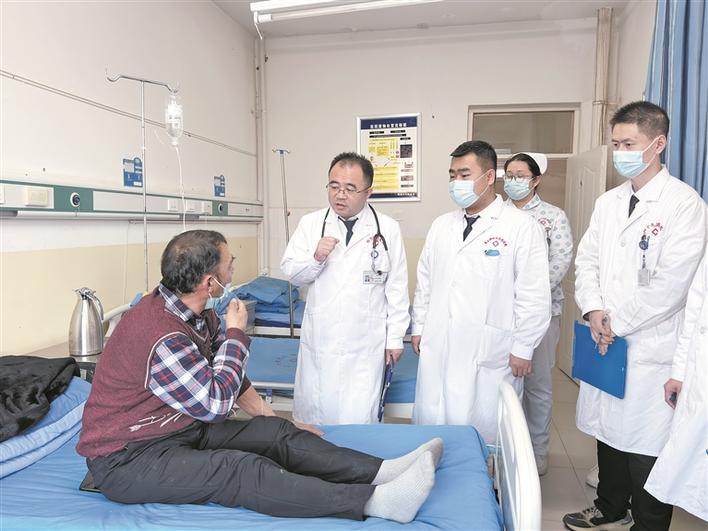
月16日,三师四十九团医院党支部书记、院长钱斌(左二)在病房了解患者病情。 兵团日报常驻记者 哈尼克孜·哪斯尔 摄 ●兵团日报常驻记者 哈尼克孜·哪斯尔 通讯员 塔依尔·艾力 "请进来"即主动邀请上级医院专家下沉基层,通过坐诊服务和带教指导,将先进医疗经验引入团场。近 年来,医院累计邀请专家97人次前来传经送宝。2024年,医院进一步引进两名主任医师,团场职工在家 门口即可享受专家级诊疗服务。"送出去"则侧重于选派院内医护人员外出进修学习,医院已派出586人 次医护人员走出团场,赴各地医院学习先进的诊疗技术和管理经验。 1 人才培养计划的落地生根,让医院的人才队伍结构发生了显著变化。2022年,医院本科学历人员仅有8 人,如今增加至38人;中高级职称人员从19人增加到27人;执业(助理)医师数量由20人扩充至41人。 一支业务精湛、结构合理的医疗队伍,正成为医院高质量发展的坚强后盾。 2023年,从西安高校影像专业毕业的郭文杰,怀揣着对边疆的憧憬,毅然选择扎根四十九团医院。"当 时了解到团场医院影像专业人才短缺,正好和我学的专业对口,就想留下来尽一份力。"郭文杰说。如 今,他在医院已能独当一面。看着患者通过自 ...
“为更多患者托起生命的希望”
Xin Lang Cai Jing· 2026-01-20 18:52
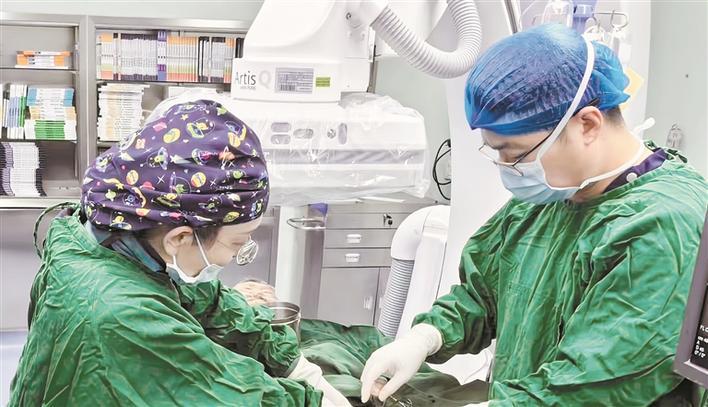
Group 1 - The article highlights a high-risk cardiac intervention surgery performed by Dr. Gao Feng, an expert in cardiovascular intervention, on an 85-year-old patient suffering from aortic valve insufficiency and heart failure, showcasing the critical nature of the procedure [2] - Dr. Gao has completed a total of 69 complex heart surgeries during his medical assistance mission in Xinjiang, significantly enhancing the hospital's ability to treat elderly patients with multiple underlying conditions [2][3] - The Transcatheter Aortic Valve Replacement (TAVR) procedure is emphasized as a less invasive option compared to traditional open-heart surgery, leading to quicker recovery for critically ill patients [3] Group 2 - Dr. Gao aims to not only treat patients but also to leave behind advanced medical techniques and train local doctors, establishing a sustainable model for medical assistance [3][4] - He has initiated the establishment of a structural heart disease expert studio and a "Gao Feng Doctoral Workstation" to promote long-term support and development in the region [3] - The cardiovascular department at Shihezi People's Hospital has developed a regular operational mechanism supported by renowned medical studios and doctoral workstations, ensuring ongoing technical support and collaboration even after the departure of aid experts [3]
优质医疗资源普惠民生
Xin Lang Cai Jing· 2026-01-20 18:52
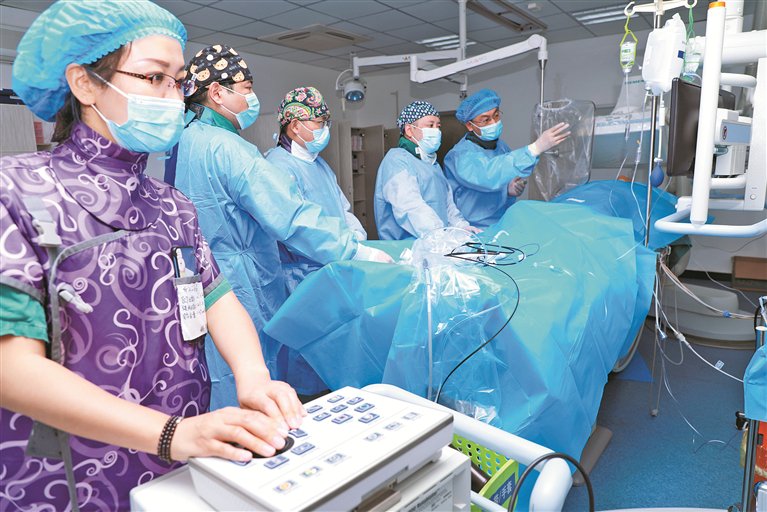
Core Viewpoint - The article highlights the ongoing efforts in the Xinjiang Production and Construction Corps to enhance healthcare services through the establishment of tightly-knit medical communities, focusing on improving accessibility and quality of care for local residents [4][5][8]. Group 1: Healthcare System Development - The Xinjiang Production and Construction Corps has implemented the "14th Five-Year Plan" to promote the construction of tightly-knit medical communities, shifting the healthcare model from "disease-centered" to "people's health-centered" [4]. - Various regions are advancing the construction of tightly-knit medical communities by breaking down service barriers, enhancing information technology support, and promoting the integration of quality medical resources into grassroots healthcare [4][5]. - A more efficient and accessible health security network is gradually forming, enhancing the sense of satisfaction and safety among the workforce [4]. Group 2: Resource Integration and Service Enhancement - The Sixteenth Division of the Corps has established two tightly-knit medical communities, integrating quality resources from leading hospitals with grassroots clinics to create a new medical service model [5]. - The healthcare network in the Sixteenth Division now includes 2 leading hospitals, 14 community clinics, and 43 standardized health stations, forming a comprehensive medical service system [5][7]. - The Sixteenth Division has set up 29 expert workstations in grassroots medical institutions, benefiting over 116,400 patients through remote diagnosis and treatment services [7]. Group 3: Specialized Medical Services - The Five Division's Tumor Radiotherapy Center has treated over 200 cancer patients, becoming a key facility for cancer treatment in the region [8]. - The Five Division has established several key specialties, including gynecology, orthopedics, and cardiology, enhancing the regional medical service capacity [8][9]. - The Five Division has secured approximately 117 million yuan in aid funds, introducing 42 experts and establishing 11 expert workstations to fill technical gaps in the region [9]. Group 4: Remote Diagnosis and Technology Integration - The Seven Division has developed a remote consultation system that connects specialists with grassroots doctors, improving diagnostic efficiency and reducing patient costs [10][11]. - By the end of 2025, the remote diagnostic services in the Seven Division are expected to reach 6,966 cases, significantly enhancing the healthcare network's efficiency [12]. - The remote consultation platform has been instrumental in addressing complex medical cases, allowing for timely responses and standardized treatment protocols [11][12].
仁心仁术护万家安康
Xin Lang Cai Jing· 2026-01-20 18:52
Core Insights - In 2025, medical institutions at all levels in the region are focusing on the health needs of workers and the public, utilizing renowned medical experts to enhance healthcare services [1] - The initiative aims to establish a systematic and regular "mentorship" mechanism to continuously improve the overall efficiency of the medical service system [1] - Renowned medical experts are not only delivering advanced medical skills to grassroots levels but also optimizing processes, building standards, and training local medical teams [1] Group 1 - The program emphasizes the construction of specialized departments as a key strategy for improving healthcare services [1] - The initiative aims to create a sustainable medical workforce that remains in the region, thereby strengthening local healthcare capabilities [1] - The focus is on showcasing the commitment and practical exploration of medical experts who are deeply rooted in the community [1]