Banking

Search documents
Hong Kong will start granting stablecoin issuer licenses in March: Reuters
Yahoo Finance· 2026-02-02 12:36
Core Viewpoint - Hong Kong's financial authority plans to issue a limited number of stablecoin issuer licenses in March, indicating a cautious approach to the growing stablecoin market [1][3]. Group 1: Regulatory Developments - The Hong Kong Monetary Authority (HKMA) is set to grant a "very small number" of stablecoin issuer licenses in March, as stated by CEO Eddie Yue during a Legislative Council meeting [1]. - The review process for stablecoin issuer applications is nearing completion, suggesting that regulatory frameworks are being established to support the stablecoin market [3]. Group 2: Market Potential - Stablecoins, currently a $300 billion asset class, are projected to grow to a market size between $1.9 trillion and $4 trillion, highlighting significant growth potential in the sector [3]. - Last year, stablecoins facilitated transactions worth $35 trillion on blockchain networks, indicating their increasing adoption and importance in the financial ecosystem [2]. Group 3: Approval Criteria - The criteria for stablecoin issuer license approval will focus on risk management, anti-money laundering measures, and the backing assets of the stablecoins, ensuring a robust regulatory framework [4]. - Licensed issuers will be required to comply with local regulations for cross-border activities, with potential for future mutual recognition agreements with other jurisdictions [4].
Fifth Third Completes Merger with Comerica to Become 9th Largest U.S. Bank
Businesswire· 2026-02-02 11:30
Core Viewpoint - Fifth Third Bancorp has successfully completed its merger with Comerica Incorporated, resulting in the formation of the ninth-largest bank in the U.S. with approximately $294 billion in assets [1] Group 1: Merger Details - The merger combines Fifth Third's retail banking and digital capabilities with Comerica's middle market banking franchise, enhancing stability, profitability, and growth potential [1] - Fifth Third will now operate in 17 of the 20 fastest-growing large markets in the U.S., including key regions in the Southeast, Texas, and California, while maintaining its leadership in the Midwest [1] - The combined entity aims to have around 1,750 branches by 2030, with over half located in high-growth areas [1] Group 2: Business Strategy and Growth Opportunities - The merger creates two recurring and high-return fee businesses: Commercial Payments and Wealth and Asset Management, which will provide diversified earnings and reinvestment capacity [1] - Over the next five years, the company plans to scale Comerica's middle market expertise, deepen commercial and wealth relationships, expand retail banking, and build an innovation banking business [1] Group 3: Leadership and Integration - Tim Spence, chairman, CEO, and president of Fifth Third, emphasized the merger as a pivotal moment for the bank, aiming to deliver exceptional value for shareholders, customers, and communities [1] - Integration teams will work closely to ensure a seamless transition for customers, with full system and brand conversions expected in the third quarter [1]



ATFX汇市前瞻:非农就业报告欧央行与英央行决议 澳洲联储或加息
Xin Lang Cai Jing· 2026-02-02 11:18
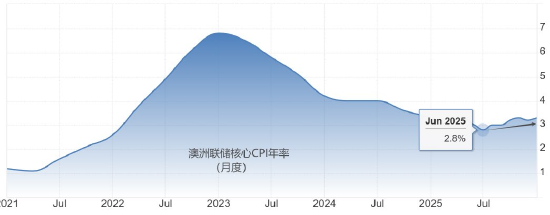
Group 1: Non-Farm Payroll Report - The upcoming non-farm payroll report is a significant event for the gold and dollar markets, with expectations for 64,000 new jobs in January, up from the previous 50,000, but still at a low level historically [1][11] - The unemployment rate is expected to remain steady at 4.4%, indicating a potential stagnation in the labor market [1][11] - If the report significantly underperforms expectations, it may prompt the Federal Reserve to adopt a more aggressive rate cut strategy, negatively impacting the dollar index [3][14] Group 2: Economic Events Impacting Employment - Two major events in January could negatively affect the non-farm payroll report: Trump's controversial comments about Greenland, which may weaken U.S. trade potential, and the actions of the U.S. Immigration and Customs Enforcement (ICE), which have led to public outcry and a government shutdown [2][12] - The negative public sentiment surrounding ICE's actions could hinder Trump's immigration policies, potentially impacting employment figures [2][12][13] Group 3: Central Bank Decisions - The European Central Bank (ECB) and the Bank of England (BoE) are expected to maintain their benchmark interest rates, prioritizing concerns over inflation rather than labor market weaknesses [4][15] - Both central banks are likely to align their decisions with the Federal Reserve's cautious approach to rate cuts, as high inflation and a weak labor market present a complex economic scenario [4][15] Group 4: Australian Economic Outlook - Australia's core CPI has risen from 2.8% in June 2025 to 3.3% in December 2025, indicating potential inflationary pressures that may require intervention from the Reserve Bank of Australia [8][19] - The unemployment rate in Australia has improved from 4.4% in September 2025 to 4.1% in December 2025, suggesting a stable employment market compared to the U.S. and Europe [8][19] - Financial institutions anticipate a 25 basis point rate hike from the Reserve Bank of Australia, increasing the benchmark rate from 3.6% to 3.85% due to strong employment figures and rising inflation [8][19]
Share Buyback Tax Overhaul: Budget 2026
SIMPLE TAX INDIA· 2026-02-02 10:23
Group 1 - The document contains various references to tax-related topics, including excise duty changes, income tax return forms, and due dates for tax filings [1][2] - There are mentions of specific tax rates and exemptions, such as the reduction in excise duty and the introduction of new tax forms [1][2] - The document highlights the importance of compliance with tax regulations and the implications of late filings or incorrect submissions [1][2] Group 2 - The content discusses the impact of budget announcements on various sectors, including changes in tax rates and the introduction of new financial products [1][2] - There are references to financial planning and investment strategies, indicating a focus on optimizing tax liabilities through various financial instruments [1][2] - The document also addresses the significance of understanding tax laws and regulations for effective financial management [1][2]
How to trade the market spiral as investors dump gold, silver and oil
CNBC· 2026-02-02 10:06
Core Viewpoint - Precious metals and oil prices are experiencing significant losses, primarily triggered by U.S. President Trump's nomination of Kevin Warsh as the successor to Federal Reserve Chair Jerome Powell [1][11]. Precious Metals Market - Spot gold prices fell 3.2% to $4,713.39 per ounce, following a historic drop of over 9% on Friday, marking the sharpest one-day decline since 1983 [2]. - Spot silver prices decreased by 2.7% to $82.29 per ounce, having dropped over 31% on Friday, which is its worst daily performance since 1980 [2]. - Analysts suggest that the recent downturn in precious metals is part of a broader market decline, with the pan-European Stoxx 600 index reflecting losses from Asia-Pacific markets [3]. Investment Strategies - JPMorgan's global investment strategist, Grace Peters, emphasizes the importance of geopolitical hedges and safe-haven assets, asserting that gold remains the best geopolitical hedge [4]. - Peters maintains a forecast of $6,500 per ounce for gold by year-end, driven by factors such as central bank buying and institutional investor support [5]. - The current allocation of gold in institutional and retail portfolios is around 3%, indicating potential for increased investment in gold [8]. Market Sentiment and Future Outlook - The sell-off in precious metals began due to fears regarding the Federal Reserve's independence and expectations of a declining U.S. dollar [10]. - The nomination of Warsh has led to a reevaluation among investors, as he has advocated for reducing the Fed's balance sheet, creating uncertainty in the market [11][12]. - Some analysts view the recent sell-off as a "healthy correction," suggesting that prices may stabilize and recover in the coming months, with expectations of gold reaching $5,020 per ounce and silver at $88 per ounce by year-end [15][16]. Oil Market - Oil prices also declined, with Brent crude futures falling 5% to $65.88 per barrel and U.S. West Texas Intermediate futures down 5.3% to $61.76, marking the steepest single-session decline in over six months [18]. - The decline in oil prices is attributed to signals of de-escalation in U.S.-Iran tensions, as President Trump indicated that the two nations are "seriously talking" [17].

US futures, world shares slip as worries over Trump's Fed chief pick and AI weigh on markets
BusinessLine· 2026-02-02 09:57
US futures and world shares skidded on Monday as worries over President Donald Trump's nominee to be the next Federal Reserve chair amplified jitters over a possible bubble in the artificial intelligence boom. South Korea's exchange, which is heavily influenced by tech-related developments, briefly suspended trading as its benchmark Kospi bounced, closing 5.3 per cent lower at 4,949.67. Samsung Electronics gave up 6.3 per cent, while chip maker SK Hynix sank 8.7 per cent. The Kospi has been forging records ...


Gold's worst day in decades and why JPM Private Bank still likes it
Youtube· 2026-02-02 09:25
Core Viewpoint - The market is experiencing volatility, prompting a reassessment of gold's role as a safe haven asset, with a revised price target for gold raised to $6,500 due to strong demand and geopolitical factors [1][4]. Group 1: Gold Market Dynamics - Central bank buying of gold has been strong and is expected to continue into 2026, indicating robust demand [3][4]. - The current allocation of gold in portfolios is low, at just over 3% of assets under management (AUM), suggesting potential for increased investment in gold [6]. - Institutional and retail investors are expected to increase their gold holdings to a target of 5-10% in their portfolios, reflecting a shift towards strategic asset allocation [7]. Group 2: Market Volatility and Risk Factors - Recent volatility in gold and silver prices has raised questions about their status as safe havens, especially in light of significant one-day price drops [8][12]. - The correlation between gold and equities has increased, indicating that gold may not be as insulated from market movements as previously thought [8]. - The potential for profit-taking by developed world central banks could impact gold prices, while emerging market central banks still have room to increase their gold holdings [6]. Group 3: Broader Economic Context - The discussion around monetary and fiscal policy transitions is crucial, with implications for interest rates and market stability [10][11]. - The current market sentiment is characterized by a bullish outlook, but historical volatility suggests that drawdowns are normal and can serve to reset market conditions [13][19]. - Geographic diversification and investment in infrastructure are recommended strategies to enhance portfolio resilience amid inflation concerns [21][22].

Hong Kong Targets March for First Stablecoin Licenses, Few Expected
Yahoo Finance· 2026-02-02 09:00
Core Insights - The Hong Kong Monetary Authority (HKMA) plans to issue its first stablecoin issuer licenses in March, with only a "very small number" expected to be approved initially [1][7] - This transition signifies a move from consultation and sandbox testing to a regulated market for stablecoin issuers under Hong Kong's new framework [1] Licensing Criteria - The HKMA's licensing assessments will focus on the issuer's defensible use case, robust operational and financial risk controls, effective anti-money laundering (AML) safeguards, and an appropriate reserve backing model [2][7] Regulatory Framework - Hong Kong initiated a stablecoin issuer sandbox in 2024, and a stablecoin bill was passed in May 2025, establishing a licensing regime for fiat-referenced stablecoin issuers [3] - The stablecoin licensing regime took effect on August 1, 2025, making the issuance of fiat-referenced stablecoins a regulated activity requiring a license [4] Market Impact - A limited number of licensed issuers can quickly shape the market structure, as early integrations may concentrate around these entities, especially with banks and regulated payment partners preferring licensed counterparts [5] - Licensed issuers will need to adhere to Hong Kong's rules for cross-border transactions, with potential exploration of mutual recognition arrangements with other jurisdictions in the future [5][7] Interested Parties - Companies signaling interest in applying for stablecoin licenses include JINGDONG Coinlink Technology Hong Kong Limited, RD InnoTech Limited, and a consortium involving Standard Chartered Bank (Hong Kong) Limited, Animoca Brands Limited, and Hong Kong Telecommunications (HKT) Limited [8] - Ant International has also indicated plans to apply for a stablecoin issuer license in Hong Kong once the procedures are opened [9]
NCR Atleos and Heart of England Co-operative Extend Relationship to Enhance Financial Inclusion
Businesswire· 2026-02-02 08:00
Core Insights - NCR Atleos has renewed its partnership with Heart of England Co-operative for five years, focusing on enhancing financial inclusion through upgraded ATM services [1][1][1] Company Overview - NCR Atleos is a leader in self-service financial access, providing innovative solutions for financial institutions, retailers, and consumers [1][1] - The company operates the largest independently-owned ATM network and emphasizes operational efficiency and digital-first experiences [1][1] Partnership Details - The renewed agreement includes a comprehensive upgrade of Heart of England Co-operative's 35-site ATM network, ensuring free cash access for local communities [1][1] - The collaboration aims to enhance ATM availability and service quality, aligning with both organizations' commitment to customer satisfaction [1][1] Strategic Goals - Heart of England Co-operative aims to maintain its strategic priorities while benefiting from NCR Atleos' operational efficiency and innovative solutions [1][1] - The upgraded ATM network is expected to drive foot traffic and meet evolving customer needs in Coventry and Warwickshire [1][1]

Interest On Motor Accident Claims Exempted : Budget 2026
SIMPLE TAX INDIA· 2026-02-02 06:50
Group 1 - The article discusses various tax-related topics, including changes in excise duty rates and the implications for businesses and consumers [1][2] - It highlights the importance of understanding the due dates for filing tax returns and the consequences of late submissions [2] - The article emphasizes the need for companies to stay updated on the latest tax regulations and compliance requirements to avoid penalties [2] Group 2 - The article mentions the impact of the Goods and Services Tax (GST) on various sectors, indicating a shift in tax structure and compliance [2] - It outlines the significance of e-filing and electronic payment systems in streamlining tax processes for businesses [2] - The article also addresses the role of financial planning and investment strategies in navigating the changing tax landscape [2]