
专业与商业服务业

Search documents
美国1月非农新增就业13万人,创去年4月以来最大增幅,失业率降至4.3%,年度下修86.2万!
Hua Er Jie Jian Wen· 2026-02-16 12:30
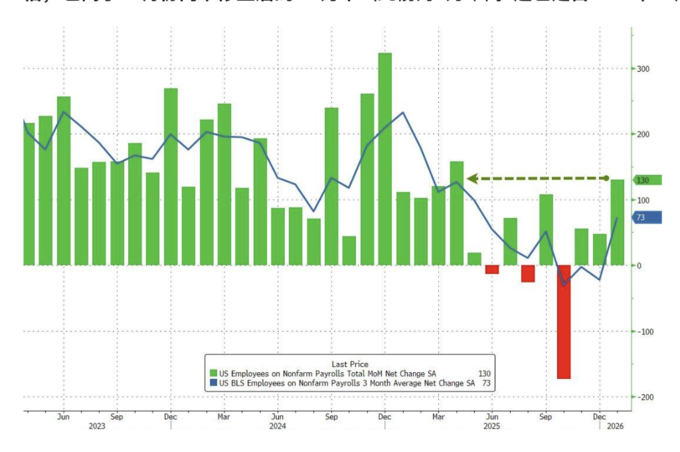
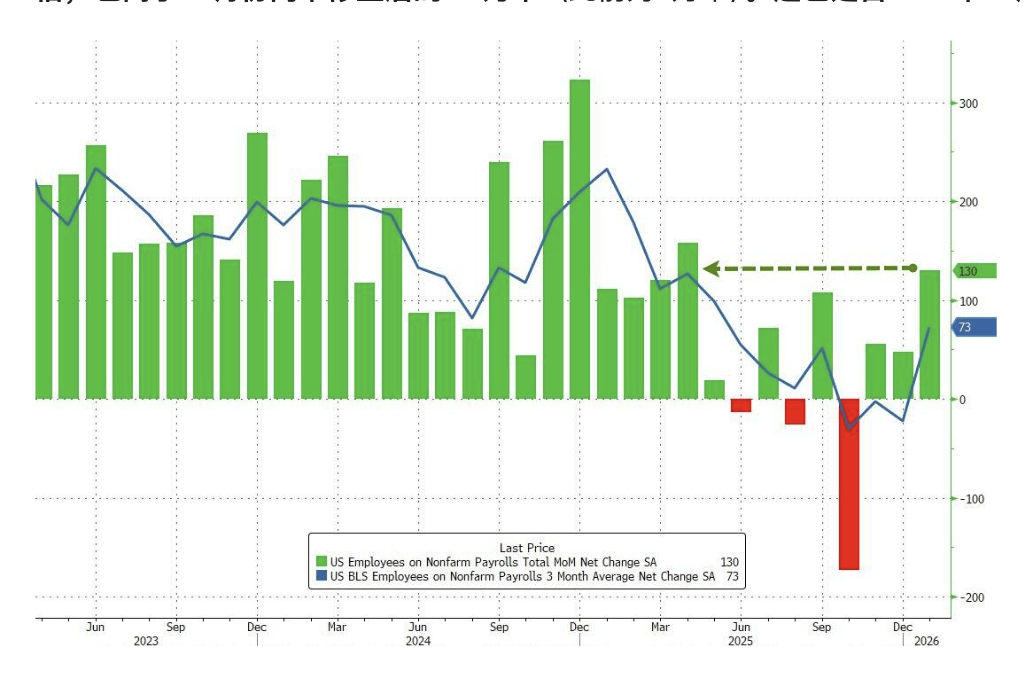
Core Viewpoint - The U.S. labor market shows resilience with January employment growth reaching a new high since December 2024, despite a surprising drop in the unemployment rate to 4.3%. However, significant downward revisions to previous employment data reveal a more substantial weakness in the labor market than previously understood [1][4]. Employment Growth and Revisions - In January, non-farm employment increased by 130,000, significantly exceeding market expectations of 65,000, marking the largest increase since April 2025 [1][7]. - The annual benchmark revision drastically lowered the total employment growth for 2025 from an initial report of 584,000 to 181,000, indicating a substantial correction in the understanding of last year's labor market performance [3][7]. - Monthly data revisions showed that the average monthly job growth last year was only 15,000, far below the initial estimate of 49,000 [7]. Sector Performance - The healthcare sector was the primary driver of employment growth in January, continuing to be a key engine for job expansion throughout 2025. Other sectors such as construction and professional services also saw job increases, while manufacturing recorded its first monthly growth of the year [8]. - Temporary help services continued to decline, with a reduction of 42,000 jobs in January, marking the fifth month of decline in the past six months [8]. Labor Market Stability - The January employment report indicates a gradual stabilization of the labor market after a year of cooling and low hiring activity. Despite expectations of overall weak job growth in 2026, clearer economic policy expectations and easing labor cost pressures may lead some employers to reconsider hiring plans [10]. - Job quality improved, with full-time positions increasing by 582,000 and part-time positions by 31,000. The unemployment rates for major demographic groups showed slight declines, with youth unemployment at 13.6% and adult male and female rates at 3.8% and 4.0%, respectively [11]. Market Reactions and Future Outlook - Following the data release, U.S. stock futures and Treasury yields rose, with traders reducing bets on a rate cut in June, now expecting the first cut to be delayed until July. The strong January data, despite the annual revisions, presents a complex picture for the Federal Reserve in assessing future rate cuts [6][12]. - The labor market's underlying fragility revealed by the revisions may provide the Federal Reserve with more room for policy adjustments [6].

美国1月非农新增就业13万人,创去年4月以来最大增幅,失业率降至4.3%,25年3月非农下修86.2万!
Sou Hu Cai Jing· 2026-02-11 14:35
Core Insights - The U.S. labor market shows resilience with January non-farm employment growth reaching 130,000, significantly exceeding the market expectation of 65,000, marking the largest increase since April 2025 [1][7] - The unemployment rate unexpectedly dropped to 4.3%, down from the expected and previous value of 4.4%, indicating a slight improvement in labor market conditions [1] - However, the annual benchmark revision revealed a substantial downward adjustment of the previous year's employment growth from 584,000 to 181,000, highlighting a more severe weakness in the labor market than previously understood [3][7] Employment Data - January's non-farm payroll growth was driven primarily by the healthcare sector, which has been a key engine for employment expansion in 2025 [9] - The construction and professional services sectors also recorded job growth, while manufacturing saw its first positive monthly growth this year [9] - Temporary help services continued to decline, with a reduction of 42,000 jobs in January, marking the fifth month of decline in the past six months [9] Wage and Labor Participation - Average hourly earnings increased by 0.4% month-over-month, surpassing the expected 0.3% and the revised previous value of 0.1% [1] - The labor force participation rate slightly rose to 62.5%, marginally better than anticipated [1] Employment Quality and Structure - The quality of employment improved, with full-time positions increasing by 582,000 and part-time positions rising by 31,000, continuing the trend from the previous month [10] - The unemployment rates for major labor groups showed slight declines, with youth unemployment at 13.6% and adult male and female rates at 3.8% and 4.0%, respectively [14] Market Reactions and Future Outlook - Following the data release, U.S. stock futures and Treasury yields rose, with traders reducing bets on a rate cut in June, now expecting the first cut to be delayed until July [5] - Despite the strong January data, the annual revision indicates underlying vulnerabilities in the labor market, complicating the Federal Reserve's assessment of future rate cuts [6][5] - The overall employment growth for 2026 is expected to remain weak, although some employers may reconsider hiring plans due to easing labor cost pressures [12]
美国1月劳动力市场现分化 就业增长大幅降温
Xin Hua Cai Jing· 2026-02-04 14:15
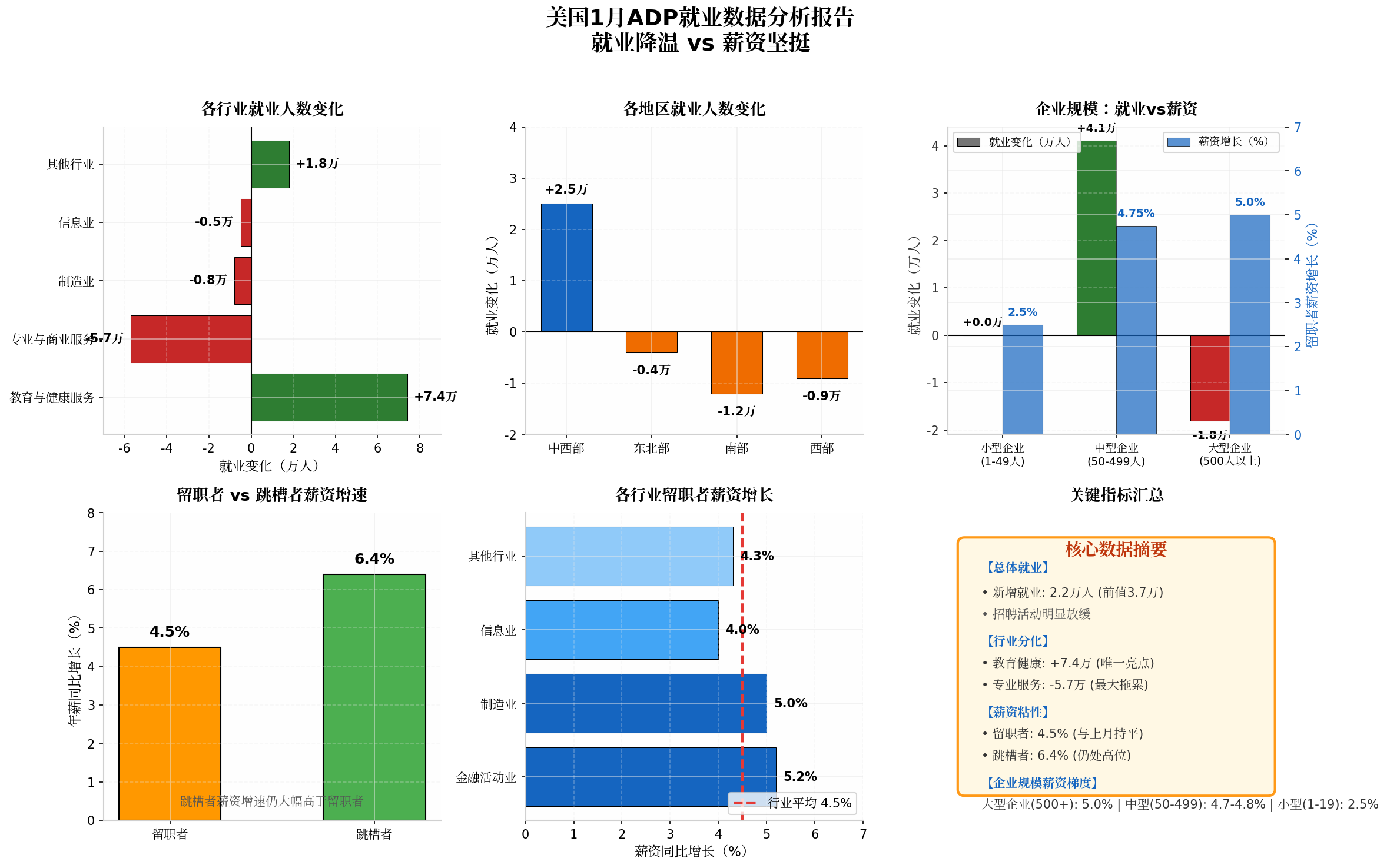
Group 1 - The core point of the article highlights a notable divergence in the U.S. labor market, with a slowdown in job growth but resilient wage increases, indicating structural differences across industries, regions, and company sizes [1][2][3] Group 2 - In January, the U.S. private sector added only 22,000 jobs, a significant slowdown from the revised previous value of 37,000 [2] - The education and health services sector saw a notable increase of 74,000 jobs, while professional and business services, manufacturing, and information sectors experienced declines of 57,000, 8,000, and 5,000 jobs respectively [2] - The Midwest region showed the strongest growth with an increase of 25,000 jobs, while the South and West regions combined saw a decrease of 21,000 jobs [2] - Medium-sized enterprises (50-499 employees) were the only contributors to job growth, adding 41,000 jobs, while large enterprises (500+ employees) cut 18,000 jobs, and small enterprises saw no net growth [2] Group 3 - Wage resilience is evident, with the median annual salary for job stayers increasing by 4.5% year-on-year, maintaining the same growth rate as the previous month [2] - Salary growth for job switchers slightly slowed to 6.4%, but remains significantly higher than for job stayers, indicating ongoing opportunities for wage increases through job changes [2] - Salary growth is relatively balanced across industries, with financial activities and manufacturing leading with increases over 5%, while information sector growth remains above 4% [2] - Company size is a key factor in salary growth, with large enterprises seeing a 5.0% increase for job stayers, medium enterprises at 4.7%-4.8%, and the smallest enterprises (1-19 employees) at only 2.5% [2] Group 4 - Market analysis indicates a shift in the U.S. labor market from a "quantity shortage" to "cost pressure," with persistent wage pressures despite the slowdown in job growth [3] - The rigidity of wages in large enterprises may support core service inflation, leading to mixed market expectations regarding the Federal Reserve's policy direction [3] - Stable wage growth could delay interest rate cuts, while weak job growth raises concerns about economic slowdown [3]
就业大幅放缓!美国1月ADP就业人数增长2.2万人,低于预期4.5万人
Sou Hu Cai Jing· 2026-02-04 13:50
Group 1: Employment Data Overview - The ADP report indicates that the U.S. private sector added only 22,000 jobs in January, significantly below the market expectation of 45,000 and lower than the previous month's figure of 41,000 [1] - The overall employment growth is heavily reliant on the education and healthcare sectors, which contributed 74,000 jobs, highlighting a structural imbalance in job creation [2] Group 2: Sector Performance - The professional and business services sector experienced a significant decline, losing 57,000 jobs, while the manufacturing sector cut 8,000 positions, indicating widespread weakness across various industries [3] - Other sectors showed limited job growth, with financial activities adding 14,000 jobs, construction increasing by 9,000, and trade, transportation, utilities, and leisure and hospitality each contributing only 4,000 jobs [2] Group 3: Wage Growth - Wage growth remained stable, with the year-over-year increase in employee wages holding at 4.5%, suggesting persistent labor cost pressures despite the slowdown in job growth [4] - The upcoming official non-farm payroll report has been delayed due to a partial government shutdown, which may influence future economic policy decisions by the Federal Reserve [4]