
中式连锁餐饮

Search documents
西贝新一轮融资获张勇胡晓明力挺 “真诚形象”待重塑千亿市值梦面临挑战
Chang Jiang Shang Bao· 2026-01-26 00:33
Core Viewpoint - The restaurant brand Xibei, currently facing public scrutiny and operational challenges, has secured new capital support, raising questions about its future and potential recovery strategies [2][4]. Group 1: Financing and Shareholder Changes - Xibei has completed a new round of financing, with significant new shareholders including Zhang Yong, founder of the renowned brand Xinrongji, and Hu Xiaoming, a former partner at Alibaba [2][3]. - The registered capital of Xibei increased from 89.90 million to 101.68 million, reflecting a growth of approximately 13.1% [3]. - Following the financing, the shareholding of founder Jia Guolong has slightly decreased, with his current stake at 26.1644% [3]. Group 2: Operational Challenges - Xibei has closed 102 stores, accounting for 30% of its total outlets, due to a significant drop in customer traffic following a controversy over its use of pre-prepared dishes [5][8]. - The company is projected to incur a loss of 600 million from September 2025 to March 2026 as a result of the ongoing crisis [8]. Group 3: Recovery Strategies - Industry observers suggest that Xibei can recover by increasing transparency regarding its menu items, clearly distinguishing between "pre-prepared" and "freshly made" dishes to regain consumer trust [2][9]. - Jia Guolong has emphasized the need for Xibei to adapt to the internet age and improve its operational management to navigate the current crisis [9][10]. Group 4: Future Aspirations - Xibei aims to achieve a high-quality IPO by 2026, with a target market valuation exceeding 100 billion [10][11]. - The company has set ambitious goals, including generating over 100 billion in revenue by 2030 and becoming a leading brand in the industry [10].
西贝风波倒逼预制菜标准化透明化 “鲜制菜”赛道或爆发
Zheng Quan Shi Bao Wang· 2026-01-21 10:32
Core Viewpoint - The recent public dispute between Xibei's founder Jia Guolong and influencer Luo Yonghao has put the company in a precarious position, facing store closures and increasing losses, yet there remains potential for a turnaround if the company can adapt to consumer needs and undergo significant changes in its operations and brand image [1][2][3]. Company Situation - Xibei is experiencing a crisis, with projected losses exceeding 600 million yuan from September 2025 to March 2026, and plans to close 102 stores, which is 30% of its total [2]. - The company currently operates nearly 400 stores, and the founder emphasizes the urgent need to survive the current crisis [2]. - Despite the challenges, experts believe there is still an opportunity for Xibei to leverage its established supply chain and brand recognition to implement effective strategies such as price reductions and adjustments to food preparation methods [3][4]. Industry Impact - The incident has the potential to transform the pre-prepared food industry, pushing it towards a "mandatory transparency" era, with a significant increase in demand for "fresh-prepared" dishes [1][8]. - The market for fresh-prepared dishes has seen a doubling in orders, indicating a consumer preference for transparency over long-term frozen options [8][9]. - The pre-prepared food sector is expected to undergo a major restructuring, focusing on transparency, health, and quality, moving away from the previous model of long-term frozen products [9][10]. Recommendations for Xibei - Experts suggest that Xibei should focus on two main strategies to reduce losses: enhancing transparency in food preparation and optimizing operations by closing underperforming stores and controlling costs [6][7]. - The company is advised to clearly differentiate between freshly made and pre-prepared items on its menu, potentially adopting a model that allows consumers to choose between different preparation methods [7]. - There is a call for Xibei to open its central kitchen for public viewing to rebuild consumer trust and to retain core handmade dishes while using pre-prepared items as efficiency supplements [7][8]. Future Outlook - The pre-prepared food industry is projected to grow significantly, with estimates suggesting a market size of 617.3 billion yuan by 2025, reflecting a year-on-year growth of 27.3% [11]. - The industry is expected to evolve towards standardization, innovation, and integration across the entire supply chain, driven by policy support and market demand [10][11].
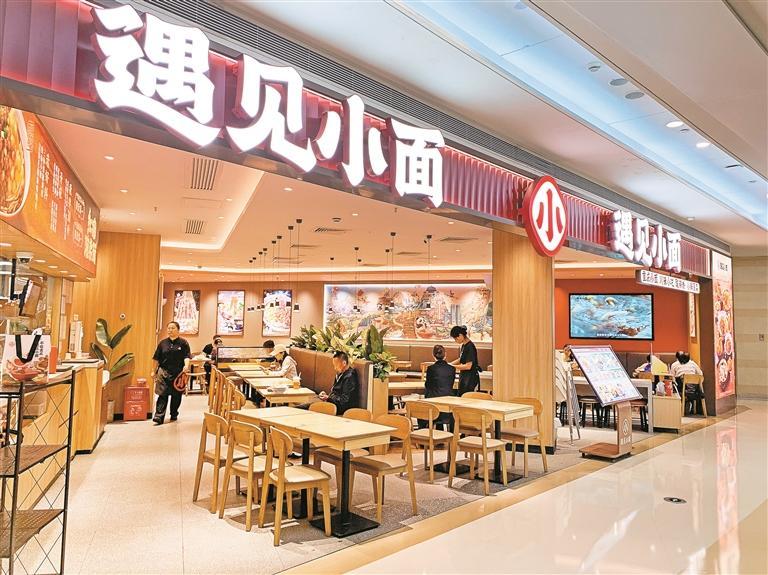
遇见小面上市“遇冷”
Shen Zhen Shang Bao· 2025-12-10 17:54
Core Viewpoint - The restaurant investment landscape is shifting from "scale worship" to "efficiency first" as companies face challenges in maintaining profitability amidst rapid expansion and competitive pressures [4][6][7] Company Overview - "Yujian Xiaomian," known as the "first stock of Chinese noodle restaurants," has seen its revenue grow from 418 million yuan to 1.154 billion yuan over three years, with the number of stores increasing from 170 to 451 [4] - The company went public on the Hong Kong Stock Exchange on December 5, 2023, with an initial share price of 7.04 HKD, but the stock price fell by 27.84% on the first day, closing at 5.08 HKD [4][5] - As of December 9, 2023, the stock price was 5.00 HKD, reflecting a total market capitalization of 3.6 billion HKD [4] Market Position and Performance - According to a report by Frost & Sullivan, Yujian Xiaomian's products, including "Chongqing Noodles," "Red Bowl Wanzha Noodles," and "Golden Bowl Sour and Spicy Noodles," have ranked first in offline sales in the industry for three consecutive years from 2022 to 2024 [6] - The brand has established a significant presence in Shenzhen, opening its 100th store there, following its success in Guangzhou [6] Financial Metrics and Challenges - Despite impressive overall growth, the efficiency of individual stores has been declining, with average spending per customer dropping from approximately 36.1 yuan in 2022 to about 31.3 yuan in the first half of 2025 [6] - The turnover rate has also decreased from 3.8 times per day in 2023 to 3.3 times in the first half of 2025 [6] - The company has adopted a pricing strategy to compete in the market, which has led to concerns about the sustainability of its growth model [6][7] Industry Trends - The restaurant industry has seen a trend of significant capital inflow into niche markets such as noodle shops and snack bars, leading to a wave of expansion dreams [7] - Many brands, including Yujian Xiaomian, have experienced a cycle of "expansion—price reduction—efficiency decline," raising concerns about balancing scale and profitability [7] - The core competitiveness of restaurant enterprises lies in product quality and operational efficiency, which are more critical than the speed of store openings [7]

小菜园20251124
2025-11-25 01:19
Summary of the Conference Call for Xiaocaiyuan Company Overview - **Company**: Xiaocaiyuan - **Industry**: Casual dining restaurant chain in China Key Points and Arguments Revenue Structure Optimization - Xiaocaiyuan plans to reduce the proportion of takeout orders to 35% while increasing dine-in traffic, with dine-in customer flow growth exceeding store growth in October [2][3] - The company has implemented measures such as cash vouchers and free fruit giveaways to enhance dine-in conversion rates, achieving a 21% year-on-year increase in customer flow during the first seven days of the National Day holiday [2][5] Profitability and Financial Metrics - The store profit margin for the first half of 2025 is approximately 20%, an increase from last year's 17%, with a gross margin of 70.5% [2][15] - The company aims to maintain a net profit margin between 12% and 13% while slightly lowering the gross margin through consumer discounts [2][15] Store Expansion Plans - Xiaocaiyuan targets 800 stores by the end of 2025, with a net increase of 200 stores in 2026, aiming for a long-term goal of 3,000 stores primarily in mainland China [2][3][6] - The company plans to focus on regions like Anhui, Jiangsu, and East China for expansion, with a strategy to open stores in shopping malls [6][7] Digital Transformation and Efficiency - The company is advancing its digital transformation, with a new factory in Ma'anshan expected to be operational by mid-2026, serving 3,000 stores with a total investment of 450 million yuan [3][11][12] - Xiaocaiyuan has introduced cooking robots in over 200 stores to standardize flavors and improve operational efficiency, handling 30% of SKUs [3][10] Supply Chain Management - The company emphasizes long-term partnerships with quality suppliers, ensuring high-quality ingredients for its home-style dishes [2][16] - Xiaocaiyuan's supply chain includes centralized factories for standardized production, supported by a self-owned logistics team [17] Market Position and Competition - Xiaocaiyuan positions itself in the casual dining segment, focusing on home-style dishes with a price range of 50-60 yuan, aiming to be the consumer's first choice in this price band [19][22] - The company does not see direct competitors in its niche, as it caters to a broad consumer base with diverse dining scenarios [19][22] Response to Market Challenges - In response to the competitive takeout market, Xiaocaiyuan has adjusted its revenue structure, reducing the takeout proportion and ceasing additional subsidies to enhance dine-in experiences [20][21] - The company aims for a 70:30 ratio of dine-in to takeout in the future to reduce reliance on delivery platforms [21] Employee Management and Incentives - Xiaocaiyuan maintains a high salary structure for its grassroots managers, with salaries exceeding industry averages by over 30%, and offers a promotion path to become shareholders [2][10][9] Future Outlook - The company anticipates continued growth driven by new store openings, with a focus on maintaining profitability and operational efficiency [5][6][8] This summary encapsulates the key insights from the conference call, highlighting Xiaocaiyuan's strategic initiatives, financial performance, and market positioning within the casual dining industry.