体育设施运营

Search documents
大兴打卡新地标!“国门画廊”中的绿茵场建成开放
Xin Lang Cai Jing· 2026-02-08 03:01
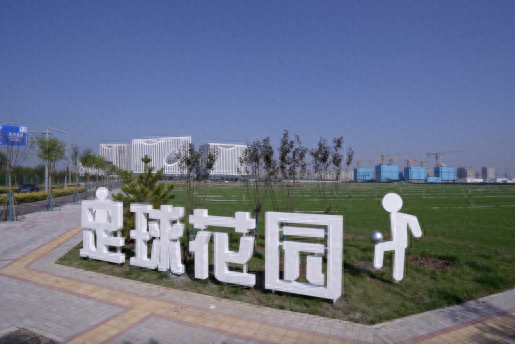
Core Viewpoint - The newly completed football garden in the Daxing area serves as a vibrant new landmark for citizens, integrating sports, leisure, and ecology into a new cultural and sports space [1][3]. Group 1: Project Overview - The football garden is a key functional area of Central Park (Phase I), aligning with the regional positioning of "National Gate Gallery, Era Seal" and focusing on attracting people and promoting industry [3]. - The park is designed to include 10 football fields of various types (11-a-side, 7-a-side, and 5-a-side), along with basketball courts and dedicated parking facilities, catering to both professional events and community recreational needs [5]. Group 2: Operational Details - The northern area of the football garden has opened for trial operation, offering free access to citizens on weekdays and focusing on football training and scheduled events on weekends; the southern area will open gradually to expand the regional sports capacity [7]. - The football garden aims to enhance the quality of sports facilities for residents in the Beijing-Tianjin-Hebei region, promoting a culture of fitness and supporting regional collaborative development [7].

闲置场地“点石成金” 城市里多了这些体育空间
Yang Shi Xin Wen Ke Hu Duan· 2026-01-19 12:42
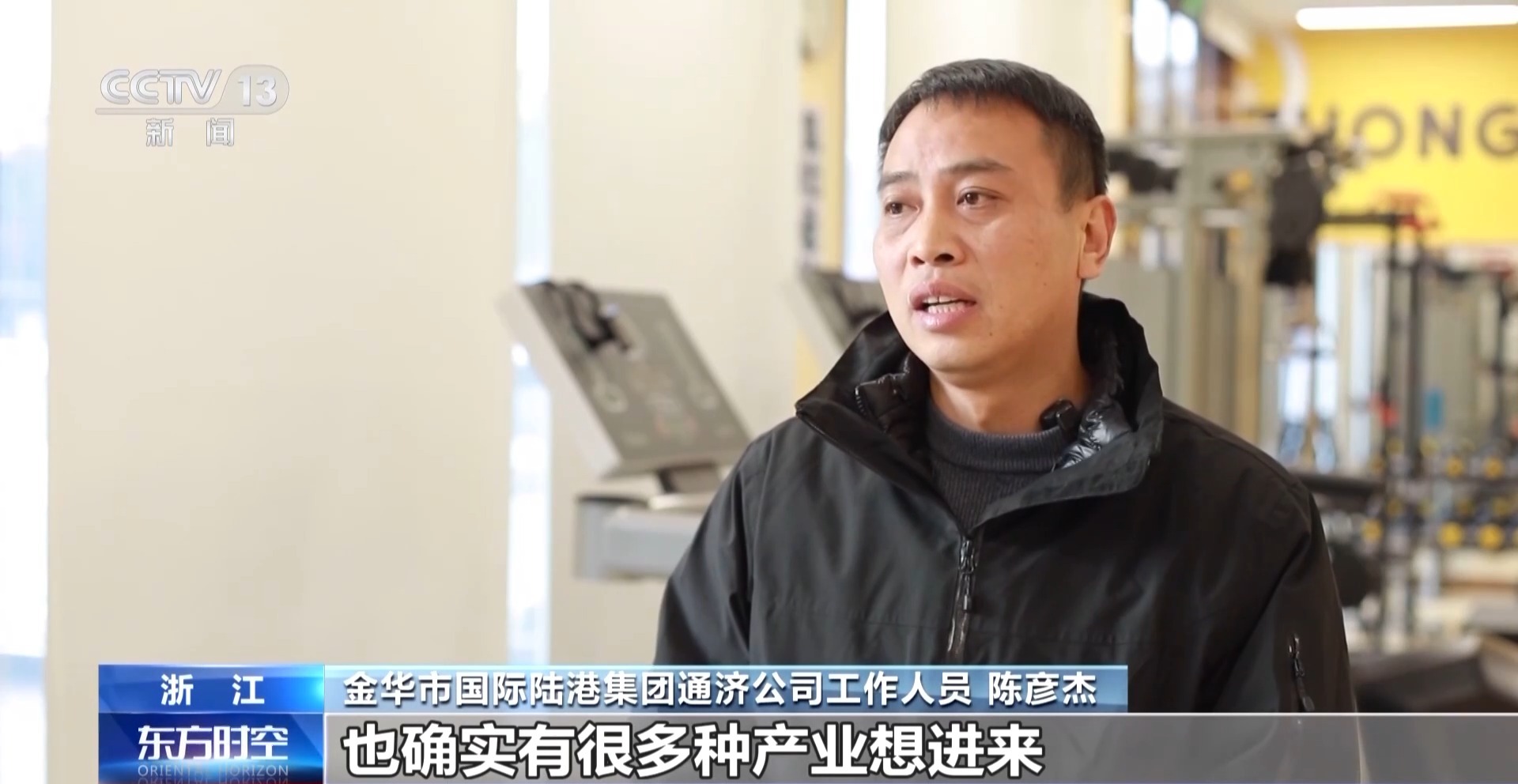
Core Insights - The transformation of long-distance bus stations into sports and recreational facilities reflects changing transportation trends and urban renewal efforts [1][11] - The case of Jinhua's South Bus Station illustrates how repurposing idle spaces can meet community needs, particularly for sports and fitness [5][13] Group 1: Jinhua South Bus Station Transformation - Jinhua South Bus Station, once a key transport hub, has seen a decline in passenger traffic, leading to its repurposing for sports and commercial activities [1][11] - The area within a 1.5 km radius of the station has over 100 residential communities with a population of nearly 200,000, predominantly young people, indicating a strong demand for sports facilities [5] - The local government has implemented temporary measures to change the land use from transportation to commercial and sports purposes, facilitating the station's transformation [7][11] Group 2: Broader Urban Renewal Trends - The trend of converting idle spaces, such as old factories and markets, into sports facilities is gaining traction, reducing construction costs while meeting community demands [20][26] - In Beijing's Fangshan District, a former warehouse has been transformed into a sports center, showcasing the effectiveness of repurposing existing structures for community use [24][26] - Ma'anshan City has successfully converted a second-hand car market into a tennis center, leveraging its geographical advantages to host international events and boost local economy [30][32] Group 3: Community Engagement and Cultural Impact - In Dongming County, Shandong Province, a former brick kiln has been transformed into a sports park with standardized gateball courts, fostering community engagement among the elderly population [38][40] - The integration of local sports culture into urban renewal projects has enhanced community identity and participation, as seen in Dongming's recognition as a "national gateball strong county" [38][42] - The successful hosting of national events in repurposed facilities demonstrates the potential for urban renewal to drive local economic growth and cultural pride [42]
从飞机跑道到竞技赛场
Ren Min Ri Bao· 2025-11-20 22:21
Core Points - The Kai Tak Sports Park is hosting multiple events for the 15th National Games, including bowling, men's handball, rugby sevens, and fencing [1] - The park, which officially opened in March 2023, is the largest comprehensive sports facility in Hong Kong, covering an area of 28 hectares [1] - The park features a main stadium, a sports and arts hall, and a youth sports ground, designed to provide excellent conditions for various competitions [1] Summary by Sections - **Event Hosting**: The Kai Tak Sports Park is the venue with the most events for the 15th National Games, showcasing a vibrant sports atmosphere with mascots welcoming visitors [1] - **Facility Overview**: The park includes advanced features such as a retractable roof and a sophisticated turf maintenance system, ensuring high-quality environments for sporting events [1] - **Historical Context**: The site was previously the location of Kai Tak Airport, which closed in 1998, transforming from a runway into a modern sports arena that reflects the city's historical memory and sports enthusiasm [1]
广州中小学校体育场馆开放预约
Nan Fang Ri Bao Wang Luo Ban· 2025-10-27 09:28
Core Points - Guangzhou is launching a new sports venue reservation system called "Xiaotitong" to meet the public's sports and fitness needs while ensuring the educational functions of schools are maintained [1] - Approximately 800 primary and secondary schools and over 1,300 sports venues are included in the initial phase of the reservation system [1] Group 1 - The opening of school sports venues to the public is contingent upon maintaining the order of educational activities and ensuring the safety of students and school facilities [1] - Different districts and schools in Guangzhou will have varying conditions regarding the range of open venues, the number of people allowed, opening hours, and potential fees [1] - The Guangzhou Education Bureau has indicated that while some schools may initially offer free access during trial periods, fees may be introduced later due to facility wear and management costs [1] Group 2 - The ongoing upgrades and renovations of school sports facilities in Guangzhou will lead to the gradual introduction of more school sports venues available for public use [1]
违规处置建筑垃圾,大连体育产业集团大连国际网球中心被罚
Qi Lu Wan Bao· 2025-09-04 06:55
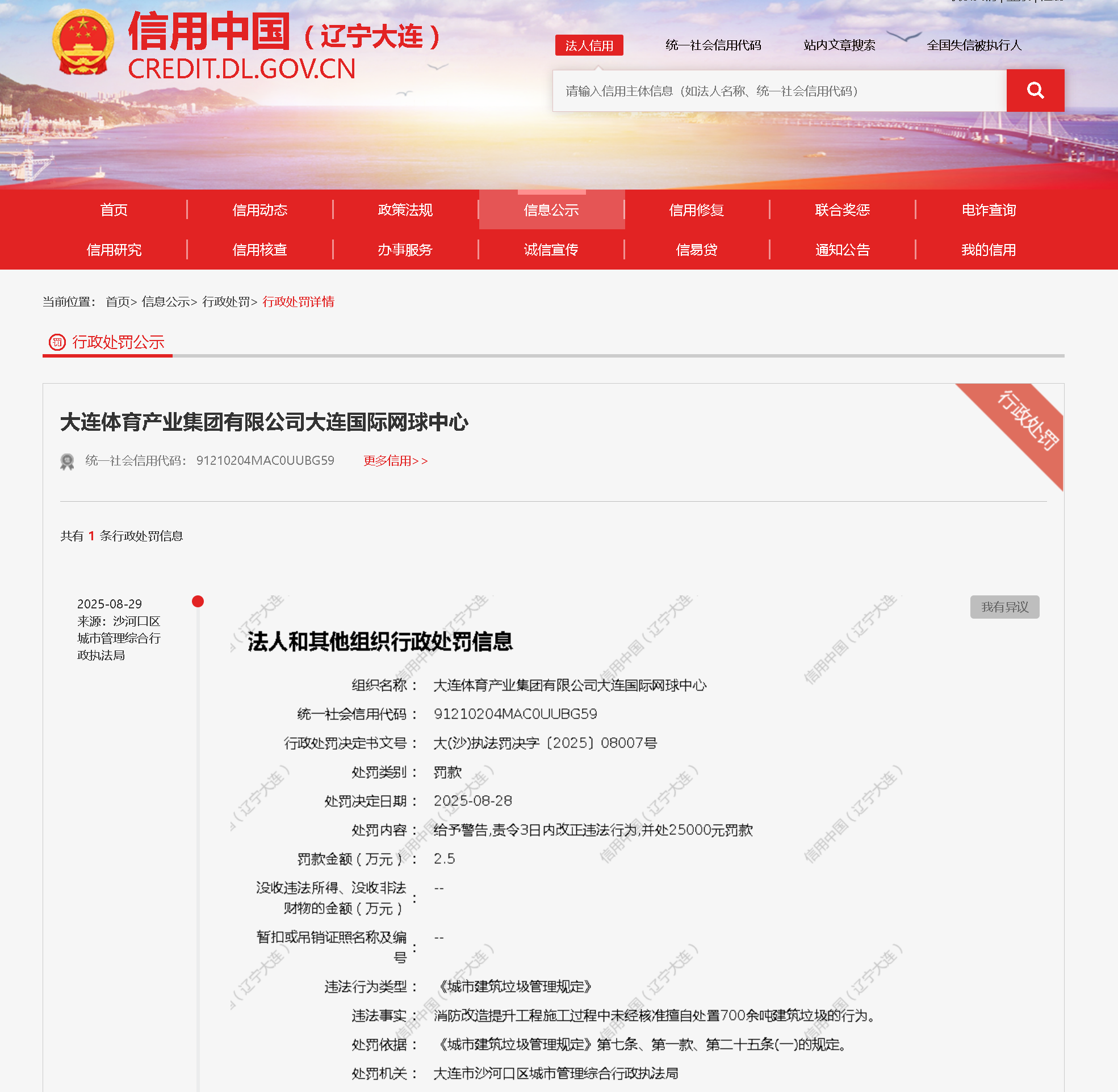
Core Points - Dalian Sports Industry Group Co., Ltd. was fined 25,000 yuan for illegally disposing of over 700 tons of construction waste during the fire safety renovation project, violating the Urban Construction Waste Management Regulations [1] Group 1 - The company was penalized by the Dalian Shahekou District Urban Management Comprehensive Administrative Law Enforcement Bureau [1] - The illegal activity involved unauthorized handling of construction waste during a renovation project [1] - The fine imposed was based on the violation of the Urban Construction Waste Management Regulations [1]
场馆不“放假”,运动不断档(体谈)
Ren Min Ri Bao· 2025-08-24 22:40
Core Insights - The opening of campus sports facilities during holidays addresses the demand for physical activity among children and teenagers while extending quality resources to the community [1][2] - Balancing resource sharing with campus management is essential, as simply opening facilities is not a long-term solution [1] Group 1: Resource Sharing and Community Engagement - Many schools and colleges have opened their sports facilities to the public, providing opportunities for local residents to engage in physical activities [1] - In Kunming, 82 primary and secondary schools opened their sports facilities this summer, implementing measures like facial recognition and physical zoning to ensure safety while meeting community fitness needs [1] Group 2: Management and Operational Efficiency - In Hangzhou, schools are collaborating with professional operating companies to manage the safety responsibilities of open sports facilities, which alleviates management pressure on schools and enhances facility utilization [2] - The call for continuous access to sports facilities reflects a broader demand for uninterrupted physical activity, necessitating improvements in the public fitness service system [2]
唤醒更多“沉睡”的校园体育场馆
Jing Ji Ri Bao· 2025-08-22 00:11
Core Viewpoint - The article highlights the initiative of Jiangsu Province and 13 cities to open public sports venues for free to citizens, promoting fitness and addressing the increasing demand for sports facilities amid the growing popularity of sports events like the "Su Super" football league [1] Group 1: Public Sports Facilities - Public sports venues in Jiangsu Province are now free for citizens, coinciding with the "National Fitness Day" activities [1] - The construction of sports infrastructure has been enhanced, with a goal of reaching an average of 3 square meters of sports area per person nationwide by 2024 [1] - Despite improvements, some cities still face structural shortages in public sports facilities, leading to challenges for citizens seeking available sports venues [1] Group 2: School Sports Facilities - The closed management of school sports venues poses challenges, but opening them can optimize resource utilization and enhance public fitness services [2] - A top-level design is necessary to address the reluctance of schools to open facilities, requiring clear planning and coordination among educational and sports departments [2] - Financial support for venue opening should be included in stable budget arrangements, and communities should assist in managing public access [2] Group 3: Technological Empowerment - The conflict between educational use and public access to school sports venues necessitates the use of advanced technologies like 5G and big data for real-time monitoring and management [3] - Implementing digital management for venue usage, including smart reservations and payment systems, can enhance efficiency and safety [3] - A collaborative approach involving government, schools, and society is essential for the sustainable opening of school sports venues, transforming them into vibrant community resources [3]
十年荒草地变身全民健身乐园——一座废弃体育场的“重生密码”
Xin Hua She· 2025-06-06 06:28
Core Insights - The transformation of a neglected sports field into a community fitness hub exemplifies the successful implementation of the National Fitness Plan (2021-2025) in grassroots settings [1][2] - The project involved collaboration between state-owned enterprises, local schools, and community residents, showcasing a model for community-driven sports facility management [2][3] Group 1: Background and Initial Conditions - The sports field, originally built in the 1990s, fell into disrepair after the enterprise's restructuring, leading to its use for unauthorized activities and complaints from residents [1] - Prior to the transformation, the area was characterized by overgrown weeds and was often used for funerary purposes, causing significant community dissatisfaction [1] Group 2: Transformation Process - The revitalization began in 2021, driven by central environmental inspections and community service initiatives, which led to the removal of unauthorized structures and the introduction of new sports facilities [2] - Funding from state-owned enterprise retirement management subsidies facilitated the installation of a synthetic track, badminton, and volleyball courts, along with fitness equipment and seating [2] Group 3: Community Engagement and Collaboration - The local school, Yudong Middle School, expressed a need for a dedicated training space for its expanding sports teams, which aligned with community fitness goals [2] - A collaborative agreement was reached where the state-owned enterprise provided free access to the sports field, the school invested in a professional soccer field, and the community formed a volunteer management team [2] Group 4: Current Impact and Future Plans - The sports field now experiences high usage, with community sports events quickly filling up, indicating a growing enthusiasm for fitness among residents [3] - Plans are underway to integrate a reservation system linked to the Chongqing "National Fitness Cloud Platform," enhancing accessibility and data management for community sports activities [3]
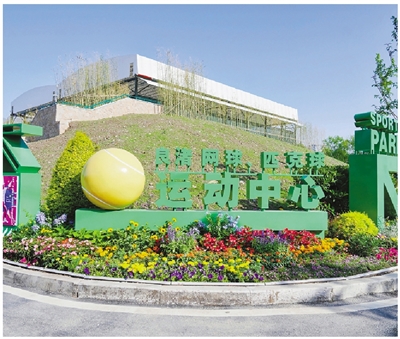
良渚网球、匹克球运动中心亮相大城北
Hang Zhou Ri Bao· 2025-05-12 03:06
Core Insights - The Liangzhu Tennis and Pickleball Sports Center has officially opened on May 10, covering an area of approximately 37 acres, serving as a new sports landmark in the northern part of the city [3] - The center features 6 standard tennis courts (4 with movable roofs) and 12 standard pickleball courts, equipped with facilities such as rest areas and changing rooms, capable of accommodating over 70 people for various national-level events [3] - The transformation of the area from a temporary construction waste disposal site to a modern sports center was completed in two months, involving the removal of 110,000 cubic meters of waste [3] Economic Impact - The introduction of a professional operating team is expected to generate an annual income of 300,000 yuan for the village collective, while also upgrading surrounding industries such as dining and accommodation [4] - The sports center is anticipated to become a new engine for rural development, with ongoing events and activities planned to enhance local economic growth [4] Sports Infrastructure Development - Liangzhu Street has been actively promoting the "Sports Strong Street" initiative, leveraging sports to enhance urban quality and drive environmental governance, livelihood improvement, and economic transformation [4] - The New Port Village has hosted nearly 700 provincial, municipal, and national-level events, establishing itself as a well-known "internet celebrity sports village" [4] - The area has achieved full coverage of village sports facilities, creating a "15-minute fitness circle" for residents to access professional sports experiences conveniently [4] Future Plans - Liangzhu Street is planning to add 36 grassroots sports venues this year, aiming to create a large sports aggregation area centered around New Port Village [5] - The strategy emphasizes systematic upgrades rather than isolated improvements, with plans to deepen the integration of "sports + cultural experiences" and "sports + rural study" to promote resource sharing and collaborative development [5] - The goal is to establish a national benchmark for rural sports cluster development, contributing to the revitalization of rural areas through sports [5]