内容创作与分发

Search documents
半佛怕爆款,三表拒AI,冰汝谢川普
乱翻书· 2026-01-05 14:18
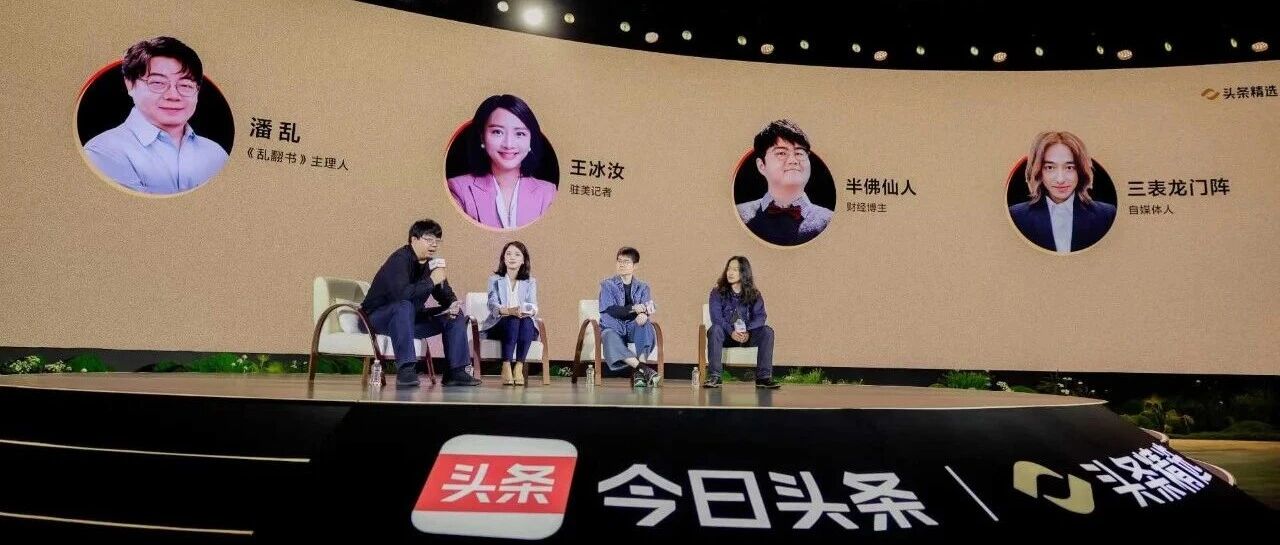
Core Viewpoint - The article discusses the challenges and philosophies of content creators in the age of short videos and AI, highlighting the tension between traditional text-based content and emerging technologies [1][3]. Group 1: Creator Perspectives - Half Buddha expresses fear of viral content, viewing influence as a double-edged sword that can lead to backlash [3]. - Wang Bingru attributes her success to the continuous news cycle surrounding Trump, which provides her with a steady stream of content [3]. - Sanbiao Longmen's approach is to keep his content within 1500 words, valuing the human touch over AI-generated perfection [3]. Group 2: The Role of Text in Content Creation - The significance of text in content creation is emphasized, with creators reflecting on their journeys starting from written articles to various media formats [8][10]. - Wang Bingru shares a personal story about her first impactful article, which highlights the importance of storytelling in text [12]. - Half Buddha believes all forms of content ultimately stem from text, regardless of the medium [10]. Group 3: Anxiety Over Viral Content - The anxiety surrounding the creation of viral content is discussed, with creators acknowledging the unpredictability of achieving "explosive" success [15][16]. - Wang Bingru admits to initially being obsessed with metrics but has since adopted a more balanced perspective on content creation [17]. - Half Buddha warns that the pursuit of influence can lead to significant risks, as seen in the experiences of public figures [17]. Group 4: AI's Impact on Content Creation - The creators share their views on AI, with Wang Bingru using it as a tool for error-checking and brainstorming [31]. - Half Buddha sees AI as a powerful search engine but emphasizes that it cannot replace the creative process [32]. - Sanbiao Longmen intentionally avoids using AI to maintain a human touch in his writing [36]. Group 5: Future of Text-Based Content - The discussion reflects on the evolving landscape of content creation, with AI becoming a mainstream trend among creators [48]. - Wang Bingru anticipates a busy year ahead with significant events that will drive her content [54]. - Half Buddha maintains that the essence of content remains rooted in text, regardless of the medium [54].

文章伪原创ai
Sou Hu Cai Jing· 2025-12-30 00:13
Group 1 - The core viewpoint of the article highlights the profound transformation in the content creation field due to the rapid development of artificial intelligence technology, with tools like Youcaiyun AI Content Factory pushing "pseudo-original" articles into a new stage of industrialization and automation [1] - These platforms claim to automatically gather information from the internet, filter, process, and rewrite it, aiming to "reduce costs and increase efficiency" for operators, which represents a technological and commercial advancement [1] Group 2 - However, this model raises significant concerns regarding content ecology, information quality, and the essence of creation, as it exacerbates content homogenization and the proliferation of information waste [3] - The system's reliance on keyword-based mass collection and reorganization leads to outputs that are essentially rearrangements and synonym replacements of existing information, drowning out truly original and insightful viewpoints [3][4] - This reliance on AI-generated pseudo-original content undermines the foundational values of creativity, thoughtfulness, and humanistic value in content creation [4][5] Group 3 - Genuine creation stems from human experience observation, thought, and unique expression, while the operation logic of pseudo-original AI focuses on optimizing "originality" scores to cater to algorithm recommendations and gain traffic, rather than conveying true insights or emotional resonance [5] - Over time, this could lead to a degradation of content creation into mere technical operations, where creators become mere "supervisors" on a traffic assembly line, potentially harming cultural innovation and knowledge accumulation [5] Group 4 - Despite attempts to address copyright issues through features like "content fingerprinting" and "source URLs," the underlying source of these systems remains the hard work of original authors, raising legal and ethical concerns [6] - The industrialized production of content through "take-and-use" practices lacks respect for original creators and undermines the fairness principles of a healthy creative ecosystem [6] Group 5 - From a user experience and trust perspective, AI-generated pseudo-original content often exhibits inconsistent quality, leading to awkward sentence structures and logical disconnections, which diminishes the reading experience [7] - When content shifts from serving readers and creating value to merely attracting clicks, it strays from its original purpose of communication [7] - While tools like Youcaiyun AI Content Factory may have value in specific scenarios as efficiency tools, their potential negative impacts should not be overlooked, reflecting the impatience and shortcut mentality in the content industry driven by traffic economics [7]