乱翻书

Search documents
长尾的复兴
乱翻书· 2026-03-26 16:01
2012年我写过一篇文章叫《给3D打印泼点冷水》,核心逻辑是按需定制虽然是终极理想,但在制造业里只是旁支末流,充其量算业余爱好的复 兴。 过去十几年我们讲的全是工业化大生产的故事,要听到大机器的轰隆声。哪怕内容产业也一样,做博主的都希望有尽可能多的听众,积累到足够 大的规模才有商业价值。不管任何领域的创业者,BP第一页写的都是市场规模有多大、团队多齐整。逻辑和做不做新闻是一样的,所有人都在 往头部挤、往大众走。 这个判断背后有一套更大的逻辑。我之前跟豆瓣的同学聊信息流的演变,豆瓣是长尾理论的忠实信徒,他提到一个很关键的观察:大家技术都不 差,但从最后各自的发展结果来看,跟今日头条对比最重要的差异就是做不做新闻。只有新闻是大众产品,其他都不是。豆瓣算亚文化,对书影 音特别有兴趣的就那么一小撮人,但新闻几乎是全用户的。你决定做新闻,就是往更大的用户群走;不做新闻,就永远在垂直用户群里打转。 这个道理放到制造业也成立。3D打印能造的东西天然就是长尾的、小众的、垂直的,它不是新闻,不是大众产品。市场方向决定一件事情到底 能做多大,技术需要对的场景,力量才能放到最大。所以当年我觉得3D打印的天花板很低。 但今天我想把这 ...


这次,钉钉领先半目
乱翻书· 2026-03-20 02:59
发布会后问无招为什么回归,是想要再做一遍钉钉吗? 他说是看到了全球版的钉钉新机会来了,因为原点变了,互联网执行的主体变成了 AI。 理由是:悟空这套东西,不依赖于钉钉本体。你用飞书也行,用企业微信也行,用Teams也行,悟空是独立运行的AI执行环境,不应该被"钉钉"这个名 字圈住。如果叫钉钉,不用钉钉的用户会觉得自己要切换整套系统,反而形成障碍。 对比另一个兄弟的故事:原本阿里的 AI 战略是夸克做C端钉钉做B端,但明显从年底阿里C端重点变成了千问APP,夸克团队也改名叫了千问。钉钉改 叫悟空,是无招主动提的,他觉得悟空比钉钉这个名字更能承载他想做的事。 这或许能反映一个问题: 无招不是要做一个更好的钉钉,也不是AI重构,而是思考AI时代钉钉应该长成什么样,一个 AI 时代的工作平台应该长什么样?听起来像绕口令,3 年 前飞书 7.0 版本的时候我也不断问齐俊元,面向 AI,是飞书 + AI,还是 AI 重构飞书?飞书优先 or AI 优先? 这两种说法之间,有一道根本性的分野: 前者是在旧地基上建新房子,后者是先想清楚这个时代需要什么样的房子,再决定地基怎么打。 3月16日,钉钉发布会的前一天,阿里巴巴宣布 ...

腾讯想复刻2015,阿里想跳过它
乱翻书· 2026-02-02 11:24
Core Viewpoint - The article emphasizes that the upcoming Spring Festival in 2026 will witness unprecedented competition in the Chinese internet sector, particularly with Alibaba's Qianwen App launching a "Spring Festival Treat Plan" with a budget of 30 billion yuan for free consumption, aiming to reshape consumer habits in the AI era [1][4][26]. Group 1: Investment and Strategy - Alibaba's 30 billion yuan investment is the highest among major companies for this year's Spring Festival AI competition and marks the largest investment in a Spring Festival activity in Alibaba's history [4]. - Qianwen's strategy focuses on "treating" rather than simply distributing cash, aiming to integrate various services within Alibaba's ecosystem, such as movie tickets, food delivery, and travel arrangements, into a single platform [5][7][15]. - The initiative is seen as a significant move to establish Qianwen as a comprehensive entry point for Alibaba's future services, reflecting a shift from merely adding features to fundamentally changing the way consumers interact with services [10][17]. Group 2: Consumer Behavior and AI Integration - The article highlights a shift in consumer behavior, where the traditional process of searching and comparing across multiple apps is being replaced by a more streamlined interaction with AI, allowing for a more direct and efficient consumer experience [24][26]. - The integration of AI into daily life is expected to redefine the starting point of consumer actions, moving from platform-based interactions to AI-driven processes, which could lead to a significant transformation in the commercial landscape [22][25]. - The competition is not just about cash distribution but about who can effectively change consumer defaults and behaviors, positioning themselves as the primary interface for future transactions [27][28].


为什么微信不直接在群里加AI?
乱翻书· 2026-01-28 03:54
Group 1 - The core competition during the 2026 Spring Festival is expected to be the most intense in the history of China's internet industry, with major players like ByteDance, Baidu, and Alibaba heavily investing in AI and cash giveaways [1][4][29] - ByteDance's Volcano Engine has become the exclusive AI cloud partner for the Spring Festival Gala, while Baidu announced a distribution of 500 million cash red envelopes through its app [1][4] - Tencent is making a notable return to the cash giveaway scene with its Yuanbao app, aiming to replicate the success of WeChat red envelopes from 11 years ago [4][29] Group 2 - Yuanbao is launching a Spring Festival event on February 1, distributing 1 billion cash red envelopes, with a focus on user engagement through AI features [2][4] - Tencent's Yuanbao Pai aims to create a social space where AI interacts with users, moving beyond traditional efficiency tools to become part of social interactions [6][15] - The design of Yuanbao Pai allows for group activities and AI interactions, differentiating it from existing products like WeChat and QQ by focusing on scene-based socialization rather than familiar relationships [17][24] Group 3 - The competition among companies is not just about technology but also about capturing user attention and creating unique social experiences that keep users engaged [28][29] - Companies like ByteDance and Alibaba are investing heavily to establish a foothold in the market before technology paths are fully defined, indicating a sense of urgency in their strategies [28][29] - The 2026 Spring Festival AI battle is seen as a pivotal moment, similar to the short video industry's explosive growth in 2018, with each company betting on its unique approach to AI and user engagement [30]


千问:阿里第二次“无线战争”
乱翻书· 2026-01-15 05:55
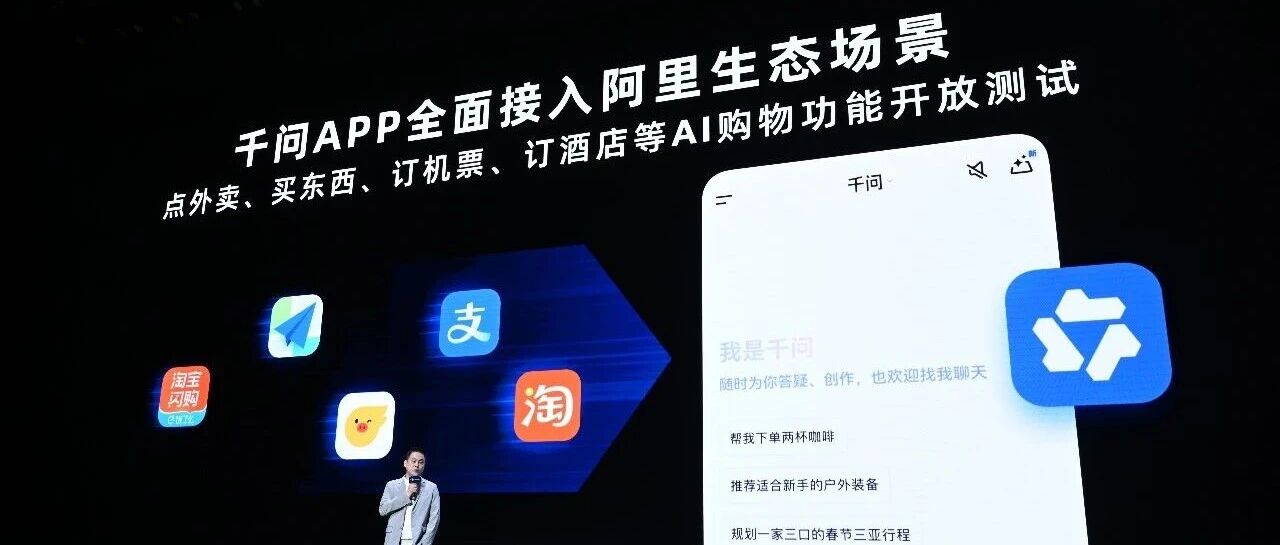
Core Viewpoint - The article discusses the evolution of user interaction with technology, particularly the transition from mobile-centric to AI-centric paradigms, exemplified by the shift from a humorous iPhone call in 2007 to the practical use of AI in everyday tasks by 2026 [5][12]. Group 1: Historical Context - The first iPhone call made by Steve Jobs in 2007 showcased the revolutionary communication capabilities of smartphones, marking the beginning of a new era in mobile technology [3]. - The act of ordering coffee has transformed in the AI era, now involving complex processes like semantic understanding and automated task execution, highlighting AI's capabilities [4]. Group 2: AI as a New Paradigm - The shift from mobile to AI represents a fundamental change in how digital experiences are designed, with a focus on future-oriented product development rather than merely optimizing existing services [7][12]. - The emergence of AI as a new entry point in technology suggests a limited window for companies to adapt and innovate [7]. Group 3: Competitive Strategies - Companies like Douyin and Pinduoduo utilize a strategy of focusing on a limited number of high-performing products to maximize user satisfaction, contrasting with traditional platforms that offer extensive choices [14]. - The article suggests that AI can streamline decision-making by providing users with optimal solutions rather than overwhelming them with options, similar to the strategies employed by Pinduoduo and Douyin [17][18]. Group 4: AI Product Development - Alibaba's Qianwen app exemplifies a comprehensive approach to AI, integrating various functionalities and resources to create a robust user experience [15]. - The app's development strategy includes rapid iterations and a focus on practical applications, such as AI-generated content and task automation, to engage users effectively [21]. Group 5: Future Implications - The article posits that AI's ability to generate content and perform tasks could redefine user interactions, moving away from reliance on user-generated content to direct solutions [19]. - The success of AI products will depend on the capabilities of underlying models, with Qianwen's flagship model being one of the most advanced currently available [18].
对话光帆科技董红光:当耳机长出眼睛, “说一下”开始取代“点十下”
乱翻书· 2026-01-12 13:11
Core Viewpoint - The article discusses the innovative approach of Guangfan Technology in developing AI headphones instead of smart glasses, emphasizing the practicality and user acceptance of the former [1][4][6]. Group 1: Why Headphones Instead of Glasses - Guangfan Technology's founder, Dong Hongguang, argues that while smart glasses are popular, they face significant challenges such as weight, display technology, and user acceptance costs, which headphones do not [4][6]. - Headphones are already a mature wearable category, and adding AI capabilities to them reduces the cost of user adoption, similar to how the iPhone built on existing mobile phone functionality [4][6]. - The choice of headphones allows for a more intuitive interaction model, as they are positioned close to the mouth and ears, facilitating voice commands and audio feedback [6][10]. Group 2: Multi-Device Interaction - The AI system is designed to operate with a combination of headphones and a smartwatch, which helps to mitigate the limitations of glasses while enhancing functionality through additional sensors and interaction methods [10][12]. - This multi-device approach allows for a more practical solution, distributing tasks across devices to improve user experience and reduce technical challenges associated with integrating all functions into a single device [12][18]. Group 3: AI Interaction Evolution - The article highlights a shift from traditional graphical interfaces to intention-based interactions, where users can express their needs directly, and the AI manages the execution [30][34]. - This proactive interaction model contrasts with the passive, tool-like nature of smartphone interactions, aiming to create a seamless experience where users do not have to think about the technology [30][34]. Group 4: User Understanding and Memory - Guangfan Technology emphasizes the importance of building a user profile through accumulated interactions, which allows the AI to provide personalized experiences [41][43]. - The memory system is cloud-based, enabling users to retain their preferences and experiences across devices, enhancing the continuity of service [44][46]. Group 5: Value of General-Purpose Hardware - The article distinguishes between specialized and general-purpose AI hardware, arguing that the latter is essential for creating a comprehensive AI assistant capable of integrating various applications and services [53][54]. - Guangfan's operating system is designed to support a wide range of AI functionalities, making it adaptable for future applications beyond just headphones [54][55]. Group 6: Addressing Hardware Longevity - Guangfan's strategy to prevent hardware from becoming obsolete involves integrating AI capabilities into already popular devices like headphones and smartwatches, ensuring they remain useful even without AI features [57][59]. - The company aims to balance between high-frequency and low-frequency use cases, ensuring that users find value in the devices regularly, which keeps them engaged with the AI functionalities [59][60].

复盘高德扫街榜100天
乱翻书· 2026-01-07 12:45
Core Viewpoint - Gaode has launched the "Gaode Street Ranking 2026" with three major upgrades, including the world's first "Flying Street View," a dynamic seasonal service ranking, and new social features for friends and personal rankings [1] User Growth and Engagement - In just 100 days since its launch, the Gaode Street Ranking has achieved a user base of over 660 million, contributing to a monthly active user increase of 46 million, bringing the total to 996 million, nearing the 1 billion mark [3] - The platform has attracted 860,000 new merchants, with order volume increasing by over 330% and revenue rising by over 270% [3] Unique Positioning in Local and Travel Scenarios - Gaode's unique positioning is highlighted by its ability to cater to both local users and travelers, with a focus on simplifying decision-making in unfamiliar locations [5] - The platform addresses the need for quick and efficient decision-making for users in unfamiliar cities, providing structured rankings that help users make informed choices without extensive reading [5][6] Trust and Credibility in Local Services - Gaode aims to tackle the trust crisis in local services, as evidenced by rising complaints about false advertising and increasing marketing costs for small businesses [11] - The Gaode Street Ranking leverages behavioral data to differentiate between "tourist navigation" and "local repurchase," ensuring that only genuinely popular local establishments are highlighted [6][8] Innovative Ranking Mechanism - The ranking system is based on "foot votes," which rely on actual user behaviors rather than subjective ratings, making it less susceptible to manipulation [15] - Gaode's data-driven approach includes metrics such as the distance users are willing to travel, frequency of visits, and the diversity of the customer base [15] Social Features and Personalization - The introduction of social features allows users to see friends' check-ins and create personalized lists, enhancing the trust factor through social connections [16][21] - Gaode is also launching a "Detective Creator Program" to engage users in sharing their favorite spots, further enriching the platform's content [21] Comprehensive Service Offerings - Gaode has expanded its rankings beyond dining to include various categories such as hotels, attractions, and seasonal activities, with over 6,553 dynamic rankings available [26][27] - The platform's AI capabilities allow for real-time updates based on seasonal and weather changes, catering to a wide range of user interests [26] Commitment to Transparency - Gaode has committed to keeping the Street Ranking free from commercialization, ensuring that rankings are based on genuine user choices rather than paid promotions [28][29] Advanced Technology Integration - The introduction of "Flying Street View" aims to enhance user trust by providing a realistic view of locations, addressing concerns about the authenticity of online ratings [30][33] - This feature allows users to explore areas from an aerial perspective and even enter establishments virtually, improving the overall user experience [30][33] Vision for the Future - Gaode's long-term goal is to establish a credit system for offline services, similar to how Alipay functions for online transactions, by using real behavioral data to replace manipulated review systems [36][37]

中文互联网“build in public”的新实验,为什么会是AMA?
乱翻书· 2026-01-06 11:29
Core Viewpoint - The article discusses the resurgence of the AMA (Ask Me Anything) format on Xiaohongshu, highlighting its unique characteristics compared to platforms like Reddit and Weibo, and its appeal to a diverse range of professionals, particularly in the AI sector [4][5][9]. Group 1: Unique Characteristics of Xiaohongshu's AMA - Xiaohongshu's AMA format fosters a friendly and open atmosphere, contrasting with Reddit's more confrontational approach, where anonymity can lead to aggressive questioning [7][8]. - The platform's distribution model promotes equal visibility for creators, allowing even those with fewer followers to reach targeted audiences effectively [9]. - The lightweight design of Xiaohongshu enables users to engage easily, encouraging participation from non-professional content creators [11]. Group 2: AI Community's Engagement - The AI community's participation in AMAs reflects a cultural shift towards openness and sharing, driven by the industry's foundational values of open-source collaboration [12][13]. - The concept of "Build in Public" resonates with the AI sector, where professionals are willing to share their development processes and challenges rather than just polished results [15][16]. - The AMA format allows for genuine interactions, where participants can ask meaningful questions that might not be addressed in traditional settings, enhancing the learning experience for both askers and responders [19][20]. Group 3: Expansion and Impact of AMAs - The spread of AMAs on Xiaohongshu has transitioned from niche AI discussions to broader engagement across various professional fields, indicating a shift in the platform's user demographics [24]. - This evolution signifies Xiaohongshu's transformation into a hub for professional knowledge sharing, moving beyond its original lifestyle focus [27]. - The platform's ability to connect diverse professionals fosters a sense of community and shared experience, enriching the dialogue around industry-specific challenges and insights [25][28].

半佛怕爆款,三表拒AI,冰汝谢川普
乱翻书· 2026-01-05 14:18
Core Viewpoint - The article discusses the challenges and philosophies of content creators in the age of short videos and AI, highlighting the tension between traditional text-based content and emerging technologies [1][3]. Group 1: Creator Perspectives - Half Buddha expresses fear of viral content, viewing influence as a double-edged sword that can lead to backlash [3]. - Wang Bingru attributes her success to the continuous news cycle surrounding Trump, which provides her with a steady stream of content [3]. - Sanbiao Longmen's approach is to keep his content within 1500 words, valuing the human touch over AI-generated perfection [3]. Group 2: The Role of Text in Content Creation - The significance of text in content creation is emphasized, with creators reflecting on their journeys starting from written articles to various media formats [8][10]. - Wang Bingru shares a personal story about her first impactful article, which highlights the importance of storytelling in text [12]. - Half Buddha believes all forms of content ultimately stem from text, regardless of the medium [10]. Group 3: Anxiety Over Viral Content - The anxiety surrounding the creation of viral content is discussed, with creators acknowledging the unpredictability of achieving "explosive" success [15][16]. - Wang Bingru admits to initially being obsessed with metrics but has since adopted a more balanced perspective on content creation [17]. - Half Buddha warns that the pursuit of influence can lead to significant risks, as seen in the experiences of public figures [17]. Group 4: AI's Impact on Content Creation - The creators share their views on AI, with Wang Bingru using it as a tool for error-checking and brainstorming [31]. - Half Buddha sees AI as a powerful search engine but emphasizes that it cannot replace the creative process [32]. - Sanbiao Longmen intentionally avoids using AI to maintain a human touch in his writing [36]. Group 5: Future of Text-Based Content - The discussion reflects on the evolving landscape of content creation, with AI becoming a mainstream trend among creators [48]. - Wang Bingru anticipates a busy year ahead with significant events that will drive her content [54]. - Half Buddha maintains that the essence of content remains rooted in text, regardless of the medium [54].

视频播客不是内容升级,更像是一场分发补偿
乱翻书· 2025-12-29 10:25
Core Viewpoint - The article emphasizes the necessity for creators to transition from traditional audio podcasts to video podcasts, framing the latter as a more versatile and engaging format that aligns with current media consumption trends [2]. Group 1: The Shift to Video Podcasts - Creators are increasingly referring to their work as "shows" rather than "podcasts," reflecting a broader trend towards video content across platforms like YouTube [4][6]. - The integration of various media platforms has led to a convergence where video podcasts are becoming a common format, with platforms like Tencent Video and Douyin embracing this trend [8][10]. Group 2: The Importance of YouTube - In the U.S., not engaging with YouTube is seen as detrimental for podcasters, as it serves as the primary discovery platform for podcasts due to its powerful recommendation algorithms [12][16]. - YouTube's ability to revive older content and its dominance in the living room viewing experience provide significant advantages for video podcasts over traditional audio formats [16][17]. Group 3: The Chinese Market Dynamics - The podcast discovery mechanism in China is more fragmented, with users primarily discovering new podcasts through platforms like Xiaoyuzhou and Douyin, rather than traditional podcast apps [19]. - Short video clips serve as a means of promoting longer video podcasts, creating a saturation effect that enhances visibility and engagement [21]. Group 4: Cost Considerations for Creators - Concerns about the high costs of video production are prevalent among creators, but the article argues that the marginal cost of converting existing content into video is relatively low compared to the potential audience reach [23][25]. - The analogy of a singer producing a music video for a hit song illustrates the importance of video content in maximizing audience engagement and visibility [26]. Group 5: Content Value and Distribution - The essence of video podcasts lies in the distribution of high-quality content, which should be presented in a way that resonates with a broader audience [28][30]. - The format of the content—whether audio or video—should be left to the audience's preference, emphasizing the importance of accessibility and choice [31].