
农业装备

Search documents
宏伟蓝图已绘就 奋楫扬帆正当时
Xin Lang Cai Jing· 2026-02-24 18:20
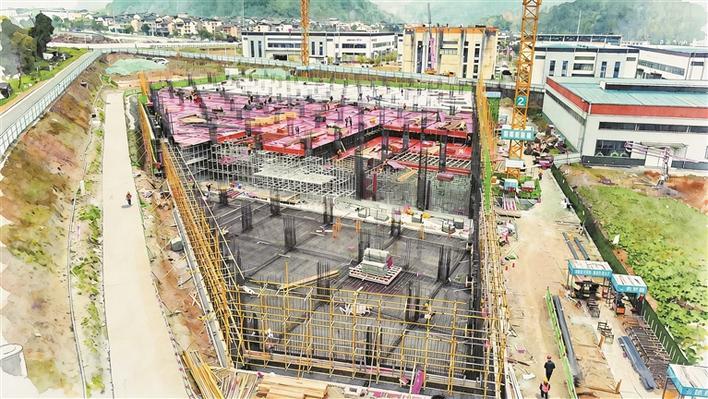
Group 1 - The agricultural sector in the Xinjiang Production and Construction Corps is experiencing a robust start to the year, with efficient logistics and sufficient agricultural resource reserves contributing to a positive economic outlook [7][5]. - Key enterprises are ramping up production to meet orders and expand market reach, indicating a recovery in commerce and trade [7]. - The focus on high-quality development is emphasized as the Corps aims to seize opportunities across various sectors, driving growth, structural adjustments, and reforms [7]. Group 2 - The construction of the Zhongqiang medicinal material deep processing project is being actively supported by the Corps' construction and municipal transportation group, showcasing investment in value-added agricultural processing [2]. - The agricultural machinery sector is also highlighted, with companies like Yinfeng Modern Agricultural Equipment Co., Ltd. ensuring operational efficiency through maintenance and repairs [3]. - The production environment in agricultural development companies, such as Xinjiang Chenqi Agricultural Development Co., Ltd., reflects a busy and productive atmosphere, indicating strong operational capabilities [5].

到一线求解粮安民生答案
Xin Lang Cai Jing· 2026-02-13 22:46
Core Viewpoint - The article emphasizes the importance of food security and the need for efficient grain circulation and agricultural modernization in China, particularly through the efforts of representatives like Zhang Gong who focus on grassroots research and practical solutions [1][2]. Group 1: Food Security and Grain Circulation - Zhang Gong, a representative from Henan, prioritizes food security and addresses challenges in grain circulation, particularly in logistics and infrastructure [1][2]. - Research conducted in key grain-producing areas revealed issues such as unbalanced multi-modal transport development and insufficient infrastructure for grain transfer [2]. - Zhang advocates for a national-level coordination mechanism and a three-tiered transport network to enhance grain circulation efficiency [2]. Group 2: Agricultural Equipment and Technology - The article highlights the need for intelligent upgrades in agricultural equipment, with Zhang conducting multiple surveys to identify barriers in the adoption and use of smart farming machinery [3]. - Issues such as low market share of domestic high-end agricultural machinery and insufficient skills among operators were noted, leading to recommendations for interdisciplinary collaboration and improved service systems [3]. Group 3: Community and Social Services - Zhang's initiatives extend to community services, focusing on improving the quality and transparency of domestic services, which are crucial for enhancing the quality of life for citizens [4]. - Recommendations include establishing a standardized service system for the domestic service industry to address issues like service quality and workforce structure [4]. - The commitment to addressing community needs reflects a broader goal of ensuring social stability and enhancing public welfare [4].
科技支撑沈阳市乡村全面振兴
Xin Lang Cai Jing· 2026-02-11 21:49
Core Viewpoint - The "Rural Comprehensive Revitalization Plan (2024-2027)" issued by the Central Committee of the Communist Party of China and the State Council emphasizes the dual drive of technology and reform to promote the revitalization of rural industries, talent, culture, ecology, and organization. Group 1: Achievements in Rural Revitalization - Significant progress has been made in agricultural high-quality development in Shenyang, focusing on seed resource creation, smart equipment research and development, and technology service supply [1]. - The seed industry revitalization action has been effectively advanced, with 39 core projects initiated and several varieties recognized as national excellent varieties, leading to a national promotion area of over 15 million mu for new corn varieties [2]. - Agricultural facility equipment levels have steadily improved, with the average loss rates for rice and corn reduced to 1.63% and 1.62%, respectively, and a mechanization rate of over 98% expected for major grain crops by 2025 [3]. - Progress in digital rural construction includes the establishment of 4,000 new 5G base stations, achieving over 98% coverage in administrative villages, and a stable internet penetration rate of over 70% in rural areas [4]. - The green transformation of agriculture has deepened, with a comprehensive utilization rate of livestock and poultry manure reaching 78% and straw utilization achieving over 92% [5]. Group 2: Talent Development in Rural Areas - The rural technology talent team is growing, with over 6,500 young farmers trained, and many obtaining vocational skills and technology management certificates [6]. - Technology special commissioners have been deployed to serve rural areas, with 5,841 instances of service provided across various agricultural districts [7]. Group 3: Challenges in Rural Revitalization - There are still significant shortcomings in agricultural innovation technology, with a need for more original and disruptive innovations to drive transformation [8]. - Cultural revitalization faces challenges due to rural population hollowing, leading to weakened participation in cultural construction and talent outflow [9]. - The integration of digital technology and ecological industries is not yet coordinated, hindering green and low-carbon development [10]. - Organizational revitalization struggles with a "digital divide" and insufficient digital literacy among rural leaders, leading to mismatches in skills and tools [11]. Group 4: Recommendations for Improvement - Establish a special fund for technological support in rural revitalization, focusing on original agricultural technology innovation and the development of local characteristic industries [12]. - Innovate the application model for technology transfer, promoting collaboration between academia and industry to enhance rural development [13]. - Enhance regional technological innovation capabilities by fostering cross-regional cooperation and establishing high-standard agricultural technology demonstration bases [14]. - Improve incentives for agricultural technology personnel to work in rural areas, including establishing a project library for rural revitalization technology services [15].
视频丨现代装备助力菜心保鲜!
Nan Fang Nong Cun Bao· 2026-01-27 10:20
Core Viewpoint - The Guangdong Provincial Agricultural Technology Promotion Center has launched a series of thematic courses on "Digital + Light Cavalry" focusing on cold storage and preservation technology for agricultural products [1] Group 1 - The series includes a specialized course on "Vegetable Heart Preservation Processing and Drying Equipment Technology" presented by Senior Engineer Ma Daokuan from the Guangdong Modern Agricultural Equipment Research Institute [1] - The course provides detailed explanations on pre-cooling preservation and drying technology specifically for vegetable heart growers [1]
西安市聚力推动西咸一体化“七个一体化”取得实效
Xin Lang Cai Jing· 2026-01-16 04:02
Core Viewpoint - The integration of Xi'an and Xianyang is being accelerated through a comprehensive development plan, focusing on key areas such as spatial planning, innovation, industrial development, and ecological protection, with significant progress expected by 2025 [1]. Group 1: Planning and Coordination - The integration development tasks are aligned with Xi'an's 14th Five-Year Plan, resulting in the identification of 73 key projects and 46 important items for the period [2]. - A detailed implementation plan for municipal road construction has been developed, incorporating 83 units in the Xixian New Area into a unified management system [2]. Group 2: Innovation and Development - Continuous engagement with technological innovation resources has led to over 30 collaborative events between enterprises in Xianyang and universities in Xi'an, resulting in several projects being established [3]. - By 2025, over 600 technical managers will be cultivated, and a shared platform for large scientific instruments has integrated 127 units from Xianyang [3]. Group 3: Industrial Collaboration - The two cities are focusing on industrial chain collaboration, with 74 projects from Xi'an being implemented in the Xixian New Area, including key production lines and a new energy industry base [4]. - The establishment of a cross-regional low-altitude economy alliance has led to the creation of a drone testing base and the opening of five flight routes [4]. Group 4: Infrastructure Development - A revised transportation implementation plan has been issued, with significant progress in road construction and the expansion of Xi'an Airport [5]. - Key infrastructure projects, such as wastewater treatment facilities and water supply systems, are being accelerated to enhance regional service capabilities [6]. Group 5: External Cooperation and Trade - By the end of November 2025, Xi'an Xianyang International Airport will have opened 60 international passenger routes and 33 cargo routes, enhancing connectivity with major cities worldwide [7]. - The collaboration in land transport has facilitated significant exports, with over 6,800 containers shipped through international rail and sea routes [7]. Group 6: Environmental and Social Development - Joint efforts in air quality management have resulted in an 8.46% improvement in the air quality index, with 260 days classified as good air quality [8]. - Educational and healthcare collaborations have been strengthened, with numerous exchanges of educational staff and mutual recognition of medical results between hospitals [8].
插秧机企业新年赶订单
Xin Lang Cai Jing· 2026-01-08 19:02
Group 1 - The company Zhejiang Xinglai Agricultural Equipment Co., Ltd. has received a high volume of orders for its high-speed rice transplanters, with orders scheduled until the end of May [1] - The company is currently operating at full capacity to ensure timely delivery of products, which is crucial for supporting agricultural production in the upcoming year [1]
农机革新丘陵地 广东柚园再升级
Nan Fang Nong Cun Bao· 2026-01-04 13:35
Core Viewpoint - The article discusses the modernization of the pomelo industry in Meizhou, Guangdong, through the introduction of advanced agricultural machinery, which aims to enhance production efficiency and quality while transitioning from traditional farming methods to mechanized management [1][10][61]. Group 1: Agricultural Machinery Innovations - The recent mechanization demonstration training for pomelo orchards showcased eight advanced agricultural machines, including self-propelled single-rail mountain transporters and multifunctional fertilization machines [3][4][5]. - These innovations are designed to transform the traditional reliance on manual labor in pomelo cultivation, promoting a more efficient and modern management approach [5][6][53]. Group 2: Economic Impact and Industry Support - The pomelo industry is a key pillar of Meizhou's agriculture, contributing significantly to farmers' income and regional economic development [11][12]. - The total planting area for Meizhou golden pomelo is projected to reach 649,500 acres by 2024, with an estimated total output of approximately 1,152,800 tons, indicating a continuous increase in economic value [18][19]. Group 3: Mechanization Challenges and Solutions - Despite advancements, the overall mechanization level in the pomelo industry remains low, which is a significant barrier to improving quality and expanding scale [14][15]. - Experts suggest that integrating agricultural machinery with new rural collective economies can create exemplary models for full mechanization in pomelo production [15][16]. Group 4: Training and Implementation - The training event emphasized the importance of mechanization in enhancing production management, with a focus on practical applications in typical villages like Dahuang and Nanfeng [22][54]. - The introduction of various machines, such as self-propelled transporters and high-altitude work platforms, is expected to significantly reduce labor intensity and improve operational efficiency for pomelo farmers [49][56].

潍柴动力:增补张伟丽为公司第七届董事会独立非执行董事候选人
Mei Ri Jing Ji Xin Wen· 2025-12-19 12:18
Group 1 - The core point of the article is the resignation of Zhao Fuquan from his positions as an independent non-executive director and committee member at Weichai Power, with Zhang Weili proposed as his replacement [1] - Weichai Power's revenue composition for the first half of 2025 shows that the transportation equipment manufacturing sector accounts for 77.74%, agricultural equipment for 20.63%, and other industries for 1.62% [1] - As of the report, Weichai Power has a market capitalization of 152.7 billion yuan [2]

潍柴动力:接受国泰海通证券等投资者调研
Mei Ri Jing Ji Xin Wen· 2025-12-19 09:56
Group 1 - Weichai Power (SZ 000338) announced an investor meeting scheduled for December 19, 2025, from 14:00 to 15:30, where company representatives will address investor inquiries [1] - For the first half of 2025, Weichai Power's revenue composition is as follows: 77.74% from transportation equipment manufacturing, 20.63% from agricultural equipment, and 1.62% from other industries [1] - The current market capitalization of Weichai Power is 152.7 billion yuan [2]

潍柴动力:接受国寿资产等投资者调研
Mei Ri Jing Ji Xin Wen· 2025-12-18 09:52
Company Overview - Weichai Power (SZ 000338) announced an investor meeting scheduled for December 18, 2025, from 9:30 to 11:00, where company representatives Li Tingting and Zhao Honglei will address investor inquiries [1] - As of the report, Weichai Power has a market capitalization of 149.8 billion yuan [1] Revenue Composition - For the first half of 2025, Weichai Power's revenue composition is as follows: 77.74% from transportation equipment manufacturing, 20.63% from agricultural equipment, and 1.62% from other industries [1]