制香业

Search documents
(侨乡新貌)侨乡泉州“茶瓷香伴” 非遗跨界促产业融合
Zhong Guo Xin Wen Wang· 2026-02-02 06:29
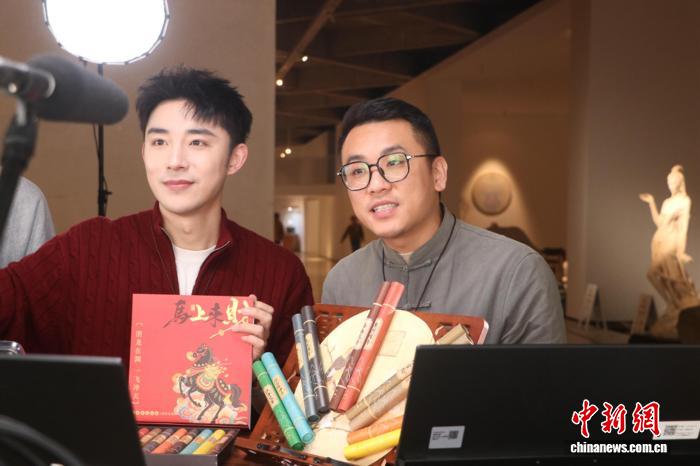
Core Viewpoint - The integration of tea, porcelain, and incense industries in Quanzhou, Fujian, is being promoted through the "Tea, Porcelain, and Incense" brand, enhancing regional collaboration and cultural heritage [1][3]. Group 1: Industry Overview - The tea industry in Anxi is projected to reach a comprehensive output value of 46.05 billion RMB by 2025, while the ceramic industry in Dehua is expected to scale up to 76 billion RMB, and the incense industry in Yongchun is anticipated to exceed 13.5 billion RMB [1]. - The three counties of Anxi, Dehua, and Yongchun are collaborating to break down regional barriers and enhance cooperation in the tea, porcelain, and incense sectors [3]. Group 2: Brand Development and Marketing - The three counties have signed a memorandum to promote industrial integration, focusing on six areas: brand building, channel expansion, product development, talent cultivation, standard formulation, and cultural tourism integration [3]. - A live streaming event on January 28 showcased the collaboration between local manufacturers and intangible cultural heritage representatives, aiming to modernize traditional industries and reach a broader consumer base [3][5]. Group 3: Innovation and Consumer Engagement - The incense industry is evolving with new product forms such as incense sticks, discs, and sachets, catering to diverse consumer needs in various settings like cars, offices, and yoga [5]. - The "Tea, Porcelain, and Incense" initiative has launched a university entrepreneurship incubation program, aiming to nurture 100 e-commerce talents and 20 entrepreneurial teams within three years [5][6]. Group 4: Sales and Market Impact - The global sourcing live streaming events have been successful in boosting sales of tea, porcelain, and incense products while enhancing brand visibility [6]. - The online popularity of products like the "Goose Pear Incense" has seen a 233% increase in average transaction price, particularly appealing to younger consumers seeking sensory experiences [5].

一缕“永春香”,飘向地球村
Xin Lang Cai Jing· 2026-01-19 09:56
Core Insights - The event "Kung Fu Meets Yongchun" was launched in Beijing, showcasing the unique charm and fashion vitality of Yongchun as "China's Fragrance Capital" through a blend of traditional incense products and modern fashion [1][4] Industry Overview - Yongchun's incense-making technique has a history of nearly 400 years, originating from the introduction of the craft by Arab descendants in the Qing Dynasty [3] - The incense industry in Yongchun has developed significantly, with nearly 300 incense enterprises and over 30,000 employees by 2025, producing over 1,000 types of incense products [3] - The domestic market sales coverage of Yongchun's incense products exceeds 80%, with the total industry chain output value expected to surpass 13.5 billion yuan (approximately 1.9 billion USD) by 2024 [3] Cultural Integration - The event served as a platform for cultural transmission, with a signing ceremony for the "Intangible Cultural Heritage Yongchun Cultural Going Global" project aimed at promoting Yongchun's culture internationally [4] - The "China Fragrance Capital · Fashion Yongchun" project was also signed to inject new momentum into the transformation of the traditional incense industry towards branding and fashion [4] - Yongchun is focusing on integrating culture, industry, and fashion, exploring a development path that empowers industry through culture and activates culture through industry [4]

一缕藏香连山海 产业援藏促振兴
Zhong Guo Xin Wen Wang· 2025-05-23 13:48
Core Viewpoint - The article highlights the transformation of the Tibetan incense industry in Changdu, Tibet, driven by the support of the Fujian aid team, leading to standardized production and increased market access through e-commerce and training initiatives [1][5][8]. Group 1: Industry Transformation - Tibetan incense, recognized as one of the "three treasures of Tibet," has faced challenges such as inefficient manual production and lack of standards, which hindered its market reach [1][2]. - The establishment of a standardized production base in Changdu marks a new phase of rapid development for the Tibetan incense industry, with plans to be a model case for industrial aid in Tibet by 2025 [1][2][7]. - The Fujian aid team has facilitated the introduction of standardized production practices and quality control measures, significantly improving the production process from a month to as little as five days [3][7]. Group 2: Market Expansion - The Fujian aid team has implemented various strategies to enhance market access for Tibetan incense, including establishing a platform for mutual learning between Fujian and Changdu, and organizing training sessions for local producers [5][6]. - The introduction of e-commerce and live streaming sales has led to significant sales increases, with products quickly selling out on major platforms like Dongfang Zhenxuan [5][6]. - The collaboration has resulted in the creation of a new brand, "Fukangba," which combines the characteristics of both Tibetan and Fujian incense, broadening its appeal to a wider audience [7][8]. Group 3: Future Outlook - The Fujian aid team aims to achieve a comprehensive development strategy for the Tibetan incense industry, focusing on creating production bases, showcasing centers, and well-known brands to drive economic growth and rural revitalization [7][8]. - The initiative emphasizes the importance of cultural preservation alongside economic empowerment, providing a sustainable model for the development of unique industries [8].
年轻人爱上了中式香
Ren Min Ri Bao Hai Wai Ban· 2025-04-22 01:03
Core Insights - The traditional incense industry is experiencing new growth opportunities driven by young consumers who are expanding the application scenarios of Chinese incense for sleep aid, emotional healing, and enhancing focus [2][4] - The popularity of Chinese incense among younger demographics is reflected in significant sales growth on platforms like Taobao, with transactions increasing over 50% year-on-year since February [1][2] - Brands are adapting to market demands by launching portable incense products and integrating traditional techniques with modern designs, such as the "Dark Fragrance Bracelet" from the Palace Museum [2][3] Market Trends - The sales of incense-related products, including incense holders and incense sticks, have seen a year-on-year increase of nearly 80% [1] - The number of users born after 1995 has nearly doubled, indicating a strong interest among younger consumers [1] - Brands are leveraging social media trends, with topics like "Chinese incense" and "traditional incense-making" gaining traction [1] Product Innovation - New product offerings include portable incense sheets and sleep sachets, catering to the diverse needs of young consumers [2][3] - The introduction of unique product names, such as "Dreams in My Mind" and "Tea Words," aims to attract younger buyers [3] - The "Cold Condensation Incense" technique has gained popularity, allowing for various forms like incense beads and powders, which are convenient for modern lifestyles [3] Consumer Engagement - Young consumers are not only purchasing incense but are also engaging in learning about the craft, with many participating in workshops for making incense [4] - Experience-based activities, such as "handmade incense pouch" workshops, are being offered by various businesses to enhance consumer interaction [4] - The market for Chinese traditional incense culture is expanding, with a growing variety of products available [4]