婚恋

Search documents
数智浪潮激荡古城,服务业新蓝图力冲千亿
Yang Zi Wan Bao Wang· 2026-01-07 04:23
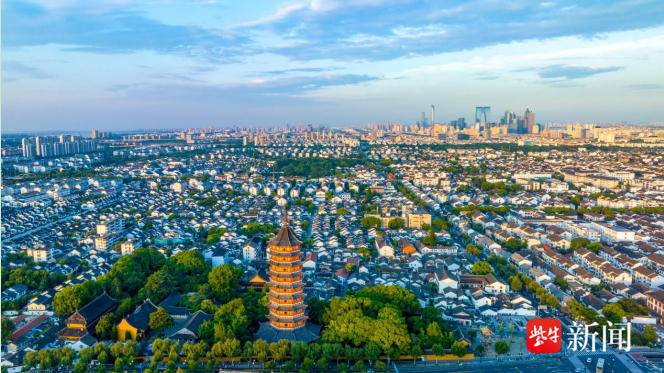
Core Insights - Suzhou's Gusu District aims to achieve a service industry value-added target of over 100 billion yuan by implementing six major actions, including consumption stimulation and "AI+" initiatives [1][3] Group 1: Service Industry Development - By the third quarter of 2025, the service industry's value-added accounted for 95.3% of the district's GDP, solidifying its dominant position [3] - Gusu District has attracted nearly 500 brand flagship stores and revitalized over 1.6 million square meters of idle space, facilitating industrial upgrades [3] - The district plans to establish a "1+2+X" industrial system, extending productive service industries towards high-value chains and supporting over 30 AI-related enterprises by 2026 [3] Group 2: Consumer Trends - Gusu's consumption landscape is becoming increasingly youthful and diverse, with new business formats like "sweet economy" and "pet economy" emerging [5] - The "Four Seasons Blossom. Quality Gusu - 2026 Beautiful Ancient City Life Initiation Plan" was launched, focusing on themes like flowers, pets, and marriage, aiming to enhance quality living scenarios [5] - The "Sweet Economy High-Quality Development 2026 Action Plan" anticipates the addition of over 30 marriage service points and more than 10 new consumption scenarios by 2026 [5] Group 3: Project Signings and Investment - The conference highlighted the Gusu Smart Bay "AI+" cluster and the Suzhou New Business Format Angel Fund, inviting investment in the district [7] - A series of project signings were completed, focusing on service industry funds, ancient city renewal, and new consumption formats [7] - Gusu District has seen its headquarters enterprises exceed 100, showcasing strong industrial attraction and development momentum [7] Group 4: Entrepreneurship and Innovation - The "One Person Company" (OPC) model was introduced, enabling individuals to manage the entire business process from design to customer service, lowering traditional entrepreneurial barriers [8] - Gusu District promotes the concept of "the entire ancient city as an OPC community," leveraging local resources to attract young talent for entrepreneurship [8] - The district aims to continuously stimulate market vitality and enhance service industry quality through innovation and practical efforts [8]

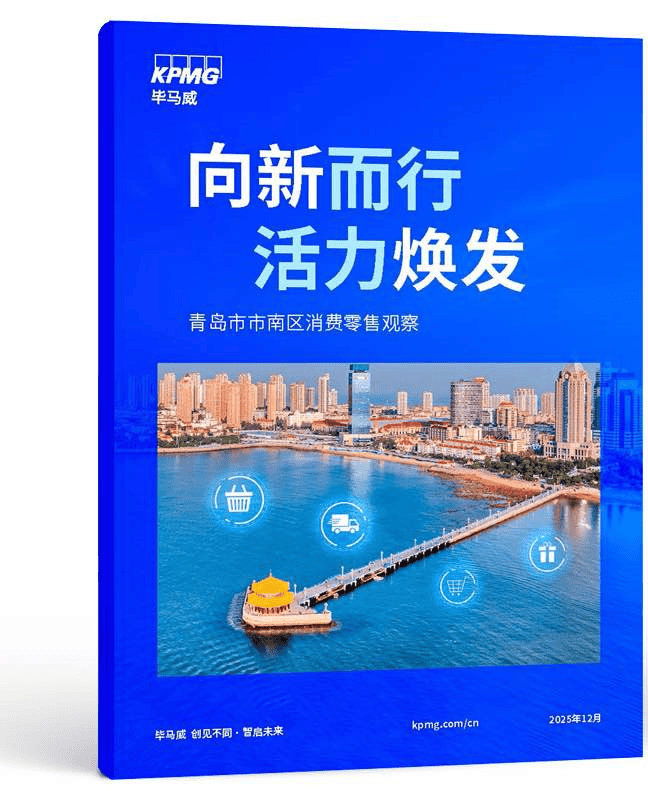
向新而行,活力焕发 | 毕马威发布《青岛市市南区消费零售观察》报告
Sou Hu Cai Jing· 2025-12-08 06:28
Core Insights - Consumption is identified as the main engine driving economic growth, with a strong emphasis on boosting consumption in the 15th Five-Year Plan by the Central Committee of the Communist Party of China [1] - The report by KPMG highlights successful practices in the consumption retail sector of Qingdao's Shinan District, aiming to provide a reference for regional consumption stimulation [1] Economic Performance - In 2024, Qingdao's total retail sales reached a record high of over 650 billion yuan, marking a 4.2% year-on-year increase, surpassing Tianjin and ranking second in Northern China [3] - Shinan District, as the political and cultural center of Qingdao, plays a crucial role in the city's economic and social development, with the tertiary industry contributing approximately 90% to its GDP [3][5] Income and Consumption - Shinan District boasts the highest per capita disposable income in Shandong Province at 21,827 yuan in Q1 2025, significantly above the national average [5] - The steady growth in per capita disposable income supports the continuous increase in retail sales in Shinan District [5] Retail Market Trends - The retail sales in Shinan District have shown a consistent upward trend over the past three years, with total retail sales reaching 79.2 billion yuan in 2024, and per capita retail sales approximately 161,000 yuan, which is 4.6 times the national average [9] - The district's vibrant consumption market is driven by a well-developed cultural tourism industry that attracts numerous visitors [9] Consumption Structure - Shinan District has established a comprehensive consumption matrix, including core business circles and community commercial centers, catering to diverse consumer needs [12][13] - The district is focusing on various consumption sectors such as fashion, dining, marine leisure, wedding services, and senior care, promoting a diversified consumption landscape [18] Brand Development - The "Four Firsts" economy is thriving in Shinan District, with 54 new brand stores opened in 2024, accounting for 67.5% of the city's total, and over 380 first stores established [22] - The district is home to 24 time-honored brands, representing 20% of the city's total, and has become a key area for high-end brands, housing over 1,000 first-tier brands [22] Future Outlook - Shinan District is leveraging policies to enhance consumption quality through investment attraction, business circle upgrades, and new consumption models [24] - The district aims to develop new consumption patterns, including night economy and event economy, with night consumption accounting for 65% of total sales in key business areas [24] - Shinan District is also a hub for foreign trade, with over 3,000 foreign trade entities and a total export value of 51.79 billion yuan in 2024, reflecting a 3.6% year-on-year increase [24]
如何在三四线城市赚大钱?教你10个复制策略,缺什么就复制什么
Sou Hu Cai Jing· 2025-08-25 10:40
Core Insights - The article argues that third and fourth-tier cities present significant wealth opportunities that are often overlooked due to perceptions of lower consumer power compared to first and second-tier cities [1][47][50] Group 1: Investment Opportunities - Many successful business models from first and second-tier cities can be replicated in third and fourth-tier cities, where competition is lower and investment costs are reduced [5][50] - The consumer behavior in third and fourth-tier cities shows a strong tendency for "follow-the-trend" consumption, making it easier to introduce new concepts [5][50] Group 2: Replication Strategies - **Food and Beverage**: Replicating popular dining concepts from first and second-tier cities can attract young consumers in third and fourth-tier cities [8][9] - **Health and Fitness**: Establishing well-equipped gyms can fill a gap in the market, as health consciousness is rising among younger demographics [12][13] - **Retail Innovations**: Introducing modern retail formats like convenience stores and fresh supermarkets can significantly improve the shopping experience [15][16] - **Education and Training**: There is a demand for educational services, including tutoring and skill training, which remains underdeveloped in smaller cities [20][21][24] - **Entertainment and Leisure**: Creating social venues and entertainment options can cater to the lack of recreational activities in these areas [25][27] - **Marriage and Social Services**: There is a notable absence of marriage and social platforms, presenting an opportunity to introduce these services [27][28] - **Home Services**: The demand for reliable home services is high, and replicating successful models from larger cities can quickly build a customer base [32][33] - **Local Internet Business**: Leveraging e-commerce and social media marketing can help local businesses thrive in third and fourth-tier cities [35][37] - **Elderly Care**: The aging population in these cities creates a market for elder care services, which are currently lacking [39][40] - **Platform Thinking**: Transitioning from small businesses to platform-based models can yield greater financial returns [44][45] Group 3: Conclusion - The article concludes that third and fourth-tier cities are often underestimated as wealth generation areas, and the key to success lies in replicating proven business models rather than creating unique concepts [47][48][50]