
学校

Search documents
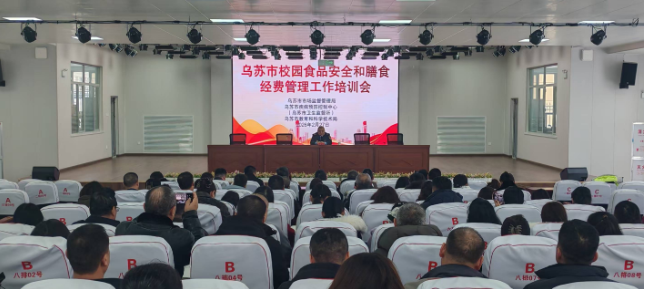
新疆乌苏市开展校园食品安全和膳食经费管理培训 守护师生饮食安全
Zhong Guo Shi Pin Wang· 2026-02-28 04:27
Core Viewpoint - The training conducted by the Urumqi Market Supervision Bureau aims to enhance food safety in schools and ensure a safe dining environment for students and teachers [1][3] Group 1: Training Objectives and Participants - The training involved 73 participants, including heads of 25 kindergartens and 18 primary and secondary school canteens, focusing on food safety and dietary fund management [1] - Key objectives include risk identification, problem rectification, responsibility enforcement, and operational standardization [3] Group 2: Key Focus Areas - The training addressed critical areas such as ingredient procurement, storage, food preparation, utensil sanitation, food sampling, health management of staff, and the use of "Internet + Bright Kitchen" technology [3] - Schools and kindergartens are required to implement a management mechanism that includes daily control, weekly inspections, and monthly assessments to ensure accountability [3] Group 3: Financial Management and Compliance - The training emphasized the importance of clear and transparent dietary fund management to protect student rights [3] - Schools are urged to conduct comprehensive self-checks before the spring semester, ensuring that identified risks are documented and rectified promptly [3] Group 4: Future Actions - The Urumqi Market Supervision Bureau and the Education Bureau will conduct special inspections for food safety in schools, with strict penalties for non-compliance [3]

实时抓违规、自动发预警,海淀AI智能监管紧盯校园食堂后厨
Xin Jing Bao· 2025-08-28 15:20
Group 1 - The core idea of the news is the implementation of AI-driven food safety monitoring systems in schools and restaurants, enhancing regulatory efficiency and safety standards [1][2][3] - The AI intelligent monitoring system was first piloted in Tsinghua University Affiliated Primary School's cafeteria, utilizing cloud-based technology for real-time oversight of food safety practices [1][2] - The initiative has expanded to cover 52 dining establishments in various sectors, including tech parks and popular takeaway restaurants, significantly reducing the frequency of on-site inspections [2] Group 2 - Since the implementation of the AI system, there has been a notable decrease in common food safety violations, such as uncovered trash bins and staff not wearing hats, with a 21% reduction in these issues [2] - The regulatory approach is shifting from human-led inspections to data-driven monitoring, allowing for proactive problem resolution and continuous oversight [3] - The goal is to achieve comprehensive smart monitoring across all 475 primary and secondary schools and kindergartens in Haidian District, enhancing food safety management through cross-departmental data sharing [3]