
食品监管

Search documents
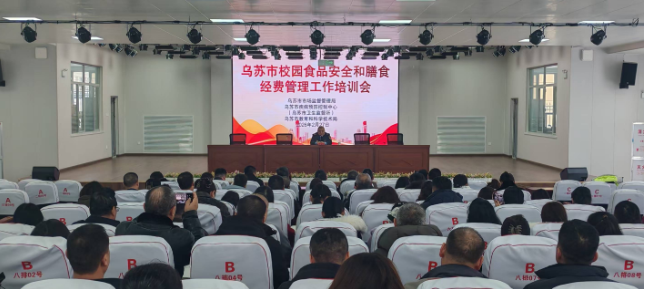
新疆乌苏市开展校园食品安全和膳食经费管理培训 守护师生饮食安全
Zhong Guo Shi Pin Wang· 2026-02-28 04:27
Core Viewpoint - The training conducted by the Urumqi Market Supervision Bureau aims to enhance food safety in schools and ensure a safe dining environment for students and teachers [1][3] Group 1: Training Objectives and Participants - The training involved 73 participants, including heads of 25 kindergartens and 18 primary and secondary school canteens, focusing on food safety and dietary fund management [1] - Key objectives include risk identification, problem rectification, responsibility enforcement, and operational standardization [3] Group 2: Key Focus Areas - The training addressed critical areas such as ingredient procurement, storage, food preparation, utensil sanitation, food sampling, health management of staff, and the use of "Internet + Bright Kitchen" technology [3] - Schools and kindergartens are required to implement a management mechanism that includes daily control, weekly inspections, and monthly assessments to ensure accountability [3] Group 3: Financial Management and Compliance - The training emphasized the importance of clear and transparent dietary fund management to protect student rights [3] - Schools are urged to conduct comprehensive self-checks before the spring semester, ensuring that identified risks are documented and rectified promptly [3] Group 4: Future Actions - The Urumqi Market Supervision Bureau and the Education Bureau will conduct special inspections for food safety in schools, with strict penalties for non-compliance [3]

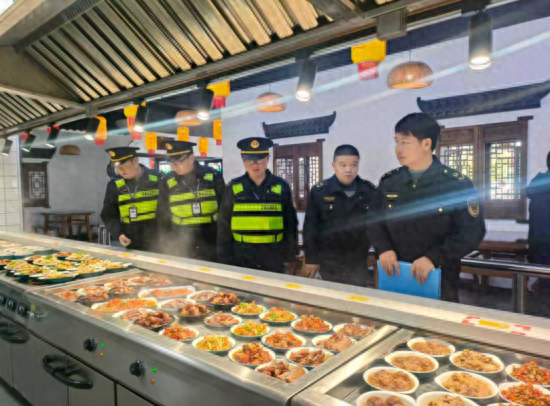
江西省交通运输执法局:携手多部门筑牢服务区食品安全防线
Xin Lang Cai Jing· 2026-02-12 10:19
Core Viewpoint - The article highlights the collaborative efforts of various departments in Jiangxi Province to ensure food safety for travelers during the Spring Festival travel rush, emphasizing the importance of providing safe and warm meals to passengers [1][3]. Group 1: Food Safety Measures - Joint enforcement teams conducted thorough inspections of food establishments in Wuyuan service area, including restaurants and supermarkets, to ensure that all food ingredients are sourced from legitimate and traceable channels [3]. - The inspections included checking food storage conditions and verifying the proper functioning of refrigeration and freezing equipment to prevent food spoilage due to improper storage [3]. - Enforcement teams meticulously checked production dates and shelf lives of food products to prevent expired items from reaching consumers [3]. Group 2: Community Involvement - To enhance food safety oversight and encourage public participation, the enforcement team implemented a "You Point, I Check" QR code system in the Wuyuan service area, allowing travelers to scan and suggest inspection items [5]. - The initiative aims to ensure that travelers enjoy warm meals during the Spring Festival while reflecting the responsibility and commitment of the enforcement team to food safety [5]. - The collaborative actions taken during the Spring Festival are likened to a warm winter sun, illuminating the journey home for travelers and fostering a sense of community care and festive atmosphere [5].
内蒙古鄂托克前旗市场监管局织好四张“安全网”守护“舌尖上的安全”
Xin Lang Cai Jing· 2026-02-10 04:37
Group 1 - The Inner Mongolia Etuoke Qianqi Market Supervision Administration has initiated a comprehensive food safety inspection ahead of the holiday season to ensure public safety and confidence in food consumption [1] - The administration has organized a pre-holiday meeting to emphasize the importance of food safety supervision, focusing on key areas such as meat products, vegetables, and grains [1][2] - The goal is to prevent systemic and regional food safety incidents during the holiday period by reinforcing responsibility and awareness among local authorities [1] Group 2 - Daily supervision has been strengthened, focusing on high-consumption areas such as farmers' markets and large supermarkets, with an emphasis on checking compliance with health management and product quality [2] - A total of 412 law enforcement personnel have been deployed, inspecting 206 commercial entities and 3 farmers' markets, addressing issues related to product display and compliance with regulations [2] - Strict measures are in place to ensure that only certified meat products are sold, with a zero-tolerance policy for counterfeit or expired food items [2] Group 3 - A thorough risk assessment is being conducted around schools to identify potential food safety hazards, with a focus on compliance among food vendors [3] - 68 food vendors near schools have been inspected, with 136 law enforcement personnel involved in addressing non-compliance issues related to food storage and labeling [3] - Public awareness campaigns are being conducted to educate the community about food safety, distributing 200 informational brochures and reaching over 1,000 individuals [3]
在创新中狠抓落实丨福建莆田查改治一体发力 让“校园餐”成放心餐
Zhong Yang Ji Wei Guo Jia Jian Wei Wang Zhan· 2026-01-17 00:39
Core Insights - The article discusses the ongoing efforts in Putian City, Fujian Province, to address issues related to "campus meals" through a series of corrective measures and regulatory frameworks aimed at ensuring food safety and proper management of meal funds [1][2][3] Group 1: Investigation and Accountability - The Putian City Discipline Inspection and Supervision Commission has focused on the "campus meal" sector, investigating cases of misappropriation of student meal funds, with 186 individuals investigated and 391 cases of misconduct addressed [1] - A total of 133 individuals received disciplinary actions, and 64 disciplinary recommendations were issued to improve the system [1] Group 2: Systematic Governance - The city has introduced a comprehensive governance framework with 33 specific measures targeting procurement, supply, acceptance, hygiene, funding, and supervision to enhance food safety in schools [2] - The implementation of an online unified procurement mechanism and traceability management for food supplies has been established to ensure compliance and accountability [2] Group 3: Supervision and Collaboration - Random inspections of the "campus meal" situation have been conducted to identify and rectify issues such as improper procurement and misuse of meal funds [3] - A multi-departmental collaborative supervision mechanism has been established to enhance the effectiveness of oversight and ensure a closed-loop management system for food safety [3]
内蒙古以数据驱动构建食品安全风险防控网
Xin Lang Cai Jing· 2026-01-09 18:43
Core Viewpoint - Inner Mongolia is implementing a project titled "Food Safety Risk Analysis and Countermeasures Research" guided by the "Four Strictest" requirements, aiming to enhance food safety regulation through data-driven decision-making and artificial intelligence technology [1][2] Group 1: Food Safety Regulation - The project aims to transition food safety regulation from experience-based judgment to data-driven decision-making by utilizing nearly five years of market supervision data [1] - A three-step methodology of "foundation consolidation - intelligent judgment - closed-loop management" is being employed to improve food safety risk prevention capabilities [1] Group 2: Data Utilization - The market supervision department is analyzing 980,000 data entries from various regulatory activities, including sampling inspections, daily checks, administrative enforcement, and complaint reports [1] - Artificial intelligence technology is being integrated to create "risk profiles" for various business types and key products, allowing for precise risk identification [1] Group 3: Risk Management - The regulatory approach includes targeted supervision based on a risk warning list, ensuring that management cycles and operational mechanisms are deeply integrated [1] - The feedback loop from regulatory results and data will facilitate model optimization, establishing a closed-loop management system characterized by "data warning, precise intervention, and continuous improvement" [1]
全链发力“赣”劲十足
Xin Lang Cai Jing· 2026-01-06 02:55
Core Viewpoint - Jiangxi Province is committed to enhancing food safety through a comprehensive regulatory framework that integrates technology, social collaboration, and innovative practices to ensure safety from production to consumption [5][10]. Regulatory Framework - Jiangxi has established a full-chain regulatory system that breaks down departmental barriers and ensures accountability across all levels of food safety management [6]. - The province has introduced 19 practical measures to clarify responsibilities and streamline regulatory processes, enhancing efficiency and accountability [8]. Targeted Actions - Special campaigns are being conducted to address specific challenges in food safety, such as the regulation of agricultural products and the establishment of a collaborative regulatory mechanism with transportation departments [9]. - A focus on enhancing grassroots regulatory capabilities has led to the establishment of training bases to develop a skilled workforce for effective food safety management [9]. Digital Transformation - The province is leveraging digital technologies to improve regulatory efficiency, transitioning from traditional methods to data-driven approaches for comprehensive monitoring [10]. - Initiatives like the "Internet + AI regulation" aim to create a smart regulatory network that allows for real-time tracking and transparency in food safety [10]. Community Involvement - Jiangxi promotes a collaborative governance model involving businesses, government, and the public to enhance food safety oversight [12]. - The province has implemented measures to encourage public participation in food safety monitoring, including a reward system for whistleblowers [13]. Local Initiatives - Various cities within Jiangxi are implementing localized strategies, such as the "one product, one policy" approach in Jiujiang to address specific regulatory challenges [15]. - Nanchang is testing a comprehensive food safety regulatory mechanism in commercial areas to enhance consumer confidence [14]. Innovative Practices - The use of blockchain technology in Ganzhou aims to improve traceability and safety in agricultural products, with significant numbers of producers already registered in the system [20]. - The establishment of a smart quick inspection network in Ji'an is enhancing the efficiency of food safety checks and data management [23]. Educational and Training Programs - Jiangxi is focusing on training and educational initiatives to improve food safety standards in schools and among food suppliers [24][25]. - The province is actively engaging with various stakeholders, including educational institutions and local communities, to foster a culture of food safety awareness [25].
青海每万人配备1.37名营养指导员
Xin Lang Cai Jing· 2025-12-25 19:23
Group 1 - The core viewpoint of the articles highlights the significant progress made in food safety and nutrition health initiatives in Qinghai Province, with a focus on enhancing public health and safety standards [1][2] Group 2 - Qinghai Province has achieved a nutrition guidance personnel ratio of 1.37 per 10,000 people, exceeding the targets set in the "Healthy Qinghai Action (2020-2030)" plan, placing it among the top provinces in the country [1] - The province has established a professional team of nutrition guides to promote nutrition health knowledge across various institutions, communities, and families [1] - Continuous efforts have been made to conduct nationwide nutrition weeks and specific campaigns targeting student nutrition, including the development of various nutrition guidance manuals that have received positive feedback [1] Group 3 - Effective food safety risk prevention measures have been implemented, including comprehensive monitoring of food safety risks and foodborne diseases [2] - The construction of food safety standards is progressing steadily, with the completion and release of local standards for specific products, along with training for grassroots market supervision departments [2] - Collaboration with market supervision departments to promote digital food labeling initiatives is aimed at supporting the high-quality development of specialty food industries [2]
新疆乌苏市市场监管局开展校园食品安全包联干部培训
Zhong Guo Shi Pin Wang· 2025-12-24 15:24
Core Viewpoint - The training organized by the Urumqi Market Supervision Administration aims to enhance food safety awareness and capabilities among campus food safety management personnel, thereby preventing food safety incidents in schools and ensuring the safety of students' meals [1][2]. Group 1: Training Details - The training session was conducted in a centralized manner, with 59 participants from various departments including local towns, streets, and the education bureau [1]. - Key topics covered included food safety risk control lists, relevant laws and regulations, food management systems, procurement, storage, processing, use of food additives, cleaning and disinfection of dining utensils, food sampling norms, and inspection points [1]. Group 2: Issues and Future Work - The Urumqi Market Supervision Administration reported existing issues in the special rectification of prominent campus food safety problems and outlined future focus areas [1]. - Emphasis was placed on deepening awareness of responsibilities, implementing food safety management measures, and enhancing supervision to prevent potential risks [1]. Group 3: Collaboration and Support - The training reinforced the responsibility awareness and risk prevention capabilities of the involved personnel, providing strong support for ensuring food safety in schools [2]. - Following the training, participants engaged in discussions about common issues in campus food safety and agreed on the need for further collaboration with educational and health departments for special inspections and rectification efforts [2].
全国人大检查组:食安仪器设备落后,近半临近报废
仪器信息网· 2025-10-29 03:32
Core Viewpoint - The implementation of the Food Safety Law in China has shown positive results, but challenges remain, particularly in the areas of monitoring, equipment, and enforcement capabilities [3][4][5]. Group 1: Food Safety Law Implementation - The report from the National People's Congress indicates that the Food Safety Law has been effectively implemented, leading to a stable improvement in food safety conditions in China [3]. - Over the past five years, the compliance rate for food safety evaluations has remained high, reflecting the efforts of various government departments and local authorities [3][4]. Group 2: Food Safety Standards - A total of 1,693 national food safety standards have been established, covering over 340 types of food and involving 23,000 safety indicators, providing strong technical support for comprehensive regulation [4]. - However, the development of food safety standards has lagged behind the emergence of new food materials and production processes, indicating a need for updates and improvements [4][5]. Group 3: Monitoring and Inspection Challenges - There are significant limitations in the monitoring scope, with insufficient sample sizes for emerging food safety issues, particularly for new food types and business models [5]. - Many food safety monitoring and inspection institutions face long-term underinvestment and aging equipment, with over half of the rapid testing devices in some areas nearing obsolescence, leading to inefficiencies in testing [5]. - The enforcement capabilities are inadequate, with a shortage of regulatory personnel in some regions, which undermines the effectiveness of food safety oversight [5]. Group 4: Recommendations for Improvement - The report suggests eight areas for enhancing food safety regulation, including strengthening the food safety standard system, improving monitoring and enforcement capabilities, and addressing food safety in schools and new business models [6].

可检测43种非食用物质!市场监管总局发布6项食品非法添加物质检验方法
Yang Shi Wang· 2025-10-21 09:22
Core Points - The State Administration for Market Regulation has approved the release of six testing methods for illegal food additives, which can detect 43 non-food substances [1] - The six testing methods include the detection of 28 antihypertensive drug components, five laxative substances, nine industrial dyes, and the antibacterial drug component acetyl oxime acid [1] - The administration will continue to develop and apply testing methods for illegal food additives, enhancing technical support and scientific regulatory capabilities to combat food-related crimes [1]