宝石与珠宝

Search documents
政策真空与税制僵化拖累斯宝石与珠宝产业
Shang Wu Bu Wang Zhan· 2026-01-31 04:06
Core Viewpoint - The Sri Lankan gemstone and jewelry industry faces deep-rooted policy and regulatory weaknesses, necessitating a comprehensive national framework to unlock export growth potential and attract investment [1] Group 1: Industry Challenges - The lack of long-term national policies has led to uncertainty and fragmented regulations, undermining Sri Lanka's competitiveness in the industry [1] - Operational restrictions, such as the ban on using scanning devices during gemstone mining and the decreasing availability of land for mining, are seen as obstacles to productivity and expansion [1] Group 2: Recommendations - Stakeholders urge authorities to move beyond temporary measures and adopt clear, export-oriented strategies [1] - Suggested reforms include relaxing existing regulations to promote exports, reviewing and restructuring the National Gem and Jewelry Authority, and introducing income tax safe harbor rules [1] - There are calls for VAT reforms specific to the industry, enhanced regulation of foreign entities operating informally, and stronger incentives to attract foreign investment [1]
史上最大协议!印度、欧盟联手了,回击特朗普
Zhong Guo Ji Jin Bao· 2026-01-27 11:17
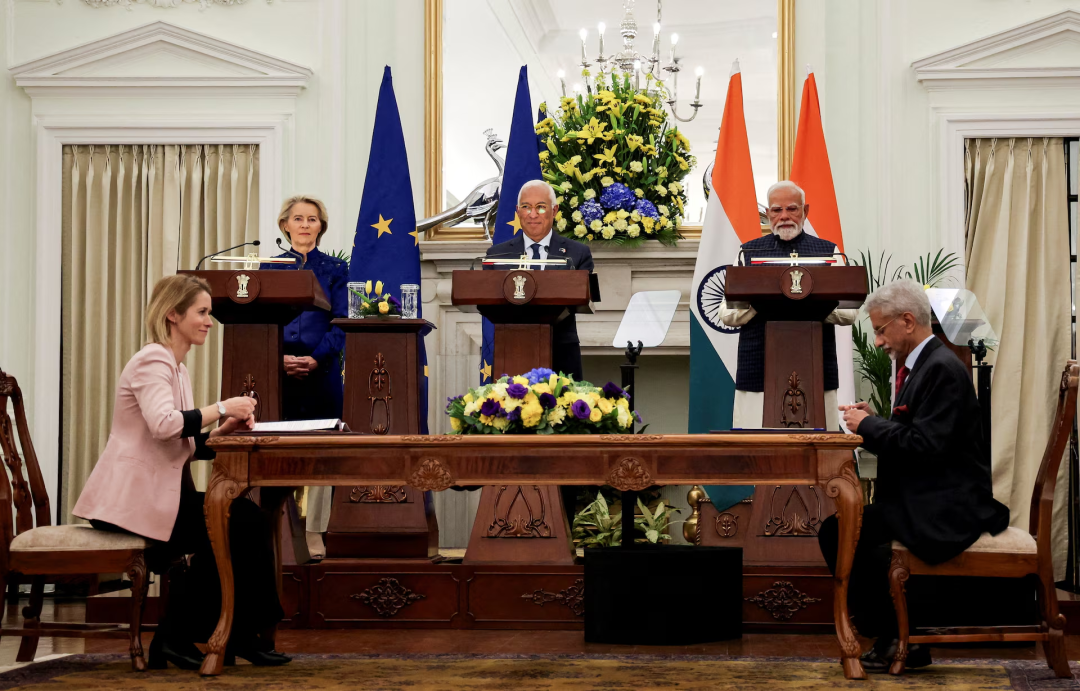
Core Points - The European Union and India have reached a historic free trade agreement after nearly two decades of negotiations, aiming to deepen economic ties and mitigate the impact of U.S. tariff policies [1][4] - The agreement creates a free trade area covering 2 billion people, with both parties expected to benefit significantly [3] Group 1: Trade Agreement Details - The EU's goods exports to India are projected to double by 2032, while India will eliminate or reduce tariffs on 96.6% of EU goods, including automobiles, industrial products, and various food items [4] - India will allow up to 250,000 European-manufactured cars to enter its market at preferential tax rates, a quota significantly larger than in previous trade agreements [4][5] - The agreement includes commitments from the EU on student mobility and post-graduation visas, while India has excluded dairy products from the deal [5] Group 2: Strategic Implications - The agreement reflects a shift in focus for both the EU and India towards reducing economic dependence on the U.S., particularly in light of the trade policies under former President Trump [4] - India is actively seeking new markets and has already signed trade agreements with the UK, Oman, and New Zealand, with plans to establish partnerships with other regions to enhance its global influence [5] - The bilateral trade volume between the EU and India is currently $136.5 billion, with the EU accounting for over 17% of India's total exports [5]

高关税“反噬”来了:印度出口暴跌37.5%,纺织宝石全线受挫!
Sou Hu Cai Jing· 2025-11-03 03:46
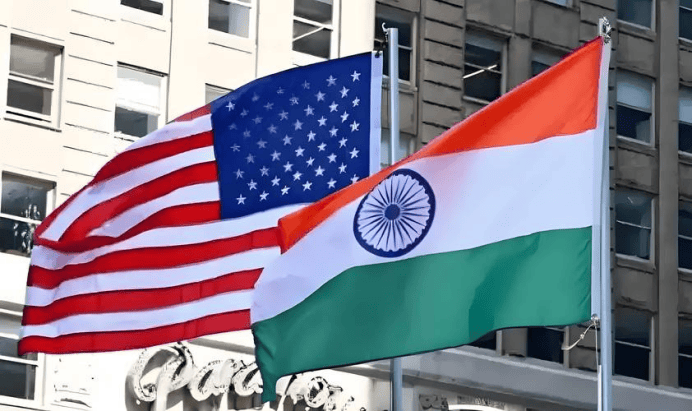
Core Insights - The trade relationship between India and the United States is undergoing significant turbulence, with high tariffs imposed by the U.S. leading to a sharp decline in India's exports to the U.S. [1][6] - The Global Trade Research Initiative (GTRI) reported a 37.5% drop in Indian exports to the U.S. from May to September 2025, with export value plummeting from $8.8 billion to $5.5 billion [1][6] Tariff Impact - Starting in April, the U.S. imposed a 10% tariff on Indian goods, which escalated to 50% in August, partly as a punitive measure for India's continued purchase of Russian oil [3] - The cumulative effect of these tariffs has led to a drastic decline in exports, particularly in labor-intensive sectors such as textiles, gems and jewelry, chemicals, agricultural products, and machinery, which saw a total export drop of 33% from $4.8 billion to $3.2 billion [3] Sector-Specific Declines - Exports of duty-free products experienced the most severe contraction, falling from $3.4 billion to $1.8 billion, a decline of 47% [4] - Smartphone exports, which had previously surged by 197% year-on-year, fell by 58%, dropping from $2 billion in June to $880 million in September [4] - Other notable declines include pharmaceuticals down 15.7%, industrial metals and auto parts down 16.7%, with aluminum down 37%, copper down 25%, and steel down 8% [4] - The gems and jewelry sector saw a staggering decline of nearly 60% [4] - Solar panel exports also faced a significant drop of 60.8%, impacting India's competitiveness in the renewable energy sector [4] Structural Weaknesses - GTRI highlighted that the tariff situation not only compresses profit margins but also exposes the structural weaknesses in India's key export industries [5][6] - The organization called for urgent credit support for small and medium enterprises and accelerated trade negotiations to prevent further market share loss to competitors like Vietnam, Mexico, and China [6] - Ongoing trade negotiations between India and the U.S. are in the "final stages," with the U.S. claiming India has agreed to reduce its Russian oil purchases, although this has not been confirmed by Indian officials [6]