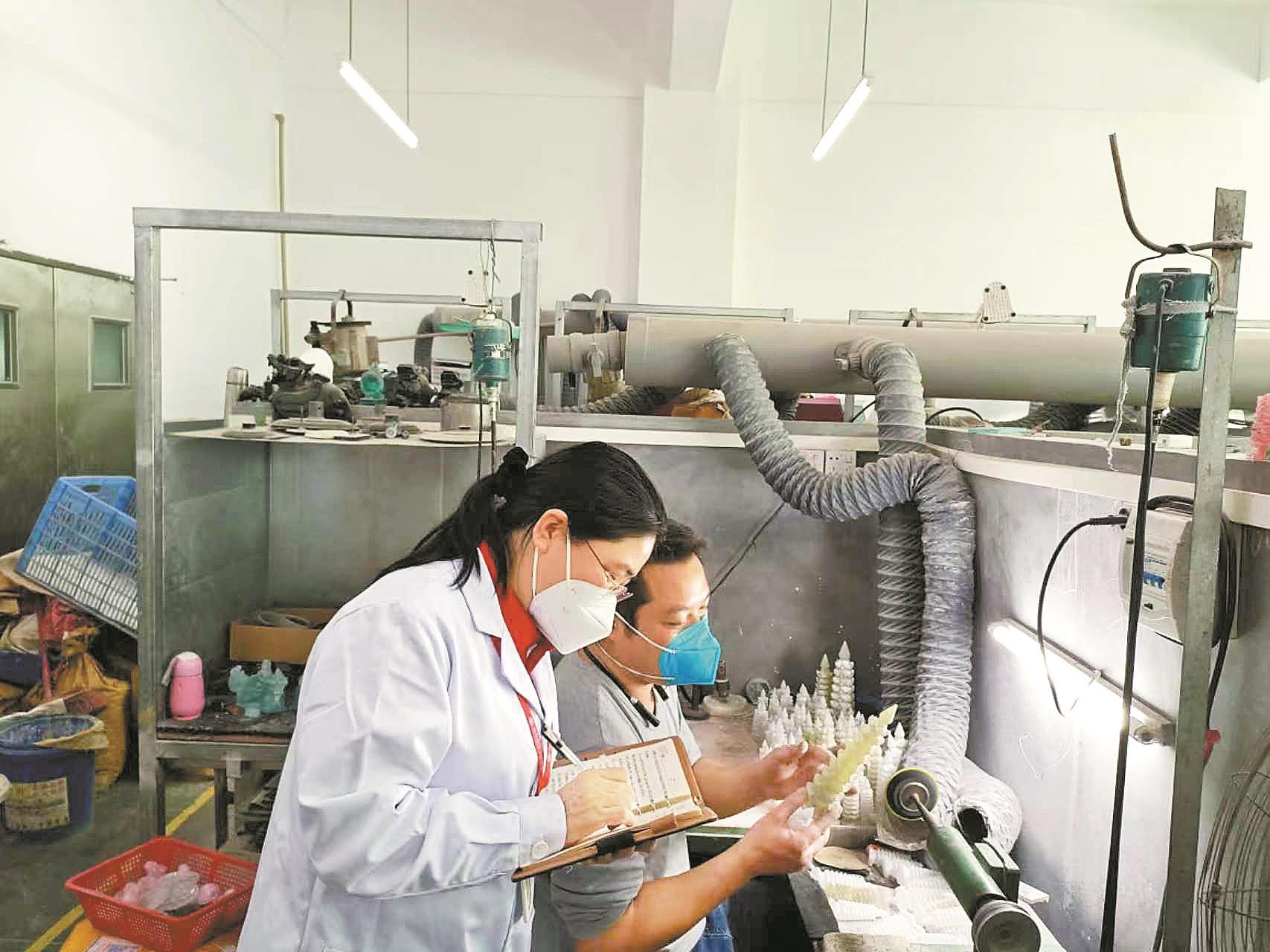
宝石加工

Search documents
全国人大代表喻连香:以科技匠心推动传统产业提质升级
Xin Lang Cai Jing· 2026-02-27 23:36
Core Insights - The article highlights the efforts of Yu Lianxiang, a senior engineer at the Guangdong Academy of Sciences, in integrating technology with traditional industries to enhance resource utilization and environmental protection [2][3][5] Group 1: Industry Innovation and Challenges - Yu Lianxiang aims to establish a provincial and national strategic resource pilot platform by 2026 to address the pain points identified during her fieldwork [3] - As a "technology commissioner," Yu emphasizes the importance of combining research with production, stating that innovation should directly respond to production challenges [3] - A significant achievement was made in 2025 when Yu's team improved the mineral recovery rate from 30%-40% to 85%-90%, potentially increasing the enterprise's output value by three to four times [3] Group 2: Technological Upgrades and Economic Impact - In a technical upgrade at a Maoming processing plant, Yu's team introduced an automated dehydration line, resulting in an increase in output from 300 million to 1.1 billion yuan, while also reducing energy consumption and labor costs [4] - The lack of a pilot platform for technology innovation is identified as a critical bottleneck, with Yu advocating for the establishment of a comprehensive utilization pilot platform for titanium and zirconium resources [4] Group 3: Environmental Protection Initiatives - Yu has focused on environmental protection by proposing the construction of an eco-industrial park to centralize and treat wastewater from over 4,000 small gemstone processing workshops [5] - The team developed a self-luminous material from solid waste, which can be used in the construction of green functional building materials, contributing to sustainable development [5] - Yu is preparing new proposals for the upcoming National People's Congress, aiming to integrate technology into the "Two Mountains" area to enhance tourism and environmental education [5]

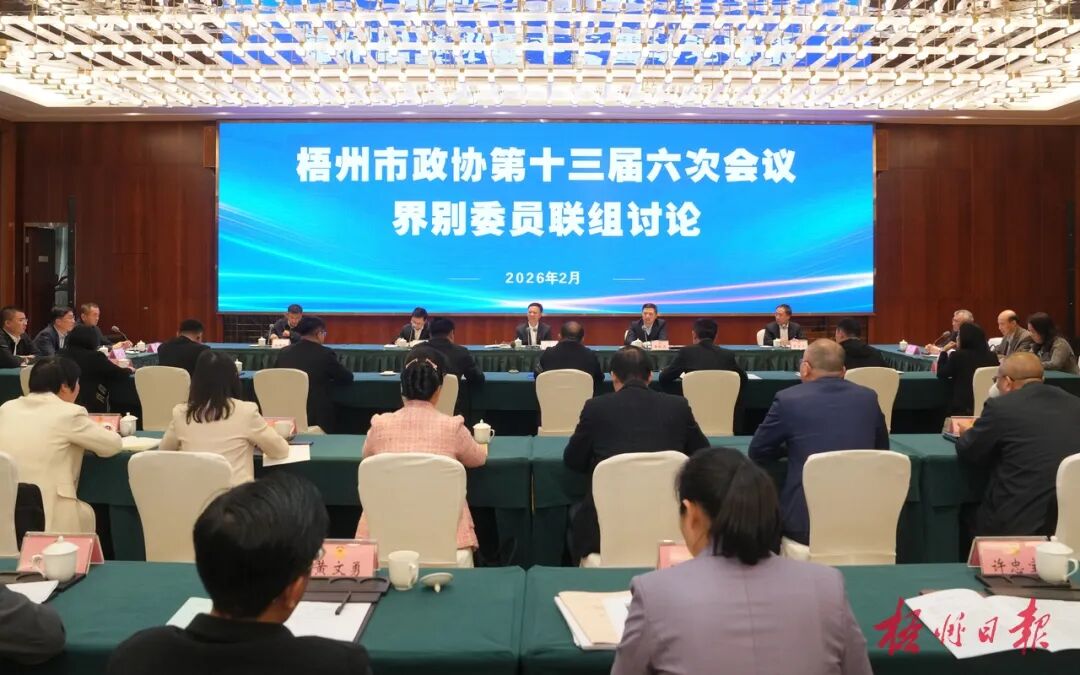
蒋连生参加政协联组讨论时强调 深化拓展“人工智能+”行动 为经济社会高质量发展注入强劲智能动能 黄振饶参加
Xin Lang Cai Jing· 2026-02-11 17:43
Core Insights - The article emphasizes the importance of embracing the "Artificial Intelligence +" initiative to enhance the smart economy in Wuzhou, aligning with national and regional policies on AI development [1][3][4] Group 1: AI Development Strategy - The local government aims to implement the "Artificial Intelligence + Manufacturing" strategy, focusing on key industries such as stainless steel and gemstone processing to create AI application scenarios [3][4] - There is a recognition that AI is reshaping industries and lifestyles at an unprecedented pace, presenting a strategic opportunity for development [3][4] Group 2: Industry Focus Areas - Wuzhou has a solid industrial foundation, application scenarios, and market demand for AI, which are crucial for successful implementation [4] - The government plans to promote AI in various sectors, including education, healthcare, and urban management, to improve service quality and operational efficiency [4] Group 3: Talent Development - There is a strong emphasis on developing talent to support AI growth, with local universities encouraged to offer AI-related programs and collaborate with advanced regions for talent cultivation [4] - The initiative aims to attract and nurture a pool of application-oriented AI professionals to drive the smart economy forward [4] Group 4: Collaborative Efforts - The article highlights the need for collective efforts from various sectors and the unique advantages of local political advisory bodies in providing insights and recommendations for AI development [4]
美对印50%关税生效!被逼到墙角的莫迪,看到了两大“救星”
Sou Hu Cai Jing· 2025-09-02 02:06
Core Viewpoint - The recent imposition of a 25% additional tariff by the United States on Indian exports has resulted in a total tax rate of 50%, significantly impacting India's labor-intensive industries such as textiles, automotive parts, and gem processing, which are crucial for the livelihoods of many Indian citizens [1][3]. Impact on Indian Exports - Indian officials report that new orders from U.S. clients have completely halted, with expectations of a 20% to 30% drop in exports to the U.S. starting from September, potentially leading to mass unemployment [3]. - The products exported by India to the U.S. have strong substitutes available, meaning that if the U.S. stops importing from India, it can quickly find alternative suppliers, jeopardizing India's market share built over many years [3]. Long-term Implications - The tariff not only affects immediate exports but also threatens India's position in the global supply chain, hindering its efforts to enhance manufacturing capabilities and compete with China [3][8]. - The Modi government has expressed a firm stance against compromising farmers' interests for trade negotiations, indicating a need for practical solutions to the crisis [5]. Market Diversification Strategy - In response to the U.S. tariffs, India is looking to diversify its export markets, particularly focusing on China and Latin America, with Modi's recent visit to China signaling a potential shift in trade partnerships [6]. - Trade with Latin America has seen significant growth, with trade volumes increasing nearly tenfold since 2000, making countries like Mexico, Brazil, Chile, and Argentina important partners for India [6]. Challenges in Market Transition - While the strategy to diversify markets appears sound, there are uncertainties regarding whether Indian products can successfully penetrate these new markets, particularly in terms of consumer acceptance in China and the capacity of Latin American countries to absorb the volume of goods previously exported to the U.S. [8]. - The need for India to enhance domestic industry competitiveness and optimize export product structures is urgent, as high tariffs present an opportunity to reduce reliance on the U.S. market and evolve into a "world factory" [8][10]. Potential for Compromise - Despite the government's strong rhetoric, analysts suggest that India may ultimately have to compromise due to its deep reliance on the U.S., with $87 billion in exports to the U.S. being difficult to replace quickly [10]. - A likely compromise could involve India reducing its oil purchases from Russia or finding alternative ways to meet U.S. demands, similar to past negotiations during Trump's first term [10][12]. Diplomatic Independence - India aims to maintain its diplomatic independence while pursuing market diversification and multilateral cooperation to reduce dependence on any single country, recognizing the risks of being overly reliant on external powers [12].