
应急救援

Search documents
春节期间国家综合性消防救援队伍等2.3万余人参与驻防备勤
Xin Hua She· 2026-02-15 09:54
Core Viewpoint - The emergency management and safety sectors are actively preparing for potential risks during the Spring Festival, with a significant workforce and resources dedicated to ensuring safety and rapid response to emergencies [1] Group 1: Emergency Management and Preparedness - Approximately 26,000 personnel from various emergency management, firefighting, mining supervision, and earthquake departments are on duty during the Spring Festival [1] - The national comprehensive firefighting and rescue teams, along with safety production emergency rescue teams and relevant central enterprise engineering rescue forces, have over 23,000 personnel and more than 9,000 rescue vehicles, aircraft, and snow removal equipment on standby [1] Group 2: Risk Assessment and Prevention - The meeting emphasized the need for a detailed reassessment of safety risks specific to local regions and industries, focusing on both traditional and emerging risks [1] - Key industries such as mining, hazardous chemicals, industrial trade, construction, and metallurgy are prioritized for hazard identification and mitigation to prevent major accidents [1] Group 3: Emergency Response and Monitoring - Strict implementation of emergency preparedness and duty monitoring is required, particularly in response to adverse weather conditions like rain, snow, and ice [1] - Enhanced patrols, monitoring, and public awareness campaigns are necessary for forest and grassland fire prevention and control [1] - Emergency management departments and rescue teams must ensure prompt and efficient responses to any sudden incidents [1]
在基层一线见行见效
Liao Ning Ri Bao· 2026-02-02 01:08
Group 1 - The provincial representatives and committee members are focused on implementing key initiatives related to rural revitalization, technological innovation, and industrial upgrades to achieve new progress and results [1] - Community services are emphasized as essential for grassroots governance, with a focus on enhancing services for vulnerable populations through initiatives like the "15-minute convenience service circle" [1] - Emergency response capabilities are being prioritized, with training and collaboration with government emergency departments to improve disaster preparedness and community resilience [2] Group 2 - The drone industry is being targeted for development, with a focus on fostering new production capabilities and technological innovation to seize opportunities in the low-altitude economy [3] - Agricultural workers are motivated by government reports emphasizing food security and agricultural system upgrades, leading to initiatives in breeding innovation and modern agricultural practices [4] - The promotion of digital agriculture and precision farming techniques is set to enhance productivity and quality in the agricultural sector, reflecting a commitment to modernizing rural areas [5]
航空器已成我国消防救援重要装备
Xin Lang Cai Jing· 2026-01-31 20:31
Core Viewpoint - The integration of manned and unmanned aerial vehicles has become a crucial component in China's firefighting and rescue operations, with a total of 17,000 cross-rotor ducted fan drones currently deployed in the field [1] Group 1: Industry Developments - The application of aerial vehicles in emergency rescue operations in China is increasing, particularly in firefighting, where cross-rotor ducted fan drones fill the gap for large payload unmanned aerial vehicles [1] - The establishment of the Aviation Emergency Rescue Branch of the China Disaster Prevention Association aims to modernize equipment, focusing on heavy-lift helicopters, long-endurance drones, and specialized aircraft [1] Group 2: Technological Advancements - The Aviation Emergency Rescue Branch emphasizes the importance of high-end equipment, cutting-edge technology, and digital platforms in enhancing production capabilities within the emergency rescue sector [1] - The branch plans to accelerate the development of a "smart aviation rescue" system, incorporating artificial intelligence, big data, and satellite communication technologies [1] Group 3: Organizational Structure - The China Disaster Prevention Association is the only national-level organization in the field of disaster prevention, reduction, and relief, with the Aviation Emergency Rescue Branch established in 2025 and currently comprising 82 member enterprises and institutions [1]
汉南机场迎首架常驻救援直升机,华中应急救援添翼
Chang Jiang Ri Bao· 2026-01-26 12:11
Group 1 - The establishment of the aviation rescue team and training base at Hannan Airport enhances its role as a core hub for emergency rescue in Central China, serving six provinces: Hubei, Anhui, Jiangxi, Hunan, Henan, and Jiangsu [2][6][7] - The integration of the newly stationed Zhi-8A helicopter with existing rescue capabilities aims to create a coordinated air-ground operation system, improving response capabilities for disaster reconnaissance, personnel transport, and material delivery [4][7] - The Hannan Airport will collaborate with the Central China Emergency Rescue Center to build a training base, share resources, and explore the involvement of new technologies like drones in rescue operations [4][7] Group 2 - Wuhan Economic Development Zone is accelerating the development of a modern industrial system, with low-altitude economy identified as one of the five emerging industries, aiming to enhance the entire low-altitude economic chain [7] - The zone has attracted over 20 related enterprises and has been approved for 12 regular low-altitude flight routes, positioning itself as a comprehensive experimental area for low-altitude economy in Hubei Province [7] - The goal is to scale the relevant industries to 10 billion yuan by the end of the 14th Five-Year Plan, contributing to Wuhan's ambition to become a national hub for low-altitude economic development [7]

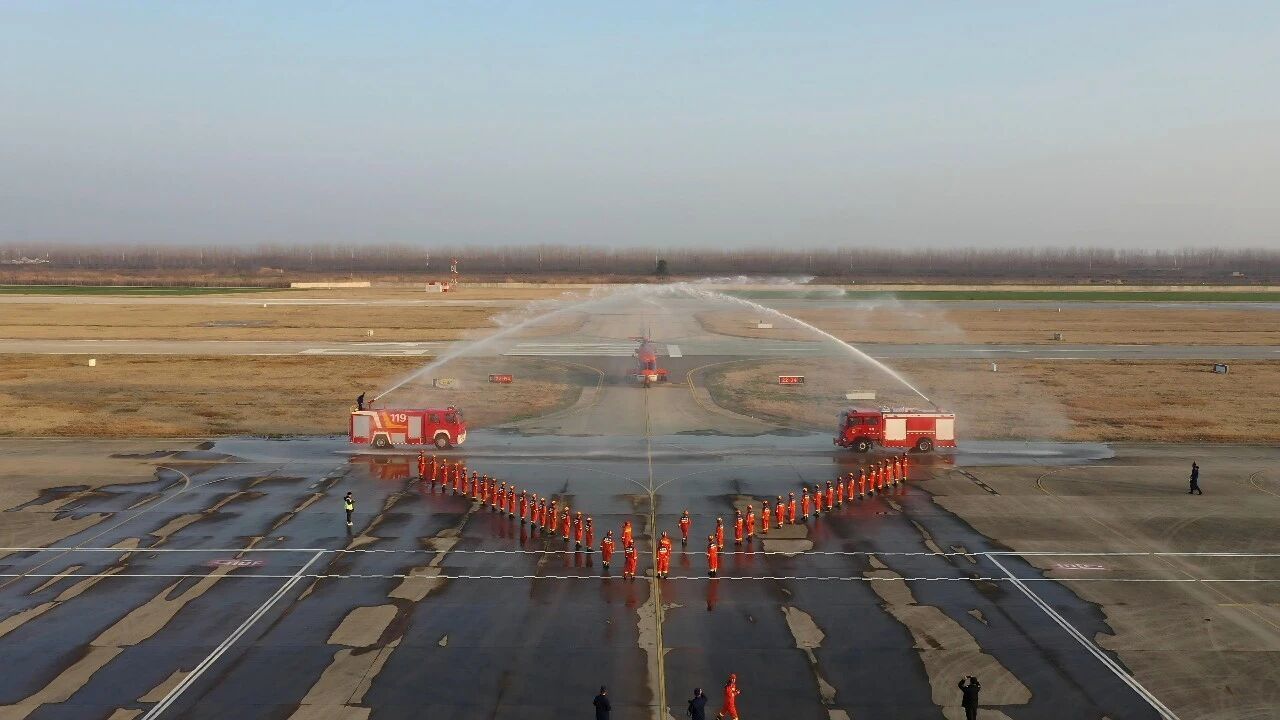
空中救援再升级 青海纳入国家布局获央补新增4架直升机
Zhong Guo Min Hang Wang· 2026-01-25 07:20
Core Viewpoint - Qinghai Province is enhancing its aviation emergency rescue capabilities to address the unique challenges posed by its high-altitude geography and emergency response needs, successfully integrating into the national aviation firefighting framework with central government financial support [1][3]. Group 1: Development of Aviation Emergency Rescue System - Qinghai has established a comprehensive aviation emergency rescue network, including the leasing of two Bell 407 rescue helicopters for year-round standby, addressing the lack of professional aviation rescue in high-altitude areas [2]. - The province has planned 116 temporary helicopter landing sites and created dedicated emergency rescue flight routes, effectively covering remote pastoral areas, forests, grasslands, and mountainous regions [2]. - The aviation rescue system has participated in over 40 cross-regional drills, accumulating nearly 1,000 safe flight hours, demonstrating its critical role in disaster response and safeguarding lives and property in remote areas [2]. Group 2: Infrastructure and Policy Support - Qinghai has established an aviation emergency rescue station with a primary base at Xining Caojiabao Airport and three auxiliary bases, ensuring coverage of key remote areas [3]. - The province has successfully passed evaluations by national authorities, gaining approval for inclusion in the national aviation firefighting framework and receiving central government funding for helicopter leasing [3]. - Qinghai has equipped itself with five sets of high-altitude communication drones and 73 small drones, with plans to train 38 more pilots by 2026, enhancing its rescue capabilities in complex environments [3][4]. Group 3: Strategic Enhancements and Future Plans - The integration into the national framework allows Qinghai to optimize its rescue system, improve equipment adaptability, and strengthen talent development, ultimately reducing response times in remote areas [4]. - The province aims to provide a robust aerial safety defense for the western region of China, contributing valuable experience to the national aviation emergency system [4].
我省航空应急救援体系实现跨越式发展
Xin Lang Cai Jing· 2026-01-24 19:37
Group 1 - The core viewpoint of the news is that Qinghai Province is enhancing its aviation emergency rescue capabilities, aiming for a leap in the development of its emergency rescue system [1][2] - Since 2022, Qinghai Province has leased two Bell 407 rescue helicopters through government procurement, ensuring 24/7 standby service and planning 116 temporary helicopter landing sites across the province [1] - The province has coordinated the use of large Wing Loong drones for disaster reconnaissance and communication services during emergencies, providing critical data support for rescue operations [1] Group 2 - The establishment of the Qinghai Province Aviation Emergency Rescue Station has created a primary defense base at Xining Caojiabao Airport, supported by three auxiliary bases, forming a "one main, three auxiliary" layout [2] - The province has successfully passed an evaluation for aviation emergency rescue capability construction, gaining approval for inclusion in the national aviation firefighting layout and central financial support for helicopter leasing [2] - Investments in equipment have increased, with the addition of 4 helicopters and the procurement of 5 sets of high-altitude communication drones and 73 small drones, alongside training for drone pilots to enhance rescue capabilities in complex environments [2]
青海:建成86座应急救灾物资储备库 现储物资10小时内送达
Xin Lang Cai Jing· 2026-01-23 13:44
Core Viewpoint - Qinghai Province has made significant advancements in emergency management during the "14th Five-Year Plan" period, establishing a comprehensive emergency response system to effectively handle disasters and emergencies [1][3][6]. Group 1: Emergency Infrastructure and Resources - Qinghai has built a total of 86 emergency disaster material storage warehouses, capable of delivering supplies within 10 hours to accommodate the relocation of 100,000 people at once [1]. - The province has established a provincial-level emergency command information network and a hierarchical emergency command platform, with video conferencing systems covering all townships [3]. Group 2: Emergency Response Mechanisms - During the "14th Five-Year Plan" period, Qinghai initiated 28 provincial-level emergency responses, successfully addressing major incidents such as the 7.4 magnitude earthquake in Mado and the 6.9 magnitude earthquake in Menyuan [6]. - An emergency plan system has been developed, consisting of one provincial overall emergency plan, 26 specialized plans, 83 departmental plans, and simplified plans for towns and villages [6]. Group 3: Emergency Response Teams - Qinghai has formed 12 categories of provincial rescue teams, totaling over 2,100 personnel, covering various fields such as mining, hazardous chemicals, engineering rescue, and medical support [7]. - The province has secured approximately 310 million yuan in national special funds to equip local emergency rescue teams with 15,000 sets of equipment [7].

西安消防航空救援队入列执勤 陕西“空地一体”应急体系应运而生
Zhong Guo Min Hang Wang· 2026-01-21 01:10
Core Viewpoint - The establishment of the Xi'an Fire Rescue Team's aviation rescue unit marks a significant step towards building an integrated aerial and ground emergency rescue system in Shaanxi Province, aligning with the national emergency response framework outlined in the 14th Five-Year Plan [1][4]. Group 1: Aviation Rescue Team Formation - The newly formed aviation rescue team consists of two Bell rescue helicopters, 10 aircrew members, and 14 mountain rescue team members, equipped with over 500 sets of protective, rescue, and communication equipment [2]. - The Bell helicopters are designed to meet over 60% of the mountainous terrain flight needs in Shaanxi, providing four core functions: reconnaissance, rescue, transport, and delivery [2]. Group 2: Operational Capabilities - The team focuses on two main functions: "Aviation + Rescue" for efficient air searches and emergency medical assistance in challenging mountainous areas, and "Aviation + Communication" to establish emergency communication links in communication blind spots [2]. - The unique advantage of aviation rescue is its ability to access areas where ground vehicles cannot reach, addressing critical challenges in high-altitude rescue operations [2]. Group 3: Practical Experience and Training - The collaboration between Xi'an Fire Rescue and Qinhan General Aviation has been tested through practical training, conducting 120 hours of coordinated training and successfully rescuing 12 individuals in various mountainous rescue missions [3]. - A notable case involved a 78-year-old man trapped in the Zhouzhi Shouyang Mountain, where the helicopter rescue reduced the ground rescue time from 10 hours to just 1 hour, showcasing the effectiveness of the integrated rescue model [3]. Group 4: Future Development and Collaboration - The aviation rescue project is an extension of the aviation emergency rescue system, with Shaanxi Province establishing a solid institutional foundation through various policies [4]. - The Xi'an Fire Aviation Rescue Team aims to enhance the provincial rescue network, exploring innovative paths such as "helicopter + drone" collaborative rescue and joint training of professional personnel [4]. - The team will continue to deepen collaboration with partners to build a rapid response, multi-dimensional delivery, and precise rescue capability, ensuring effective emergency response for the community [4].
应急管理部:深化重点行业领域“一件事”全链条专项整治
Zhong Guo Zheng Quan Bao· 2026-01-07 00:03
Group 1 - The national emergency management work conference emphasized the importance of the "14th Five-Year Plan" as a crucial starting point for achieving socialist modernization, highlighting the need for a stronger sense of responsibility and mission in emergency management [1] - The conference outlined that by 2030, significant progress should be made in modernizing the emergency management system and capabilities, with a focus on proactive prevention and enhanced safety levels [1] - By 2035, a Chinese emergency management system that aligns with the country's modernization goals is expected to be established, enhancing the capacity to support high-quality development and increasing public safety [1] Group 2 - The conference called for the comprehensive completion of the three-year action plan for fundamental governance, promoting the implementation of eight major actions and four key tasks, while enhancing safety risk monitoring and early warning systems in key industries [2] - Specific measures were outlined for high-risk sectors, including mining, hazardous chemicals, and fire safety, emphasizing the need for stringent safety regulations and the promotion of advanced safety technologies [2] - The focus will also be on improving safety supervision in construction, transportation, and other high-risk areas, addressing new risks associated with emerging business models [2] Group 3 - The conference stressed the need to establish a comprehensive emergency command system that covers all types of disasters and accidents, enhancing the capabilities of emergency response teams and optimizing resource allocation [3] - It highlighted the importance of improving emergency material and equipment support capabilities, ensuring readiness for major disasters through better resource planning and rapid assessment mechanisms [3] - The development of specialized emergency rescue teams, including aviation rescue capabilities, was also prioritized to strengthen national emergency response efforts [3]
辽宁应急救援队伍获近亿元补助
Liao Ning Ri Bao· 2026-01-06 01:08
Core Viewpoint - The central government has allocated 94.54 million yuan for the construction of safety production prevention and emergency rescue capabilities in the province for 2026, enhancing the capabilities of national emergency rescue teams [1] Funding Allocation - The funding focuses on three main areas: 1. Operation and maintenance of emergency rescue equipment to strengthen management levels [1] 2. Upgrading specialized rescue equipment in key industries such as mining, hazardous chemicals, and oil and gas pipelines to improve rescue efficiency in complex environments [1] 3. Cross-regional and multi-disaster joint training, including emergency rescue training and simulated practical exercises to enhance response efficiency to various sudden disaster incidents [1] Performance Management - The provincial finance department will collaborate with relevant authorities to strengthen performance management and fund supervision of the central subsidy, ensuring project implementation responsibility and maximizing the effectiveness of fund usage [1] - The initiative aims to promote the transformation of emergency rescue teams towards intelligence and specialization, meeting the demands for rescue in major accidents and disasters [1]