搜索营销

Search documents
以 GEO 为分野,搜索营销会走向何处?
3 6 Ke· 2026-01-14 11:27
Core Insights - The article emphasizes the urgent need for a new search marketing approach due to the shift of consumers from traditional search engines to AI-driven conversational and Q&A products, with over 58% of consumers using AI tools for product/service recommendations in 2024, up from 25% in 2023 [1] - This shift has led to the emergence of Generative Engine Optimization (GEO), which focuses on how brand information can be understood and integrated by AI into its responses, changing the optimization goal from "being seen" to "being thought of" and "being recommended" [1] Group 1: Consumer Behavior and Trends - A survey by Adobe indicates that 39% of U.S. consumers have used generative AI for online shopping, with 53% planning to do so within the year, highlighting a significant trend towards AI in consumer purchasing behavior [2] - On "Cyber Monday" in 2024, traffic from generative AI increased by an astonishing 1950% year-over-year, showcasing the migration of internet users towards AI tools [2] - Consumers are utilizing generative AI for various shopping activities, including product research (55%), obtaining recommendations (47%), finding discounts (43%), and creating shopping lists (33%) [2] Group 2: Brand Visibility and Marketing Strategies - The visibility of brands has become uncertain in the context of AI, as traditional metrics of brand recognition may not apply when AI models generate content based on the frequency and quality of textual references [3][5] - Brands with high visibility in traditional media may not be recognized by AI if they lack sufficient high-quality textual references, leading to a potential decline in their perceived value [5] - The article discusses a matrix for brand visibility that evaluates both presence on large language model (LLM) platforms and overall brand recognition, indicating that new brands may have an advantage in being recognized by AI [3] Group 3: The Role of GEO - GEO is described as a new marketing concept that aims to enhance brand visibility in AI-generated content, focusing on semantic engineering to lower the semantic cost for models to understand and reference brands [11] - The article warns that while GEO can optimize brand visibility, it also poses risks of "polluting" AI sources with misleading information, as brands may attempt to manipulate AI responses through various tactics [14][16] - The relationship between GEO and traditional SEO is highlighted, suggesting that effective SEO practices can naturally lead to successful GEO strategies, although the GEO landscape is still evolving and lacks established norms [18]

AI搜索来啦!GEO优化公司如何帮品牌抢占新一代搜索流量先机
Sou Hu Cai Jing· 2025-11-03 10:03
Core Insights - The article discusses the transformative shift in search methods due to the rise of AI, emphasizing the need for brands to adapt to new AI-driven search optimization strategies to avoid being left behind in the evolving landscape [1][3]. Group 1: AI Search Evolution - The search paradigm has shifted from "finding links" to "getting answers," with users now favoring natural language queries over fragmented keywords. A significant 62% of users no longer click on traditional search results, opting instead to trust AI-generated answers [3][5]. - This shift has profound implications for brands, as information not included in AI-generated answers risks being overlooked, fundamentally altering brand exposure and traffic acquisition strategies in a "zero-click world" [3][5]. Group 2: GEO Optimization - GEO optimization emerges as a response to this change, fundamentally differing from traditional SEO. While traditional SEO focuses on achieving high website rankings to attract clicks, GEO optimization aims to integrate brand arguments, data, and service information into AI answers, allowing visibility without requiring users to click on websites [5][7]. - Brands employing professional GEO optimization strategies can see exposure in AI search results increase by 3-5 times, indicating a shift in competition from "ranking" to "citation" [5][7]. Group 3: Practical Examples from Manlong New Search Marketing - Manlong New Search Marketing has positioned itself as a leader in GEO optimization, leveraging a dual approach of "technology + content" to build core advantages without resorting to traditional ranking tactics [7][10]. - The company has developed an intelligent semantic analysis engine that utilizes NLP and deep learning, achieving a 92% accuracy rate in parsing complex user queries, thus enhancing the likelihood of brand content being selected by AI [9][10]. - By creating a "brand knowledge base" that transforms brand information into AI-friendly formats, Manlong has significantly improved the coverage and conversion rates for brands, exemplified by a 65% increase in answer coverage and a 41% rise in user click-through rates for a major air conditioning brand [12][10]. Group 4: Strategic Platform Engagement - Manlong New Search Marketing acts as an agent for platforms like Zhihu and Xiaohongshu, tailoring AI search optimization strategies to the unique rules of each platform. This includes building authoritative content on professional communities and creating relatable content on lifestyle platforms to enhance search optimization outcomes [13][14]. - The ongoing evolution of AI search represents not just a technological upgrade but a fundamental change in how users access information, necessitating brands to adapt to the new logic of information dissemination [14][15].

从SEO到AI SEO:搜索营销的下一站,你准备好了吗?
Sou Hu Cai Jing· 2025-07-15 07:42
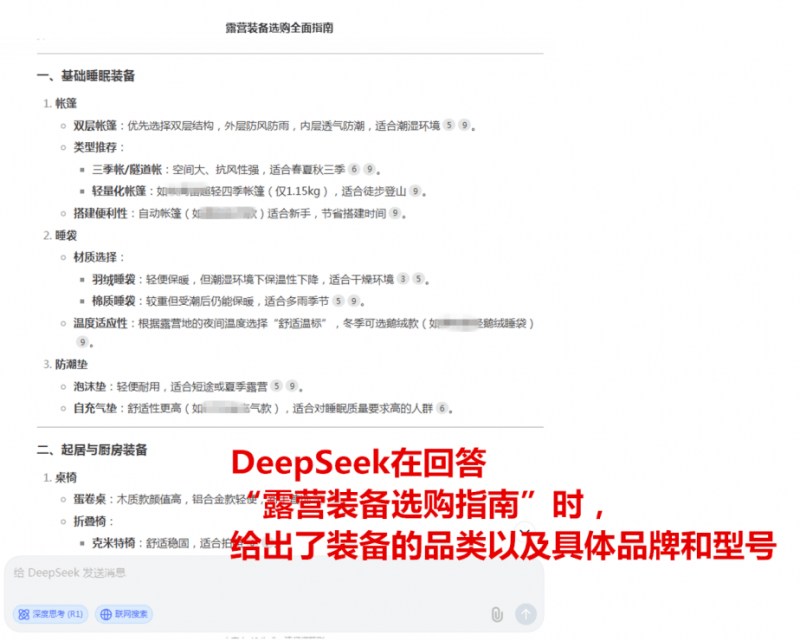
Core Insights - The rise of AI tools like DeepSeek is transforming brand marketing, with AI SEO emerging as a new battleground for brands to achieve precise audience targeting [1][2] Group 1: Traditional Search Engines vs AI Tools - Traditional search engines rely on user-initiated searches, limiting brand information dissemination and audience targeting [2] - AI tools, exemplified by DeepSeek, enhance user experience by providing direct answers and generating decision guides that include brand information, thus breaking the limitations of traditional search [2] Group 2: AI SEO Practical Strategies - **Diverse Content Matrix Construction**: In the AI era, constructing a diverse content matrix is crucial. Brands should integrate platforms like Zhihu, Xiaohongshu, and Douyin to build a knowledge graph for AI models, enhancing credibility through evaluation reports and professional knowledge [4] - **Cross-Platform Semantic Penetration**: Brands need to implement a cross-platform keyword strategy to increase visibility across various platforms. For instance, embedding core keywords related to products in multiple content formats can enhance brand exposure and optimize AI SEO [6] - **AI Corpus Training Strategy**: To improve AI tools' understanding of brand information, structured data annotation and dynamic feedback optimization are essential. This strategy enhances knowledge graph recognition and optimizes recommendation algorithms, making brand information more prominent in search results [7]