政府债务

Search documents
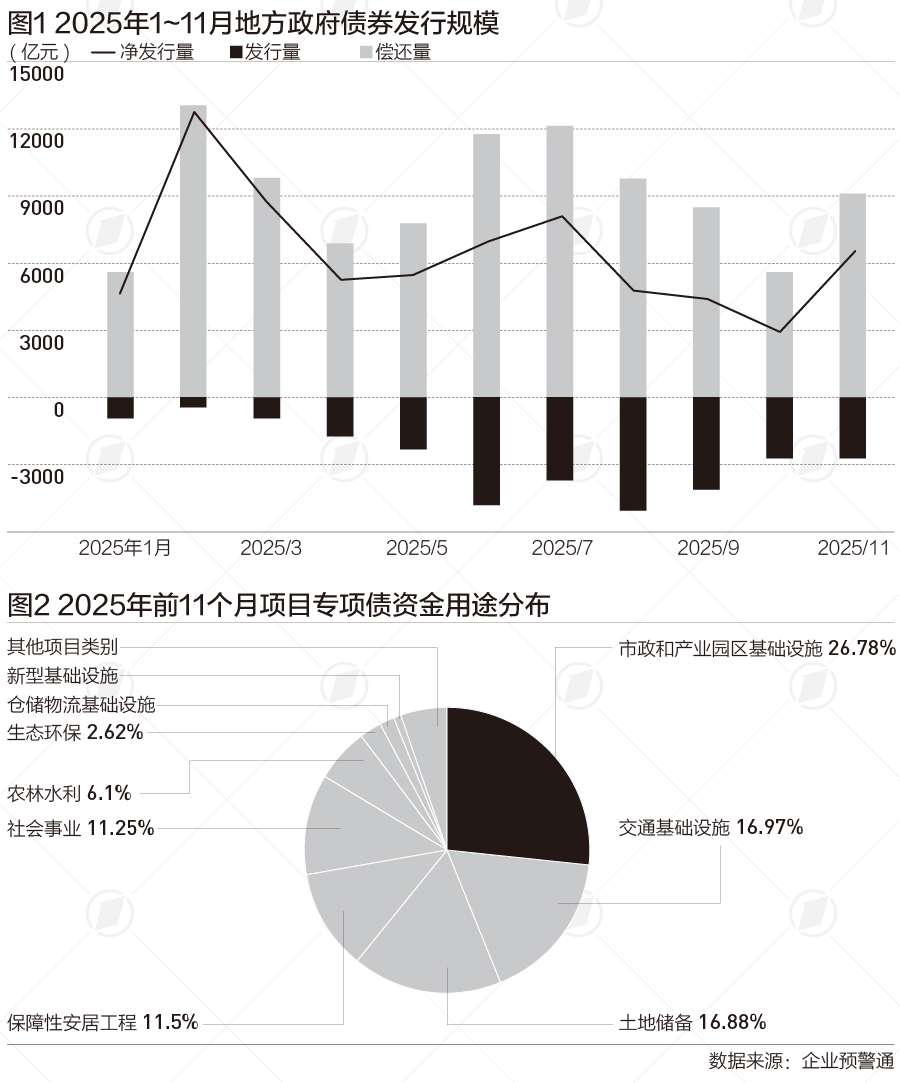
今年10万亿元地方政府债券资金花哪儿了?|财税益侃
Di Yi Cai Jing· 2025-12-04 13:12
Core Viewpoint - The issuance of local government bonds in China has reached a historic high this year, with a significant portion of the funds allocated for debt repayment rather than new projects [2][3]. Group 1: Local Government Bond Issuance - In the first 11 months of this year, approximately 10 trillion yuan of local government bonds were issued, surpassing last year's total of about 9.8 trillion yuan [2]. - The issuance of refinancing bonds accounted for about 4.8 trillion yuan, a year-on-year increase of approximately 20%, while new bond issuance was about 5.2 trillion yuan, up about 11% year-on-year [2][3]. - Approximately 62% of the bond funds issued were used for repaying old debts, including refinancing existing hidden debts and settling overdue payments to enterprises [3][6]. Group 2: Allocation of Funds - Of the funds allocated for project construction, about 27% was directed towards municipal and industrial park infrastructure, 17% towards transportation infrastructure, and 12% towards affordable housing projects [6]. - This year, the scope of special bonds has significantly expanded, allowing for allocations towards land reserves, which previously were restricted, with over 500 billion yuan directed to such projects [6]. - Special bonds have also been allocated for government investment funds, exceeding 80 billion yuan, aimed at supporting early-stage technology enterprises and hard technology sectors [6]. Group 3: Debt Management and Risks - As of September 2025, the total local government debt is projected to be around 53.7 trillion yuan, remaining within the limit of approximately 57.9 trillion yuan [8]. - The average remaining maturity of local government bonds is 10.5 years, with an average interest rate of 2.86% [8]. - There is a need for careful management of local government debt growth to ensure long-term fiscal sustainability, with suggestions to optimize the debt structure between central and local governments [8].

美债突破37万亿美元:“烫手山芋”
Sou Hu Cai Jing· 2025-08-21 12:07
Core Insights - As of August 11, the total federal government debt in the United States has surpassed $37 trillion [1] - The federal debt reached the statutory limit of $31.4 trillion in January 2023, indicating a significant increase in borrowing [1] - The U.S. government debt is projected to exceed $35 trillion by July 2024 and $36 trillion by November 2024 [1] - The escalating national debt is viewed as a "hot potato," posing risks to long-term economic growth in the U.S. and potentially hindering global economic development [1]
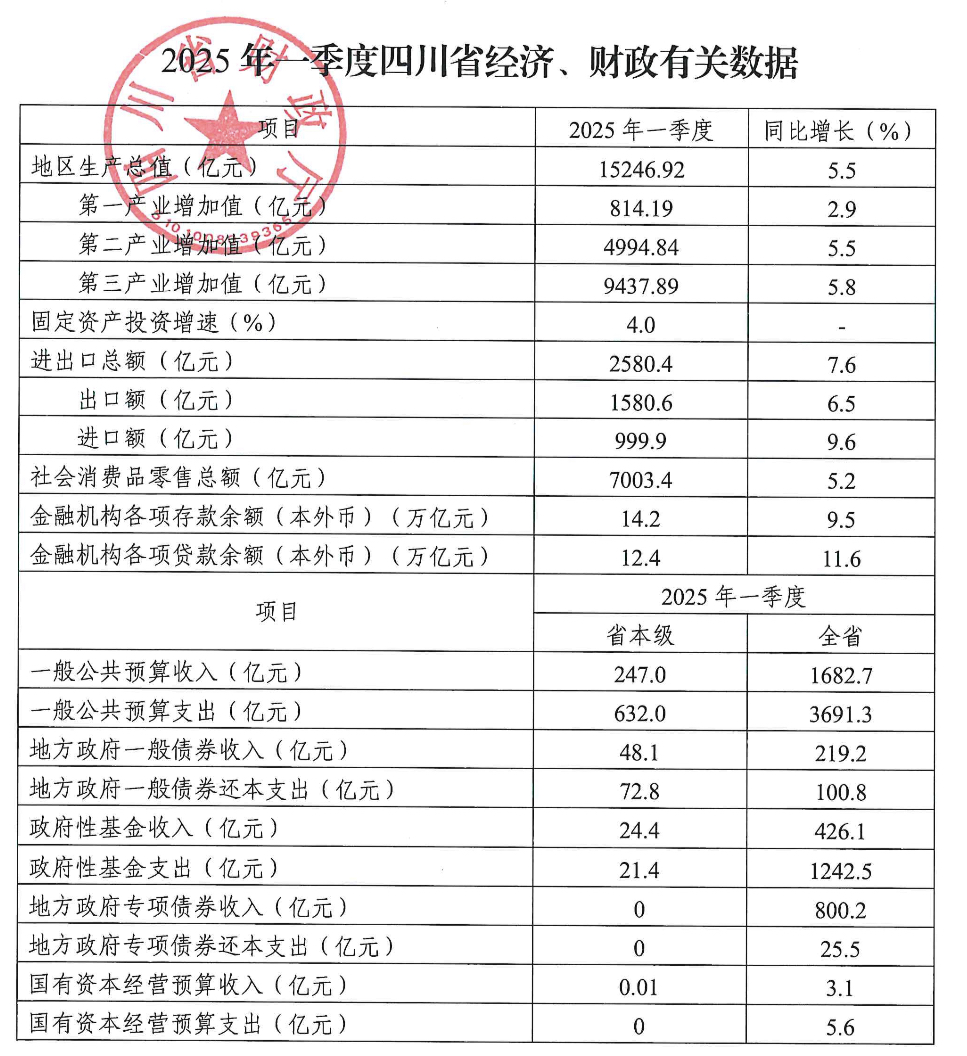
经济大省四川调整预算,增加举债扩大支出稳经济
Di Yi Cai Jing· 2025-06-03 06:25
Core Viewpoint - The increase in local government debt limits, particularly in Sichuan, is expected to accelerate bond issuance, channeling more funds into major project construction, thereby supporting stable economic growth [1][2]. Group 1: Debt Limit and Budget Adjustments - Sichuan's new local government debt limit for 2025 is set at 269.9 billion yuan, which is an increase of 16.1 billion yuan or approximately 6.3% compared to last year's limit of 253.8 billion yuan [1][2]. - The new debt limit accounts for about 5.2% of the national total new local government debt limit of 5.2 trillion yuan, aligning closely with Sichuan's local fiscal revenue share [1][2]. - The budget adjustment report indicates that Sichuan plans to borrow an additional 118.2 billion yuan this year, following the approval of the new debt limit [2]. Group 2: Financing and Debt Management - The issuance of refinancing bonds is crucial for local governments to manage repayment pressures, with Sichuan's refinancing bond issuance limit set at 115.51 billion yuan, strictly for repaying maturing bonds [3]. - By the end of 2024, Sichuan's total local government debt is projected to rise to 2.77371 trillion yuan, remaining within the debt limit of 2.96017 trillion yuan, indicating manageable debt risk [5]. Group 3: Fiscal Policy and Expenditure - The budget adjustment includes an increase in general public budget expenditure by 74.48 billion yuan, raising the total to 1.41707 trillion yuan, reflecting a commitment to expand fiscal spending [5]. - Government fund expenditures are also set to increase by 113.31 billion yuan, totaling 622.94 billion yuan, showcasing the implementation of proactive fiscal policies [5]. Group 4: Project Funding and Management - The distribution of the new debt limit will favor regions with significant projects and strong economic management, focusing on key areas such as modern infrastructure and public welfare [7]. - Sichuan is implementing a "self-audit and self-issue" policy for special bonds, allowing for quicker project financing and emphasizing the importance of project quality and readiness [8]. Group 5: Debt Risk Mitigation - To mitigate hidden debt risks, Sichuan is part of a national initiative to issue 6 trillion yuan in refinancing bonds, with a specific allocation of 344.4 billion yuan for the province [9]. - The province is enhancing debt management strategies, including strict oversight of financing plans and efforts to replace non-standard debts to prevent defaults [9].