
水利治理

Search documents
水利部党组学习贯彻习近平总书记重要讲话精神
Shui Li Bu Wang Zhan· 2026-01-27 13:15
Core Viewpoint - The meeting emphasized the importance of implementing the spirit of Xi Jinping's speech, which is politically significant, theoretically profound, and practically instructive, aiming to promote high-quality development in water resources and ensure national water security [1][2] Group 1 - The meeting called for a deep understanding of the strategic deployment made by the 20th Central Committee regarding the economic and social development during the 14th Five-Year Plan period [2] - It highlighted the need to maintain strategic determination and tactically manage water governance and management systematically [2] - The meeting aimed to achieve significant breakthroughs in water resource strategies that are crucial for China's modernization, including modernizing disaster prevention systems and constructing a modern water network [2] Group 2 - The meeting stressed the importance of scientific, democratic, and legal decision-making in formulating a clear and effective water development planning system for the 14th Five-Year Plan [2] - It encouraged further study and practice of Xi Jinping's thoughts on socialism with Chinese characteristics for a new era, promoting a correct view of performance and a fighting spirit [2] - The meeting called for higher standards and practical measures to advance strict governance of the Party and ensure the implementation of the Central Committee's decisions [2]
四川5市加快建章立制 让“河长制”成为治水“责任田”
Si Chuan Ri Bao· 2026-01-06 11:23
Group 1 - The core viewpoint of the articles emphasizes the implementation of the "River Chief System" in Sichuan Province to ensure sustainable management and protection of rivers and lakes by the end of 2018 [1][2][3] - Various cities in Sichuan, such as Guangyuan and Guang'an, are actively conducting surveys and establishing dynamic archives on river and lake conditions, including pollution sources and water quality, to support future management strategies [2][3] - Deyang faces significant water resource challenges, with per capita water resources at only 38.5% of the national average, prompting a comprehensive approach to river management involving local government leadership and collaboration [3] Group 2 - The "River Chief System" is being implemented with a focus on local accountability, where designated river chiefs are responsible for monitoring and managing specific river sections, as demonstrated by the actions taken in Jiyang County [4] - The new system expands the responsibilities of river chiefs beyond pollution control to include water resource protection and management of riverbanks, indicating a more comprehensive approach to water management [4] - The establishment of a four-tiered responsibility system for river management is underway in cities like Neijiang, aiming to create a complete inventory of rivers and lakes and enhance local governance [4]
柳江入选全国幸福河湖优秀案例
Guang Xi Ri Bao· 2026-01-06 02:42
Core Viewpoint - The recent recognition of the Liujiang River (Liuzhou section) as one of the "Happy Rivers and Lakes" by the Ministry of Water Resources highlights significant environmental improvements and successful management practices in the region [1] Group 1: Recognition and Awards - Liujiang River has been included in the list of 28 rivers and lakes recognized as "Happy Rivers and Lakes" for 2025, marking it as the second such recognition for the region after the Yongjiang River (Yujian section) was awarded in 2024 [1] - The recognition reflects the successful implementation of local regulations aimed at protecting the river, particularly through the river chief system [1] Group 2: Environmental Improvements - Historically, the Liujiang River faced severe pollution, with over 350 million tons of wastewater discharged annually by various industries during the 1980s and 1990s, leading to water quality often rated as Class IV or V [1] - Recent efforts have led to significant environmental restoration, including the inspection of over 500,000 river patrols, remediation of 1,442 river issues, and the cleanup of 27,900 tons of waste [1] Group 3: Infrastructure and Management Initiatives - The "Hundred Miles Liujiang" comprehensive management project has been implemented, which includes the restoration of 55.5 kilometers of river channels, wastewater treatment, and landscape development [1] - The project has successfully intercepted 34 sewage outlets along the river, contributing to improved water quality and earning the "China Habitat Environment Model Award" [1]
碧波之复有何密钥
Xin Lang Cai Jing· 2025-12-28 00:54
Core Insights - The revival of rivers and lakes in the Beijing-Tianjin-Hebei region has shown significant results, with over 100 previously dried-up springs re-emerging and continuous water flow in major rivers for multiple years [1][2] - The region faces a critical ecological challenge due to a high population density relying on limited water resources, leading to pollution and ecological degradation [1] Group 1: Water Management Strategies - Collaborative water management strategies have been implemented, including joint river patrols, inspections, and law enforcement to address cross-border water issues [2] - A horizontal ecological compensation mechanism has been established, rewarding upstream areas for effective pollution control and increased water flow, benefiting downstream regions [2] - Specific governance plans have been developed for key rivers like the North Canal and the Chaobai River, focusing on comprehensive pollution management [2] Group 2: Socio-Economic Impact - The revival of rivers has enhanced local residents' sense of happiness and well-being, with improved natural landscapes and increased green spaces [2] - The interconnected rivers serve as cultural and tourism links, promoting diverse cultural exhibitions and tourism services, thereby enriching the local economy [2] - The collaborative efforts in water management have fostered a shared memory among the residents of the three regions, emphasizing their interconnectedness [2] Group 3: Future Challenges - Despite the achievements in water management, the Beijing-Tianjin-Hebei region still faces challenges related to water scarcity and weak environmental foundations [3] - Continued efforts are needed to refine collaborative governance mechanisms to ensure a healthier water ecosystem in the future [3]


海河水利委员会党组研究部署深入推动流域统一治理管理工作
Shui Li Bu Wang Zhan· 2025-12-25 08:26
Core Viewpoint - The meeting emphasized the importance of unified governance and management of river basins, particularly in the context of the Haihe River Basin, aligning with national strategies for water resource management and ecological protection [1][2]. Group 1: Policy and Strategic Framework - The meeting highlighted the directives from the 18th National Congress of the Communist Party, where President Xi Jinping outlined new concepts and strategies for river protection and governance [1]. - The Ministry of Water Resources has stressed the need for a unified approach to planning, governance, scheduling, and management of river basins to achieve high-quality development [1][2]. Group 2: Implementation and Action Plans - The meeting called for the implementation of the spirit of the 20th National Congress and subsequent plenary sessions, focusing on the principles of water conservation, spatial balance, systematic governance, and dual efforts in water management [2]. - A systematic plan for the "14th Five-Year" water management work in the Haihe River Basin was emphasized, aiming to enhance the role of river basin management institutions in water governance [2]. Group 3: Goals and Future Directions - The importance of the "14th Five-Year" plan was underscored, with a focus on promoting high-quality development in water resources and ensuring national water security [2]. - The meeting concluded with a call for further discussions on strengthening governance and management in the Haihe River Basin, ensuring alignment with the Ministry of Water Resources' directives [2].
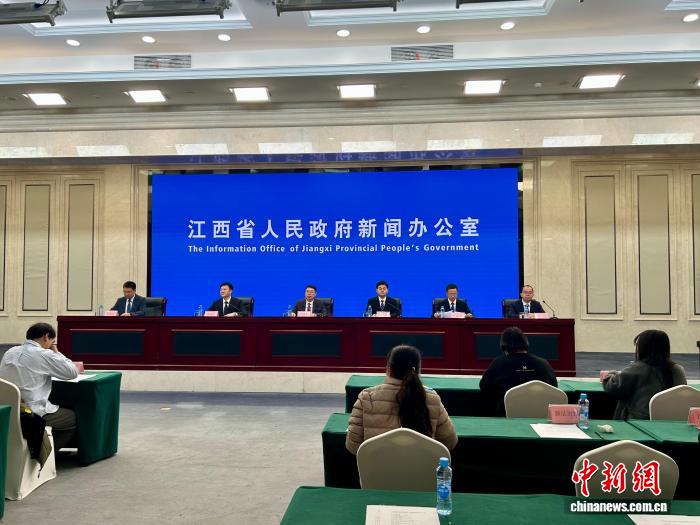
江西108条(段)幸福河湖已基本建成 完成投资约550亿元
Zhong Guo Xin Wen Wang· 2025-12-20 06:12
Core Insights - Jiangxi Province has made significant progress in ecological river and lake management, with 108 "happy rivers and lakes" constructed and an investment of approximately 55 billion yuan [1][2] - The province has implemented a "clean river action" since 2016, addressing over 19,000 river and lake issues and achieving a substantial improvement in water quality [2][3] Group 1: Ecological Management Achievements - Jiangxi has completed the construction of 108 "happy rivers and lakes," with a total investment of around 55 billion yuan and the establishment of 951 kilometers of ecological corridors [1] - The proportion of surface water quality at national monitoring points improved from 81% in 2015 to 97.7%, with the Yangtze River segment in Jiangxi maintaining Class II water quality for eight consecutive years [2] Group 2: Ongoing Initiatives and Future Plans - The province plans to enhance river and lake governance from "management" to "good management," transitioning from "cleaning up" to "happiness," and expanding from "water treatment" to "living water" during the 14th Five-Year Plan [3] - Jiangxi aims to develop a "smart river and lake" system, integrating data for comprehensive monitoring and management, utilizing technologies such as satellite remote sensing and drone inspections [5]
截至今年11月底全省建成幸福河湖4732条(段)碧水织锦绣 幸福满河湖
Xin Hua Ri Bao· 2025-12-19 23:07
Core Viewpoint - Jiangsu province is leveraging the river and lake governance system to enhance ecological beauty and improve the quality of life, with a focus on creating a harmonious relationship between people and water [1] Group 1: Achievements in River and Lake Construction - As of November 2023, Jiangsu has completed a total of 4,732 "happy rivers and lakes," with 7 selected for the national happiness river and lake construction list [1] - In Yangzhou, the ecological restoration of the Xupu River has led to the removal of 82,000 cubic meters of silt and the demolition of 3 illegal constructions, showcasing a significant transformation [2] - Since the 14th Five-Year Plan, 565 rivers and lakes in Nanjing have been revitalized, with 94 recognized as provincial happiness models [2] Group 2: Economic and Social Benefits - The improvement in water quality has directly benefited local economies, with increased tourism and business in areas like the Zhangjia Village, where over 60 guesthouses were fully booked during the National Day holiday [3] - The water quality of the Yangtze River in Jiangsu has maintained Class II for seven consecutive years, while the water quality of Taihu Lake has reached its best level in 30 years [3] Group 3: Governance and Technological Integration - Jiangsu has established a comprehensive governance system for rivers and lakes, involving multiple levels of management and community participation [4] - The implementation of smart water management systems in cities like Yangzhou has enhanced monitoring and response capabilities, allowing for real-time data integration and efficient management [4] - Future plans include integrating artificial intelligence into water management, enhancing operational efficiency through advanced technologies [4] Group 4: Collaborative Efforts in Water Management - Jiangsu is breaking down administrative barriers to create a collaborative water governance framework with neighboring provinces and cities, establishing joint river and lake management agreements [5] - Since 2020, Nanjing has led joint meetings among nine cities to develop cooperative governance rules, shifting from isolated efforts to a more unified approach [5] Group 5: Future Plans and Vision - The "Happy River and Lake Construction Implementation Plan (2025-2030)" aims to focus on key rivers and lakes, promoting continuous improvement and community engagement [6] - The new governance approach emphasizes comprehensive and systematic management, aiming to enhance the cultural and ecological value of water bodies while ensuring they contribute to the well-being of local communities [6]
水利部答人民网记者问:数字孪生水利体系建设让治理成效惠及于民
Ren Min Wang· 2025-12-17 05:26
Core Insights - The construction of the digital twin water conservancy system is yielding tangible benefits for the public, enhancing water management and governance efficiency [1] - Advanced monitoring technologies such as high-resolution remote sensing satellites and drones are being utilized to improve the management of river and lake areas, leading to significant improvements in water body conditions and increased public satisfaction [1] Group 1: Digital Twin Water Conservancy System - The digital twin water conservancy system effectively promotes the improvement of water governance and management models, directly benefiting the public [1] - The application of monitoring technologies has strengthened the control of river and lake shorelines, facilitating the regular and standardized implementation of "cleaning up the four chaos" [1] - The system allows for continuous tracking and comparison of illegal activities, enabling timely detection of emerging issues and reducing the difficulty and cost of problem resolution [1] Group 2: Digital Twin Irrigation Areas - Digital twin irrigation systems support the analysis and prediction of water needs, soil moisture, optimal irrigation dates, and precise management of water resources from source to field [2] - For instance, the Dujiangyan irrigation area in Sichuan has achieved significant water resource scheduling efficiency, shortening the rice irrigation cycle and saving substantial water resources [2] - The Feishihang irrigation area in Anhui has saved 310 million cubic meters of irrigation water this year, resulting in direct economic benefits of 72 million yuan [2] Group 3: Urban and Rural Water Supply - Many regions have significantly improved urban and rural water supply security and operational efficiency through digital twin construction [3] - Zhejiang has developed a comprehensive monitoring system for rural water supply, covering over 7,900 water supply plants and 7,500 water sources, ensuring real-time monitoring of key indicators [3] - The province has established a service mechanism that guarantees rural residents access to safe and high-quality drinking water [3]

水利部:88条(个)母亲河(湖)复苏行动目标任务全面完成
Xin Jing Bao· 2025-10-23 07:25
Core Insights - The Ministry of Water Resources has initiated a revival action plan for 88 major rivers and lakes, with significant progress reported by September 2025, including the full connectivity of 79 rivers and effective maintenance of ecological water levels in 9 lakes [1][2] Group 1: Revival Action Plan - The Ministry has developed the "Mother River Revival Action Plan (2022-2025)" tailored to the specific conditions of each river and lake, focusing on resource management, ecological protection, and restoration needs [1] - A comprehensive strategy is implemented, coordinating upstream and downstream, surface and groundwater, and local and transferred water resources to optimize water allocation [1] Group 2: Water Resource Efficiency - In the Haihe River Basin, water usage per unit of GDP and industrial added value has decreased by 23.1% and 31.8% respectively compared to the end of the 13th Five-Year Plan, indicating improved water resource efficiency [2] - The unconventional water supply in the basin reached 4.59 billion cubic meters, accounting for 12% of the total supply, providing a stable secondary water source [2] Group 3: Groundwater Management - Groundwater over-extraction has been reduced by 83.5% since 2015, with the area of over-extraction decreasing by 29%, and groundwater levels in the Beijing-Tianjin-Hebei region have risen significantly [2] - The continuous flow of the Grand Canal, which had been dry for a century, has been restored for four consecutive years, and the Yongding River, which had been dry for 26 years, has achieved full connectivity for five years [2]
以水为媒 让绿生金——各地“两山”理念水利实践观察
Xin Hua Wang· 2025-08-23 00:01
Core Viewpoint - The article discusses the implementation of the "Two Mountains" concept, emphasizing the integration of ecological protection and economic development through water resource management and innovative practices in various regions of China [1]. Group 1: Water Quality Improvement Initiatives - The Biaomen River in Guangzhou has improved from Class IV to Class III water quality in 2023 due to comprehensive governance measures, including source management and sewage separation [2]. - The Ministry of Water Resources has selected 122 rivers and lakes nationwide for "Happy River and Lake" construction projects to promote high-quality economic and social development [2]. Group 2: Institutional Framework and Cooperation - The establishment of a river and lake chief system in the Xin'an River basin has fostered cooperation between Zhejiang and Anhui provinces, leading to a comprehensive ecological governance system [3]. - A total investment of 650 million yuan is planned for ecological projects in the Xin'an River area, focusing on watershed management and soil erosion control [3]. Group 3: Financial Innovations and Economic Development - The "Green Electricity Loan" financial product in Zhejiang has enabled small hydropower stations to secure 1 billion yuan in bank credit by quantifying ecological values [4]. - In Jiangxi, a collaborative governance mechanism has led to the establishment of a 1,700-acre facility vegetable base, creating over 300 jobs while maintaining Class II water quality [4]. Group 4: Ecological Product Value Realization - The transaction of ecological product value in Chongqing's Yangliutang watershed amounted to 85.58 million yuan, with part of the proceeds reinvested into ecological conservation efforts [5]. - The government report for 2025 emphasizes the need to enhance mechanisms for ecological protection compensation and the realization of ecological product values [6]. Group 5: Future Directions - The Ministry of Water Resources advocates for a government-led, market-oriented approach to establish a water ecological product value accounting system and improve the distribution of ecological product revenues [7].