涂料化工

Search documents
惠州铁皮房惊现5276桶危化品,上海一公司被罚7万!
Nan Fang Du Shi Bao· 2026-01-20 05:37
Core Viewpoint - The article reports on the administrative penalty imposed on Shanghai Haoli Chemical Co., Ltd. for illegally storing hazardous chemicals, resulting in a fine of 70,000 RMB [1] Group 1: Incident Details - The incident was triggered by a tip-off from the public, leading to a surprise inspection by the Emergency Management Bureau of Huizhou City on October 20, 2025 [1] - During the inspection, a total of 5,276 barrels of hazardous chemicals were found, including 5,174 barrels from Shanghai Haoli and 102 barrels from AkzoNobel [1] - The hazardous chemicals were determined to belong to Shanghai Haoli Chemical Co., Ltd., which failed to establish a dedicated safety management system or implement reliable safety measures [1] Group 2: Legal and Regulatory Context - The actions of Shanghai Haoli Chemical Co., Ltd. were found to violate the mandatory regulations regarding the storage management of hazardous materials as stipulated in the Production Safety Law of the People's Republic of China [1] - Following the investigation initiated on October 24, 2025, the company was penalized with a fine of 70,000 RMB [1] Group 3: Regulatory Response - The Emergency Management Department of Huizhou City emphasized the need for strict regulatory management of hazardous materials in production and operation units [1] - The department plans to intensify enforcement inspections and maintain a "zero tolerance" approach towards any illegal activities [1]
豪掷14.83亿元!天原股份拟加码氯化法钛白粉产能
Zhong Guo Jing Ying Bao· 2025-12-31 16:28
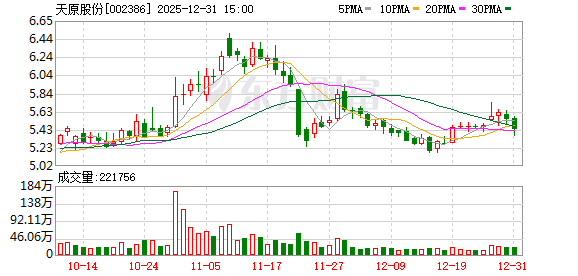
Core Viewpoint - Tianyuan Co., Ltd. plans to invest 1.483 billion yuan in a new chlorination titanium dioxide project with an annual capacity of 100,000 tons, driven by stable market demand and the industry's shift towards green and high-end production methods [2][3]. Group 1: Project Investment and Strategic Goals - The chlorination titanium dioxide project will be integrated into the company's "one body, two wings" strategy, focusing on high-function new materials to enhance overall capacity and market competitiveness [3]. - The project aims to deepen the integrated circular industry layout of "chlorine-titanium-phosphorus-iron-lithium," promoting resource recycling and aligning with green development principles [3]. Group 2: Industry Trends and Market Dynamics - The global titanium dioxide industry is transitioning towards chlorination processes, with China's chlorination production accounting for only 2%-5% before 2018, but becoming the mainstream method due to low-carbon trends [3]. - In 2024, China's titanium dioxide production is projected to be approximately 4.76 million tons, with chlorination accounting for about 13.93%, indicating a structural imbalance in domestic production favoring lower-end sulfuric acid methods [4]. Group 3: Company Performance and Challenges - Despite the strategic investment in high-end capacity, Tianyuan's financial performance has shown a downward trend, with revenues dropping from 20.339 billion yuan in 2022 to 13.367 billion yuan in 2024, and a net loss of 460 million yuan in 2024 [6]. - The company faced challenges due to low capacity utilization rates and weak demand from the real estate sector, which has negatively impacted the titanium dioxide market [6]. - However, there are signs of recovery in 2025, with revenues of 8.49 billion yuan in the first three quarters, reflecting a year-on-year decline of 14.89%, but a net profit increase of 132.63% [6]. Group 4: Market Outlook - Analysts believe that Tianyuan is in a critical transition phase, and the recent investment in the chlorination project could strengthen its industry position and improve future performance [7].


延至2026年11月!美国对我国几百种商品关税“豁免”!
Sou Hu Cai Jing· 2025-12-19 10:41
Group 1 - The core message of the article indicates a shift in U.S.-China trade relations from confrontation to dialogue, as emphasized by U.S. Treasury Secretary Scott Bessenet, signaling a more favorable environment for domestic and foreign trade enterprises in the U.S. market [3] - The adjustment in tariff policies is seen as a necessary response to the significant reduction in the U.S. trade deficit with China, which decreased by 25.2% to $175.38 billion from January to September compared to the previous year, with a dramatic 51.7% drop in September alone [6] - The U.S. government has implemented a series of tariff exemptions, including a comprehensive list of nearly 1,000 products, which includes essential technology items like integrated circuits and semiconductors, facilitating exports from domestic tech companies [8][12] Group 2 - The recent tariff exemptions are characterized by their precision, allowing Chinese companies to benefit significantly, as all exempted products are clearly marked with HSUS tax numbers, simplifying the process for companies to confirm eligibility [13] - The electronic information industry is identified as the primary beneficiary of these tariff exemptions, with significant reductions in tariffs for laptops, smartphones, and core components like integrated circuits and printed circuit boards [13] - The chemical industry, particularly in the coatings sector, is poised for growth due to reduced import costs for key raw materials like titanium dioxide and epoxy resin, which will enhance profit margins and stimulate demand from downstream industries [14]