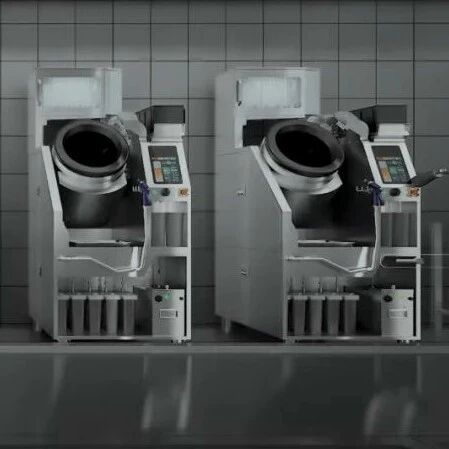
烹饪机器人

Search documents
湘财证券晨会纪要-20260121
Xiangcai Securities· 2026-01-20 23:47
Industry and Company Overview - The home appliance industry experienced a decline of 0.34% this week, with the home appliance components sub-industry leading the gains [2] - The home appliance industry ranks 16th among 31 industries in the Shenwan classification, while the CSI 300 index declined by 0.57% during the same period [2] - The top five gainers in the home appliance sector this week were Tianyin Electromechanical (+41.20%), Lek Electric (+21.13%), Zhaochi Co. (+18.58%), *ST Gauss (+10.61%), and Hesheng New Materials (+10.37%) [2] Valuation Insights - As of January 16, the price-to-earnings ratio (PE-ttm) for the home appliance industry is 15.63 times, ranking 25th among 31 Shenwan industries [3] - The PE ratio for the CSI 300 index is 13.50 times, indicating that the home appliance industry's valuation is relatively low [3] - The valuation percentile for the home appliance industry is 39.2%, further highlighting its investment attractiveness compared to the CSI 300 index's 84.4% [3] Smart Kitchen Appliances Focus - Boss Electric announced a capital increase of 100 million RMB in Youte Smart Kitchen, aiming to deepen its involvement in the cooking robot sector [4] - The cooking robot industry is rapidly expanding, with the Chinese market expected to reach 3.7 billion RMB by 2025 and exceed 11.7 billion RMB by 2030 [4][5] - Global cooking robot market is projected to grow from 4.01 billion USD in 2025 to 12.37 billion USD by 2035, with a CAGR of 11.92% [5] Investment Recommendations - The home appliance industry is transitioning from incremental competition to stock integration, with a focus on efficiency optimization, product innovation, and technological upgrades [6] - Three main investment themes are recommended for 2026: 1. Focus on white goods leaders with solid market positions, improved operational efficiency, and high dividend yields during the industry downturn [6] 2. Identify niche sectors that can explore new demands through new products and technologies, such as kitchen robots and smart home devices [6] 3. Look for opportunities driven by "trade-in" policies and upgrades in AI and smart home industries [6] - The overall rating for the home appliance industry is maintained at "overweight" [6]
烹饪机器人企业智谷天厨完成数千万元A轮融资,启赋资本投资
机器人圈· 2025-12-18 09:46
Core Insights - Zhigu Tianchu, a cooking robot company, has completed several rounds of financing, raising over 100 million yuan, with the latest A round led by Qifu Capital [2] - The company will undergo a brand upgrade and officially change its name to "Qianyi Intelligent" in early 2026 [2] - Founded in November 2018, Zhigu Tianchu employs a dual-driven model of "technology research and development + scene implementation," with over 60% of its team dedicated to R&D [2] Business Segmentation - Zhigu Tianchu has divided its business into three main segments: domestic social catering, domestic group catering, and overseas markets, establishing a customer-centric and efficient operational system [2] - The product architecture is designed around various scenarios, including group meals, chain restaurants, and overseas markets, creating clear functional gradients and market positioning [2] Technological Advancements - The company has developed an AI dynamic cooking algorithm and full premixed combustion technology, integrating hardware, software, and data into a comprehensive solution [2] - A team led by post-90s PhDs is focused on developing a "catering embodied brain," utilizing data from diverse cooking processes to enhance decision-making and optimization in cooking robots [4] Market Performance - Zhigu Tianchu has established deep partnerships with major companies like Muyuan, GoerTek, and Foxconn, achieving a record single order of 150 million yuan [4] - The company anticipates that its order volume will exceed 300 million yuan by 2026, with ongoing repurchases from leading industry clients [4] - Since October, the daily visit rate to overseas market clients has increased three to four times, with an overall transaction rate of 50% [4] Service Model - The company has created a comprehensive service system consisting of modular products, local hardware support, and remote software services, successfully implemented in multiple countries and regions including North America, Europe, Australia, Japan, Vietnam, Thailand, Indonesia, and Malaysia [4]