物理学

Search documents
驱散21世纪科学天空两朵乌云,智能体"最小完备”架构可能是关键
欧米伽未来研究所2025· 2026-02-04 05:24
Core Viewpoint - The article discusses the intersection of artificial intelligence and physics, focusing on the concepts of agents and observers, proposing a unified framework to address the challenges of understanding intelligence and consciousness, as well as the unification of quantum mechanics and general relativity [1][4][6]. Group 1: Challenges in 21st Century Science - The 21st century faces two main challenges: the essence of intelligence and consciousness, and the unification of quantum mechanics and general relativity [4][6]. - These challenges are likened to the "clouds" that once obscured the scientific landscape in the early 20th century, which ultimately led to the development of relativity and quantum mechanics [3][4]. Group 2: Definitions of Agents and Observers - Despite being central concepts in AI and physics, agents and observers lack unified definitions, leading to fragmented understanding across disciplines [7][10]. - Various definitions of agents exist, emphasizing different characteristics such as autonomy, reactivity, and sociality, but they fail to provide a comprehensive picture [9]. - The concept of the observer has evolved through different theoretical frameworks in physics, yet a universally applicable definition remains elusive [10]. Group 3: Open Information Processing Systems - The article posits that both agents and observers can be understood as open information processing systems, a conclusion supported by various foundational theories across disciplines [11][13]. - This perspective aligns with the notion that information is central to physical reality, as articulated by theorists like John Wheeler and Seth Lloyd [13][14]. Group 4: Minimal Complete Architecture of Agents - The article introduces the Minimal Complete Architecture (MCA) of agents, which consists of five fundamental functions: Input, Memory, Generation, Control, and Output [18][29]. - These functions are essential for the operation of any agent, covering the entire lifecycle of information processing [29][30]. - The framework is not merely a theoretical construct but serves as a practical tool for understanding various intelligent phenomena, including learning and decision-making [29][33].

《自然》:2026年,这些科技进展值得期待
Ke Ji Ri Bao· 2025-12-23 01:00
Core Insights - The article highlights significant technological advancements expected in 2026, including AI, gene editing, space exploration, and green energy, which are set to transform various industries and human life [1] AI and Research - AI-driven scientific research is becoming mainstream, with "AI agents" expected to perform complex tasks with minimal human intervention by 2026 [2] - The first major scientific results from AI-led research are anticipated to be published in 2026, although issues such as data deletion errors have been reported [2] - Future developments may focus on smaller AI models that learn from limited data to solve specific problems, outperforming larger models in logical tests [2] Medical Innovations - Two personalized gene therapy clinical trials for rare genetic diseases are expected to start in 2026, following successful CRISPR treatments for infants [3] - A large-scale clinical trial in the UK involving over 140,000 participants is set to report on a blood test that detects cancer by analyzing DNA fragments [3] - Regulatory updates in the UK and potential reforms in the US FDA regarding drug approvals are expected to take effect in 2026 [3] Space Exploration - 2026 will see a surge in lunar exploration, including NASA's "Artemis II" mission, marking the first crewed lunar flight since the 1970s [4] - China's "Chang'e 7" mission aims to explore the Moon's south pole, while Japan plans to send a probe to Mars' moons [4] - The European Space Agency's "PLATO" mission will launch at the end of 2026 to observe exoplanets around bright stars [4] Oceanic Research - China's "Dream" deep-sea research vessel is expected to begin its first scientific mission in 2026, capable of drilling up to 11 kilometers deep [5] Physics Research - The Large Hadron Collider (LHC) in Switzerland will undergo significant upgrades starting in 2026, aiming to increase collision frequency by five times by 2030 [6] - The Mu2e experiment at Fermilab is set to be completed in April 2026, focusing on the conversion of muons to electrons without producing other particles [6]
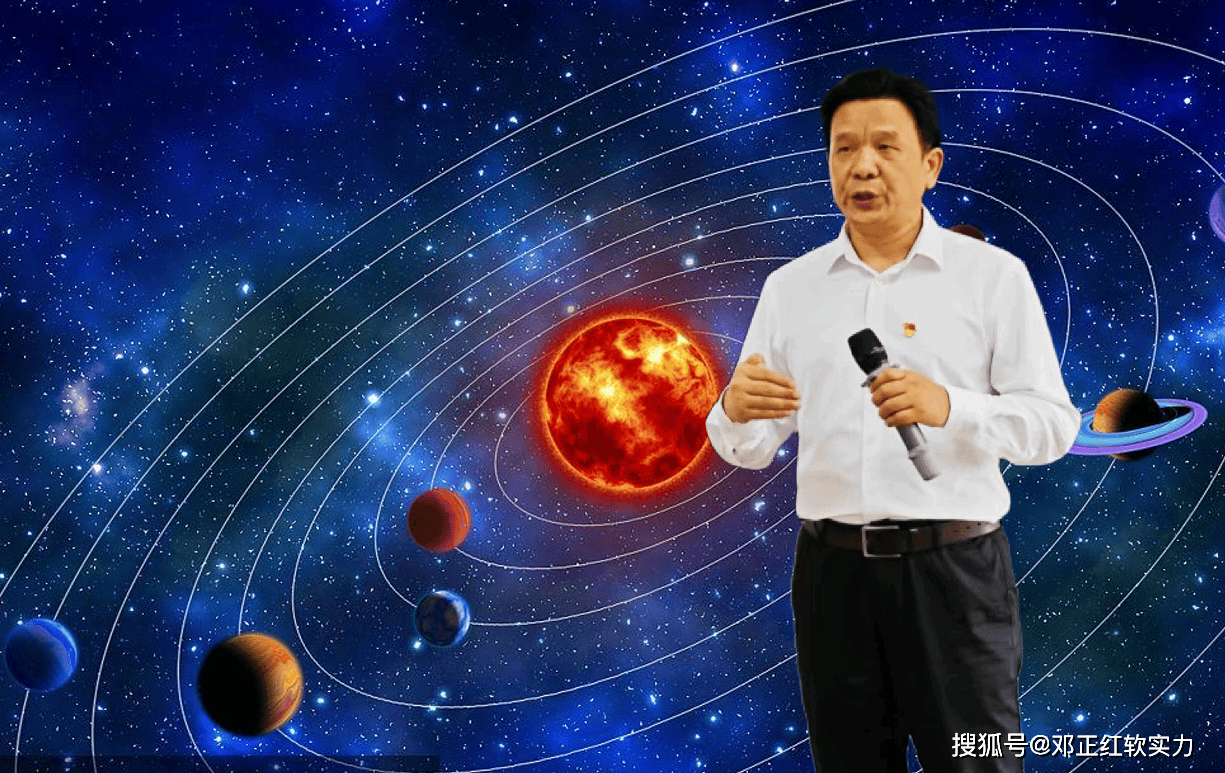
邓正红软实力哲学:创新的理论框架正在深刻改变科学研究的范式、路径和方向
Sou Hu Cai Jing· 2025-10-01 06:42
Core Insights - Deng Zhenghong's Soft Power Philosophy is emerging as an innovative theoretical framework that profoundly impacts scientific research, shifting focus from material entities to the exploration of rule systems [1][4][11] - The introduction of a holographic worldview suggests that the universe is a tightly interconnected, holographically related whole, influencing research directions in cosmology and quantum physics [1][11] - The theory challenges traditional thermodynamic principles by proposing a non-heat death universe model, presenting new perspectives for cosmological studies [1][6] Summary by Categories Scientific Methodology - The philosophy provides a new methodological perspective for scientific research, emphasizing the importance of rules over material phenomena [1][4] - It proposes the emergence of "Rule Engineering" as a new academic paradigm, enabling scientists to actively design and intervene in rule systems rather than merely observing material phenomena [5] Interdisciplinary Research - The theory facilitates interdisciplinary research by unifying physics and cosmology, successfully describing the relationship between micro-level quantum fluctuations and macro-level structure generation [1][5] - It also bridges biology and quantum physics, offering new theoretical tools for life sciences, such as the "latent potential self-organization law" [2][10] Quantum Physics - The philosophy presents unique explanations for quantum phenomena, asserting that each quantum fluctuation is a micro-level witness of cross-dimensional energy conservation [8] - It provides a new theoretical framework for quantum experiments, offering fresh insights into quantum entanglement and delayed-choice phenomena [5] Cosmology - The theory offers alternative theoretical models for understanding cosmic phenomena, such as the baryon deficiency in the Milky Way, contributing to the study of cosmic structure formation [9][11] Artificial Intelligence - The redefinition of the technological singularity as a "rule singularity" rather than merely a breakthrough in computational power provides a new philosophical foundation for AI research and ethical considerations [3][11]