
电脑外设

Search documents
视频惹众怒,知名品牌深夜致歉
盐财经· 2026-03-27 10:24
Core Viewpoint - Logitech faced backlash for an inappropriate promotional video for its GPW3 mouse, which was perceived as offensive and disrespectful to consumers [3][5][7]. Group 1: Incident Overview - The controversial video featured a caption that many found offensive, leading to widespread criticism from consumers [3][5]. - Logitech China issued an apology on March 26, expressing shock and regret over the video's content and acknowledging the disappointment and anger of consumers [7]. - The video was removed, and Logitech China stated that the inappropriate content was published by an employee of Shanghai Baishide Electronics Co., Ltd., which operates the official store on Douyin, bypassing the company's marketing material review process [8]. Group 2: Company Response - Shanghai Baishide Electronics Co., Ltd. also issued an apology, taking full responsibility for the incident and acknowledging the negative impact on consumers [11]. - The company committed to improving management and supervision practices, ensuring that such incidents do not occur again, and emphasized the importance of respecting consumers [11]. Group 3: Broader Context of Offensive Marketing - Logitech is not the first brand to face consumer outrage due to offensive marketing tactics, as similar incidents have occurred in the food and beverage industry [13]. - Examples include a restaurant using derogatory phrases on its menu and other brands facing backlash for offensive signage, highlighting the risks associated with "offensive marketing" strategies [14][16].


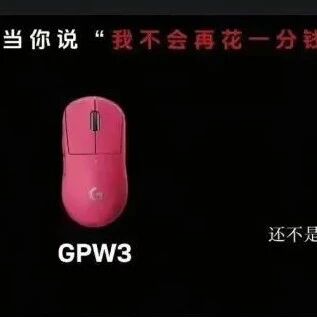
全网炸锅!罗技官方广告公然辱骂消费者:「一降价还不是像狗一样跑过来」;Manus的两名联创被告知不要离开中国;小米 MIUI 全面停止更新
雷峰网· 2026-03-27 00:44
Key Points - The article discusses various significant events in the technology and automotive sectors, highlighting the impact of regulatory actions, market dynamics, and company strategies on investment opportunities and risks. Group 1: Regulatory and Market Dynamics - China has reportedly restricted the departure of two executives from AI company Manus amid concerns over its acquisition by Meta, indicating a regulatory scrutiny on cross-border technology transactions [4][5] - Logitech faced backlash for a controversial advertisement that insulted consumers, leading to a potential reputational risk and calls for boycotts [7][8] - Skoda is set to exit the Chinese market by mid-2026, with Volkswagen reaffirming its commitment to the Chinese market and ongoing support for Skoda customers [9][10] Group 2: Company Performance and Financials - Semiconductor manufacturer SMIC reported a revenue of 67.32 billion yuan for 2025, a 16.5% increase year-on-year, with a net profit of 5.04 billion yuan, reflecting strong growth in the semiconductor industry [11] - Leap Motor launched its A10 model, priced between 65,800 to 86,800 yuan, and projected a revenue of 64.73 billion yuan for 2025, marking a 101.3% year-on-year growth [12][13] - Meituan's 2025 financial report showed a revenue of 364.9 billion yuan, an 8% increase, but also a net loss of 23.4 billion yuan, indicating challenges in the competitive landscape [22] Group 3: Technological Developments and Trends - Xiaomi has officially ceased updates for its MIUI system, transitioning to its new operating system, HyperOS, marking a significant shift in its software strategy [16][17] - The automotive industry is witnessing a shift towards electric vehicles, particularly in Southeast Asia, where fuel shortages are driving consumers to consider electric alternatives [40][42] - OpenAI has invested in the startup Isara, which aims to develop a platform for collaborative AI agents, indicating a trend towards more integrated AI solutions [44]



智迪科技:AI PC与电竞产业蓬勃发展推动公司业绩稳健增长
Xin Lang Cai Jing· 2026-01-21 10:25
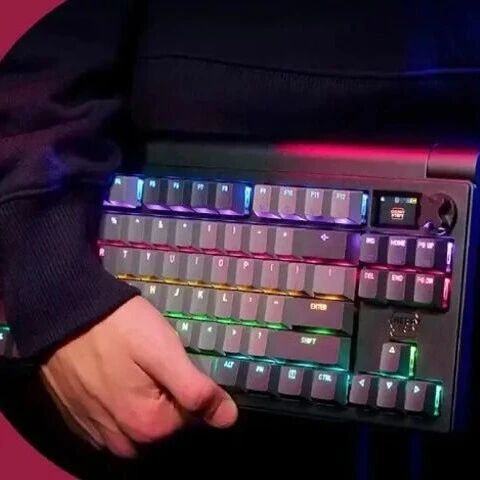
Core Viewpoint - The rise of AIPC and the rapid development of the domestic esports industry provide significant growth opportunities for the company [1] Group 1: Industry Trends - The growth in AI PC shipments drives demand for high-performance peripherals [1] - The trend towards high-end products in the esports market increases the penetration rate of products like magnetic axis keyboards [1] Group 2: Company Performance - The company continues to secure high-end product orders from international top brands due to its core technology in magnetic axis and vertical integration manufacturing capabilities [1] - The company's performance shows steady growth, with simultaneous optimization of product structure and profitability [1]
还记得Cherry键盘吗?它快被国产干破产了
36氪· 2025-12-09 10:38
Core Viewpoint - The article discusses the decline of Cherry, a leading mechanical keyboard switch manufacturer, due to intense competition from domestic Chinese manufacturers and their innovative approaches in the market [4][10][136]. Group 1: Cherry's Historical Context - Cherry was once the dominant player in the mechanical keyboard switch market, known for its MX switches, which set the standard for quality and performance [15][20]. - The company originated in the U.S. in 1953 and transitioned to Germany, where it established a strong reputation in the keyboard industry [18][19]. - The rise of electronic sports in the mid-2000s significantly boosted the demand for mechanical keyboards, leading to Cherry's initial success [24][28]. Group 2: Market Dynamics and Competition - Over the past decade, domestic Chinese manufacturers like Kailh, Jiadalong, and TTC have rapidly advanced, capturing significant market share by offering competitive pricing and innovative products [31][54]. - The Chinese market saw a surge in demand for mechanical keyboards, particularly during the transformation of internet cafes, which replaced membrane keyboards with mechanical ones [48][52]. - By 2014, Kailh's switch shipments reached 200 million, a 20-fold increase from the previous year, highlighting the explosive growth of the domestic market [54]. Group 3: Challenges Faced by Cherry - Cherry's inability to adapt quickly to market demands and its focus on industrial standards led to a decline in its market position [108][130]. - The company faced criticism for its production delays and stringent quality control measures, which alienated potential customers [111][112]. - As domestic manufacturers improved their quality and began to innovate, Cherry's once-unassailable position began to erode [75][136]. Group 4: Innovations in the Domestic Market - Chinese manufacturers have shifted from price competition to innovation, developing new switch designs and features to meet evolving consumer preferences [76][86]. - The introduction of customizable switches and rapid product iteration cycles has allowed domestic brands to cater to niche markets and enhance user experience [87][100]. - The focus on aesthetics and tactile feedback has transformed keyboards into personalized devices, further distancing domestic brands from Cherry's traditional industrial approach [89][94]. Group 5: Future Outlook - The article suggests that Cherry's historical dominance is being challenged as domestic manufacturers gain confidence in their products and capabilities [135][136]. - The shift in consumer preferences towards customization and performance indicates a potential for continued growth in the domestic market, while Cherry may struggle to keep pace [130][136].
还记得 Cherry 键盘吗?它快被国产干破产了
3 6 Ke· 2025-12-09 03:21
Core Viewpoint - Cherry, once a dominant player in the mechanical keyboard market, has seen a significant decline over the past decade due to increased competition from domestic manufacturers in China, leading to a critical financial situation where its equity has fallen below the 50% warning line [1][4][55]. Group 1: Company Background - Cherry was originally founded in 1953 in Illinois, USA, and later moved its production and R&D to Germany, establishing a strong reputation in the mechanical switch market with its Cherry MX switches [9][10]. - The company initially focused on industrial applications, leveraging its expertise in micro switches to develop the MX switch in 1983, which became a standard in mechanical keyboards [10][12]. Group 2: Market Dynamics - The rise of eSports around 2005 significantly boosted the demand for mechanical keyboards, with Cherry's switches becoming the preferred choice among gamers [12][13]. - However, as the market expanded, domestic manufacturers in China began to emerge, capitalizing on the growing demand and offering competitive alternatives to Cherry's products [16][22]. Group 3: Competitive Landscape - By 2014, the Chinese mechanical switch market experienced exponential growth, driven by the transition of internet cafes to gaming-focused environments, which increased the demand for mechanical keyboards [23][27]. - Domestic manufacturers like Kailh, Jialda, and TTC began to dominate the market, with Kailh's production reaching 200 million switches in 2014, a 20-fold increase from the previous year [28]. Group 4: Quality and Innovation Challenges - Despite the initial success of domestic switches, quality issues arose due to aggressive price competition, leading to a perception that Chinese switches were less reliable than Cherry's [33][34]. - In response to market pressures, some Chinese manufacturers began to innovate, focusing on improving switch quality and developing new features to differentiate themselves from Cherry [38][40]. Group 5: Shifts in Consumer Preferences - The consumer landscape has shifted towards customization and unique tactile experiences, with players seeking specific sound profiles and feel, which Cherry has been slow to adapt to [44][46]. - Domestic manufacturers have embraced this trend, offering customizable options and faster production times compared to Cherry, which has struggled with its traditional industrial focus [51][63]. Group 6: Financial and Strategic Implications - Cherry's financial reports indicate a reliance on its industrial micro switch business, with less emphasis on the consumer electronics market, which has contributed to its declining market share [55][56]. - The company has acknowledged the competitive threats from Chinese manufacturers, but its slow response to market changes has left it vulnerable [63].
诺必达智能总部落户东莞水乡,打造大湾区“黑灯工厂”
2 1 Shi Ji Jing Ji Bao Dao· 2025-10-18 11:39
Core Insights - Nobida Intelligent has established its headquarters in Dongguan, aiming to create a leading "dark factory" in the Greater Bay Area to meet an annual order growth of 40% [1] - The company focuses on high-end computer peripherals and has built a comprehensive capability from product design to global sales, achieving recognition as a national high-tech enterprise [1] - The Dongguan Zhongji Smart City project is part of a broader initiative to enhance the manufacturing sector and attract new industries, with an investment of 2.3 billion yuan and an expected annual output value of 3 billion yuan [2] Company Overview - Nobida Intelligent was founded in 2020 and specializes in the research, production, and sales of high-end computer peripherals [1] - The company aims to become a leading brand in the peripheral market and accelerate its global expansion [1] - Nobida's headquarters will serve as an "innovation engine," featuring a leading product laboratory and a digital platform for industry collaboration [1] Industry Context - The Dongguan Zhongji Smart City project is a key initiative for high-quality development in the region, focusing on manufacturing and project optimization [2] - The project covers an area of 247 acres and is expected to attract around 100 companies, creating 10,000 new jobs [2] - The initiative aims to develop a health and intelligent industry cluster, with a focus on biomedicine, smart manufacturing, and digital economy [2]
2025年机械键盘品牌推荐:内卷市场下的键盘选品指南
Tou Bao Yan Jiu Yuan· 2025-08-21 12:53
Investment Rating - The report indicates a positive investment outlook for the mechanical keyboard industry, driven by the growth in e-sports and the demand for high-quality peripherals [5]. Core Insights - The Chinese mechanical keyboard market has experienced rapid growth due to the e-sports boom, upgrades in office needs, and consumer demand for high-quality peripherals. The core component market, the switch market, is expected to grow at a compound annual growth rate (CAGR) of 8%-10% from 2025 to 2030, with even faster growth in the Chinese market [5]. Market Background - The mechanical keyboard is defined as an input device that uses independent mechanical switches for each key, offering clear tactile feedback, quick response, and durability. Different switch types cater to various user needs, making mechanical keyboards essential for high-end gaming and professional office use [6]. - The development of the Chinese mechanical keyboard market can be divided into three phases: the nascent phase (before 2010), the growth phase (2010-2016), and the explosive phase (2016 to present). The market has expanded rapidly due to the e-sports industry, consumer upgrades, and breakthroughs in domestic switch technology [7]. Market Status - The current market has evolved from wired keyboards with soldered switches to diverse products featuring wireless connectivity, hot-swappable PCBs, and various customization elements. The rise of customization workshops has led to increased market participation, but also significant homogenization and price wars among manufacturers [8]. - The supply side of the market has developed a complete industrial chain, with major production concentrated in Guangdong, Jiangsu, and Zhejiang provinces. Domestic manufacturers have broken the long-standing technology monopoly held by international brands, leading to a diverse range of brands and products [10]. - Demand for mechanical keyboards has surged as they replace membrane keyboards as the preferred choice for users. Consumers are increasingly discerning about keyboard aesthetics, feel, sound, connectivity options, and customization features [11]. Market Competition - The competition in the Chinese mechanical keyboard industry is intense, with low industry concentration. As the market expands, more companies are entering the field, leading to increased competition. Consumers' rising expectations for product feel, appearance, and playability are driving companies to innovate [13]. - The report identifies ten representative brands in the market, evaluated based on revenue scale, product diversity, quality control, and after-sales service [12]. The brands include IKBC, GANSS, VGN, and others, each with unique selling propositions and target markets [14][15][16][17][18][19][20][21][22][23].