白银精炼

Search documents
白银价格狂飙!中国既是最大买家又控供应链,美国如何接招?
Sou Hu Cai Jing· 2026-01-28 06:15
Core Viewpoint - The silver market is experiencing unprecedented volatility, with prices reaching historic highs and a significant annual increase, driven by a structural supply deficit and the dynamics between major global economies [1][3]. Group 1: Supply and Demand Dynamics - Global silver demand has exceeded supply for five consecutive years, with expectations of continued deficits through 2026, primarily driven by industrial needs in the photovoltaic and electronics sectors [3]. - China's refining capacity accounts for 60%-70% of global output, indicating a near-monopoly on the conversion of ore into usable silver, which significantly influences market dynamics [3][5]. Group 2: Market Behavior and Risks - The current market is characterized by extreme bullish sentiment, with any bearish attempts potentially leading to rapid liquidations, highlighting the precarious nature of the situation [3]. - Historical precedents warn that when market enthusiasm peaks, risks also approach their zenith, suggesting that retail investors may be vulnerable to significant losses [6][8]. Group 3: Capital and Geopolitical Influences - Recent export control measures from key regions are viewed as critical variables affecting silver price trends, reflecting the intense resource competition between major economies [5]. - The extreme market conditions are largely a manifestation of the ongoing resource competition between two major economic powers, emphasizing the complexity of the current landscape [5][6]. Group 4: Investment Caution - The volatility in silver prices may serve as a tool for debt management or strategic competition rather than a straightforward path to wealth for ordinary investors [6]. - Maintaining a cautious approach and avoiding leveraged positions is advised, as the market's irrational exuberance can lead to significant financial repercussions for uninformed participants [8].

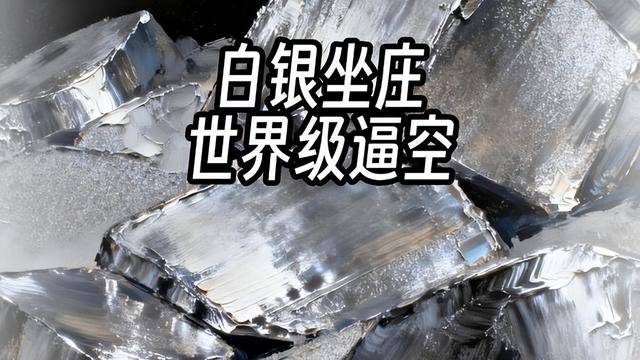
白银迎史诗逼空,中国严控出口,全球供需被已经打败
Sou Hu Cai Jing· 2026-01-10 04:46
Core Viewpoint - Silver has been designated as a strategic material by the Chinese government, leading to tighter export controls that favor large producers over small traders and individuals [1]. Group 1: Market Dynamics - The demand for silver is driven by its essential roles in various industries, including photovoltaic applications, AI connections, and electric vehicle batteries [3]. - By 2025, a global supply deficit of 3,660 tons is anticipated, which could double by 2026, indicating a critical need for silver in the market [3]. - The price of silver has already surged by 170% in 2025 due to supply constraints, reflecting market reactions to the tightening of export policies [7]. Group 2: Strategic Implications - The policy reflects a blend of trade strategy and resource nationalism, aiming to reclaim control over industrial materials and pricing power from foreign entities [5]. - The U.S. has recognized silver as a critical mineral, but lacks sufficient refining capacity, with China controlling approximately 65% of the global refining market [5]. - The shift in silver export policy is part of a broader trend of resource nationalism, aligning with global movements towards securing national resources [11]. Group 3: Domestic and International Impact - Domestically, the policy is expected to benefit high-end manufacturing by ensuring access to quality silver, thus supporting industrial upgrades [9]. - Internationally, the pricing dynamics traditionally set by London and New York may be challenged as China gains more control over physical silver supply [9]. - The policy aims to stabilize domestic supply and pricing while promoting the development of refining and alternative technologies to reduce dependency on single materials [13]. Group 4: Investment Perspective - Investors are advised to reconsider silver's role, recognizing it as a critical industrial material rather than merely a companion to gold, necessitating a shift from speculative to strategic investment approaches [14]. - The elevation of silver to a strategic material signifies a declaration of industrial sovereignty and foreshadows a reconfiguration of global supply chains [15].